Average US New Car Price Tops $51,000: How AI and Software-Defined Vehicles Are Driving Up Costs
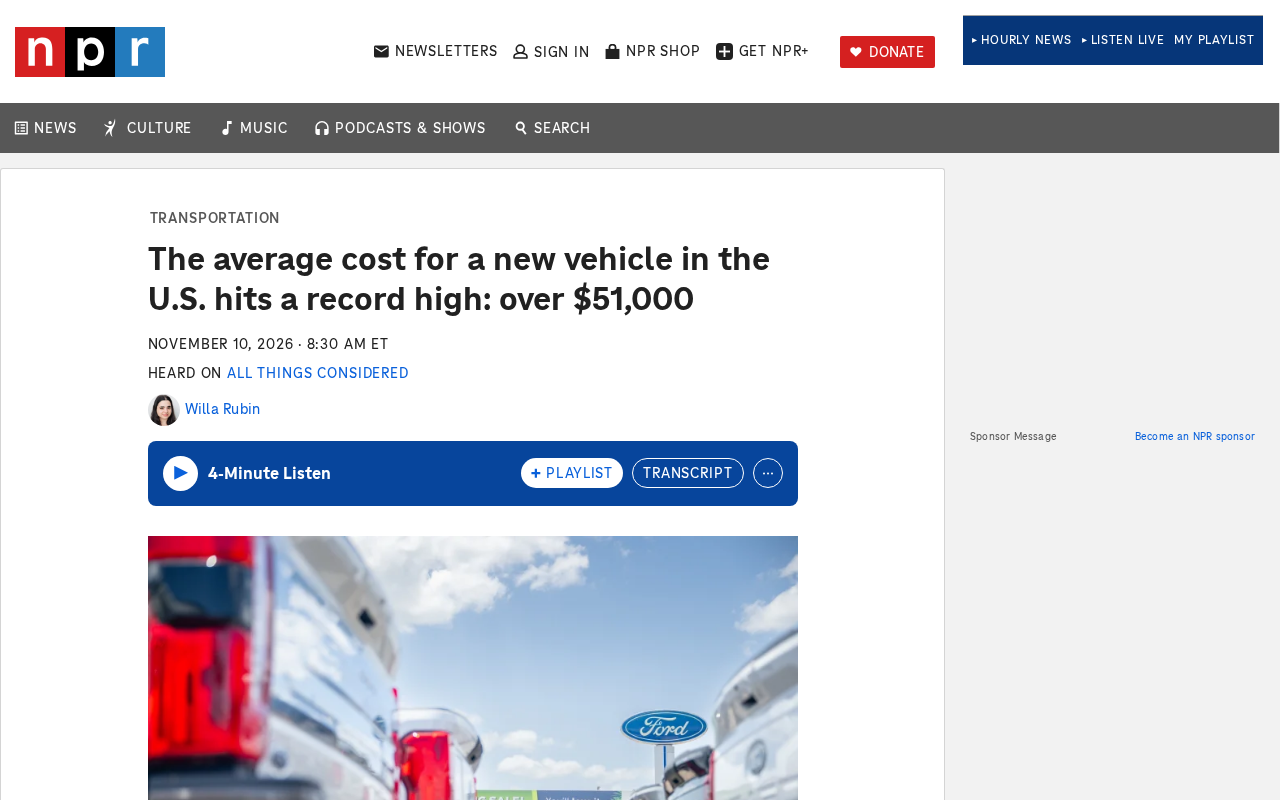
US new car average price tops $51,000, driven by compute and software costs baked into the sticker price.
The average US new car transaction price has surpassed $51,000, a record high. The article argues that the real driver of price increases is shifting from mechanical parts like engines and interiors to chips, sensors, in-vehicle operating systems, and driver-assistance algorithms. Central computing architectures replacing distributed ECUs, pre-installed sensor hardware, and software R&D amortization are three paths pushing up costs. For AI professionals, this is a pricing-side portrait of AI migrating into the physical world: in-vehicle inference is constrained by power, thermal, automotive-grade reliability, and long lifecycles, so costs fall far less steeply than in the cloud. High average prices are also forcing automakers to rethink standard high-level driver assistance, while consumer car-buying increasingly resembles tech product purchasing.
The average transaction price of a new car in the US has surpassed $51,000, hitting an all-time high. This news, which sparked discussion on Hacker News, looks like a consumer automotive story on the surface—but behind it lies a trend more worthy of attention from tech professionals: cars are becoming computers on wheels, and the cost of compute, sensors, and software is being written into every new-car invoice.
The Structural Shift Behind $51,000
According to data reposted on Hacker News, the average price of a new car in the US has exceeded $51,000, the highest level in history. Taken at face value, this is easy to read as a continuation of inflation or supply chain problems. But if you zoom out over a longer timeline, you'll find that what's driving prices up is changing—in the past, consumers paid for engine displacement, leather seats, and brand premium; today, an increasingly large share of the bill goes to chips, cameras, radar, in-vehicle operating systems, and driver-assistance algorithms.
In the bill of materials (BOM) of traditional cars, electronics and software-related costs have long been marginal. But in the "software-defined vehicle" era, the electrical/electronic architecture complexity of a new car is approaching that of consumer electronics devices, and the SoC compute in some models even rivals flagship phones from a few years ago. These components aren't free—they ultimately show up in the average-price curve.
How Software-Defined Vehicles Write Costs Into the Sticker Price
From Distributed ECUs to Central Computing Platforms
Traditional vehicles use dozens or even hundreds of distributed ECUs to control different functions, with complex wiring harnesses and scattered costs. New-generation platforms are shifting to a central computing plus zone controller architecture. On the surface, the number of hardware units is decreasing, but high-performance compute modules, automotive Ethernet, and the accompanying thermal and power delivery designs cost far more per unit than traditional ECUs. The architecture upgrade isn't a simple replacement—it's a rewrite of the cost structure.
ECU (Electronic Control Unit) is an embedded controller in a car responsible for controlling a single or a few functions—for example, engine control, window lift, and air conditioning adjustment are each managed by separate ECUs. Under traditional distributed architectures, the total wiring harness length can reach several kilometers, with high weight and assembly costs. A central computing platform concentrates compute into one or two high-performance compute units, while zone controllers handle nearby sensor and actuator connections, with the two communicating over automotive Ethernet. This shift is similar to data centers moving from scattered servers to centralized virtualization: the number of hardware units drops, but per-point performance, network bandwidth, and thermal design requirements rise substantially, so unit costs go up rather than down.
Pre-installed Hardware for Driver Assistance and Sensors
More and more models come from the factory with pre-installed cameras, millimeter-wave radar, and even LiDAR, even if the user doesn't subscribe to the relevant features at the moment. This "hardware first, software unlock" strategy front-loads R&D and material costs into the car price, while the functional benefits are deferred to the subscription stage. For automakers, this is a reasonable way to spread R&D investment; for consumers, it means paying in advance for a capability that isn't fully activated.
"Hardware pre-installation, software unlock" means the vehicle is equipped at the factory with sensors and compute beyond what current features require, and features are activated later through OTA (Over-the-Air) updates or paid subscriptions. This model originated with Tesla's practice and was later adopted by most new EV makers and some traditional automakers. Its business logic is to trade one-time hardware costs for subsequent software revenue and avoid the engineering challenges of aftermarket installation. But for consumers, the cost of pre-installed hardware is already included in the car price, and whether and when the features will be delivered is uncertain—which is one reason regulators in recent years have looked into whether "paid unlocking of hardware features" infringes on consumer rights.
The Amortization Pressure of Software R&D
Iterating in-vehicle operating systems, maintaining OTA update systems, and investing in data compliance and cybersecurity are all expenses traditional automakers didn't need to bear at scale in the past. These software-side investments have no directly corresponding hardware gross margin, so they can only be amortized into the vehicle price. When the software team grows from dozens of people to thousands, the amortization pressure shows up on the price tag for real.
Amortization is an accounting concept that refers to spreading a large upfront investment across periods over its useful life. Software R&D is a typical fixed cost: the marginal cost of copying code written once is near zero, but the upfront investment is huge. If an automaker builds an in-house software team of thousands, annual R&D spending of billions of dollars must be spread across sales volume, and per-vehicle amortization fluctuates sharply with sales. When sales fall short of expectations, per-vehicle amortization rises, further squeezing room for price cuts—creating a cycle in which "the more you invest in software, the more you depend on scale to dilute it." This is also one of the structural reasons new EV makers struggle to be profitable for a long time.
Why This News Matters to AI Professionals
The rise in average car prices is essentially a pricing-side portrait of AI capabilities migrating into the physical world. Voice interaction in smart cockpits, perception and decision-making in driver assistance, and vehicle-level energy optimization all rely on model inference running in real time. These capabilities require compute, and compute costs money.
Unlike cloud AI, the cost constraints for in-vehicle AI are harder: power consumption, thermal dissipation, automotive-grade reliability, and support for a lifecycle of more than ten years—any one of these significantly raises unit costs. While the industry discusses falling inference costs for large models, the cost curve for in-vehicle inference isn't nearly as steep—which is one of the technical reasons new car prices are hard to push down.
From an industry perspective, this also explains why some automakers have begun reassessing their strategy of "making high-level driver assistance standard across the lineup"—when the average price is already at a high of $51,000, further stacking hardware will hit consumers' price sensitivity threshold.
Automotive grade means components must pass AEC-Q series reliability certification and operate stably over the long term in wide temperature ranges such as -40°C to 125°C, under strong vibration and strong electromagnetic interference, with a design life typically required to be 10 to 15 years. Compared with the 2-to-3-year replacement cycle of consumer electronics, automotive-grade chips have long validation cycles, high yield requirements, and long supply commitments, and often cost several times more at the same process node. In addition, the functional safety standard ISO 26262 requires redundant verification and failure degradation design for inference results, further increasing compute and software overhead. Together, these constraints are the fundamental reason the in-vehicle AI cost curve is hard to bring down steeply.
A Two-Way Game Between Consumers and Automakers
For consumers, a record-high average price means car buying is becoming more like purchasing a tech product: you need to judge whether the compute platform is upgradeable, whether the sensors are sufficient, and whether a software subscription is worth paying for long term. For automakers, the challenge is to repeatedly weigh "differentiating with configurations" against "keeping the entry price in check."
The buzz around this news on Hacker News itself shows that pricing is no longer just a topic within the auto industry—the tech community has begun using it as a sample for observing the real-world cost of AI deployment. As software and compute account for a growing share of a car's price composition, the auto industry's pricing logic will inevitably move closer to consumer electronics: faster performance iteration, restrained entry-level configurations, and obvious premiums on high-end models.
$51,000 is a price figure, and also a signal: the process of AI entering the physical world will ultimately be felt by every ordinary consumer in the form of cost.
One-line Summary
Average US new car prices break $51,000, driven by compute and software costs being written into the sticker price.
Paragraph Summary
The average transaction price of a new car in the US has surpassed $51,000, a record high. The article points out that what's really driving prices is shifting from mechanical components such as engines and interiors to chips, sensors, in-vehicle operating systems, and driver-assistance algorithms. Central computing architectures replacing distributed ECUs, pre-installed sensor hardware, and amortization of software R&D form three paths that push up costs. For AI professionals, this is a pricing-side portrait of AI capabilities migrating into the physical world: in-vehicle inference is constrained by power, thermal dissipation, automotive-grade reliability, and long lifecycles, so its costs are falling far less steeply than in the cloud. Persistently high average prices are also forcing automakers to rethink the strategy of making high-level driver assistance standard across the lineup, while consumers' car-buying decisions are increasingly resembling tech product purchases.
Related articles
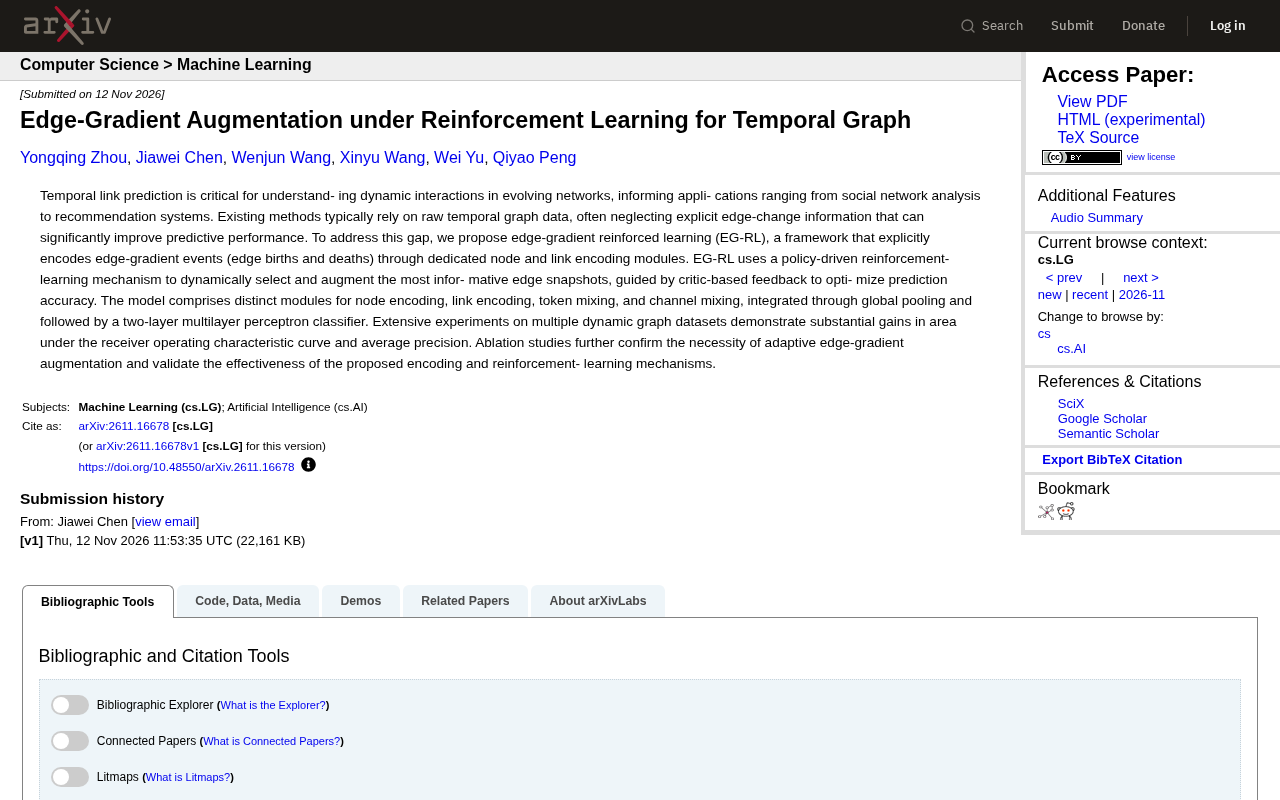
EG-RL: Edge-Gradient Augmentation + Reinforcement Learning for Temporal Graph Link Prediction
An in-depth look at EG-RL: explicitly encoding edge-gradient events (edge births and deaths) and using reinforcement learning to dynamically select the most informative snapshots, significantly improving AUC and AP for temporal link prediction on multiple dynamic graph datasets.
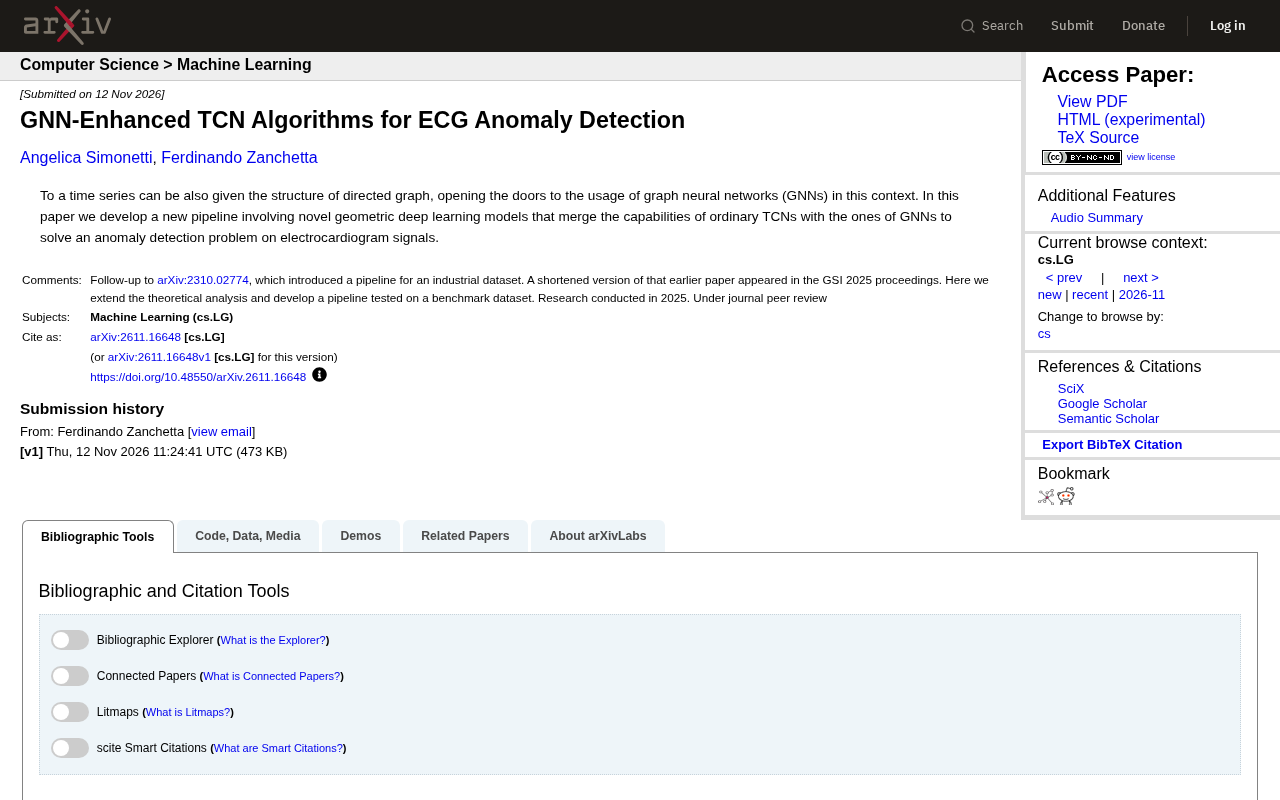
GNN+TCN Fusion Algorithm: A New Paradigm for ECG Anomaly Detection
Explore the innovative application of GNN and TCN fusion algorithms in ECG anomaly detection: transforming time series into directed graphs and using geometric deep learning to simultaneously capture local temporal features and global topological structures, offering a new paradigm for medical AI time-series analysis.
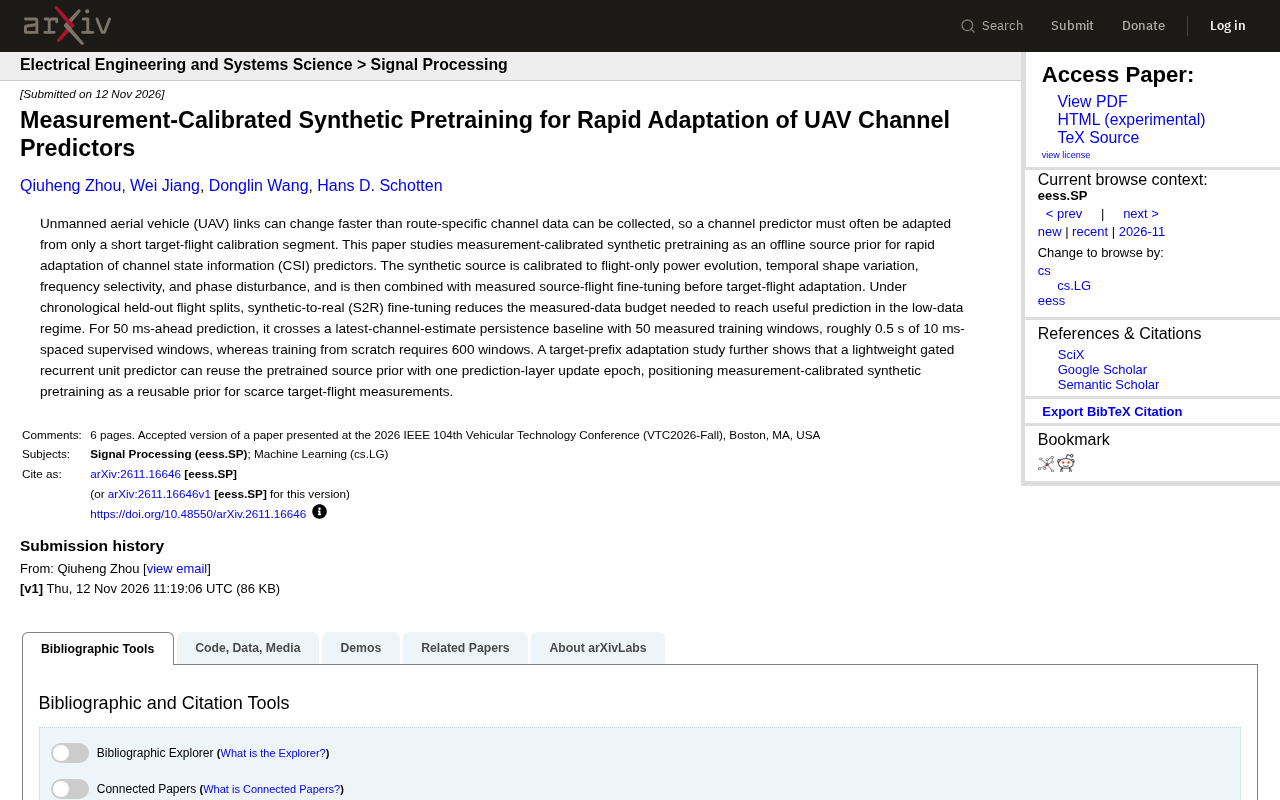
A New Approach to UAV Channel Prediction: Measurement-Calibrated Synthetic Pretraining Accelerates Adaptation
The paper proposes measurement-calibrated synthetic pretraining to accelerate UAV channel predictor adaptation using synthetic source priors. Experiments show 50 ms ahead prediction surpasses the persistence baseline with only 50 measured windows, improving data efficiency by an order of magnitude.