GNN+TCN Fusion Algorithm: A New Paradigm for ECG Anomaly Detection
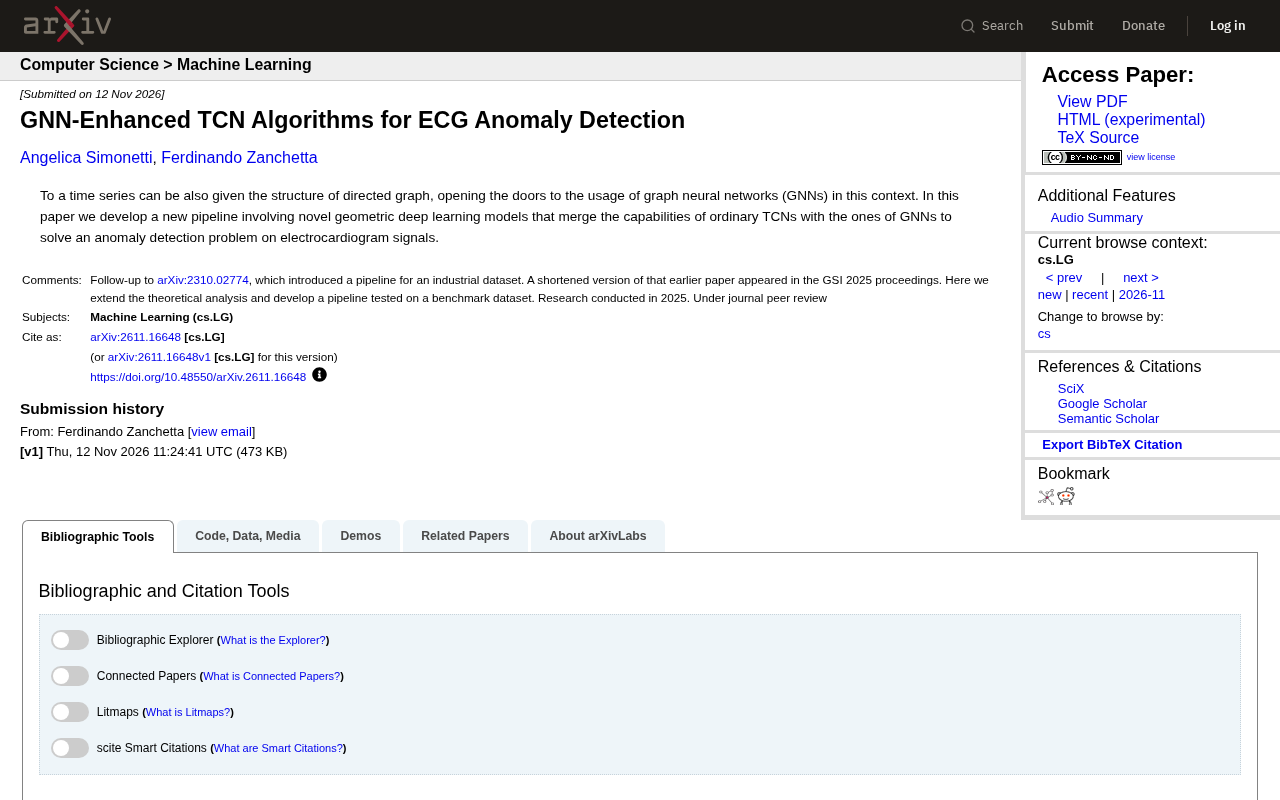
Graphify ECG time series and use a TCN+GNN fusion architecture to capture non-local associations for improved anomaly detection.
This article introduces a new geometric deep learning paradigm for ECG anomaly detection: converting ECG time series into directed graph structures so that Graph Neural Networks (GNN) can capture non-local associations ignored by traditional temporal models. The pipeline fuses TCN and GNN—TCN extracts local temporal features and generates node representations, while GNN performs message passing on them to integrate global structural information. The two are complementary, attending to both local morphology and global rhythm, and are more sensitive to anomalies such as premature beats and atrial fibrillation. The article also discusses practical challenges such as graph construction strategies and computational overhead, and points out that this "graphify first, then fuse" paradigm can be extended to other time-series anomaly detection tasks such as EEG, EMG, and industrial sensors, though clinical interpretability still requires further design.
From Time Series to Graph Structure: A New Perspective on ECG Detection
ECG anomaly detection has long been a key topic in medical AI. Traditional methods mostly treat ECG as a pure time series, relying on models like RNN and TCN to capture temporal dependencies. But recent research proposes a completely different approach: endowing time series with a directed graph structure, thereby introducing the capabilities of Graph Neural Networks (GNN). This study develops a geometric deep learning pipeline that fuses TCN and GNN, specifically designed to solve the anomaly detection problem in ECG signals.
Why Turn Time Series into Graphs?
TCN (Temporal Convolutional Network) excels at handling long-range temporal dependencies, achieving efficient modeling through dilated convolutions and residual connections. However, ECG signals may contain non-local, structured associations between different time points—such as morphological similarity between heartbeat cycles and spatial relationships between different leads—relationships that pure temporal models struggle to explicitly characterize.
After converting the time series into a directed graph, each time point or segment becomes a node, and edges encode temporal precedence or morphological similarity. GNN can perform message passing on such graphs, aggregating neighborhood information to capture topological structures that traditional TCN ignores. This dual modeling of "time series + graph" is precisely the core innovation of this research.
Temporal Convolutional Network (TCN) is a time-series modeling architecture based on one-dimensional convolutions. Its core components include causal convolution (ensuring no leakage of future information), dilated convolution (capturing long-range dependencies through exponentially growing receptive fields), and residual connections (mitigating gradient vanishing in deep networks). Compared to RNN, TCN allows parallel computation and more stable training; compared to Transformer, TCN has fewer parameters and inductive biases better suited for local temporal patterns. In ECG scenarios, TCN can effectively extract local morphological features such as P waves, QRS complexes, and T waves, but is limited by the locality of convolution kernels and struggles to directly model global rhythm relationships between heartbeats—this is one of the motivations for introducing graph structures.
Design Logic of the Fusion Architecture
The pipeline proposed in the paper is not a simple concatenation of TCN and GNN, but rather makes the two work collaboratively. TCN is responsible for extracting local temporal features and generating representations for each node; GNN then performs graph convolution on these representations to integrate global structural information. Finally, the anomaly detection head determines whether the signal is anomalous based on the fused features.
The key advantage of this design is: TCN provides a stable temporal foundation, GNN supplements cross-segment association information, and the two are complementary. For common ECG anomalies such as premature beats and atrial fibrillation, morphological changes are often accompanied by subtle shifts in temporal rhythm. A single model can easily miss detections, while the fusion model can simultaneously attend to "local morphology" and "global rhythm."
Graph Neural Network (GNN) is a class of models that perform representation learning directly on graph-structured data. Its core mechanism is message passing: each node aggregates features from neighbor nodes, updates its own representation, and after multiple layers of propagation obtains node embeddings that incorporate global topological information. Common variants include GCN (a simplification based on spectral graph convolution), GAT (introducing attention mechanisms to weight neighbors), and GraphSAGE (supporting inductive learning). In ECG graph-based modeling, nodes can correspond to time segments or sampling points, and edges can encode temporal adjacency, morphological similarity, or lead spatial relationships. The advantage of GNN lies in explicitly exploiting these non-Euclidean structures to capture cross-segment associations beyond the TCN receptive field, such as long-range dependencies between anomalous heartbeats with similar morphology.
Potential and Limitations of Geometric Deep Learning
This research falls within the scope of geometric deep learning, which emphasizes using geometric priors of data (such as graph structures) to design models. In ECG scenarios, the way the graph structure is constructed (how nodes and edges are defined) directly affects model performance. The paper does not disclose specific details of the graph construction strategy, but this is precisely the key to practical application—different lead configurations, sampling rates, and individual patient differences all require adapted graph representations.
Another aspect worth noting is computational overhead. GNN message passing may introduce additional burden when the number of nodes is large, and ECG signals have dense sampling points. How to efficiently construct sparse graphs or adopt hierarchical graph strategies is a problem that must be solved for engineering deployment. The paper abstract does not mention inference speed or parameter count comparisons, leaving room for future research.
Geometric deep learning was proposed by Bronstein et al. in 2017, aiming to generalize deep learning methods to non-Euclidean domains (graphs, manifolds, point clouds, etc.). Its core idea is to use the symmetries and geometric priors of data to design equivariant or invariant network architectures. In ECG scenarios, the graph structure itself is a geometric prior: it specifies which time points or segments are associated with each other, thereby constraining the message passing paths of GNN. Geometric deep learning emphasizes that "priors determine architecture," so the graph construction strategy (node granularity, edge definition, sparsification method) directly determines what structural information the model can capture—this is also the aspect that requires careful design when applying this paradigm in practice.
Implications for Medical AI Practice
The value of this work lies not only in ECG detection itself. It demonstrates a general paradigm: any time-series task (such as EEG, EMG, industrial sensor monitoring) can attempt graph-based modeling to leverage GNN for capturing non-local dependencies. For AI developers, this means that when processing temporal data, in addition to stacking TCN/Transformer, one can also consider the route of "graphify first, then fuse."
However, medical scenarios have extremely high requirements for interpretability. The graph structure of GNN itself provides some interpretability—which time segments are connected, which neighborhoods are aggregated—but how to present this information to clinicians still requires further design. The paper currently focuses on algorithm performance and has not yet discussed clinical validation or interpretability interfaces.
Typical anomaly types in ECG anomaly detection include premature beats (atrial/ventricular premature contractions, manifesting as premature ectopic beats and compensatory pauses), atrial fibrillation (absence of P waves, absolutely irregular RR intervals), and conduction blocks. The common feature of these anomalies is that local morphological changes and global rhythm shifts often occur simultaneously. For example, the QRS morphology in atrial fibrillation may be close to normal, but the RR interval sequence exhibits chaotic characteristics; ventricular premature beats have both wide, bizarre QRS waves and an early temporal position. Therefore, models relying solely on local morphology or global rhythm both have blind spots, and the TCN+GNN fusion architecture can precisely cover these two dimensions, providing a structural foundation for joint detection of multiple anomaly types.
Conclusion
The fusion of GNN and TCN opens a new path for ECG anomaly detection. Its core idea is to endow temporal signals with graph structures and use geometric deep learning to mine deeper associations. Although specific implementation details and experimental data have not yet been fully disclosed, this direction is worth continued attention. For teams working in medical AI or time-series analysis, it may be worth asking: can your time series also become a meaningful graph?
Related articles

Average US New Car Price Tops $51,000: How AI and Software-Defined Vehicles Are Driving Up Costs
US average new car prices hit a record $51,000. This article analyzes how software-defined vehicles, central computing, pre-installed sensors, and in-vehicle AI inference costs drive up sticker prices—and what it means for consumers and automakers.
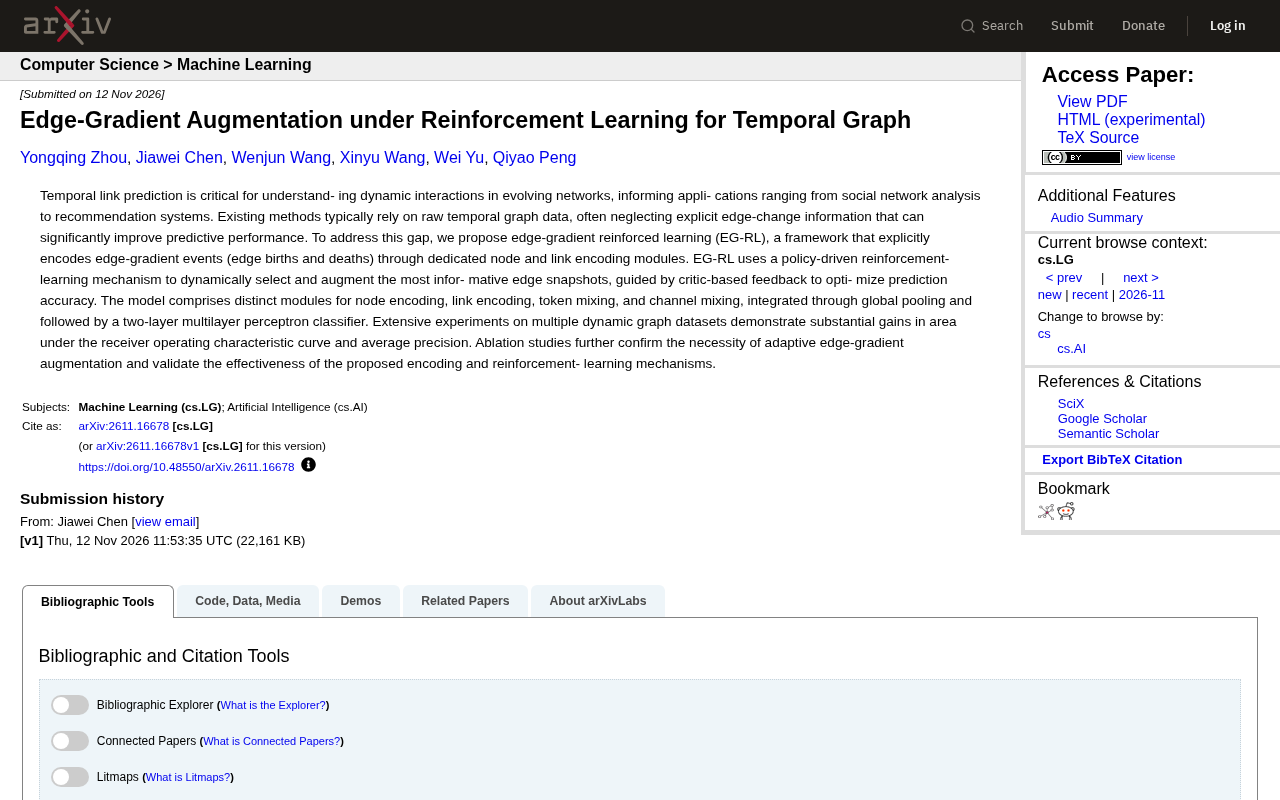
EG-RL: Edge-Gradient Augmentation + Reinforcement Learning for Temporal Graph Link Prediction
An in-depth look at EG-RL: explicitly encoding edge-gradient events (edge births and deaths) and using reinforcement learning to dynamically select the most informative snapshots, significantly improving AUC and AP for temporal link prediction on multiple dynamic graph datasets.
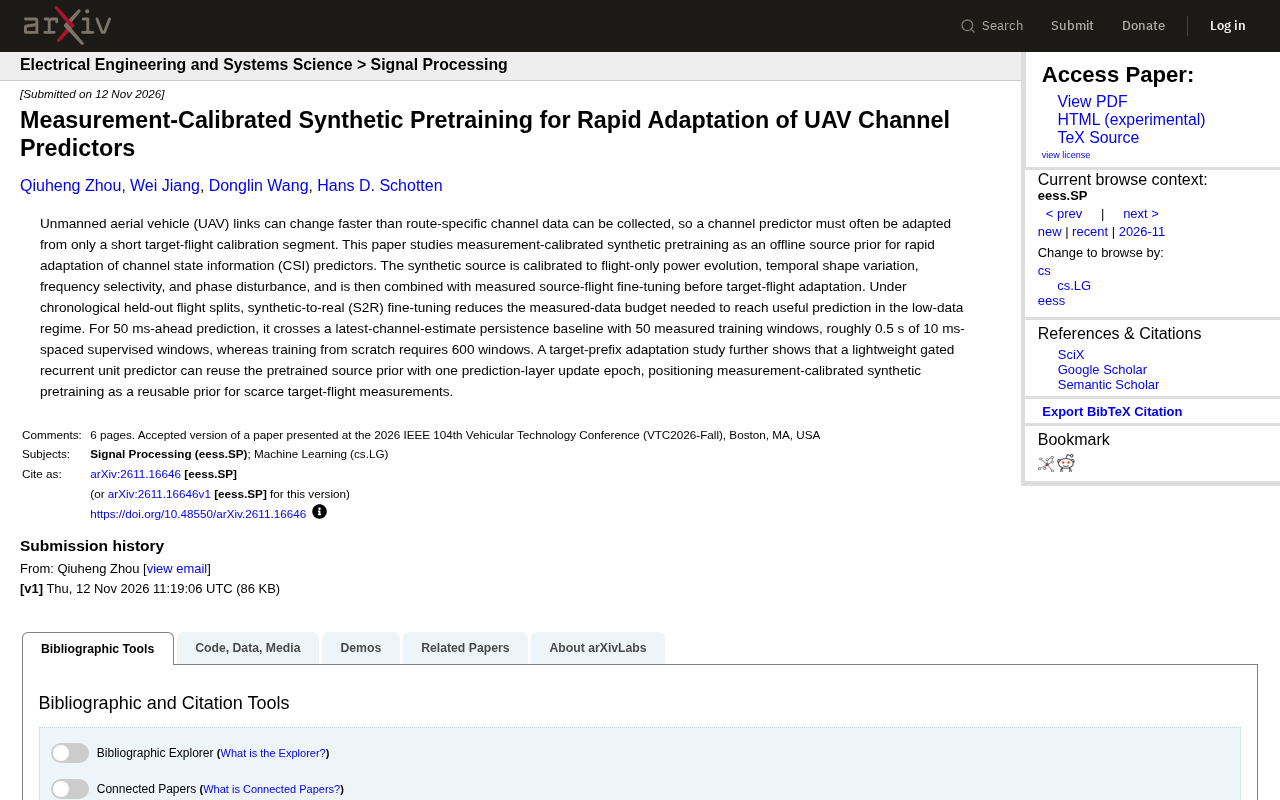
A New Approach to UAV Channel Prediction: Measurement-Calibrated Synthetic Pretraining Accelerates Adaptation
The paper proposes measurement-calibrated synthetic pretraining to accelerate UAV channel predictor adaptation using synthetic source priors. Experiments show 50 ms ahead prediction surpasses the persistence baseline with only 50 measured windows, improving data efficiency by an order of magnitude.