A Portrait of the GPT-6 Hackathon: How Side Projects Ignite AI Creativity

A GPT-6 hackathon snapshot shows how generative AI is turning side project ideas into prototypes in hours.
A tweet from an AI hackathon — opening with "Get lost in your side projects" — reflects a deeper shift in how individual developers create in the age of generative AI. Participants combined real star maps with a project called Astra to help people "find their way home," while others aimed to build educational tools in just a few hours. Together, these details point to a clear trend: powerful LLMs are compressing what once took weeks into a single hackathon session, enabling cross-disciplinary ideas to ship fast. Three takeaways emerge: value your side projects, embrace cross-domain fusion, and let AI handle the boilerplate so you can focus on creativity.
The AI Hackathon Culture Behind a Single Tweet
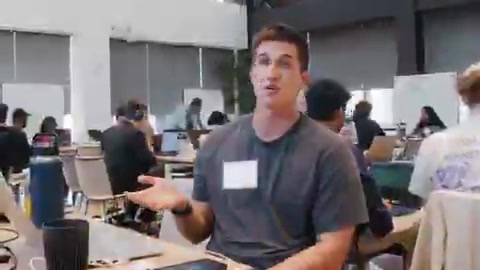
A seemingly simple tweet recently caught the attention of the developer community: at a GPT-6-themed hackathon, one participant brought real star maps and combined them with a project called Astra, with the goal of helping people "find their way home." The tweet opened with "Get lost in your side projects" — a clever double entendre that captures the very essence of hackathon culture: losing yourself in exploration, only to find direction through creation.
The source material itself is sparse, but it reflects a phenomenon worth examining in today's AI developer community: large language models are becoming powerful engines for personal side projects, compressing ideas that once took a team weeks to build into something that can take shape within a few hackathon hours.


Where the Side Project Spirit Meets AI Tools
Hackathons have long been the stage where technical creators showcase their ingenuity. Participants rapidly build prototypes around a central theme in a compressed timeframe. This GPT-6-themed event is no different in spirit — the tools in hand have simply become far more powerful.
The developer mentioned in the tweet combined physical materials — real star maps — with AI capabilities. This fusion of offline artifacts, astronomical data, and AI models is precisely what makes hackathons so compelling: they aren't confined to pure software, but actively encourage cross-disciplinary, personally meaningful expression.
Other participants' motivations can also be glimpsed through the fragments shared. One developer mentioned being inspired while "listening to music with my daughter," hoping to "make education — especially around data centers — more accessible," and expressing confidence in being able to "accomplish it in a couple hours." These scattered remarks paint a familiar hackathon portrait: personal motivation, ideals around educational equity, and the extreme development efficiency that AI now enables.
Hackathons trace their roots to the software development community of the late 1990s, with the OpenBSD team hosting what is widely considered the first in 1999. The word "hackathon" blends "hack" (creative programming) with "marathon" (sustained endurance), emphasizing high-intensity creation over a short, continuous period. Facebook's Like button and several of Gmail's core features were born out of internal hackathons. In recent years, with the opening of APIs from OpenAI, Anthropic, and others, AI-themed hackathons for external developers have surged in number and dropped significantly in barrier to entry — even non-professional programmers can quickly build functional prototypes using natural language interfaces, further amplifying the hackathon's value as an incubator for ideas.
The Efficiency Revolution Behind "A Couple of Hours"
The phrase worth sitting with is "going to accomplish it in a couple hours." This quietly confident statement reveals just how disruptive generative AI has become to the development paradigm.
Not long ago, a project involving data visualization, educational content generation, or an interactive interface would demand significant time investment in boilerplate code, content organization, and debugging. With powerful language models, those steps are dramatically simplified. Developers can now focus their energy on the creative core — whether that's visualizing the "middle of the universe" or designing an educational tool for data center concepts.
This leap in efficiency is closing the gap between individual developers and the realization of their ideas. Side projects are no longer slow-burn endeavors that take months to show results — they can go from concept to prototype in a single weekend, or even within one hackathon.
In technical terms, generative AI's boost to development efficiency operates across three dimensions: code generation (tools like GitHub Copilot have been shown to increase routine coding speed by over 55%); content and data processing (LLMs can automate copywriting, data cleaning, and format conversion, eliminating repetitive labor); and prototyping (with multimodal models, developers can describe interface requirements in natural language and receive runnable code). Together, these capabilities mean that an MVP once requiring a team of 3–5 developers over two weeks can now potentially be built solo within a single hackathon cycle. The deeper implication of this paradigm shift: the cost of validating an idea's feasibility approaches zero, enabling far more concepts to be tested quickly rather than remaining stuck at the ideation stage.
Astra and the Metaphor of "Finding Your Way Home"
The Astra project, specifically called out in the tweet, uses star maps as its medium and centers on the theme of "helping you find your way home." While public information is limited and its exact functionality remains unclear, the name and positioning are symbolically rich.
In a moment of rapid AI iteration and information overload, "finding your way home" can be read literally — as a navigation or astronomical positioning tool — but also as an emotional metaphor: helping people return to their original sense of curiosity and desire to create, amidst the churning waves of technological change. This resonates with the hackathon's invitation to "get lost in your side projects": allowing yourself to wander without a fixed destination often leads you closer to what you actually want to build.
Notably, "Astra" means "stars" in both Latin and Sanskrit. In the tech world, it's also the name of Google DeepMind's real-time multimodal AI assistant project, unveiled at Google I/O 2024. Whether the Astra project mentioned here bears any connection to Google's offering is unclear, but the name carries strong cultural resonance in the AI developer community, evoking navigation, perception, and intelligent guidance. Bringing physical star maps into a hackathon demo also aligns with the growing trend of embodied AI — the idea of AI not just processing digital information, but understanding and responding to inputs from the physical world.
Key Takeaways for Developers
The tweet offers limited details, but its signal is clear. For developers of all levels, a few lessons stand out:
First, don't underestimate the value of side projects. Many influential products started as seemingly casual personal experiments. With AI tools now widely accessible, the cost of iteration on a side project has never been lower.
Second, cross-disciplinary fusion is a wellspring of creativity. Combining elements as seemingly unrelated as astronomical star maps, family life, and educational ideals with AI often produces uniquely compelling product forms.
Third, use AI to compress development cycles. Offloading repetitive, boilerplate work to models — and reserving your limited time for creative thinking and user experience design — is the core competitive advantage for developers in this new era.
The appeal of the hackathon hasn't changed. What's changed is what's in your hands. When "finishing a project in a couple of hours" shifts from a bold claim to a reasonable expectation, what becomes truly scarce isn't technical ability — it's the willingness to get lost in your side projects in the first place.
Related articles

Free Unlimited Claude Code Solution: Agnes AI + CC Switch Setup Guide
No paid subscription needed — pair the free AI platform Agnes AI with the open-source tool CC Switch to provide a backend for Claude Code, enabling unlimited free calls to text, image, and video models. This guide covers the full setup, test results, and usage boundaries.

A Complete Zero-Cost Guide to Getting Started with Claude Code for Beginners in China
A beginner's guide to Claude Code for users in China: two installation methods (command line and IDE plugin), full configuration steps for replacing the official API with the free domestic LongCat model, and a hands-on demo of building a small tool with natural language, plus tips.

When the NSA Gets Involved: The AI Supply Chain Crisis Behind Open-Source CVEs and API Key Hijacking
Multiple open-source projects disclosed severe CVEs in one day, PHP flaws alarmed the FBI, and Railway and OpenCode were breached with API keys stolen. This article breaks down the vulnerability window, AI-accelerated exploitation, and the AI supply chain crisis behind the API key black market, with a developer defense checklist.