A Practical Guide to Monetizing Python Skills: From Zero Reviews to Freelancing Success

A practical roadmap for turning Python skills into freelance income, from zero reviews to steady gigs.
This guide helps Python learners transition into freelancing by identifying high-demand, low-barrier tasks like data cleaning, web scraping, and automation. It covers platform strategies for Upwork and Fiverr, cold-start tactics for overcoming zero reviews, and how to translate technical skills into client-facing value propositions.
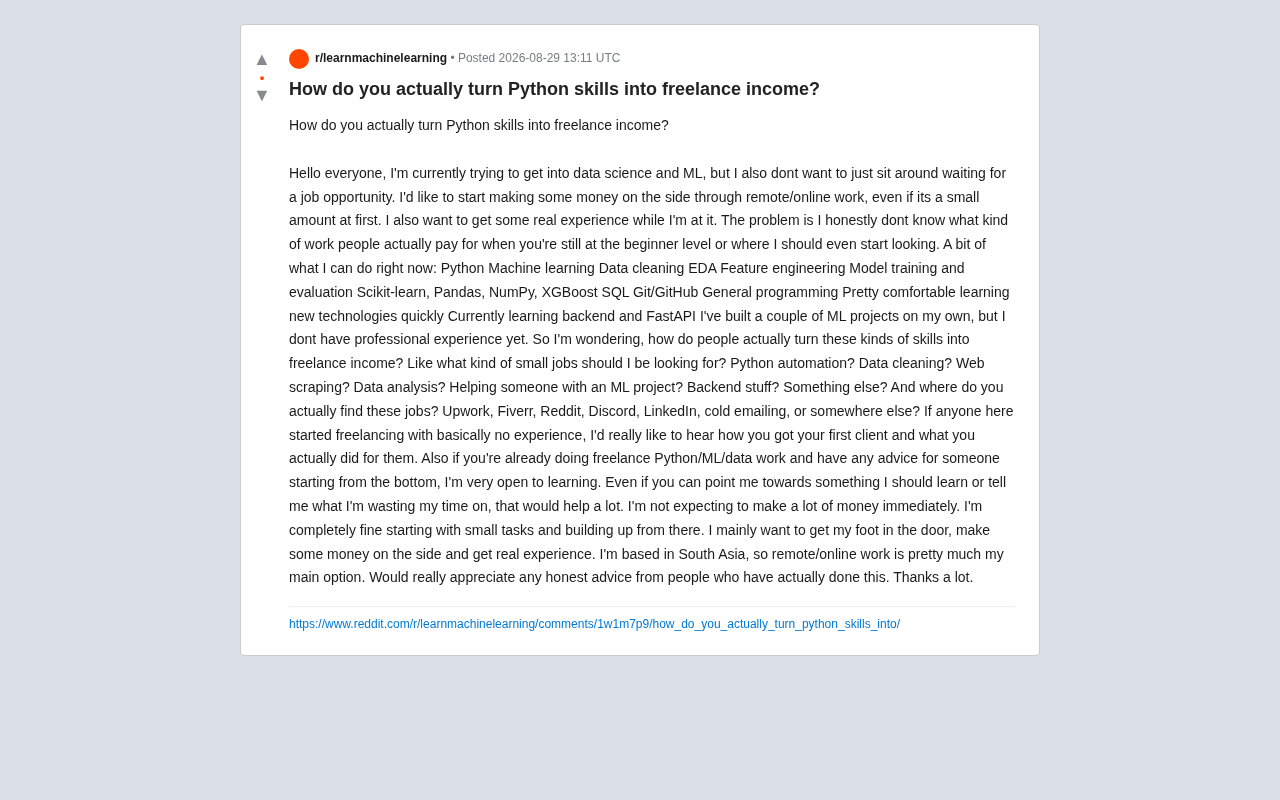
One question comes up again and again among data science and machine learning learners: I've already mastered Python, Pandas, and Scikit-learn, and I've completed a few personal projects — but how do I actually turn these skills into freelance income? Recently, a learner from South Asia posted this exact dilemma on Reddit. Rather than passively waiting for a full-time job opportunity, they wanted to earn real experience and extra income through remote freelancing. It's a highly relatable question, and this article lays out a practical, actionable roadmap for monetizing Python skills.
The Beginner Stage: What Python Skills the Market Actually Pays For
Many beginners fall into a common trap: they assume clients will pay for "training a complex machine learning model." The reality is quite the opposite. At the entry level of the freelancing market, clients are most willing to pay for boring, repetitive, well-defined tasks — not advanced modeling work that requires long-term commitment.
For newcomers with Python, SQL, data cleaning, and web scraping skills, the following types of tasks have the most genuine demand and the lowest barrier to entry:
Data Cleaning and Wrangling
This is a seriously underrated entry point for Python freelancing. Countless small business owners, researchers, and e-commerce sellers have piles of messy Excel and CSV files. They need someone to deduplicate records, standardize formats, handle missing values, and merge tables. These tasks aren't technically difficult, but clients are happy to pay because the work is tedious and painful for them. Your Pandas skills are hard currency here.
Web Scraping and Automation Scripts
"Help me scrape product prices / contact info / review data from a website" is an extremely common request on Upwork and Fiverr. The combination of requests + BeautifulSoup + Pandas is more than enough for most entry-level scraping jobs. Similarly, Python automation scripts — batch file renaming, automated report generation, scheduled email sending — are real needs for small business owners. These projects have short delivery cycles and clear acceptance criteria, making them perfect for beginners looking to accumulate their first reviews.
Basic Data Analysis and Visualization
Help clients perform exploratory data analysis (EDA) on their existing data and deliver charts with simple insight reports. The key here isn't how complex your model is, but whether you can turn data into a compelling business story using clear language. Mastering visualization tools like Matplotlib and Seaborn can significantly improve your deliverable quality and client satisfaction.
Choosing a Freelance Platform: Where to Find Your First Client
There are many channels for finding work, but for zero-experience newcomers, the strategies differ significantly across platforms.
Different Approaches for Upwork vs. Fiverr
These are the two mainstream freelancing platforms, but they operate on different logic. Upwork uses an "active bidding" model where you write targeted proposals for each project. Fiverr uses a "passive listing" model where you package your services as standardized products and wait for clients to come to you.
For Python freelancing newcomers, listing a low-priced "data cleaning" or "web scraping" service on Fiverr is an effective way to quickly accumulate your first few five-star reviews. Upwork is more competitive, and new accounts struggle to win bids. In the early stage, it's best to actively apply for small-to-medium projects with high client interaction rates and moderate budgets.
Breaking Through the Cold Start: Prove Your Ability Before Negotiating Price
Regardless of the platform, the biggest obstacle for beginners is "zero reviews." There's only one way to break through — let your work and results speak in place of a track record.
- Post well-structured projects with clear README files on GitHub as proof of your Python capabilities
- Accept lower rates or even slim margins on your first few gigs — the goal is to earn real reviews
- Proactively offer potential clients a small free "demo deliverable" — for example, scrape a small sample of data to show them the results
Don't Overlook Non-Platform Channels
LinkedIn, relevant Reddit subreddits, Discord tech communities, and even cold emails are all important sources of work outside of freelancing platforms. LinkedIn is especially valuable — many small business owners post temporary technical needs directly there. Consistently contributing to niche communities — answering data-related questions, sharing your Python projects — is itself a low-cost client acquisition strategy.
The Critical Leap: From Python Skills to Freelance Income
Translate Your "Tech Stack" into "Client Value"
A common mistake beginners make is listing "proficient in XGBoost, NumPy, FastAPI" in their profiles. But clients don't care what tools you use — they care about results. A much more effective pitch is: "I'll turn your messy sales data into clean, analysis-ready reports" or "I'll automatically scrape competitor prices for you, updated daily."
Translating technical capabilities into business value that clients can understand is the watershed moment for improving your win rate.
FastAPI and Backend Skills as a Differentiator
The original poster mentioned learning FastAPI, which is a very smart move. The freelancing market is oversaturated with pure data analysts, but people who can deploy models as APIs and build small backend services are relatively scarce. When you can offer an end-to-end service — "train a model + wrap it as a callable API" — your pricing power opens up considerably, and you're more likely to land long-term, recurring projects.
Mindset Management: Get Started First, Optimize Later
From the post, it's clear the author has a healthy mindset — they're not expecting to make big money overnight and are willing to start with small tasks. This is precisely the key mindset for freelancing success. The value of your first client often isn't the income itself, but the real project experience, a showcase-worthy case study, and that crucial review that determines whether you can land more work down the road.
Summary: The Python Freelancing Monetization Roadmap
For learners hoping to monetize their Python skills through remote work, the path is actually quite clear: Start with well-defined small tasks like data cleaning, web scraping, and automation. Build credibility through GitHub portfolios and early low-priced gigs. Then gradually level up to higher-value services like data analysis and backend API development.
The real barrier isn't the technology itself — it's whether you can translate your capabilities into value that clients understand, and whether you can persevere through the cold-start phase of zero reviews. Taking that first step and landing your first client is always the hardest — and most rewarding — part of freelancing.
Related articles

Getting Started with Claude Code: Why It's the Most Powerful AI Coding Assistant
Deep dive into Claude Code's core advantages vs Cursor, Trae, and Copilot. Learn how its full-project context understanding and auto-debugging make it the top AI coding assistant.

OpenCode Tutorial: A Complete Guide from Installation and Configuration to Hands-On Practice
Complete guide to OpenCode AI coding tool: two installation methods, model configuration, Agent types, custom commands, MCP extensions, Agent SQL, with practical examples.

Getting Started with Claude Code: Complete Guide to Terminal AI Coding Tool Installation and Selection
Complete guide to Claude Code terminal AI coding tool: installation, setup, Terminal vs Device Agent comparison, and the practical Claude Code + DeepSeek combo.