Absurd Open-Source Model Naming: What a Qwen Frankenstein Fork Reveals About Community Chaos
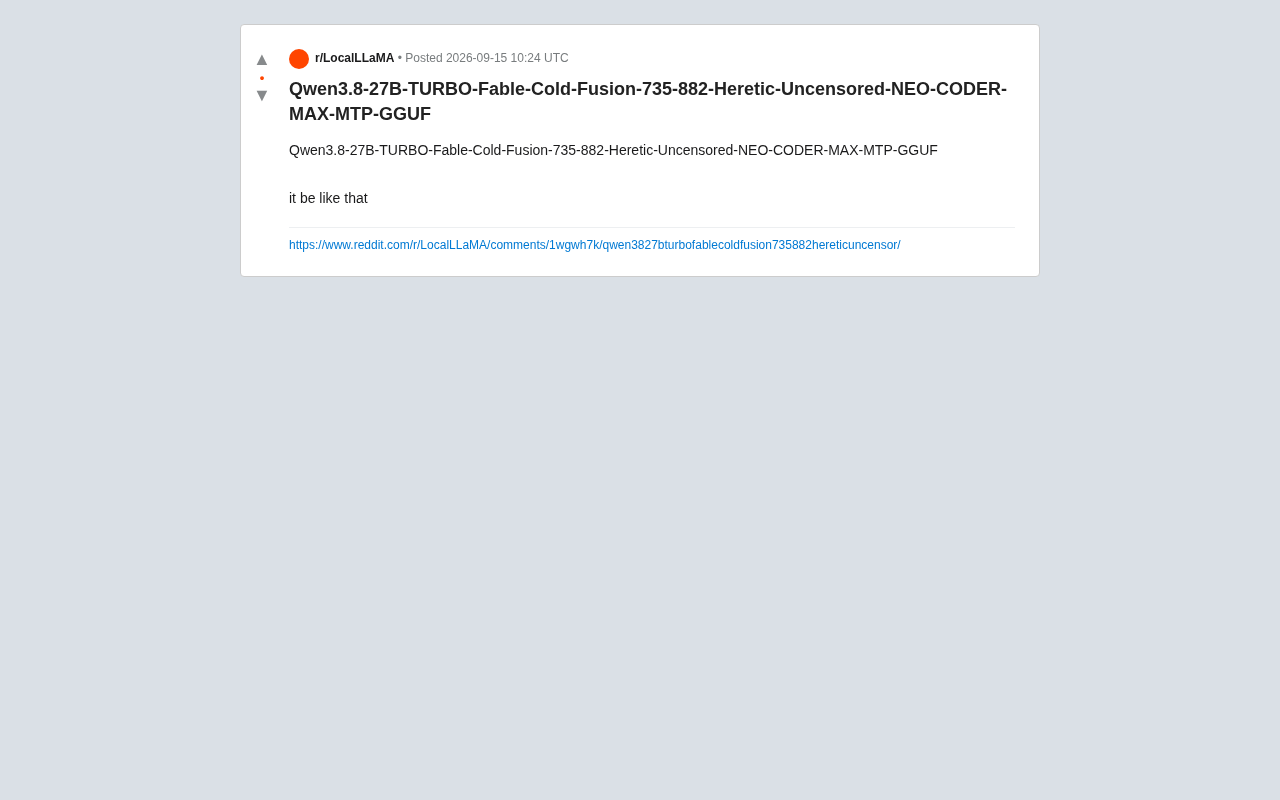
A viral absurdly long model name on Reddit exposes the naming chaos in the open-source LLM fine-tuning community.
A comically long model name circulating on Reddit's local LLM community has struck a nerve, capturing the naming chaos endemic to open-source fine-tuning culture. The name stacks real technical terms like GGUF quantization and 27B parameter count alongside meaningless marketing suffixes (TURBO, MAX, NEO), uncensored flags, and cryptic merge recipe numbers. With no naming standards on platforms like Hugging Face, creators race to stuff keywords into filenames for visibility — leaving users struggling with poor discoverability, weak reproducibility, and inflated trust costs. The advice: focus on base model, parameter scale, and quantization format; ignore the rest.
A Model Name That's Equal Parts Funny and Tragic
Recently, a model name started making the rounds in Reddit's local LLM community: Qwen3.8-27B-TURBO-Fable-Cold-Fusion-735-882-Heretic-Uncensored-NEO-CODER-MAX-MTP-GGUF. The original poster accompanied it with a single line: "it be like that."
The post resonated so widely because it perfectly captured a long-standing phenomenon in the open-source model community — fine-tuned model names are getting longer and more absurd by the day. This particular name stacks over a dozen tags, cramming in virtually every suffix imaginable. It reads less like a model identifier and more like a random keyword soup.
To be clear, this specific name is almost certainly a community joke — a satirical exaggeration rather than an actual release. But in its dark humor, it manages to compress the current chaos of fine-tuned model naming into a single line of text.
Breaking Down This "Frankenstein" Name
Take the name apart, and each segment actually maps to a real naming convention found in the wild:
Base Model and Scale
- Qwen3.8: Implies the model is based on Alibaba's Qwen (Tongyi Qianwen) series, with a version number that's already a bit of a stretch.
- 27B: Parameter count — 27 billion puts it in the mid-size range.
- GGUF: A real quantization format defined by the llama.cpp project, used for running models efficiently on local hardware.
The GGUF format was introduced by the llama.cpp project in 2023, replacing the earlier GGML format. It packages model weights, hyperparameters, vocabulary, and all other necessary data into a single file, supporting multiple quantization precisions (e.g., Q4_K_M, Q8_0). This allows large models with billions of parameters to run on consumer-grade GPUs or even CPUs. The core idea behind quantization is approximating the original floating-point weights using lower-bit integers, trading some model accuracy for reduced VRAM usage and faster inference. GGUF filenames typically include the quantization level directly, making it one of the few suffixes in a model name that carries clear, unambiguous technical meaning.
The "Performance" and "Feature" Suffixes
- TURBO / MAX / NEO: These terms have no technical definition — they're purely marketing-style signals for "it's better, somehow."
- Cold-Fusion / Fable: Often refer to model merge techniques or the name of a specific fine-tuning data recipe.
- Heretic / Uncensored: Indicates a "jailbroken" version with the original model's safety alignment removed.
- CODER: Suggests the model has been optimized for coding tasks.
- MTP: Likely refers to Multi-Token Prediction or a similar technical feature.
- 735-882: Number strings like this typically encode layer ratios used in a model merge or version iteration numbers.
Stack all of these together, and you get a name that's simultaneously information-overloaded and nearly impossible to parse.
Model merging refers to combining the weights of two or more trained models using a mathematical algorithm to produce a new model — no retraining required. Common methods include SLERP (Spherical Linear Interpolation), TIES-Merging (merging after pruning conflicting parameters), and DARE (merging after randomly dropping a portion of weights). The appeal of merging is its near-zero cost: no GPU compute needed, just math on weight files. This makes it wildly popular in the community. Names like "Cold-Fusion" or "Fable" are often custom recipe names for a specific merge experiment, encoding the combination of source models and layer weight ratios used. Without the full config file, these names are nearly impossible to reproduce from the name alone. Number strings like "735-882" are typically traces of exactly these recipe version numbers or layer interpolation ratios.
Why Model Naming Spirals Out of Control
Behind this phenomenon is the collision of a hyper-active open-source fine-tuning ecosystem with a complete absence of naming standards.
On platforms like Hugging Face, anyone can upload a model they've fine-tuned or merged. To stand out in a sea of models — and to communicate a model's selling points at a glance — creators are incentivized to cram everything into the name: which base model, parameter count, merge method, whether it's uncensored, what tasks it excels at, quantization format...
The rise of model merging has made things worse. A merged model is itself a "Frankenstein" of multiple models, and its name naturally tends to concatenate names from all its sources. Layer by layer, name lengths grow exponentially.
Hugging Face, currently the dominant open-source model hosting platform, had surpassed one million model repositories by 2024, a significant portion of which are community fine-tunes or derivative merges. The platform enforces no naming conventions, and model visibility is primarily driven by keyword search matching and download rankings. This objectively incentivizes creators to pack as many descriptive terms as possible into a model name, creating an arms race of keyword stuffing. This stands in sharp contrast to academic institutions and large labs, which typically follow concise internal naming conventions (e.g., GPT-4, Llama-3-8B) — because they rely on brand recognition rather than the name itself to convey information.
The Real Problems Long Names Create
What seems like a joke actually causes genuine friction:
Reduced discoverability: A name stuffed with keywords ironically makes it harder to grasp the key point, leaving users unable to judge what the model is actually suited for.
Poor reproducibility: A string like 735-882, without the author's explanation, is meaningless to anyone else — and impossible to reproduce or verify.
Higher trust costs: Terms like Uncensored and TURBO have no unified standard. Users can't reliably judge a model's true quality or safety boundaries from the name alone.
For developers and hobbyists trying to deploy models locally, names like these often mean spending extra time reading the model card just to figure out what they're actually looking at.
Community Self-Deprecation as a Signal
The fact that this post resonated so broadly suggests the community is well aware of the problem. Capping it with a casual "it be like that" is both resignation and collective self-deprecation.
On a more optimistic note, this kind of mockery is actually a signal of self-correction. When naming chaos becomes a running joke, it may nudge more creators toward cleaner, more principled naming — using clear model cards to explain technical details instead of stuffing everything into a filename.
For everyday users, the practical advice when encountering these "Frankenstein" models is straightforward: don't be dazzled by flashy suffixes. Focus on three core pieces of information — base model, parameter size, and quantization format. Treat everything else as a rough hint, and verify actual performance through your own testing.
Related articles
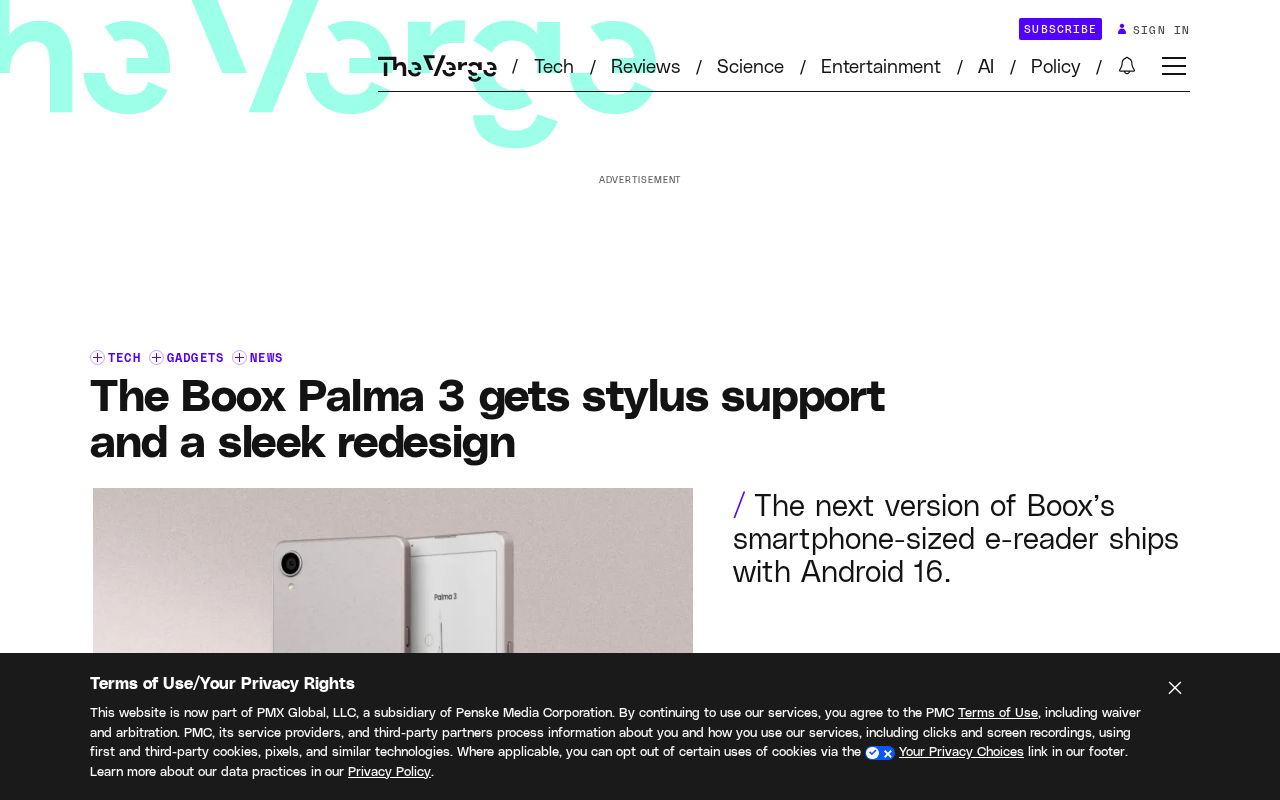
Boox Palma 3 Launches with Stylus Support and Redesigned Look
Boox Palma 3 launches with stylus support and a sleek new design. The pocket-sized e-ink reader gains new capabilities but comes at a higher price than its predecessor.
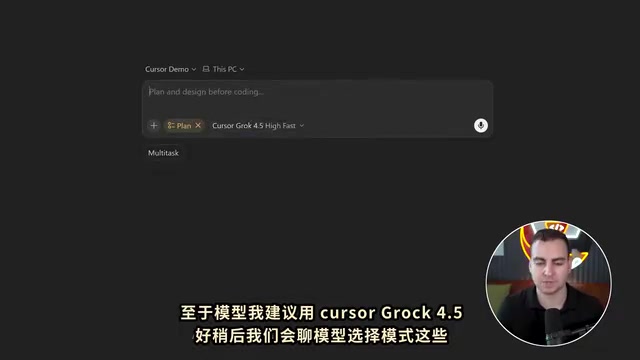
Cursor 3.0 Complete Beginner's Guide: Getting Started with AI-Powered IDE Development
Cursor 3.0 beginner's guide: from download and setup to parallel sub-agents, cloud development, skills, and automations. Master model selection, design mode, and Git with this complete AI IDE walkthrough.
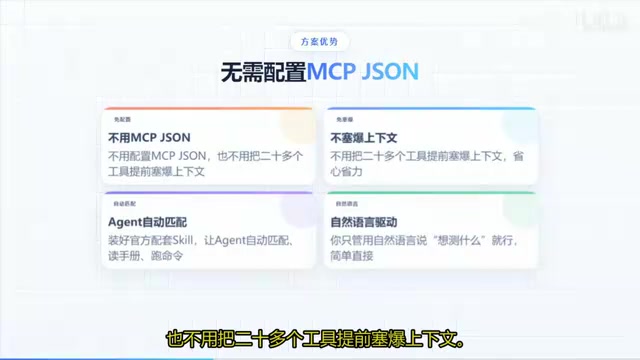
Codex + Playwright as a Skill: UI Automation Without Manual Commands
Wrap Playwright as a Codex Skill so AI agents run UI automation tests via natural language. Covers install, Sauce Demo walkthrough, PO pattern, and MCP vs CLI+Skill tradeoffs.