Aclif: A Unified CLI Framework Designed for AI Agents
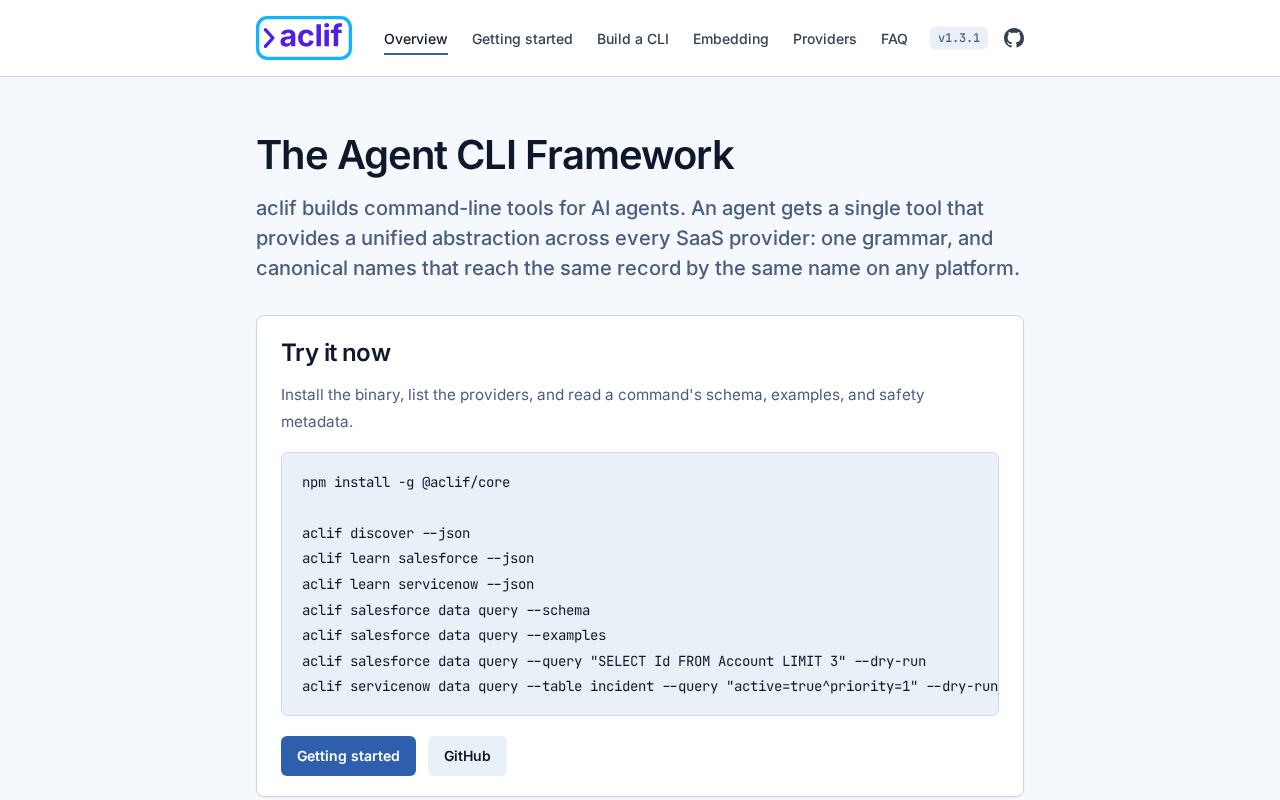
Aclif gives AI Agents a unified CLI syntax with canonical naming to tame cross-SaaS tool invocation chaos.
Aclif is an early-stage open-source CLI framework for AI Agents, built around the idea of using unified syntax and cross-SaaS canonical naming to eliminate confusion when agents call heterogeneous external services. By mapping the same class of operations to consistent verbs and structures regardless of the underlying SaaS, Aclif aims to reduce reasoning overhead and hallucinated invocations. The approach aligns with broader standardization trends like function calling and MCP, but takes the CLI layer as its abstraction entry point, drawing on traditional systems integration experience.
One Syntax to Rule All SaaS Command Lines
On Hacker News, an open-source project called Aclif has been drawing attention. Its positioning is clear: build a unified CLI (Command Line Interface) framework for AI Agents, using "one syntax and cross-SaaS canonical naming" to address the chaos agents currently face when invoking external tools.
This idea targets a pain point that's becoming increasingly real. As AI Agents evolve from "chat assistants" into "executors," they need to frequently call external services — sending emails, querying databases, updating CRMs, deploying code. But every SaaS has its own API and command format. Agents are either forced to memorize hundreds of different invocation patterns, or they rely on brittle adapter layers. Aclif attempts to use a unified syntactic abstraction to converge these heterogeneous interfaces under a consistent naming convention.
Why Agents Need "Canonical Naming"
For human developers, differences between CLI tools are tolerable — check the docs, memorize a few common commands, and you're done. But for AI Agents, interface inconsistency directly amplifies error rates.
Take a simple example: the action of "listing resources" might be called ls, list, get, or show across different tools, with varying parameter formats. Every time an agent makes a call, it has to re-reason the correct command structure — burning tokens and risking hallucinated, erroneous invocations. Aclif's proposed "canonical names" are designed to eliminate exactly this ambiguity: regardless of which SaaS sits underneath, the same class of operation maps to the same verb and structure, dramatically reducing the agent's reasoning burden.
This design philosophy aligns with the broader tool-calling standardization trend that has gained momentum in recent years. From function calling to MCP (Model Context Protocol), the industry is exploring how to make models operate the external world more reliably. Aclif chose the CLI layer as its abstraction entry point — an approach that draws more heavily from traditional systems integration and automation scripting experience.
Background: MCP and Function Calling MCP (Model Context Protocol) is an open protocol proposed by Anthropic in late 2024, designed to give large language models a standardized interface specification for "tool calling." It defines how models discover, describe, and invoke external tools or data sources, enabling interoperability between models and tools from different vendors without requiring custom adapter code for every pair. Function calling is an earlier mechanism introduced by OpenAI, allowing models to output structured JSON expressing "intent to call a function with specific arguments" during a conversation, with external code executing the actual call and returning results to the model. Both aim to extend models from "generating text" to "driving actions," but at different levels: function calling focuses on structured output for individual calls, while MCP targets a more complete ecosystem interoperability standard. Aclif's exploration at the CLI layer can be seen as a concrete implementation of this standardization wave in the command-line interaction dimension.
The Value and Challenges of Unified Syntax
The promise of "one syntax" sounds compelling, but the real difficulty lies in balancing breadth of coverage with semantic accuracy. Differences between SaaS services go beyond naming — they extend to permission models, pagination mechanisms, error handling, async task patterns, and other deep-level logic. Unifying all of this under a single syntax requires enormous mapping and encapsulation work from the framework.
For developers, the appeal of a framework like this hinges on several key questions: How costly is it to onboard a new SaaS? Do canonical names actually reduce agent invocation error rates? When the underlying API changes, can the abstraction layer be maintained reliably? These are the practical factors that determine whether a project gets adopted.
Based on its current Show HN exposure (3 upvotes, 1 comment), the project is at a very early stage with limited community traction. This means it's still validating its core assumptions, and while the problem it addresses — standardizing agent tool calls — is important, the competitive landscape for solutions remains unsettled.
Why CLI as an Abstraction Layer? The choice of CLI as an abstraction layer isn't arbitrary. Command-line interfaces are inherently structured, scriptable, and easy to parse — they've been the backbone of Unix systems integration and automation for decades. Compared to calling REST APIs directly, CLI wrappers typically already handle authentication, error messaging, and parameter validation, making them a more "human-friendly" interface layer for agents. However, this also introduces new challenges: CLI tools suffer from their own version fragmentation issues, and in containerized and cloud-native environments, process-level CLI invocations carry higher startup overhead and stricter sandboxing requirements than API calls. How to preserve the elegance of the CLI abstraction while addressing these real-world engineering frictions is a practical constraint that frameworks like Aclif need to directly confront.
A Direction Worth Watching
How agents interact with external tools is becoming one of the central engineering challenges in AI application development. Whether it's a CLI framework like Aclif or higher-level protocol standards, they're all ultimately answering the same question: how do you get an inherently unreliable language model to reliably drive increasingly complex real-world systems?
For teams building agent-based products, Aclif offers a useful perspective on abstraction — rather than training the model to accommodate the quirks of every individual tool, first normalize the tools themselves into a consistent shape. Whether this project can grow into a widely adopted standard remains to be seen, but the problem space it's addressing is undeniably worth paying attention to.
Related articles
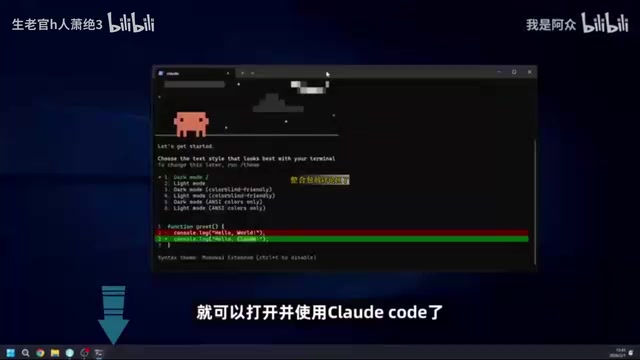
Using Claude Code for Free in China: A Complete Guide to Connecting Free Domestic Models
A step-by-step guide for China-based users to run Claude Code for free by connecting Meituan's open-source LongCat model API — no paid subscription needed.
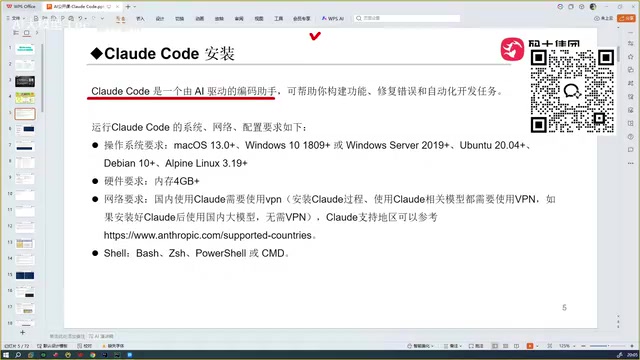
Getting Started with Claude Code: A Beginner's Guide to AI-Powered Coding
Claude Code is a locally-run AI coding agent that reads your entire project and auto-debugs code. Compare it with Copilot, Cursor, TRAE, and Codex to see why it leads the pack.
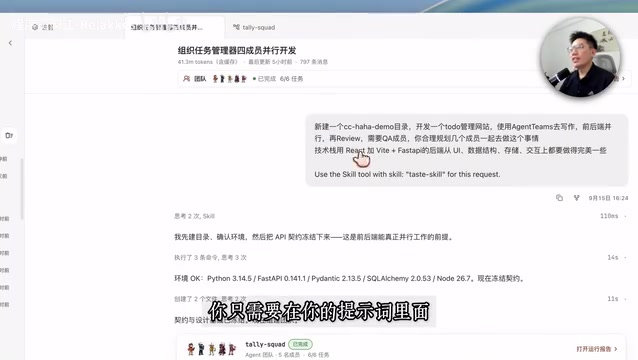
14K Stars Open-Source Desktop App cc-haha: 5 AI Agents That Divide and Conquer on Their Own
cc-haha, the open-source Claude Code desktop app with 14K Stars, adds Agent Teams: 5 AI agents autonomously divide tasks, with a 99% cache hit rate on 40M tokens.