Actress Misdiagnosed with Multiple Sclerosis for Five Years: Can AI Solve the MS Diagnostic Dilemma?

Actress Applegate's five-year MS diagnosis was overturned, reflecting the structural challenge of MS diagnosis: no gold standard and a 15% false-positive rate.
Actress Christina Applegate was told she never had MS five years after her diagnosis, yet she still has no clear new answer—leaving her in a dilemma of "diagnosis revoked, no answers." The article explains that MS diagnosis lacks a single gold-standard test and relies on a combination of MRI, lumbar puncture, and clinical symptoms; overlapping symptoms and imaging misinterpretation lead to a roughly 15% false-positive rate. Experts believe updated guidelines and AI image interpretation could improve accuracy, though AI use is still early. MS treatment has advanced significantly, and patients should consult specialists, question diagnostic evidence, seek second opinions, and be their own advocates.
A "Good News" That Brings a New Dilemma
Actress Christina Applegate revealed a startling piece of news on The Messy Podcast: her doctors told her she never had multiple sclerosis (MS). Before that, she had lived as an MS patient for five years and publicly disclosed her diagnosis in 2021.

"Congratulations, you don't have MS." The doctor's words sound like good news, but Applegate says this left her "back at square one"—because she still doesn't know what is actually wrong with her body. This state of "having your diagnosis revoked without receiving a new answer" may be more unsettling than the diagnosis itself.
Applegate's experience is not an isolated case. According to Vox, research estimates that about 15% of MS diagnoses may be false positives. Behind this figure lies a long-standing structural challenge in the MS diagnostic system.
Why Is MS So Hard to Diagnose?
The diagnostic dilemma of MS stems from a fundamental fact: no single test can definitively confirm MS. Doctors rely on a combination of MRI scans, lumbar punctures (cerebrospinal fluid testing), and clinical symptoms (such as numbness, fatigue, and vision problems).
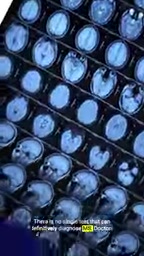
The problem is that these symptoms overlap with many other diseases, and MRI interpretation can also be inaccurate. An atypical lesion image or an unclear cerebrospinal fluid result can steer the diagnosis in the wrong direction. When multiple "ambiguous signals" stack up, the probability of misdiagnosis rises.
This explains why the 15% false-positive rate is not the negligence of any individual doctor, but a reflection of the limitations of the diagnostic tools themselves. MS has no "gold standard" test, meaning diagnosis relies heavily on physician experience and judgment—and that is precisely where AI may be able to step in.
Multiple sclerosis (MS) is an autoimmune disease of the central nervous system (the brain and spinal cord) in which the immune system mistakenly attacks the myelin sheath that wraps nerve fibers, impairing nerve signal transmission. Myelin damage forms "demyelinating lesions," which appear as white matter plaques in specific locations on MRI. MS symptoms are highly heterogeneous: common ones include limb numbness, blurred vision (optic neuritis), fatigue, balance problems, and cognitive issues, but these symptoms can also appear in stroke, lupus, Lyme disease, neuromyelitis optica spectrum disorder (NMOSD), and many other conditions. The course of MS typically follows a "relapsing-remitting" or progressively worsening pattern, and this temporal dimension is also an important basis for diagnosis. Precisely because the disease manifests diversely and lacks specific biomarkers, MS diagnosis has long depended on a combination of evidence for "dissemination in time" and "dissemination in space"—which is the root cause of the persistently high misdiagnosis rate.
Lumbar puncture (cerebrospinal fluid testing) is used in MS diagnosis mainly to detect "oligoclonal bands" (OCB) in the cerebrospinal fluid—an abnormal banding pattern of immunoglobulins in the CSF. About 85%–95% of MS patients have detectable oligoclonal bands in their cerebrospinal fluid, but this marker is not unique to MS: polyradiculoneuritis, certain infections, and systemic autoimmune diseases may also test positive. Moreover, a negative lumbar puncture result cannot rule out MS, and a positive one cannot confirm it on its own. For this reason, doctors must interpret cerebrospinal fluid results together with MRI lesion distribution and the history of clinical symptom onset. When the indicators point in inconsistent directions, diagnosis enters a gray zone—this is the structural weakness of the "combination judgment" model, and the reason AI-assisted integration of multimodal data holds such promise.
AI and New Diagnostic Guidelines: What Changes Can They Bring?
According to Vox, experts believe that updated diagnostic guidelines and AI technology have the potential to improve the accuracy of MS diagnosis. AI's value may lie in standardizing image interpretation—reducing variability among different radiologists reading the same MRI scan, or identifying patterns in symptom combinations that humans tend to overlook.

But caution is warranted: AI's application in MS diagnosis is still at an early exploratory stage, and the original article does not provide specific AI tools or clinical data. Updating diagnostic guidelines is a more direct path to improvement—more precise MRI criteria (such as strict requirements on lesion location and number) can help doctors distinguish MS from other demyelinating diseases.
For patients, these advances mean the misdiagnosis rate is expected to decline in the future, but in the short term, the "combination judgment" model will not disappear.
The McDonald diagnostic criteria are the internationally used framework for MS diagnosis, first published in 2001 and subsequently revised in 2005, 2010, and 2017. The core idea is to use MRI evidence to demonstrate that lesions are "disseminated in time" (new lesions appearing at different times) and "disseminated in space" (involving different regions of the central nervous system). The 2017 revision allowed a single MRI to replace follow-up scans under certain conditions, speeding up diagnosis but potentially increasing the risk of false positives. The new guidelines under expert discussion are expected to further refine the rules for determining MRI lesions and to incorporate "red flags"—warning signs that suggest alternative diagnoses—more strictly, helping doctors identify atypical cases early and reduce misjudgment.
After Diagnosis: Treatment Advances and Patient Self-Advocacy
On the other side of the diagnostic challenge, MS treatment has made significant progress. According to Vox, modern treatments continue to improve the quality of life for MS patients.
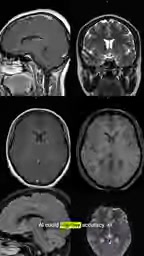
For patients currently going through the diagnostic process, doctors offer several practical recommendations: consult an MS specialist; directly ask "what specific evidence supports the MS diagnosis"; and seek a second opinion when necessary. Applegate's experience confirms the last point—as the report puts it, "you have to be your own advocate."
Behind Misdiagnosis: A Field That Needs More Answers
Applegate's story has drawn attention not only because of her public profile, but because it touches on a widespread anxiety: when medical tests cannot provide definitive answers, where should patients turn? A 15% false-positive rate is not a number that can be easily digested—it means a large number of individuals have received treatment in the wrong direction, or have lived for years with uncertain information.
AI and new diagnostic criteria offer directions for improvement, but fundamentally alleviating diagnostic uncertainty still depends on more specific biomarkers and deeper research into disease mechanisms. Until then, "be your own advocate" is not just a piece of advice—it is a necessity.
One-line Summary
Actress Applegate's five-year MS diagnosis was overturned, reflecting the structural challenges of MS diagnosis: the lack of a gold standard and a 15% false-positive rate.
Paragraph Summary
Five years after being diagnosed with multiple sclerosis, actress Christina Applegate was told she never had the disease—yet she still has no clear new diagnosis, leaving her in the dilemma of "having her diagnosis revoked without an answer." The article notes that MS diagnosis lacks a single gold-standard test and can only rely on a combination of MRI, lumbar puncture, and clinical symptoms; overlapping symptoms and imaging misinterpretation lead to a false-positive rate of about 15%. Experts believe updated diagnostic guidelines and AI image interpretation could improve accuracy, but AI applications remain at an early stage. Treatment for MS has advanced significantly, and patients should consult specialists, question the diagnostic evidence, and seek second opinions—becoming their own advocates.
Related articles

Frontend to AI Agent Development: A Frontline Architect Explains Career Paths and Opportunities
A frontline AI architect explains the industry changes and practical paths for frontend developers transitioning to AI Agent development: why pure frontend jobs are disappearing, why Agent + full-stack has become mainstream in hiring, and three transformation routes—Agent development engineer, FDE, and remote contracting—along with corresponding learning strategies.

How to Choose an AI Agent Development Course: Five Pitfall-Avoidance Guidelines
A mechanical-engineering career changer's two-year pitfall-tested checklist for screening AI Agent development courses: complete delivery pipeline, resume-worthy projects, real development perspective, update frequency, and coaching feedback—with concrete judgment methods and pitfall-avoidance tips.

Coze AI Agent Building for Beginners: A Zero-Code AI Agent Development Guide
Coze, ByteDance's one-stop AI application development platform, supports zero-code drag-and-drop AI agent building. This article outlines Coze's core concepts, three advantages, differences between the domestic and international versions, and the distinction between agents and apps, helping beginners quickly get started with AI Agent development.