Aerial Reconnaissance a Century Ago: Neubronner's Miniature Pigeon Camera
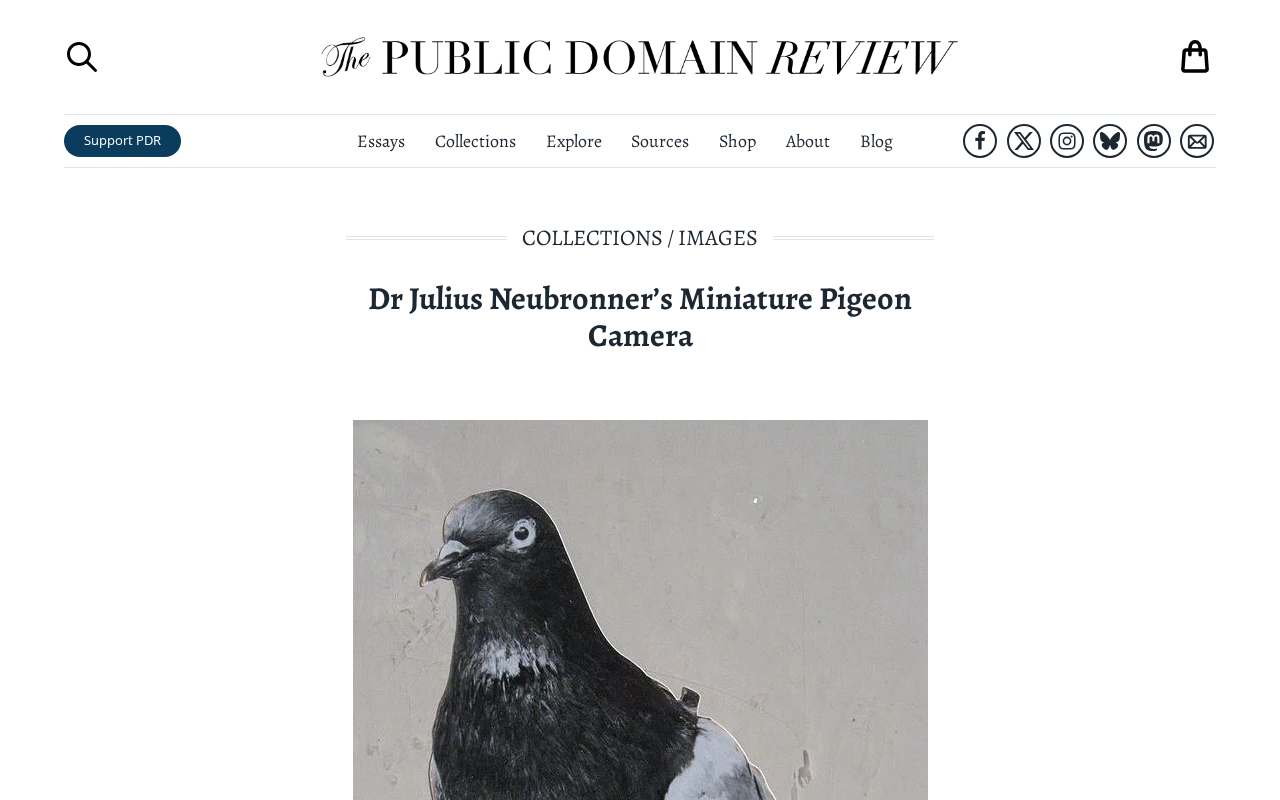
German pharmacist Neubronner mounted tiny cameras on pigeons to achieve early aerial photography through pure mechanical design.
In the late 19th century, German pharmacist Julius Neubronner converted the carrier pigeons he used for medication delivery into aerial photography platforms, designing a lightweight chest-mounted camera system that used a mechanical timer to automatically capture ground images during flight. This purely mechanical solution cleverly resolved three engineering constraints — weight control, automatic triggering, and stable mounting — demonstrating remarkable ingenuity without any electronic technology. Though the camera attracted military interest for reconnaissance purposes, it never achieved practical use due to the impossibility of precisely controlling flight paths and shooting angles. This overlooked episode in technology history is both a prehistoric exploration of aerial photography and a reminder that constraints fuel innovation — a mindset still relevant in today's low-power and edge computing design.
A Forgotten Prehistory of Aerial Photography
Long before drones and satellite imagery became part of everyday life, humanity's desire to "look down upon the world from above" gave rise to a host of remarkable inventions. Among the most legendary was the Miniature Pigeon Camera, designed by German pharmacist Dr. Julius Neubronner. By combining carrier pigeons with lightweight cameras that automatically snapped photographs during flight, his invention became one of the most fascinating early explorations in aerial photography.
This piece of technical history, recently shared on Hacker News, has rekindled interest in an era defined by low-tech ingenuity. It reminds us that engineering innovation doesn't always depend on cutting-edge equipment — sometimes it only takes a clever recombination of existing resources.
A Pharmacist, Carrier Pigeons, and a Stroke of Inspiration
Neubronner was, by trade, a pharmacist who regularly used carrier pigeons to deliver medications between his pharmacy and local hospitals. This day-to-day familiarity with pigeon behavior sparked a bold idea: if a camera light enough could be mounted on a pigeon, could one obtain photographs taken from a bird's-eye view?
The central challenge was miniaturization. Cameras of the era were generally heavy, and carrier pigeons had limited load-bearing capacity. To address this, Neubronner designed a lightweight chest-mounted camera harness equipped with a pneumatic or timer-based mechanism that automatically triggered the shutter during flight, capturing towns, fields, and buildings along the route.
The Engineering Ingenuity Behind the System
The elegance of this system lay in how it resolved three core engineering constraints:
- Weight control: The camera had to be light enough not to impair the pigeon's normal flight.
- Automatic triggering: With no human operator, a mechanical timer or pneumatic mechanism had to handle continuous shutter releases.
- Stable mounting: The device needed to be firmly secured to the pigeon's chest without restricting its wing movements.
With no electronic controls and no digital sensors, all of these challenges were solved purely through mechanical design — a testament to extraordinary engineering intuition.
The camera design itself is worth examining in detail. Historical records indicate that Neubronner ultimately settled on a small aluminum film camera weighing approximately 75 grams, mounted via an adjustable inflatable bladder or a purely mechanical timer that triggered the shutter roughly every 30 seconds. The timing mechanism worked on a principle similar to a watch's escapement — storing energy in a mainspring and releasing it at a steady rate through a gear train to open and close the shutter blades. The full chest harness was secured to the pigeon's breast and abdomen using leather straps, refined through numerous trials to find a configuration that didn't interfere with the bird's wing strokes. To demonstrate the invention's commercial potential, Neubronner publicly exhibited pigeon-captured photographs at the 1909 Dresden Photography Exhibition and later sold the images as postcards to considerable public interest. Both the German Imperial Post and the military evaluated the project, but ultimately declined large-scale procurement due to concerns over controllability.
From Civil Curiosity to Military Interest
The invention didn't remain a personal hobby for long. The potential for aerial reconnaissance quickly caught the attention of the military — using pigeons to carry cameras for enemy surveillance held obvious tactical appeal at a time when aircraft reconnaissance was still in its infancy. Pigeons were small, difficult to detect, and possessed a natural homing instinct, making them theoretically ideal as "stealth reconnaissance platforms."
Yet pigeon aerial photography had a fundamental limitation: the angle of capture and flight path could not be precisely controlled, making results highly unpredictable. Where the pigeon flew, when the shutter fired, and whether the target area was ever in frame — none of this could be planned with the precision we now take for granted with modern drones. This was the core reason the technology never achieved large-scale practical use.
Aerial reconnaissance at the turn of the 20th century was in an extremely primitive state. In the decade following the Wright Brothers' first powered flight in 1903, aircraft lacked the payload capacity, range, and stability needed for reliable military surveillance missions; balloon and kite photography, meanwhile, were limited by weather and poor maneuverability. It was precisely in this technological vacuum that the pigeon camera — a "lightweight, self-navigating" reconnaissance solution — seemed so compelling. During World War I, all sides made extensive use of carrier pigeons to relay intelligence (primarily written messages), and their homing instinct gave them a far higher delivery success rate than human couriers when artillery had severed communication lines. However, the pigeon-camera variant of aerial photography saw extremely limited battlefield deployment due to the controllability issues described above, remaining largely experimental. It wasn't until aircraft reconnaissance matured after World War I that this approach was definitively retired from history.
Why This History Is Worth Revisiting Today
With drone aerial photography and satellite remote sensing now highly mature, looking back at the pigeon camera might seem like mere curiosity. But it actually illuminates a clear throughline in the history of technology: humanity's pursuit of an aerial perspective has been persistent and tenacious — only the means of achieving it have changed with the times.
From pigeons to kites, balloons, aircraft, drones, and satellites, each generation of solutions has tackled the same fundamental problem: how to obtain an overhead view at lower cost and higher precision. Neubronner's pigeon camera represents the earliest — and most imaginative — link in that chain.
For engineers today, this case offers another layer of insight: constraints are often the catalyst for innovation. Working under extreme limitations in computing power, materials, and energy, earlier generations still managed to achieve their goals through mechanical ingenuity. This mindset of "solving the hardest problems with the fewest resources" remains highly relevant in contemporary edge computing and low-power device design.
Conclusion
Neubronner's Miniature Pigeon Camera is a chapter that mainstream technology history has barely touched — yet it is deeply instructive. It stands as both a prehistoric attempt at aerial photography and a vivid footnote to the power of engineering creativity. The next time you casually launch a drone into the sky, it's worth remembering: that "God's-eye view" was first delivered to humanity by a flock of pigeons with cameras strapped to their chests.
Note: This article is based on historical materials shared on Hacker News. Original discussion details are limited, and some technical specifics reflect the generally accepted descriptions of this invention.
Related articles

OpenCode Complete Guide: Installation, Configuration & Practical Usage
A complete guide to OpenCode, an open-source AI coding tool: desktop and WSL installation, model and rule configuration, agent types, custom commands, MCP integration, and Agent SQL reuse.
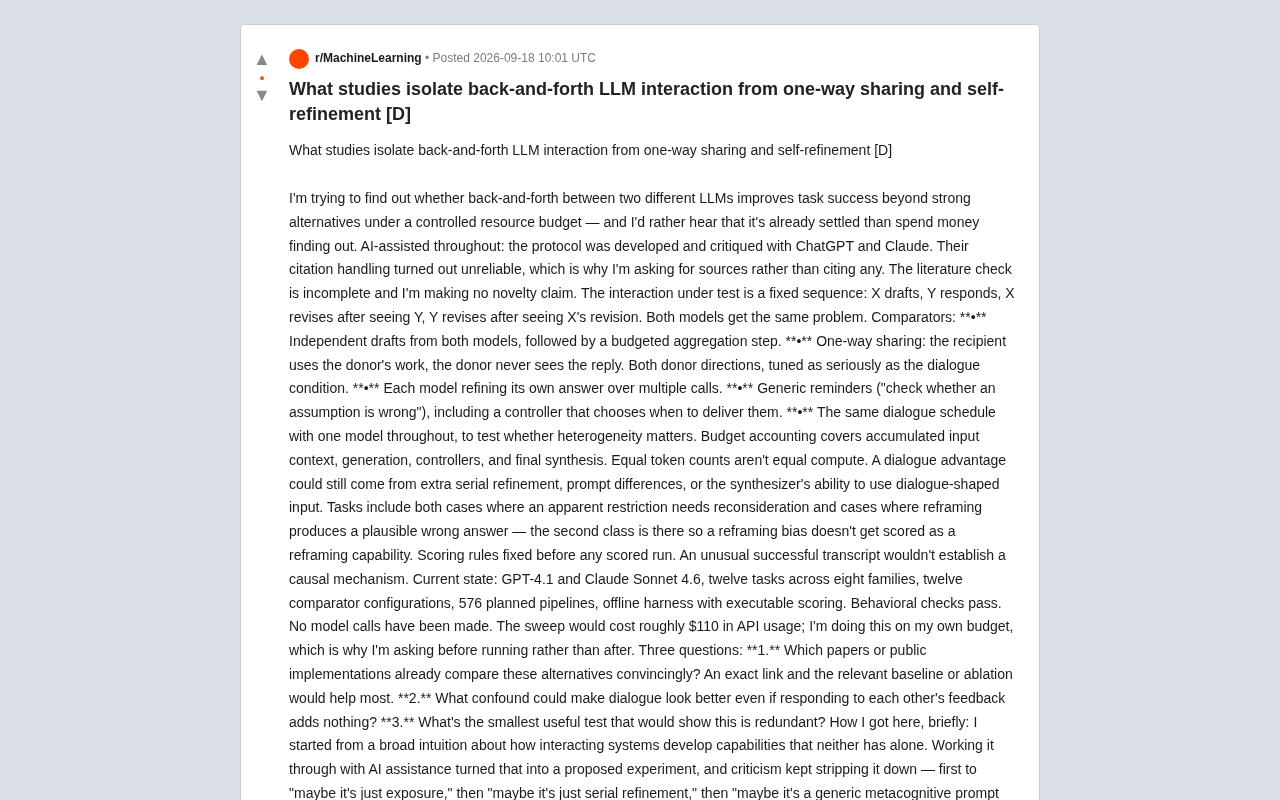
Can Multi-LLM Dialogue Really Improve Task Performance? Lessons from a Rigorous Experimental Design
A researcher designed rigorous controlled experiments to isolate whether multi-LLM back-and-forth dialogue genuinely outperforms simpler baselines like self-refinement and one-way sharing.

Which $10 AI Coding Plan Should You Choose? Go vs. Code Credit Breakdown
After DeepSeek's price hike, should you pick Go or Code for your $10 AI coding plan? We break down credit allocations for Mimo, Qwen, DeepSeek V4, Kimi, and more.