After Investing in 500+ Startups: The Most Common Fundraising Mistakes Early-Stage Founders Make

Veteran VC Charles Hudson shares the top fundraising mistakes founders make at the pre-seed and seed stage.
Precursor Ventures partner Charles Hudson has backed over 500 early-stage startups. In this breakdown of his key insights, he identifies three critical mistakes founders make when fundraising: failing to articulate their core value clearly, distorting market and competitive realities, and misjudging the right timing to raise. His advice is grounded, practical, and directly applicable to seed and angel-stage founders.
A Seasoned Investor's Frontline Observations
In the latest episode of the Build Mode podcast, Precursor Ventures partner Charles Hudson sat down with host Isabelle Johannessen for an in-depth conversation. As an early-stage investor who has witnessed the growth journeys of more than 500 startups, Hudson brings a uniquely informed perspective — he has seen countless companies go from zero to closing a round, and has watched founders make the same critical mistakes at pivotal moments.
Precursor Ventures is a Silicon Valley VC firm focused exclusively on the pre-seed stage, and its investment strategy is notably distinctive within the industry. Most venture firms wait until a startup has an MVP (Minimum Viable Product) or early revenue data before getting involved. Precursor, by contrast, bets even earlier — sometimes on nothing more than an idea and a team. This approach has given Hudson an unusually broad sample of observations, and has sharpened his ability to evaluate founders themselves far beyond what metrics-driven investors can offer.
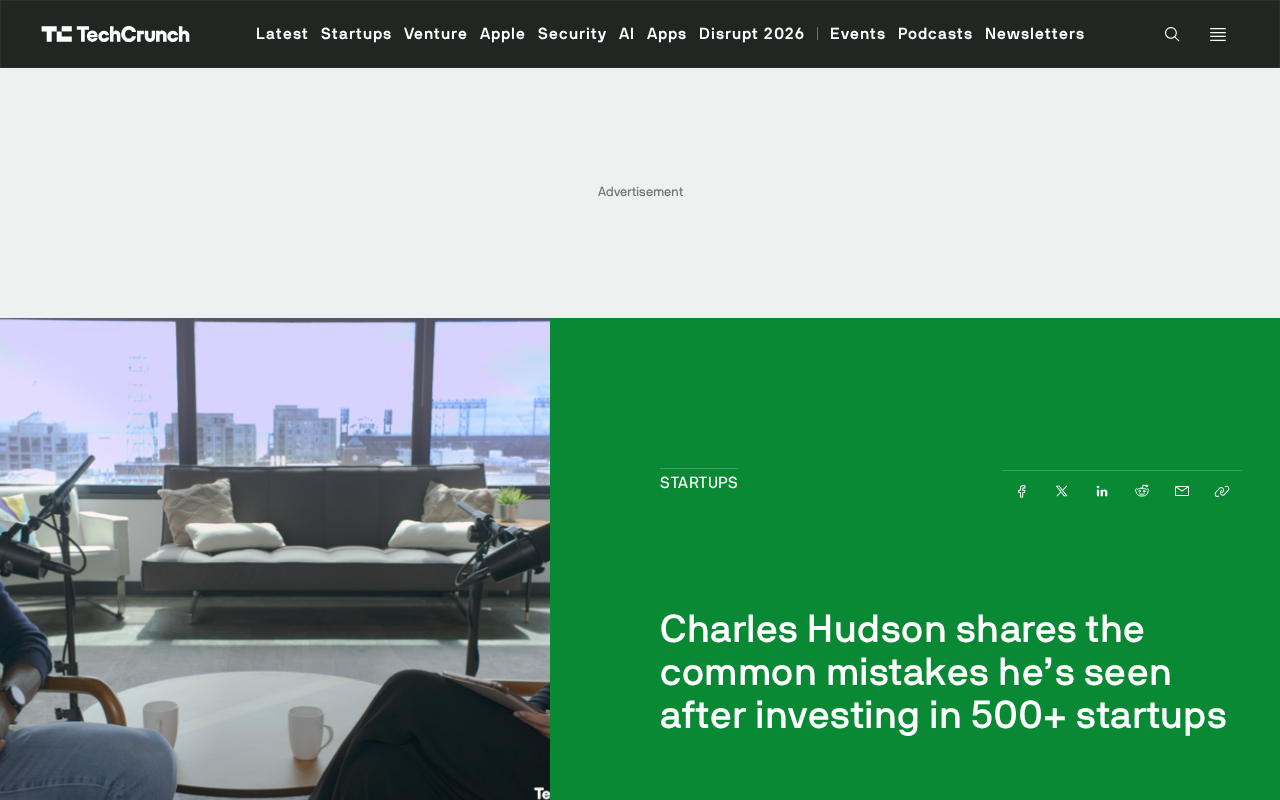
This episode centers on two core themes: the headwinds facing early-stage founders today, and the high-frequency mistakes founders must avoid to successfully close a round. For anyone in the seed or angel stage, the practical takeaways from this frontline investor are well worth internalizing.
Fundraising Stage Context: Angel rounds are typically provided by individual investors, ranging from tens of thousands to hundreds of thousands of dollars, and rely heavily on personal trust in the founder. Seed rounds are more institutionalized, led by professional funds, typically ranging from $500K to $3M, and begin to require some degree of market validation. What both rounds share is extreme information asymmetry — investors cannot rely on a complete financial history or scaled user data to make decisions. As a result, the weight placed on a founder's storytelling ability, logical consistency, and team signals is significantly higher than in later-stage rounds.
The Headwinds Facing Early-Stage Founders
The early-stage startup ecosystem today looks fundamentally different from the capital-exuberant era that preceded it. The fundraising environment has tightened considerably, investors are scrutinizing valuations and business logic with far greater rigor, and early-stage founders must now find a path to survival amid more limited capital, higher expectations, and a more cautious market.
As a long-tenured early-stage investor, Hudson understands deeply the vulnerability of founders at this stage. At the seed level, products are often unfinished, market validation is limited, and teams are small — founders must convince investors to bet on their vision with almost no data to back it up. This inherent information asymmetry is the underlying reason so many founders walk away empty-handed.
Information asymmetry — the core concept economist George Akerlof introduced in his 1970 "market for lemons" paper — is especially pronounced in early-stage investing. Founders know far more about their product, market, and technology than investors do, while investors hold capital and networks. This asymmetry produces a unique "signaling game" in early fundraising: investors try to assess true value through indirect signals — how founders express themselves, the quality of their responses to hard questions, team backgrounds, and more. This is precisely why a clear narrative is not merely a communication skill, but a core proxy through which investors gauge the depth of a founder's thinking. Founders who fail to tell their story in a way investors can understand and trust are often the first ones eliminated from this signaling game.
The Three Most Common Mistakes Early-Stage Founders Make
Mistake #1: Unclear Communication of Core Value
Hudson observes that the biggest problem for many founders is not that their product isn't good enough — it's that they cannot clearly and concisely explain what problem they're solving, for whom, and why now. Early-stage investing is fundamentally a bet on people and vision. If a founder can't articulate their own core narrative, it's very hard for an investor to build conviction.
Mistake #2: A Distorted View of Market and Competition
Another recurring pitfall is founders lacking an honest, grounded read on market size and competitive dynamics. When investors evaluate market opportunity, they typically use a three-layer framework: TAM (Total Addressable Market) represents the theoretical ceiling of the overall market; SAM (Serviceable Addressable Market) is the segment the company can realistically reach; and SOM (Serviceable Obtainable Market) is the realistic share the company can capture in the near term.
The "blindly inflating market size" that Hudson criticizes typically shows up as founders presenting only a TAM figure with no explanation of how they'll grow from SOM upward — or citing large, unrelated market numbers as justification for their own opportunity. Seasoned investors want to see founders who are both ambitious and clear-eyed about reality. That means not only having bold aspirations, but validating the market opportunity from the bottom up through real user pain points, rather than stacking empty top-down numbers. Ignoring existing competitors is another classic manifestation of this kind of distorted thinking.
Mistake #3: Poor Fundraising Timing and Mindset
Pacing and mental management matter just as much as the pitch itself. The fundraising window — when to actually start raising — is one of the most underestimated strategic decisions in early-stage startups. Raising too early means founders don't yet have enough "story material" — no product progress, user feedback, or team milestones — and risk being labeled "too early" in investors' minds. Once rejected, re-approaching the same investor in the short term becomes significantly harder. Raising too late can trigger a cash crunch that forces negotiations from a position of weakness, eroding valuation leverage.
Industry experience suggests the optimal fundraising window is typically after a company has hit a key milestone, but before the next major milestone has been reached — at that point, founders have a story to tell and a clear rationale for why the capital is needed. Truly understanding investor decision-making logic, accurately identifying that window, and maintaining resilience under pressure — these "soft skills" are often the hidden factors that determine whether a fundraise succeeds or fails.
Practical Advice for Founders
Drawing on Hudson's frontline experience, early-stage founders can improve their fundraising outcomes by focusing on the following dimensions:
- Sharpen your core narrative: Boil your value proposition down to one sentence — the problem you're solving and your differentiated approach — and iterate until anyone can understand it instantly.
- Be honest about your market: Show ambition, but back it up with data and logic. Distinguish between TAM and the SOM you can realistically capture. Avoid "deck startup" syndrome.
- Understand the investor's perspective: Early-stage investing is fundamentally about trust in people. Building genuine credibility matters more than stacking up impressive-sounding metrics.
- Manage your fundraising timing: Launch your raise after a meaningful milestone, before the pressure of running out of runway sets in — and mentally prepare for a long process full of rejection.
Conclusion: The Fundamentals Are the Real Bar
Charles Hudson, who has invested in more than 500 companies, has seen enough real cases to arrive at the same conclusion again and again: fundraising failure usually isn't caused by a bad idea. It comes from gaps in clarity of expression, depth of market understanding, and execution timing.
For early-stage founders, proactively avoiding these high-frequency mistakes is the most direct path to improving your odds of closing a round. In a market where capital has returned to rationality, these seemingly basic fundamentals — a clear narrative, an honest grasp of the market, and precise fundraising timing — have become the true dividing line between standout founders and the rest of the pack.
Key Takeaways
Related articles

PGP-Clinical-TimeKAN: A Detailed Guide to the Multivariate Physiological Indicator Joint Prediction Framework
An in-depth analysis of the PGP-Clinical-TimeKAN framework for joint probabilistic prediction of multivariate physiological indicators, covering trajectory-first paradigm, KAN message passing, MIMIC-IV validation, and ablation studies.
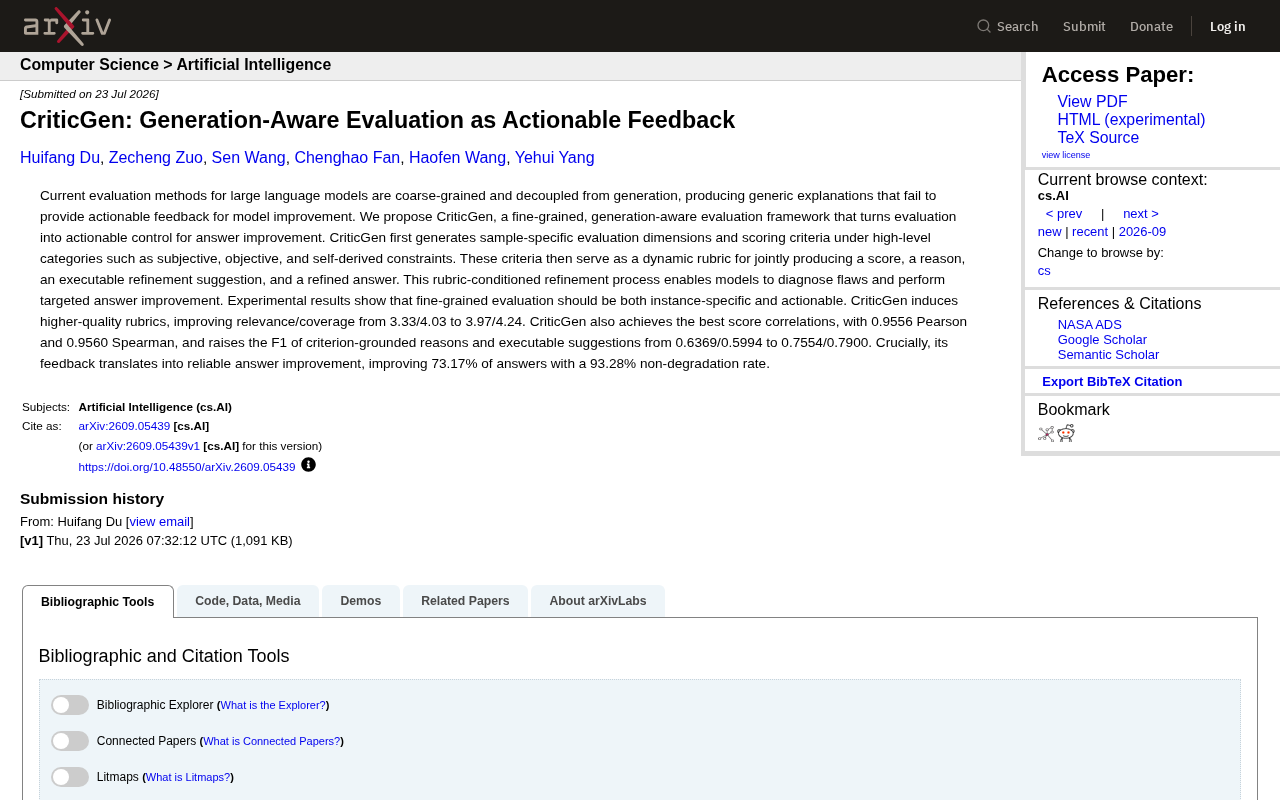
CriticGen: A New Framework That Transforms AI Evaluation into Actionable Improvement Feedback
CriticGen proposes a generation-aware evaluation framework that transforms AI assessment from passive scoring to an active optimization loop, achieving 73.17% answer improvement and 93.28% non-degradation rate.

Vercel AI SDK workflow-harness Update Analysis
Deep analysis of Vercel AI SDK workflow-harness 1.0.107 update: architecture design, engineering practices, and developer value for building reliable AI apps.