After Nvidia Spy Scandal, US Congress Moves to Tighten AI Chip Exports
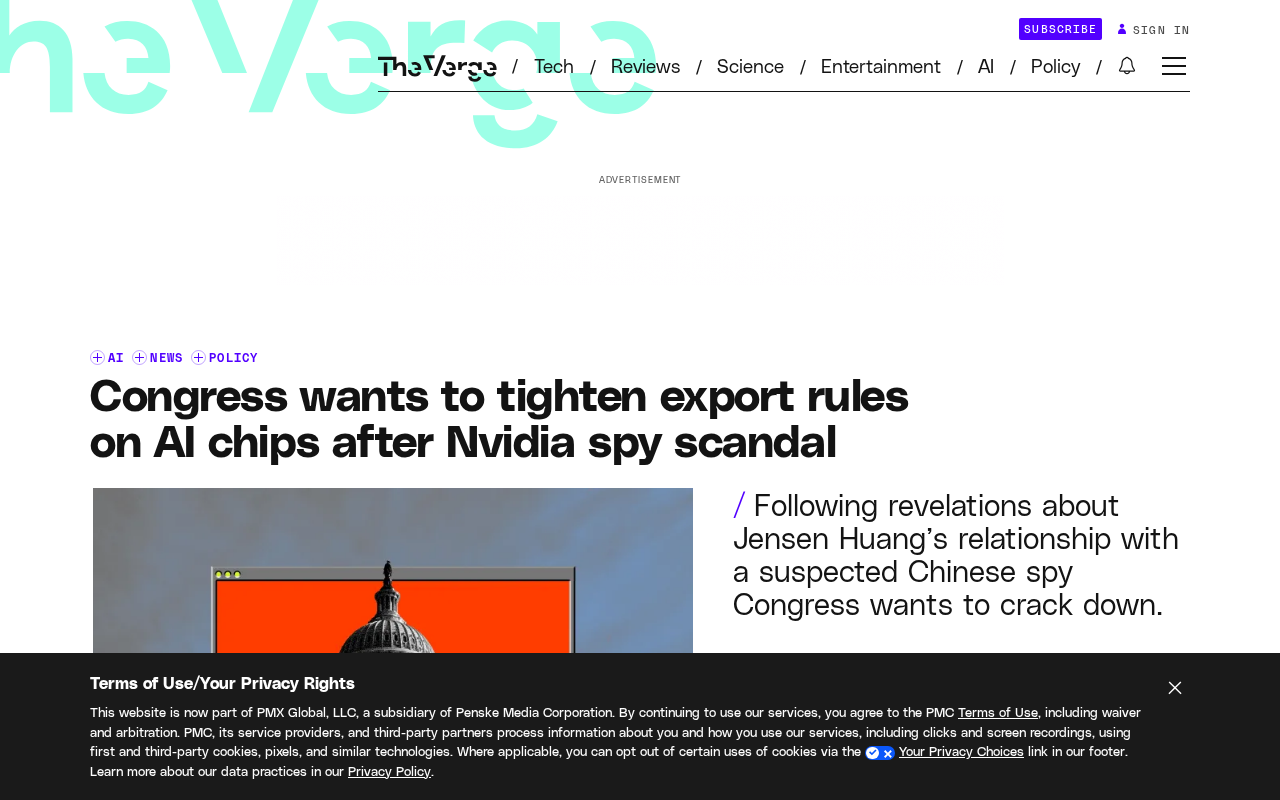
Former Nvidia CEO Jensen Huang's spy scandal escalates, with bipartisan congressional push to tighten AI chip export controls.
The article reports that after a scandal involving former Nvidia CEO Jensen Huang and a suspected Chinese spy, the US Congress quickly responded with rare bipartisan consensus to support tightening AI chip export rules and demand Huang and other Nvidia executives testify. This marks a potential shift from item-based to entity-based controls, with future rules possibly including stricter executive background checks and broader licensing, raising compliance costs for Nvidia.
Background: Spy Scandal Triggers Congressional Action
According to RSS sources, a scandal involving former Nvidia CEO Jensen Huang and a suspected Chinese spy is rapidly becoming the catalyst for the US Congress to tighten AI chip export controls. Following the revelations, Democratic and Republican lawmakers have shown a rare bipartisan consensus, voicing support for various bills to tighten the rules and demanding that Jensen Huang and other Nvidia executives testify before Congress.
This development marks a potential new phase in US restrictions on AI chip exports to China. Previously, export controls focused mainly on computing power thresholds and chip models, but this scandal has shifted attention to executive conduct compliance and security reviews.
US export controls on AI chips to China did not begin with this incident. Since October 2022, the US Department of Commerce's Bureau of Industry and Security (BIS) has repeatedly revised the Export Administration Regulations (EAR), using computing power thresholds (such as total processing performance, TPP, and performance density) as benchmarks to restrict Nvidia's A100, H100, and subsequent China-specific models (such as A800, H800, H20) from being exported to China. The October 2023 rules further expanded the range of restricted chips and introduced the "foreign direct product rule" to prevent circumvention. What makes this congressional action unusual is that the regulatory focus has extended from "chip parameters" to the "people" dimension—executive background checks and conduct compliance—which is relatively rare in US export control practice, suggesting that the compliance logic may shift from item-based controls to entity-based controls.
Bipartisan Consensus: From Division to Joint Pressure
According to the original report, the Senate minority (specific details of their position were not fully presented in the source) and Republicans both expressed support for tightening measures. Such a bipartisan stance is uncommon in the current US political environment, indicating that AI chip export controls have become a priority in national security issues.
Congress is not only seeking legislative tightening but also directly demanding that Nvidia's leadership testify publicly. This move sends a clear signal: lawmakers want to understand Nvidia's specific practices regarding export compliance, executive background checks, and its relationship with the Chinese market.
In the US legislative process, congressional demands for corporate executives to testify are typically enforced through committee subpoenas, which carry legal force; if executives refuse to appear, they may face contempt of Congress charges, theoretically leading to criminal prosecution. Unlike executive branch export controls, congressional legislation, if ultimately enacted, is more enduring and harder to reverse through executive orders. Current AI chip controls on China are mainly based on administrative rules; if Congress pushes for statutory codification, it will raise the political threshold for future policy reversals—one of the deeper motivations behind bipartisan lawmakers' active involvement.
Impact Analysis on the AI Chip Industry
How Export Rules May Change
Although specific bill details were not elaborated in the original material, congressional actions suggest that future tightening may include: stricter executive background checks, broader chip export licensing requirements, and enhanced oversight of corporate compliance systems. For industry leaders like Nvidia, any rule change will have cascading effects.
Rising Corporate Compliance Costs
The demand for executive testimony itself constitutes pressure. Nvidia needs to cooperate with the congressional investigation while balancing its global business footprint. Tightening export controls means companies must invest more resources in compliance reviews, especially concerning sensitive technologies and personnel backgrounds.
Nvidia's global business is highly dependent on the Chinese market. In the fiscal year before the 2022 export controls, the Chinese market accounted for approximately 20% to 25% of its data center business revenue. After the controls took effect, Nvidia launched several "special edition" chips that met the computing power thresholds, but the 2023 rules included performance density in restrictions, subjecting some special models to restrictions as well. Corporate compliance systems typically include export control classification, end-user screening (such as entity lists and unverified lists), and internal training. If executive background check requirements are added, the compliance chain will be further extended, involving coordination among HR, legal, and security departments, with costs and business uncertainty rising simultaneously.
Unresolved Questions and Follow-up Observations
The original report did not fully elaborate on the specific details of the "suspected Chinese spy," the full course of the scandal, or Jensen Huang's current legal status. The Senate minority's complete statement was also truncated. These information gaps mean the incident is still unfolding, and more details may emerge.
Whether the congressional subpoenas for testimony are enforceable, whether Nvidia will voluntarily cooperate, and whether the relevant bills can pass both the Senate and the House are key points worthy of continued attention.
One-line Summary
Former Nvidia CEO Jensen Huang's spy scandal escalates, with bipartisan congressional push to tighten AI chip export controls.
Paragraph Summary
The article reports that after a scandal involving former Nvidia CEO Jensen Huang and a suspected Chinese spy came to light, the US Congress quickly responded, with Democrats and Republicans forming a rare bipartisan consensus to support tightening AI chip export rules and demanding that Jensen Huang and other Nvidia executives testify before Congress. This marks a potential shift in US AI chip controls on China from item-based controls based on computing power thresholds and chip models to entity-based controls involving executive conduct compliance and background checks. The article analyzes that future rules may include stricter executive background checks, broader export licensing requirements, and enhanced compliance oversight, putting leading companies like Nvidia under dual pressure of rising compliance costs and balancing global operations. Since the original report's scandal details, bill content, and Senate minority statements are incomplete, the incident is still unfolding, and follow-up attention should be paid to the enforceability of subpoenas, Nvidia's willingness to cooperate, and the prospects for bill passage.
Related articles

FBI-Warned AI Hacking Tool ARTEX: Cost Disruption and Defensive Restructuring
The FBI-warned AI hacking tool ARTEX reduces penetration testing costs to $150-$1,500, causing financial data breaches and supply chain attacks. Learn how it works, real cases, and a five-step defense strategy.
FBI Warns: ARTEX AI Hacking Tool Breaches Systems in Three Hours
FBI warns the open-source AI pentesting framework ARTEX is being abused, with some intrusions gaining privileged access in under three hours, over 1,600 consoles exposed, and links to South Korean financial data breaches and the ConnectWise supply chain attack.

FBI Warns About Artex: AI-Driven Attack Framework Threatens Cloud Identity Security
FBI warns that the AI penetration testing framework Artex is being used for automated attacks: written in Go and driven by AI agents, it covers the full chain from reconnaissance to data exfiltration. This article analyzes its real threat to cloud identity and privilege security and key defense priorities.