FBI Warns About Artex: AI-Driven Attack Framework Threatens Cloud Identity Security
FBI warns that the AI penetration testing framework Artex is being abused, shifting defense focus to cloud identity and behavioral monitoring.
The FBI warns that an AI-driven penetration testing framework called Artex is being used to launch automated attacks against organizations worldwide. Written in Go and powered by AI agents, Artex chains together reconnaissance, vulnerability discovery, exploitation, privilege escalation, and data exfiltration with almost no human intervention. The article notes that the real threat is not a magic vulnerability but the permission paths formed by trusted identities that can reach large amounts of cloud resources, which automation will repeatedly probe and amplify. Defenders should shift from patching vulnerabilities to watching behavior, focusing on quiet background service accounts and cloud identity signals, with fine-grained permission audits and cross-tenant access verification. Since the warning video lacks concrete cases and technical details, it should be treated as a directional signal.
Why the FBI Is Focused on a "Penetration Testing Framework"
According to a security warning video circulating on YouTube, the FBI has issued a warning: an AI-driven penetration testing framework called Artex is being used to launch automated attacks against organizations worldwide. The key phrase here is "penetration testing framework"—it is not malware itself, but a tool with inherent dual-use offensive and defensive properties. What truly worries defenders is that AI has dramatically lowered the barrier to launching attacks.
The video makes clear that the focus of concern is not some "one-shot kill" magic vulnerability. In other words, Artex's danger does not come from a single point of breakthrough, but from the fact that it links the entire attack chain together. This means defensive strategy must also shift from "patching vulnerabilities" to "watching behavior."
How Artex Actually Works
Artex is written in Go, and its core mechanism relies on AI agents to autonomously advance between tasks. It covers a remarkably complete set of attack phases: reconnaissance, vulnerability discovery, exploitation, privilege escalation, and data exfiltration—with almost no human intervention throughout the process.
Breaking down its functionality, this is closer to an "attack assembly line": AI agents decide what to do next and which target to try, while Go's concurrency and deployment advantages make it easier to run at scale. When attackers can hand the loop from reconnaissance to exploitation over to machines, both labor costs and time costs drop significantly—that is the structural change that automated frameworks bring.
Penetration testing framework is itself a legitimate tool used by security professionals for authorized assessments—common open-source projects include Metasploit and Nmap's companion script collections, whose value lies in standardizing and making reusable steps like reconnaissance, scanning, and exploitation. What makes Artex special is that it uses AI agents to delegate decisions that originally required human judgment to models, upgrading a "tool" into an "assembly line." This also explains why the FBI's warning focuses on the risk of abuse rather than the tool itself—the boundary between the same set of capabilities in authorized testing versus unauthorized attacks depends only on whether the user has permission, and is nearly impossible to distinguish at the technical level.
AI agent refers to a model system capable of perceiving its environment, planning autonomously, and invoking tools to execute multi-step tasks. Unlike single-turn question-answering AI, it emphasizes maintaining state and goals across tasks. In attack scenarios, an agent can decide the next probing target based on the previous scan results, forming a closed loop. The risk of such systems is that their decision speed far exceeds human capability, and multiple instances can run in parallel, making it difficult for defenders to triage alerts one by one manually.
What's Really Being Targeted Is Cloud Identity
The single most important line for defenders to note in the video is this: when a trusted identity can reach a large number of tenants or resources, the privilege itself becomes an attack path that defenders must account for. In multi-cloud and SaaS environments, an ordinary-looking service account or a token granted overly broad permissions is often more dangerous than an unpatched vulnerability.

Combined with AI automation, this path will be repeatedly probed and amplified. Attackers do not need to confront perimeter defenses head-on; they only need to find a "legitimate" identity to move laterally inside the system while appearing compliant. Privilege governance therefore shifts from a compliance topic to a direct offense-defense topic.
Service account refers to a non-human identity used by applications or background tasks in cloud environments. These are typically long-lived, have broad permission scopes, and do not rotate credentials as frequently as employee accounts. Once stolen or abused, attackers can use their existing permissions to move laterally within a tenant without triggering rules aimed at "anomalous logged-in users." In multi-cloud and SaaS environments, a single organization often has hundreds or thousands of such accounts with blurred permission boundaries, making them priority targets for automated tools to probe.
Lateral movement refers to the process by which an attacker, after gaining an initial foothold, uses trusted identities or credentials to gradually expand control within a system. Unlike traditional lateral movement that relies on vulnerabilities, movement based on legitimate identities appears as normal calls in logs and is difficult to identify with signatures or perimeter rules—which is why behavioral baseline monitoring becomes critical.
What Defenders Should Watch
The direction offered by the video is to "watch the quiet services, watch the cloud signals." Quiet services refer to background service accounts that typically generate no obvious traffic but hold sensitive permissions; cloud signals refer to observable events such as authentication, permission changes, and anomalous calls. Small-scale access in the hands of automated tools can quickly escalate into serious consequences.

In practice, this means defenders need more granular permission audits, baseline monitoring of service account behavior, and continuous verification of cross-tenant access. Against AI-driven attacks, static perimeter rules have limited effect—behavioral anomaly detection is the main battleground.
A Measured Assessment
It should be noted that this warning video has limited information density: it does not provide specific attack cases, victim scale, or technical details about Artex, nor does it elaborate on Artex's relationship with "Portlynx." A more reasonable attitude toward this warning is therefore to treat it as a directional signal—AI is "productizing" the capabilities of penetration testing tools, and the time gap between attackers and defenders is being compressed. Governance of cloud identities and permission paths has moved from best practice to necessity.
One-line Summary
FBI warns that the AI penetration testing framework Artex is being abused, shifting defense focus to cloud identity and behavioral monitoring.
Paragraph Summary
The FBI warns that an AI-driven penetration testing framework called Artex is being used to launch automated attacks against organizations worldwide. Artex is written in Go and uses AI agents to chain together reconnaissance, vulnerability discovery, exploitation, privilege escalation, and data exfiltration—with almost no human intervention. The article notes that the real threat is not some magic vulnerability, but the permission paths formed by trusted identities that can reach large amounts of cloud resources, which automation will repeatedly probe and amplify. Defenders should shift from patching vulnerabilities to watching behavior, focusing on quiet background service accounts and cloud identity signals, conducting fine-grained permission audits and cross-tenant access verification. Since the warning video lacks concrete cases and technical details, it should be treated as a directional signal.
Related articles

FBI Warns About AI Hacking Tool Artex: Systems Breached in Three Hours
FBI warns about AI hacking tool Artex: describe targets in natural language for automated scanning and intrusion, with some attacks achieving full privileged access within three hours. It affected over 2,000 Microsoft 365 organizations and South Korean banks. Copies still circulate after the developer took it down in October; security fundamentals remain key.
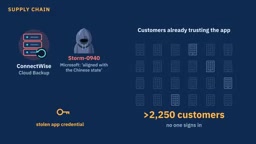
FBI-Warned AI Hacking Tool ARTEX: Cost Disruption and Defensive Restructuring
The FBI-warned AI hacking tool ARTEX reduces penetration testing costs to $150-$1,500, causing financial data breaches and supply chain attacks. Learn how it works, real cases, and a five-step defense strategy.
FBI Warns: ARTEX AI Hacking Tool Breaches Systems in Three Hours
FBI warns the open-source AI pentesting framework ARTEX is being abused, with some intrusions gaining privileged access in under three hours, over 1,600 consoles exposed, and links to South Korean financial data breaches and the ConnectWise supply chain attack.