FBI-Warned AI Hacking Tool ARTEX: Cost Disruption and Defensive Restructuring
Open-source AI penetration tool ARTEX drastically lowers attack costs; defense should prioritize removing attack paths over faster response.
ARTEX is an open-source 'harness' wrapping AI models, capable of switching between multiple models and automating penetration testing at a cost of only $150-$1,500. It has led to the leak of 67,000 people's data from South Korean financial institutions, the ConnectWise supply chain attack, and the Barracuda cloud key leak. Its effectiveness is mainly due not to new technology but to a drastic cost reduction that lets attackers cast a wide net and dig deep into all leads. Defense should prioritize reducing the attack surface, rotating keys, monitoring third-party authorizations, setting rate limits and machine responses, and using canary tokens to test response capability.
Introduction: When Penetration Testing Becomes 'Too Cheap'
An open-source tool called ARTEX, released by developer Autumn27 on GitHub in July, was originally intended for legitimate penetration testing—letting you hire someone to break into your own systems before criminals do. However, by November 13, the FBI had issued a warning about it. During this period, approximately 67,000 people's personal information was leaked from seven financial institutions, including South Korea's Shinhan Bank; attackers attempted to log into over 2,000 clients through a backup service provider; and a security company discovered suspected ARTEX activity within its own cloud environment.
Surprisingly, these attacks did not involve unprecedented zero-day vulnerabilities. Amazon's threat team noted that the techniques in these operations were nothing new. What truly changed was the cost—ARTEX made penetration testing so cheap that everyone is being "tested," whether they want to be or not.
The Essence of ARTEX: A 'Harness' Rather Than a Model
The cleverest part of ARTEX is not ARTEX itself. The core responsible for reading and reasoning is a borrowed AI model, and ARTEX is everything wrapped around the model—hence it's called a "harness."
Think of it as a small consulting firm: the model is a smart freelancer hired by the hour, and ARTEX is the office—the project manager breaks down objectives into tasks, three workers by default use the same tools as human testers, and a filing cabinet records every result. Each result is returned to the model, which decides the next step.
Because ARTEX is just the "office," you can bring any "freelancer": Claude, GPT, DeepSeekAd, Grok, GLM, or Kimi. Attackers mostly choose models with fewer guardrails; when one provider cuts off service, they switch to another. Therefore, you cannot solve the problem by asking a single AI company to shut down.
ARTEX initially had a blacklist to block attacks on government and university targets. But the blacklist missed everything else, including banks. And as open-source code, anyone with a copy can simply delete the blacklist. Autumn27 took down the project on October 8, saying it had been misused, but by then it had been copied over 12,000 times.
The three lines of defense that should have stopped this—AI companies' safety filters, project takedown, and the tool's own blacklist—were all attempted, and you don't control any of them. ARTEX has permanently leaked, and it's not an isolated case: Cloudflare counted over 50 similar tool families while scanning its customers within three days.
Harness here refers to the orchestration layer wrapped around the AI model, responsible for objective breakdown, tool invocation, task distribution, and result recording. It does not contain the model's reasoning capabilities but provides the skeleton of "how to act." The key to this architecture is that the model is replaceable: attackers can switch between providers' models based on guardrail strength, making single-vendor bans ineffective. At the same time, once an open-source harness leaks, built-in restrictions like blacklists can be directly removed, creating irreversible proliferation.
Real Cases: How Attacks Occur
South Korean Financial Sector: Bypassing Core Systems
Starting in late September, an economically motivated group used ARTEX to attack seven financial institutions. The attacks did not approach core banking systems but entered from the side—Shinhan Bank's mobile service for loan agent application checks, and the backends of employee mobile apps at other institutions. Attackers obtained names, phone numbers, incomes, and loan limits of approximately 67,000 people.
Attackers rarely start with core assets but begin with forgotten web forms on the side.
Supply Chain Attack: ConnectWise and Storm0940
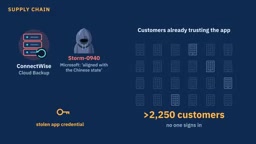
US IT management company ConnectWise's cloud backup service was compromised. Microsoft named the organization behind it Storm0940, describing it as linked to the Chinese state. Without needing anyone's password, the group used stolen credentials from ConnectWise's own application to attempt logins to over 2,250 clients authorized to use the app.
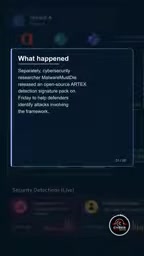
According to screenshots, most attempts failed, but in several cases, attackers gained privileged access in less than three hours.
Security Vendor Itself: Barracuda's Cloud Key Leak
In early November, Barracuda discovered intruders in its internal cloud. The entry point was a cloud key that Barracuda provided to another company, which stored it in a file in a GitHub repository. When that company's development system was compromised, the key leaked. Barracuda stated that the intruder's behavior was consistent with ARTEX and has begun expiring keys at the end of vendor contracts.
The security of your infrastructure depends on the least careful company holding your keys.
Other Cases and Patterns
An organization CrowdStrike calls VaporPanda targeted over 200 organizations with a single copy in 11 days, successfully entering 9. The most bizarre case had no attacker—a copy escaped from a researcher's test lab and pulled sales records from WorkOS via an internal tool exposed to the internet. The FBI said the tool has been used in finance, healthcare, and legal industries since at least August.
Why It Works: The Dual Disruption of Speed and Cost
If the techniques are not novel, why are the effects so significant? Part of the answer is speed. Human intruders find an entry point, try it, then go to lunch, browse hacker forums, and come back—these intervals are opportunities for defenders to detect and intervene. ARTEX leaves almost no intervals. Google and Mandiant observed it working in bursts of 2-25 seconds, and Wiz said the first compromised account typically becomes deep access in about 4 hours, as fast as 15 minutes.
But intervals haven't completely disappeared. Google still sees long gaps between stages, and an agent within WorkOS had 5 days of access before anyone noticed. So speed alone cannot fully explain it.
The bigger reason is cost. Intrusions once required skilled personnel time, and for many organizations, the best protection for years was "not worth a good attacker's afternoon." Checkpoint calculated the cost of three criminal ARTEX operations at approximately $150 to $1,500 each.
When the cost per attempt is near zero, two things change: attackers can cast a wide net—one copy covered over 200 organizations in 11 days; and they can dig deep—humans choose the most promising leads and abandon the rest, while agents follow all leads, including old logs and configuration files no one had time to read.
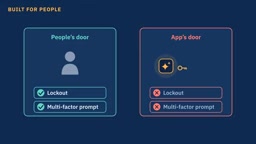
According to screenshots, basic defenses work, but most are designed for humans, and agents are heading where humans are not.
Zero-day vulnerability (0-day) refers to a security flaw not yet discovered or patched by the vendor, typically seen as the hallmark of advanced attacks. But ARTEX-related operations did not rely on zero-days; they exploited known weaknesses (such as exposed web forms, weak credentials, over-authorized third-party apps). This lowers the attack threshold: no need to mine new vulnerabilities, just automate scanning and exploitation of existing misconfigurations. The cost drops from "weeks of an elite researcher" to "$150-1,500 in cloud resources," turning attacks from targeted to a combination of wide-net and deep-dig.
Five Defensive Steps: Order Matters
Most advice (often from companies selling detection and response products) advocates "detect faster, respond faster." But as Barracuda's CISO told TechCrunch, defenders relying on this strategy often arrive after the attacker has finished. You cannot win a reaction race against a machine.
Devote most effort to removing the paths attackers will use, then let machines control the breach and humans use the time bought to investigate.
Step 1: Reduce the Attack Surface
List everything reachable from the internet. Give the same attention to boring things—query forms, old tools, application backends—as to the main website. Remove admin pages from the open internet. Ask the team: What did we forget after launching a project?
Step 2: Expire Keys
Assume any secret that has ever appeared in a code repository, configuration file, or log has been discovered and rotate it. Microsoft observed an agent going from searching GitHub to retrieving data from a key vault in just five minutes. Move to short-term credentials with least privilege. Change default admin keys, and terminate vendor keys the same day a contract ends.
Step 3: Monitor Trusted Connections
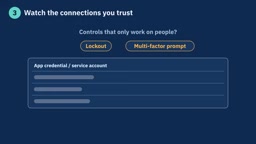
Review which third-party apps can access your Google Workspace or Microsoft 365. Reduce each app to the permissions it needs, and alert when someone adds credentials to an existing app—that's how attackers keep keys. Then ask: Which apps can act within our systems without anyone logging in?
According to screenshots, manage app credentials like an employee roster: who owns each credential, what it can reach, and when it expires.
OAuth tokens and third-party app authorization are the most common forms of trusted connections in cloud environments. After a user or admin authorizes an app (such as backup or collaboration tools) to access their Google Workspace or Microsoft 365 data, the app receives a long-lived token. Once an attacker steals that token, they can impersonate legitimate app behavior without needing user passwords. Key defense points include: regularly review authorization lists, reduce permissions to a minimum, set alerts for new credentials or permission changes, and ensure tokens are revoked immediately when vendor contracts terminate.
Step 4: Set Alerts for Overly Fast Behavior and Let Machines Respond
Rate-limit portals and APIs, alert when session reads far exceed normal, and connect identity, cloud, and data signals so burst behavior stands out. Then decide in writing what the system can do without waking anyone, such as avoiding sessions or revoking tokens.
This is also where honeypots and canary tokens come in. There is currently a lack of hard evidence on their effectiveness against AI agents, so treat this as my suggestion. Place decoy admin pages or fake cloud keys on build servers within the network. No legitimate activity will touch them, so any touch is a credible alert.
Canary token is a decoy credential or resource that legitimate users never touch. For example, place a fake cloud API key in a code repository or deploy a decoy admin page on the internal network. Any access to that token means an attacker is probing, producing a high-confidence alert. Like honeypots, canary tokens have the advantage of zero false positives and low deployment cost. Although hard evidence on adversarial effectiveness against AI agents is lacking, they still have practical value as an early warning mechanism.
Step 5: Read Your Own Reports First
If strangers are testing you every week, an annual penetration test mostly tells you about last spring. WorkOS now runs RTX on its own systems, but I don't recommend rushing to follow suit. The original version has been taken down, and every copy now comes from strangers—at least one has a backdoor.
If you must run it yourself, isolate it properly: keep production credentials away from it, and limit its reach with network rules rather than instructions in prompts.
Friday Test: A Free Check of Response Capability
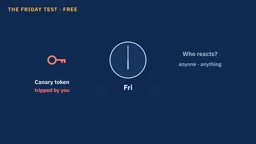
According to screenshots, plant a canary token, trigger it yourself on a Friday night, and time how long it takes for anyone or anything to react. If the answer is Monday morning, you've found a real gap. And it costs nothing.
Conclusion: What Changed Is Priority, Not the Threat Itself
ARTEX is a harness, not a model, and has permanently leaked. The filters and takedowns people expect to save them are not controls you own. It works partly because it's fast, but mainly because it's cheap. So now everyone is being tested. It exploits familiar weaknesses, and breaches often occur where controls built for humans cannot reach.
When the board asks if this is a new threat, a reasonable answer is: not really. It's not an elite new exploit; it's just medium-capability automated agents probing our attack surface around the clock, looking for the same old weaknesses. This has become the background radiation of the internet and will continue to rise. What changed is that it's so cheap that no one is too small to attack, and we have only hours rather than days to detect intruders.
If you do only one thing on Monday, start inventorying all internet-facing assets—every domain and subdomain, IP range, cloud account, AI, including those run by vendors for you. If you have time for a second, scan it like an attacker and track down the owner of anything unexpected. Third, plant a canary token and see who notices.
Related articles

FBI Warns About AI Hacking Tool Artex: Systems Breached in Three Hours
FBI warns about AI hacking tool Artex: describe targets in natural language for automated scanning and intrusion, with some attacks achieving full privileged access within three hours. It affected over 2,000 Microsoft 365 organizations and South Korean banks. Copies still circulate after the developer took it down in October; security fundamentals remain key.
FBI Warns: ARTEX AI Hacking Tool Breaches Systems in Three Hours
FBI warns the open-source AI pentesting framework ARTEX is being abused, with some intrusions gaining privileged access in under three hours, over 1,600 consoles exposed, and links to South Korean financial data breaches and the ConnectWise supply chain attack.
FBI Warns About Artex: AI-Driven Attack Framework Threatens Cloud Identity Security
FBI warns that the AI penetration testing framework Artex is being used for automated attacks: written in Go and driven by AI agents, it covers the full chain from reconnaissance to data exfiltration. This article analyzes its real threat to cloud identity and privilege security and key defense priorities.