After the Right to Vote Was Lost: The Hidden Costs to American Democracy

After Democrats' voting rights legislation failed, restrictive state laws and Supreme Court rulings combine to undermine American democracy.
This article examines the chain of changes in the U.S. electoral ecosystem after Democrats failed to pass the John Lewis Voting Rights Advancement Act and the Freedom to Vote Act. With federal legislation absent, multiple states have passed restrictive voting laws, such as New Hampshire not recognizing student IDs, raising thresholds for young and transient voters. Meanwhile, the Supreme Court has weakened the Voting Rights Act and allowed unconstrained partisan gerrymandering, making it harder for voters of color to elect representatives. Voting obstacles and unfair districts may trigger a chilling effect, suppressing minority turnout and creating a vicious cycle of representation deficits. The article argues Holder's warning is becoming reality and restoring voting rights protections requires legislative and judicial coordination.
The foundation of American democracy rests on the right to vote, but as legislative protections repeatedly stall, the consequences are quietly emerging. This episode starts from a conversation to explore what changes have occurred in the U.S. electoral ecosystem after Democrats failed to pass the John Lewis Voting Rights Advancement Act and the Freedom to Vote Act.
Legislative Defeat and Democratic Concerns
The conversation notes that during the Biden administration, Democrats failed to advance the John Lewis Voting Rights Advancement Act. Former Attorney General Holder once warned: "If we don't succeed on H.R.1, I genuinely fear our democracy will suffer fundamental and irreparable damage." Some considered these remarks exaggerated at the time, but in retrospect, their warning cannot be ignored.
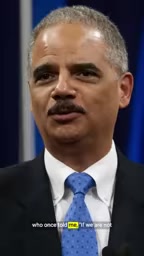
Legislative efforts being blocked is not the end point, but the starting point of a chain reaction. Failing to pass the Freedom to Vote Act and the John Lewis Voting Rights Advancement Act meant losing the opportunity to establish uniform federal election standards, allowing states to act independently.
The John Lewis Voting Rights Advancement Act and the Freedom to Vote Act are two pieces of federal election reform legislation advanced by the Democratic Party in the 117th Congress (2021-2022). The former, named after civil rights leader John Lewis, had as its core goal repairing the Section 5 "preclearance" mechanism of the Voting Rights Act that the Supreme Court struck down in Shelby County v. Holder in 2013, requiring states with a history of discrimination to obtain approval from the federal Department of Justice or a court before changing election laws. The latter was a comprehensive reform covering automatic voter registration, Election Day as a holiday, curbing partisan gerrymandering, and limiting campaign finance transparency. Both bills failed in the Senate due to Republican opposition and the filibuster rule, thwarting efforts to establish uniform federal election standards.
The Wave of Restrictive State Legislation
In recent years, multiple states have continued to pass wave after wave of restrictive voting legislation, creating obstacles for eligible voters. For example, New Hampshire does not allow student IDs as voter identification, and such policies directly increase the difficulty for young voters and transient populations to participate in elections.
These laws often masquerade under the banner of "election security" while actually tightening voter qualification verification. For racial minorities, low-income groups, and young voters, obtaining compliant identification documents is more costly, effectively raising the threshold for voting.
Voter ID Laws require voters to present specific types of photo identification at polling stations. Supporters call them necessary measures to prevent election fraud, but research shows that voter impersonation is extremely rare. Critics point out that such laws impose disproportionate burdens on racial minorities, low-income individuals, young people, and transient populations, because obtaining compliant documents like passports and driver's licenses requires time and money. New Hampshire's non-recognition of student IDs is one example: college students legally residing in the state cannot use campus identification to vote, effectively raising the participation threshold for young voters. Since the 2020 election, multiple states have passed such laws, forming a wave of restrictive legislation.
The Supreme Court and the Erosion of the Voting Rights Act
Meanwhile, the Supreme Court has continuously weakened the effectiveness of the Voting Rights Act and allowed completely unconstrained partisan gerrymandering. This means voters of color have greater difficulty electing candidates who represent their will—district lines are used as political tools rather than reflecting community diversity.
The Freedom to Vote Act originally sought to curb partisan gerrymandering, while the John Lewis Voting Rights Advancement Act aimed to restore the preclearance provisions of the Voting Rights Act. Neither piece of legislation passed, leaving these protective mechanisms absent.
Partisan Gerrymandering refers to the ruling party using its redistricting power to concentrate or disperse opposition voters into a minority of districts through strategies such as "packing" and "cracking," thereby winning a majority of seats even without a majority of the total vote. In 2019, the Supreme Court ruled in Rucho v. Common Cause that federal courts have no authority to hear constitutional disputes over partisan gerrymandering, treating it as a "political question" and effectively giving the green light to unconstrained partisan districting. This made the federal standards attempted in the Freedom to Vote Act, such as independent redistricting commissions, particularly crucial, and the bill's failure left state redistricting powers without checks and balances.
Chilling Effects and Lack of Representation
When voting obstacles increase and district lines are unfair, voters' willingness to participate is discouraged. Especially in minority communities facing institutional barriers, turnout may decline, creating a vicious cycle: the weaker the representation, the harder it is for policies to reflect their needs.
This impact is not abstract. From student IDs not being recognized to districts being carefully carved up, every link diminishes the equal value of "one person, one vote." The quality of democracy is reflected not only on Election Day but also in the design of election rules.
Chilling Effect originally refers to laws or policies suppressing free speech through deterrence. In the context of voting rights, it describes the phenomenon where, when voting procedures become complex, uncertain, or punitive, eligible voters voluntarily give up voting for fear of making mistakes, being rejected, or facing legal risks. For example, strict ID requirements or restrictions on voting assistance may discourage voters unfamiliar with the process. This effect is particularly pronounced in minority and low-income communities, as these groups have historically experienced election intimidation and discriminatory enforcement. The chilling effect does not directly deprive people of the right to vote, but it reduces participation rates through psychological and behavioral mechanisms, thereby weakening representation.
Unfinished Legislation and Future Choices
Was Holder's warning excessive? Looking at the current situation, the combined effects of restrictive legislation and judicial rulings have posed a substantive threat to voting rights. Legislative failure is not the end point but the beginning of an era where states act independently and federal protections are absent.
In the future, restoring voting rights protections requires both legislative and judicial efforts. For those concerned about democratic health, voting rights should not be a partisan issue but the baseline for institutional survival. When voting rights lose protection, what is damaged is not only minority groups but the legitimacy of the entire democratic system.
One-line Summary
After Democrats' voting rights legislation failed, restrictive state laws and Supreme Court rulings have combined to erode the foundations of American democracy.
Paragraph Summary
This article starts from Democrats' failure to pass the John Lewis Voting Rights Advancement Act and the Freedom to Vote Act to explore the chain of changes in the U.S. electoral ecosystem. With federal legislation absent, multiple states have passed restrictive voting laws—such as New Hampshire not recognizing student IDs—raising the voting threshold for young voters and transient populations. Meanwhile, the Supreme Court has weakened the Voting Rights Act and allowed unconstrained partisan gerrymandering, making it harder for voters of color to elect representatives. Voting obstacles and unfair districts may trigger a chilling effect, suppressing minority turnout and creating a vicious cycle of representation deficits. The article argues that Holder's warning is becoming reality, and restoring voting rights protections requires legislative and judicial coordination—voting rights should be an institutional baseline, not a partisan issue.
Related articles

One Person Producing 90 Episodes of AI Anime Shorts: The Complete Production Workflow in 10 Hours for 10 Yuan
No screenwriting experience needed for AI anime shorts: 10 hours and 10 yuan in costs, 4,200 yuan earnings per work on Hongguo. This article breaks down the complete six-step workflow from AI-generated scripts and storyboard scripts to the finished film, with a universal questioning formula and beginner pitfall guide.
Build a Quote Calculator with Doubao Agent: Stop Guessing Your Freelance Rates
A Bilibili creator uses Doubao Agent to build a no-code quote calculator that auto-generates itemized quotes with rush and copyright buyout rates, one-click copy, and mobile quoting.

WorkBuddy Hands-On Tutorial: 10 Agent Projects from Beginner to Resume-Worthy
WorkBuddy tutorial: a Chinese-language AI work assistant with simpler setup than Codex or Claude Code. 10 hands-on Agent projects for beginners, resume-ready.