Agent Developer: The High-Paying AI Role No One Can Fill — And How to Break In
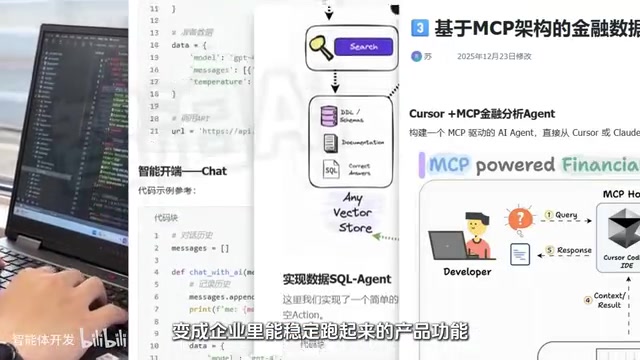
Agent Developers bridge AI and business — here's why they're scarce and how to break in.
Agent Developers are the rarest hybrid talent in today's AI industry: engineers who can turn LLM capabilities into stable, production-ready business features. The shortage stems from a structural mismatch — algorithm experts lack business context, and business professionals lack AI engineering skills. For newcomers, the article outlines a practical four-step path: prompt engineering, RAG knowledge base setup, Agent workflow design, and real-world portfolio building. It also cautions that "2–3x salary" claims can be inflated, and that true competitiveness requires the hard-won ability to ship reliable systems from ambiguous requirements.
When major tech companies are offering starting salaries with two to three times the pay of entry-level positions, a previously obscure new job title is rising fast — the Agent Developer. ByteDance, Meituan, Alibaba, and Tencent are all competing for this talent, yet genuinely qualified candidates are vanishingly rare.
This isn't just a salary bubble. It reflects a real pain point companies face when trying to deploy AI in practice: they want to use it, but almost no one can actually make it work in production.
What Does an Agent Developer Actually Do?
In one sentence: an Agent Developer's job is to turn the capabilities of large language models into product features that run reliably inside a company.
There's a common misconception here. When people hear "Agent development," they often picture deep learning, Transformers, attention mechanisms — hardcore algorithm work. But that's the domain of research scientists and paper-writers. Agent development is a pure engineering role, and the skills it demands are completely different.
It comes down to three things: breaking down business processes, integrating with various tools, and making sure the system doesn't fall apart when something goes wrong. Put simply — a user asks a question, and the system you built can independently decide which tools to call, which path to follow, and ultimately deliver a reliable answer, without anyone directing it step by step.
Why Is This One of the Hardest Roles to Hire For?
On the surface, Agent development looks like "calling APIs with an AI twist" — the barrier seems low. But take a real look at the job market and you'll find it's one of the hardest positions for companies to fill right now.

The reason is a structural talent mismatch: people who know algorithms don't understand business; people who understand business don't know AI; and the rare few who can bridge both sides are almost nonexistent. That intersection is exactly where Agent development lives.
From a business perspective, what executives actually care about is very concrete: Can AI plug into business workflows to cut costs and boost efficiency? Can processes be standardized? Can AI genuinely replace human labor? Will things break after going live? None of these questions can be answered by algorithms alone — they require engineers who understand both business logic and AI tooling. Nail that real-world need, and the value of this role rises naturally.
A Four-Step Path for Newcomers
For anyone looking to ride this wave, the core approach can be summed up in three words: learn by doing. You don't need to start by digging into low-level algorithms. Follow these four steps, one at a time.

Step 1: Prompt Engineering
Start by learning how to get large language models to consistently produce the output you want. By the end of this step, you'll have your first working artifact — auto-generated meeting notes, daily reports, or sales scripts. The key shift here is moving from "using AI" to "directing AI."
Step 2: RAG Knowledge Base Setup
RAG (Retrieval-Augmented Generation) is about feeding a company's own documents to the AI so its answers are grounded in evidence rather than fabricated. After this step, you can build a private knowledge base for your team — one of the most common and most demonstrable AI capabilities companies want.
What is RAG? RAG is currently one of the most mainstream technical approaches for enterprise AI deployment. It works in two phases: first, internal company documents (product manuals, FAQs, contract templates) are split into small chunks and converted into vector embeddings stored in a database. When a user asks a question, the system retrieves the most relevant text snippets from the vector database and sends them along with the question to the LLM to generate a grounded answer. This solves two core LLM problems: "hallucination" (making up information that doesn't exist) and the knowledge cutoff problem (inability to access information after the training data ends). Compared to fine-tuning a model, RAG is far cheaper and more flexible to update — companies only need to maintain their document library to keep the AI's knowledge current. This makes it the most commonly delivered capability module for Agent engineers.
Step 3: Agent Workflows
Learn to chain multiple AI components into an automated pipeline, turning inputs into outputs end-to-end with no human intervention. This is the most central deliverable for an Agent engineer: taking a vague business requirement and turning it into a stable, automated process.

What is an Agent workflow? The core concepts are "tool use" (Tool Use / Function Calling) and the "plan-execute" loop. An LLM by itself can only generate text — but give it the ability to call external tools (search engines, database queries, code execution, sending emails, etc.) and it can break a complex task into subtasks, invoke different tools in sequence, and aggregate the results. Popular workflow frameworks include LangChain, LlamaIndex, AutoGen, and low-code platforms like ByteDance's Coze. The engineer's value lies in designing sensible task decomposition logic, handling fallback strategies when tool calls fail, and ensuring the entire pipeline doesn't crash on unexpected inputs. This is why "system reliability" gets emphasized repeatedly — no matter how elegant the flow design, if it's unstable in production, it's worthless.
Step 4: Build with Real Scenarios
Don't wait for someone to walk you through it. Pick a workflow from your own daily work and rebuild it from scratch using AI. Once it actually runs, it's no longer a toy — it's your portfolio. And in an interview, that's your strongest proof of capability.
A Grounded Perspective
The logic of this path is clear: from prompt engineering to RAG to Agent workflows, the difficulty ramps up gradually, and each step produces a tangible deliverable. This "build-your-portfolio-as-you-learn" approach is genuinely accessible for career changers.
That said, it's worth being level-headed about the salary figures being advertised. The hiring demand is real — but claims like "entry-level roles paying two to three times your current salary" often carry the flavor of enrollment marketing. Actual compensation varies widely by city, company size, and individual skill level. Agent development, as an engineering role, may not require deep algorithm knowledge, but the bar for business understanding, system design, and production stability is not low at all. The ability to truly "hold the system together" takes sustained real-world practice to develop.
It's absolutely a direction worth investing in — just don't mistake it for an easy shortcut. The real competitive moat will always be the same: can you turn an ambiguous requirement into a system that runs reliably in production?
Related articles

From Enterprise Practice to a Reusable Template: Lessons from Building an AI Agent
A developer shares an open-source AI Agent template built from an enterprise project, covering natural language data Q&A, analysis, auto-generated PPTs, and email distribution.

Nintendo's Open-World Design Evolution: Breaking Down Fire Emblem Fortune's Weave
Nintendo brings the open-world design philosophy of Breath of the Wild to Fire Emblem with the massive Switch 2 title Fortune's Weave. Here's what it means.
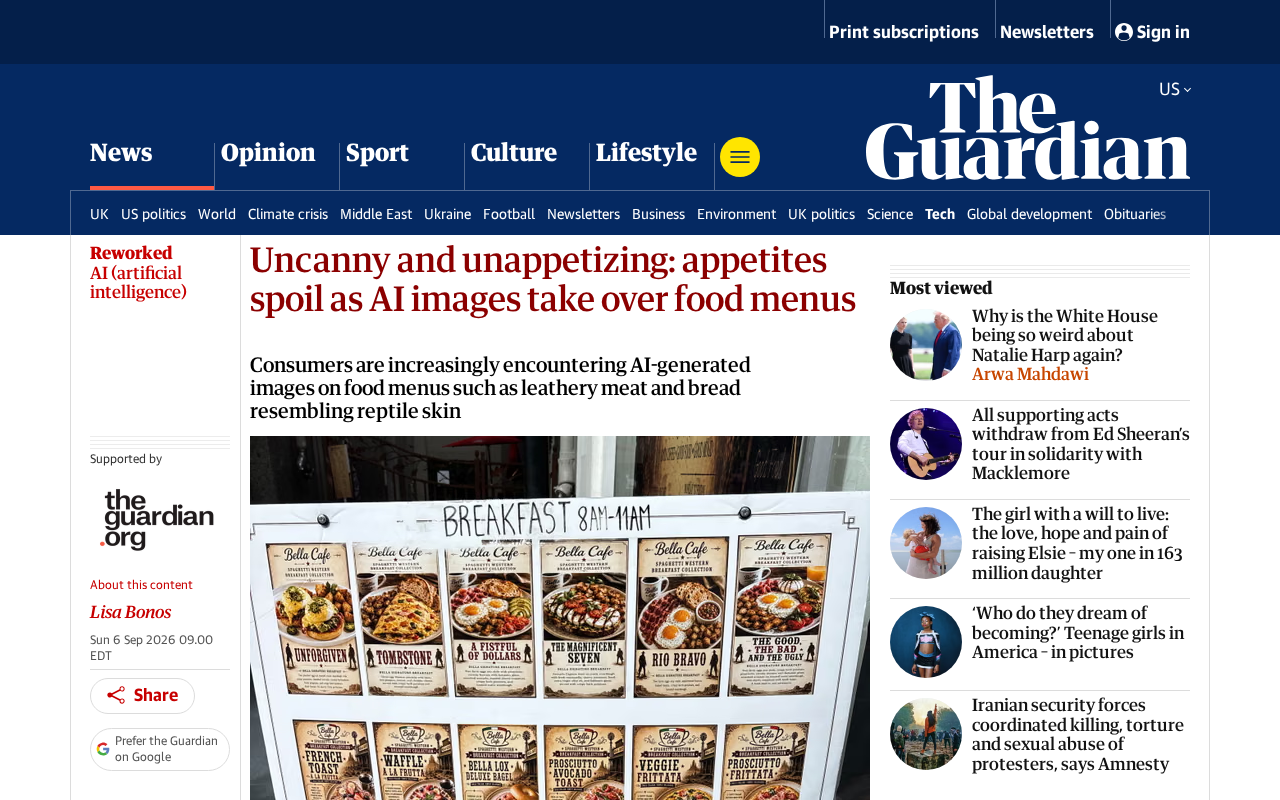
AI-Generated Food Photos Are Ruining Menus: How the Uncanny Valley Kills Appetite
AI-generated food images are flooding restaurant menus and delivery apps, but uncanny details kill appetite instead of sparking it. Here's why the uncanny valley effect hurts brands.