Agent Led Growth: Unpacking the New Paradigm of AI Agent-Driven Growth

When coding agents make tech choices, growth shifts from targeting humans to optimizing for AI preference.
As coding agents like Cursor and Claude Code increasingly make autonomous technology decisions, a new growth paradigm called Agent Led Growth is emerging. Gauge, a new product, helps developer tools optimize for agent preference and integration experience — essentially SEO for AI agents. With customers like Supabase and PostHog already on board, the concept signals a fundamental shift in how developer infrastructure companies drive adoption.
When Your Customer Is No Longer Human: A Quiet Shift in Growth Paradigms
In the SaaS world, we've grown accustomed to the logic of PLG (Product Led Growth): build a product good enough that users onboard themselves, pay themselves, and spread the word themselves. But as more and more code is no longer written by developers' own hands, but autonomously generated by coding agents like Cursor, Claude Code, and GitHub Copilot, a pointed question emerges — if the AI agent is the one actually deciding which tool to use, shouldn't the target of growth change accordingly?
Gauge, a product that recently launched on Product Hunt, offers a rather ambitious answer. Its tagline is refreshingly direct: "Agent Led Growth: Get written into every customer's codebase." The concept might sound convoluted at first, but the insight behind it deserves serious unpacking.

Core Insight: Coding Agents Are Making Technology Choices on Behalf of Developers
Gauge's thesis is built on something that's already happening: coding agents are no longer just chat-based Q&A tools — they're autonomously implementing product integrations. In their own words: "Unlike AI chat, coding agents are implementing products autonomously. They're doing so without ever talking to a sales rep or taking a demo."
This statement exposes a fracture point in the traditional growth funnel. In the past, a developer integrating an API or SDK would read documentation, check comparison reviews, and possibly go through a sales process. Now, when a developer tells an agent "add user authentication" or "hook up a database," it's the agent that decides in seconds which service to call and which import statement to write. This decision process involves neither marketing outreach nor sales intervention — it happens within the model's weights and context.
In other words, the "last mile" of technology selection is shifting from humans to agents. Whoever can claim a place in an agent's "default choices" wins this new growth war.
Gauge's Product Logic: Optimizing for Agent Preference
Gauge's product logic becomes clear from this perspective. It claims to "run real coding sessions to identify actions to improve the agent's preference, and the agent experience once you're selected."
This can be understood as an entirely new form of "SEO" — except the optimization target has shifted from search engine crawlers to coding agents. It operates on two levels:
Level One: Getting Selected (Preference)
How do you make an agent more likely to choose your product when faced with multiple similar tools? This likely involves factors such as documentation structure, naming conventions, clarity of code examples, and frequency of appearance in training corpora and public repositories. An agent's "preference" largely stems from how many correct usage patterns of your product it has encountered.
Level Two: Getting Used Well (Experience)
Once selected, can the agent smoothly and correctly complete the integration? If the API design is counterintuitive, error messages are vague, or documentation doesn't match actual behavior, the agent will likely give up midway or produce buggy code, ultimately leading to integration failure. Gauge exposes these friction points by running real coding sessions.
Together, these two levels are essentially answering one question: Is your product AI-friendly?
What the Customer List Reveals About Market Signals
Gauge's listed customers carry significant weight: Supabase, OpenRouter, Resend, PostHog, Mintlify, Braintrust, and others. These names share a common trait — they're all developer-facing infrastructure products that are highly dependent on "being integrated" to drive growth.
Supabase provides database and backend services, Resend is an email API, OpenRouter is an LLM router, PostHog handles product analytics, and Mintlify itself is a documentation tool. For companies like these, being written into a codebase is equivalent to being locked into a product, with extremely high switching costs. Their early bet on Agent Led Growth signals that this logic is proving valuable first in the developer tools space.
You might not have noticed, but Mintlify's presence on that list is particularly telling — it's a documentation tool, and documentation is precisely the primary entry point through which agents understand a product. This indirectly confirms that "optimizing documentation for agents" is becoming a real business.
A Measured Take: Novel Concept, Still Needs Validation
As a product that just debuted on Product Hunt with 71 upvotes and a #20 ranking, Gauge is currently more about proposing a thought-provoking concept than delivering a methodology validated at scale. Several questions are worth watching:
First, can agent "preference" be reliably measured and influenced? LLM selection behavior is shaped by training data, prompts, version iterations, and many other factors. Optimization tactics that work today might become ineffective after the next model update.
Second, there's a subtle ethical boundary here. If optimization goes too far and becomes manipulation of agent choices through various tactics, it's no different in essence from black-hat SEO in the search era — and may not benefit the developer ecosystem in the long run. The truly healthy direction should be: making your product clearer, more standardized, and easier to use correctly, thereby naturally earning agent preference.
Finally, this logic currently holds only in the specific lane of developer tools. For broader consumer or enterprise software, agents have not yet become the primary decision-makers in technology selection.
Conclusion: The Growth Evolution from PLG to Agent Led Growth
From SEO to PLG, and now to the emerging Agent Led Growth, every shift in growth paradigm is driven by a fundamental change in how users are reached. Gauge's value isn't in whether it's the ultimate solution, but in its sharp identification of a trend taking shape — in the era of AI coding, your first "user" is very likely an agent.
For any team building developer tools, the pragmatic takeaway is this: it's time to seriously examine what happens when a coding agent tries to integrate your product. Can it smoothly read the docs, write the correct code, and complete the integration end-to-end? That might be a more worthwhile investment than building yet another landing page.
Related articles
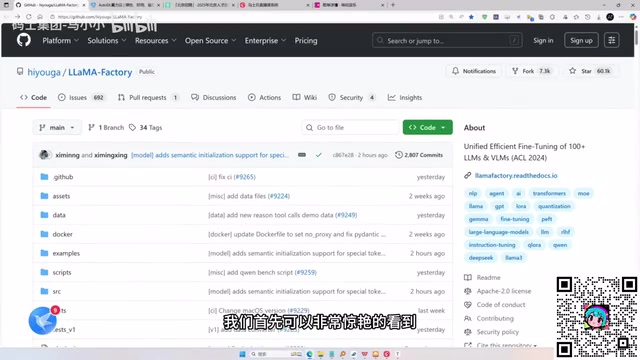
LLaMA-Factory in Practice: A Complete No-Code Guide to Fine-Tuning Large Models
An introduction to LLaMA-Factory, the open-source fine-tuning tool: its 60.1K-star background, supported models and algorithms, local vs. cloud deployment, and CUDA setup steps.

Zeng Ming's Deep Retrospective: Why OpenAI May Not Be the Ultimate Winner — and Why the Corporate System Will Disappear
Zeng Ming's deep retrospective on the AI endgame: model companies are just infrastructure, OpenAI and Anthropic won't be the final winners; the next battle is the Agent entry point standard; the corporate system will disappear as AI restructures collaboration, and only mission-driven companies can survive the cycle.

OpenHands v1.28.0: OpenCode and PI Added as Built-in Agents, API Keys Requestable In-Conversation
OpenHands ships 5 releases in 21 days: v1.27.0 adds OpenCode and PI as built-in agents, v1.28.0 enables in-chat key requests. ACP integration, credential reuse, model list changes, and upgrade advice.