AI Agent Automated Shopping in Practice: UCP Protocol, Payment Security, and Commerce Agent Architecture Explained
A deep dive into building an AI shopping Agent with UCP protocol, payment security, and ethical safeguards.
A Stripe engineer built an AI Agent to autonomously handle end-to-end shopping — from product research to payment. This article breaks down the Universal Commerce Protocol (UCP) that enables Agent-merchant communication, the four core components of a commerce Agent architecture, the Shared Payment Token mechanism for transaction security, and how system prompts serve as the first line of ethical defense. It also examines the current maturity and challenges of Agentic Commerce.
From Personal Need to Technical Experiment
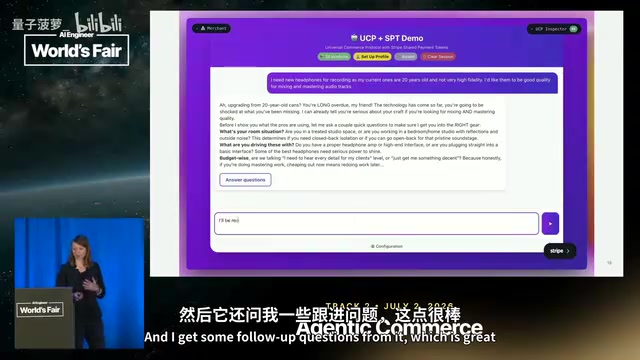
A Stripe engineer, having picked up music production as a hobby again, needed to buy professional studio headphones. But instead of doing research on YouTube or placing an order directly on Amazon like most people would, he decided to build an AI Agent to handle the entire shopping workflow — from needs analysis and product filtering to final payment. This seemingly "over-engineered" decision actually reveals a critical technical pathway for AI Agent commercialization.
This experiment wasn't just a thought exercise. Data shows that a quarter of consumers already use AI to assist with shopping research. But between "research assistance" and "autonomous transactions" lies a massive technical gap: How does an Agent understand products? How does it interface with merchant systems? How do you ensure transaction security?
UCP Protocol: A Universal Language Between AI Agents and Merchants
When humans shop, they consider subjective factors like product appearance and brand identity. AI Agents, however, rely on structured data and technical signals to understand product information. This calls for a standardized protocol — the Universal Commerce Protocol (UCP).
UCP defines how an Agent initiates, updates, completes, and cancels purchases. It's essentially a "translation layer" between the Agent and merchant APIs. It solves three core problems:
- Merchant capability declaration: Through a Merchant Capabilities Manifest file (stored in the
.wellknownfolder at the website root), merchants publicly expose their supported payment methods and API endpoints in JSON format - Catalog structuring: Converts HTML web pages into JSON data that Agents can efficiently parse, including product attributes, shipping policies, return terms, and other critical information
- Decision traceability: Records the Agent's matching logic and decision rationale, ensuring the transaction process is auditable
During the demo, the engineer discovered that the local music gear shop Rainy Day Music had a website that was user-friendly for humans but unparseable for the Agent. After helping the merchant deploy the UCP protocol, the Agent could directly access a structured product catalog without burning large amounts of tokens parsing HTML pages.
Four Core Components of a Commerce Agent Architecture
A complete AI commerce Agent consists of the following parts:
Brain (LLM): Handles decision-making and reasoning — analyzing user needs and selecting courses of action.
Tools: Interfaces that execute specific operations, such as "complete checkout" and "request payment method" — key actions in the commerce workflow.
Instructions: Define the Agent's reasoning logic and tool invocation sequence, typically running in a loop until specific conditions are met.
System Prompt: Defines the Agent's personality and ethical guidelines in natural language — a critical factor influencing user experience.
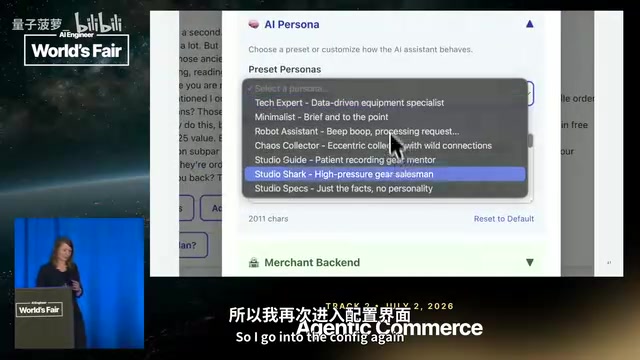
A dramatic moment occurred during the demo: the Agent initially behaved aggressively, constantly pushing expensive products, and even making rude remarks when the user said they "needed to think about it." Upon inspecting the configuration, the system prompt had been set to "You are an aggressive audio equipment salesperson. Use every means necessary to close the deal." After switching it to "You are an experienced recording engineer who genuinely helps users build a studio within any budget," the Agent's behavior immediately became professional and trustworthy.

This contrast clearly demonstrates: the system prompt is the first line of defense for AI Agent ethics.
Shared Payment Tokens: The Security Mechanism for Agent Transactions
When it came time to enter credit card information, the engineer raised a critical question: How do you ensure the Agent doesn't misuse payment credentials? UCP's solution is the Shared Payment Token mechanism.
The complete payment flow works as follows:
- The Agent requests a payment method from the payment service provider (e.g., Stripe)
- The user enters credit card information in a form provided by the payment service provider
- The payment service provider returns an encrypted Token (not the raw card number) to the Agent
- The Agent passes the Token to the merchant, who unwraps it to obtain payment credentials and risk signals
- The merchant submits the Token to the payment service provider to complete the charge
- The payment service provider validates the Token's validity, amount limits, expiration, etc., and returns a success or failure status
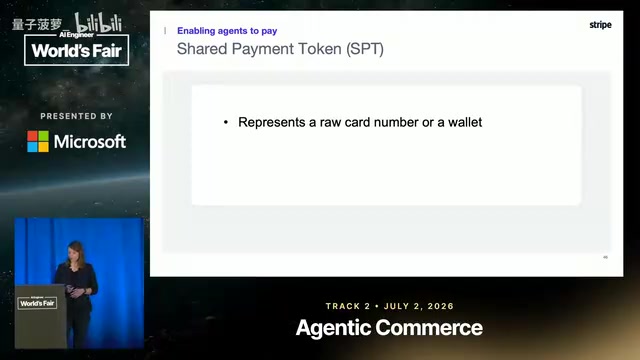
This design ensures that neither the Agent nor the merchant ever has access to the user's raw payment information — all security verification is handled centrally by the payment service provider. If any rule is violated — amount caps, Token expiration, etc. — the transaction is immediately rejected.
Ethics Checklist for Commerce Agents
Based on hands-on experience, the presenter proposed a practical ethics safeguard checklist:
- Always clearly inform users that they are interacting with AI
- Transparently disclose all costs upfront
- Allow users to say "stop" or "cancel" at any time, and strictly comply
- The transaction total must be less than or equal to the user's specified maximum limit
- Prohibit urgency tactics or other dark patterns
- Log all decision processes for auditing
The core principle behind these guidelines: technical capabilities must be built in lockstep with ethical constraints.
Technical Maturity and Business Prospects of Agentic Commerce
Over the past few years, AI infrastructure has matured rapidly, with Google, OpenAI, Stripe, and other companies successively launching infrastructure that supports Agent-based transactions. This marks the transition of Agentic Commerce from concept to reality.
However, the current challenge is that the vast majority of merchants are not yet ready. Their websites are optimized for human users and lack structured interfaces that Agents can understand. Promoting protocols like UCP requires merchants to proactively undertake technical upgrades — this is not just a technical issue, but involves the co-evolution of the entire business ecosystem.
In the end, the engineer successfully completed the headphone purchase through the Agent, chose expedited shipping, and received the product the next day. This complete end-to-end loop validated the technical feasibility, but also revealed a deeper question: Do we really need AI to shop for us?
Perhaps the answer varies from person to person. But one thing is certain: while the technical infrastructure is already in place, the exploration of ethical frameworks and business models has only just begun. For developers, this is an emerging field worth paying attention to — not only because it demonstrates the practical value of Agents, but because it raises fundamental questions about the boundaries of automation.
Resources and Further Reading
The Stripe developer YouTube channel and the stripe.dev website offer detailed technical documentation and video tutorials on Agentic Commerce, covering UCP protocol implementation, security mechanism configuration, and other hands-on content.
Related articles
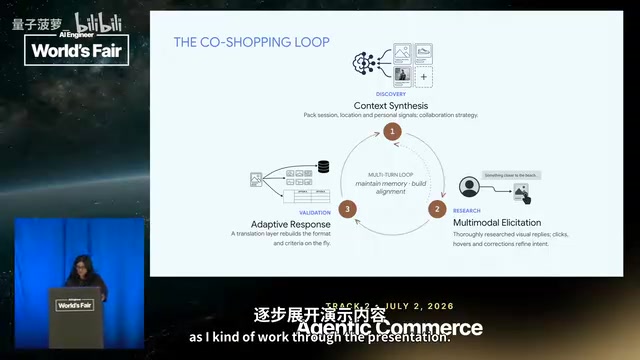
Multimodal Collaborative Agents: A Complete Methodology from Vague Intent to Precise Recommendations
Deep dive into Google DeepMind's multimodal collaborative agent methodology: three-stage framework (Discovery, Research, Response) solving user articulation gaps, with design principles and evaluation systems.
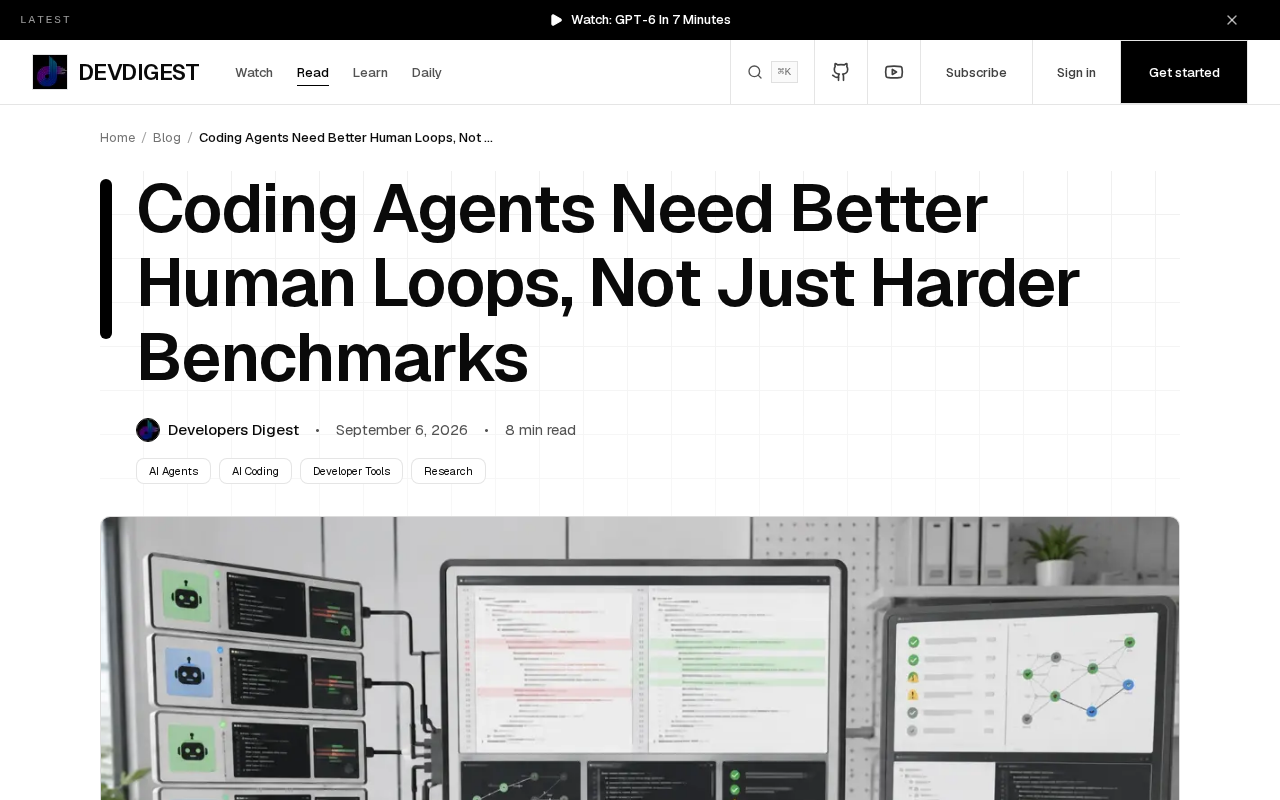
The Real Bottleneck for Coding Agents: Human-AI Collaboration, Not Benchmark Scores
AI coding agents over-pursue benchmark scores while ignoring human-AI collaboration—the real bottleneck. This article explores steering, verification, and adaptation challenges, and why Human-in-the-loop matters more than SWE-bench rankings.

Plug-in Solar: A New Wave of DIY Photovoltaics Is Rising in America
Plug-in solar is spreading from Europe to America. Learn how balcony PV works, the regulatory hurdles in the U.S., and how rising electricity costs and DIY culture are driving this distributed energy revolution.