AI Agent Beginner's Guide: From Concept to Enterprise Deployment — The Opportunity Window You Shouldn't Miss

AI Agents are moving from concept to enterprise reality — practitioners who can build them are in short supply.
AI Agents are digital employees with a closed-loop perceive-plan-execute-reflect capability, fundamentally different from conversational chatbots. As LLM inference costs fall, Agents are already running in enterprise customer service, finance, and operations, delivering measurable efficiency gains. "Agent deployment experience" is emerging as a valued skill in hiring. The truly scarce resource isn't people who understand Agent concepts — it's those who can handle real errors and ship working systems. This execution gap creates an opportunity window for ordinary people, much like the early days of WeChat Official Accounts and short-form video: the first movers tend to capture the biggest rewards.
AI Agent is rapidly becoming the central topic in enterprise digital transformation. As ByteDance pours resources into AI infrastructure, LLM inference costs continue to decline, and domestic API prices have nearly halved within six months, a clear trend is emerging: the logic behind enterprise AI has shifted from a capital-intensive arms race to an obsessive pursuit of engineering efficiency.
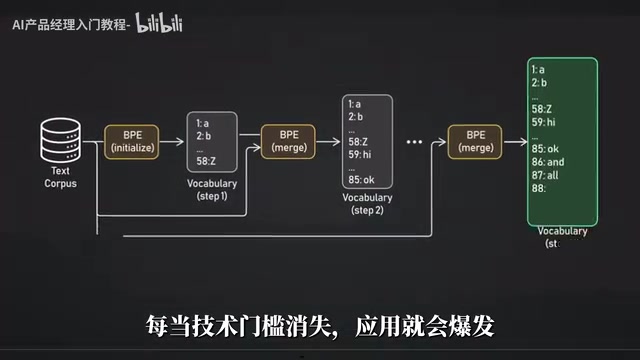
History has a way of repeating itself — whenever a technology barrier disappears, applications explode. And this time, the core answer to that explosion is Agent.
What Is an AI Agent
In one sentence: an Agent is a digital employee that can do work on your behalf. This is fundamentally different from a chatbot. A chatbot can only hold a back-and-forth conversation with you — an Agent can do far more.
A true Agent can read your business data, call your system interfaces, break down complex tasks, and autonomously plan and execute each step. Crucially, when it hits a roadblock along the way, it will try to find a workaround on its own and ultimately deliver a usable result. This closed-loop capability — perceive → plan → execute → reflect — is what fundamentally sets an Agent apart from traditional conversational AI.
Put simply: a chatbot is a tool that can chat; an Agent is an "employee" that can achieve work objectives.
Technically, this closed loop relies on several key components: a Large Language Model (LLM) serves as the "brain," responsible for understanding intent and reasoning through plans; Tool Use / Function Calling lets the Agent operate external systems — querying databases, sending emails, calling APIs; a memory module maintains context across multi-step tasks; and a task orchestration framework (such as LangChain or AutoGen) coordinates the execution order of each step. RAG (Retrieval-Augmented Generation) is another frequently mentioned technique: before answering a question, the Agent first retrieves relevant information from the enterprise's private knowledge base rather than relying solely on what the model learned during training — dramatically improving accuracy and reliability. Understanding how these modules divide responsibilities is the first step from "having heard of Agent" to "being able to build one."
Real-World Enterprise Applications of Agents
Agents aren't a concept living in slide decks — they're already running in real enterprise environments.

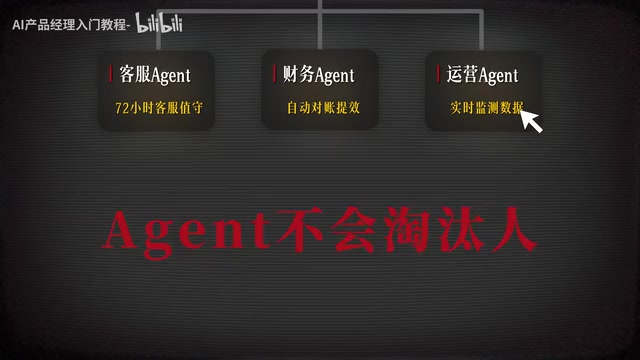
Customer Service: A customer service Agent operates 24/7, autonomously resolving 90% of common inquiries, dramatically reducing labor costs and response times.
Finance: A finance Agent can automatically verify invoices and generate reports, compressing the month-end reconciliation cycle from three days down to three hours.
Operations: An operations Agent continuously monitors backend data, automatically triggering restocking when inventory runs low and firing alerts when anomalies appear — shifting operations from reactive firefighting to proactive prevention.
These aren't hypothetical scenarios — they're live business processes already running in actual companies today. They all point to the same conclusion: the value of an Agent lies not in "being able to converse," but in "being able to deliver results within real business workflows."
Those Who Can Use Agents Are Pulling Ahead
Agents won't make people obsolete — but those who can use them will pull significantly ahead of those who can't.
This gap is already showing up in the job market. For the same role, one candidate writes "independently built a customer service Agent and a reporting Agent," while another writes "proficient in office software." It's obvious which résumé a hiring manager will click first. The appearance of "Agent deployment experience" as a requirement in job descriptions is exactly the signal to watch.
What's worth noting is that the truly scarce resource right now isn't people who "know about Agents." There's actually no shortage of people familiar with RAG or Agent architecture. What's genuinely scarce is someone who can take an Agent from a concept diagram and get it running in a real business environment.
Where Is the Opportunity Window for Ordinary People?
There is a significant capability gap between theoretical knowledge and engineering execution.
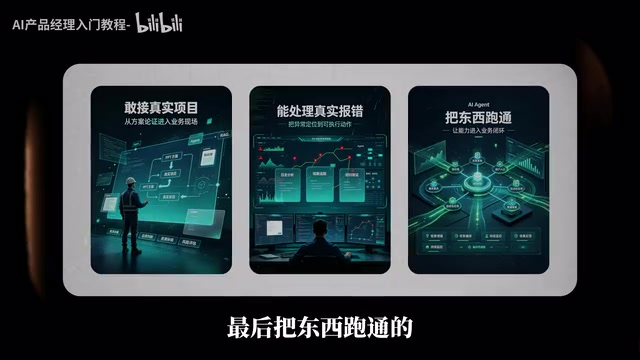
Among those who understand Agent concepts, the ones who dare to take on real projects, debug real errors, and actually get the system running end-to-end — you might find one in ten. This gap between "can talk about it" and "can build it" is precisely where the opportunity window for ordinary people lies.
This kind of window has appeared repeatedly across past technology waves — WeChat Official Accounts a decade ago, short-form video five years ago. The people who captured the early gains weren't usually the most technically sophisticated; they were the ones who started moving first and weren't afraid to experiment. Agents are currently in exactly that position.
How to Seize This Window
The good news is that seizing this opportunity doesn't require overwhelming investment. The window won't wait, but the learning curve itself isn't steep. With a reasonable learning pace — two hours a day, sustained over three months — you can move Agent from "something I've heard of" to "something I've built."
What matters is choosing the right path: avoid spinning your wheels on irrelevant knowledge, and focus your energy on the core skills that actually get projects across the finish line — understanding Agent architecture, mastering RAG, getting comfortable with tool calling and task orchestration, and building real experience handling errors and delivering results through actual projects.
Every technology wave in history has shared one defining characteristic during its window period: the toolchain isn't yet fully dumbed-down, but the technology itself is already usable enough to act on. In the early days of WeChat Official Accounts, formatting tools and growth playbooks were immature — but those who started early accumulated readers and monetization experience. In the early days of short-form video, editing software was still relatively complex — but early entrants built algorithmic advantages. Agents today are in a strikingly similar position. Frameworks like LangChain, Dify, and Coze have dramatically lowered the barrier to building, but the engineering knowledge of "how to handle exceptions in real business," "how to debug failed tool calls," and "how to keep an Agent running stably in production" can only be gained by getting your hands dirty. This is the essence of a window period: knowledge can be acquired quickly, but experience can only be earned with time.
Final Thoughts
The rise of AI Agents is no accident — it's the inevitable result of falling technology costs and enterprises pivoting toward engineering efficiency. It doesn't bring panic; it brings a clear divergence. Those willing to move from concepts to practice, and bold enough to take on real projects, will secure a first-mover advantage in this wave. The opportunity window is opening, and windows have always only stayed open for those who start moving first.
Related articles

Workbuddy for Absolute Beginners: How a Desktop AI Agent Fits Into Real Workflows
A beginner's guide to the Workbuddy desktop AI agent: installation, claiming credits, file management, and building automated workflows—compared with CodeX for fit and cost, helping professionals shift from AI question-askers to AI managers.

OpenAI's New Agent Stack: Computer Use, Decisions API, and Ultra-Fast Workflows
OpenAI Dev Day unveiled a new agent stack: Computer Use outperforms humans, Decisions API delivers ultra-low-latency classification via Luna, Agents API opens the same Computer Use capabilities, and GPT-6.1 Sol costs only one-seventh of Astra. Core updates, benchmark data, and developer insights.

Liang Wenfeng Open-Sources DeepInfo Inference Framework, Takes On U.S. Ban
DeepSeek open-sources its DeepInfo inference framework after its models, featuring GPU/CPU cross-pipelining, small-model prediction with large-model verification, and full Huawei Ascend and NVIDIA chip support—facing the U.S. federal ban head-on. This article analyzes its significance for AI deployment and open-source strategy.