AI Agent Orchestration Framework Tier List: Who's Overrated, Who's Legendary

A tech streamer grades mainstream Agent frameworks on four criteria, crowning CrewAI and LangGraph as legendary.
The article compiles a tier-list evaluation of mainstream AI Agent orchestration frameworks from a YouTube tech streamer. The evaluation is based on four criteria: compatibility, design pattern support, ease of use and integration, and community support—with community activity repeatedly emphasized as key to framework survival. CrewAI and LangGraph are the only two "legendary" frameworks; the former wins for its historical role in multi-agent collaboration paradigms, while the latter is called "the best orchestration framework today" for its graph structure, checkpointing, and LangChain ecosystem. OpenAI Agents SDK, Claude Agent SDK, Agno, and DSPy are rated "good"; cloud vendor SDKs are accused of copying each other, with their value lying in coupling with respective cloud ecosystems; LlamaIndex and Cloudflare Agents are rated overrated, and Haystack and Pydantic AI fall into the lowest tier. The author also places custom-built frameworks in the legendary tier, emphasizing that a framework's value ultimately depends on its fit with the business.
Evaluation Criteria: More Than Just "Does It Run"
The author explicitly lays out four scoring criteria: compatibility (fit with existing tech stacks and programming languages), design pattern support (whether various Agent topologies like sequential, hierarchical, producer-reviewer, and semantic can be implemented), ease of use and integration capabilities (tool definition, API/MCP integration, registries, and identity management), and community support. The last one is repeatedly emphasized—"many new frameworks emerge but don't survive because the community is too weak; open-source projects can't hold up without a strong community."
These criteria also explain why the same framework gets wildly different evaluations across teams: enterprise teams prioritize coupling with cloud vendors, while independent developers care more about onboarding speed and community activity.
Legendary Tier: CrewAI and LangGraph
Only two frameworks made it into the "Legendary" tier in the entire evaluation.
CrewAI earned its spot for historical significance and maturity. In the period after the RAG boom and just as LLM Agents were emerging, CrewAI was one of the few libraries that could help developers build multi-agent systems. Its core abstraction—defining goal, role, and backstory for each Agent, then chaining them through sequential or hierarchical design patterns—remains a classic paradigm for multi-agent collaboration today. The output of the first Agent becomes the input of the next, and this pipeline-style orchestration solved a large number of practical problems at the time.
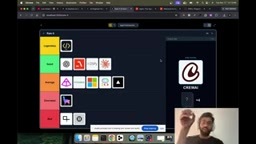
LangGraph was called by the author "there's no better orchestration framework than it today." Three reasons: first, backed by the LangChain ecosystem, with strong community support and a thick atmosphere of developer mutual aid; second, built on graph (DAG, directed acyclic graph) principles, supporting conditional edges and deterministic Agent flows, giving it a clear advantage in multi-Agent systems that require precise control; third, outstanding context management capabilities—through checkpointing and scratch pad (temporary memory) mechanisms, Agents maintain state consistency across long flows. The author mentions that LangChain recently completed a large funding round (approximately $300 million), further cementing confidence in its ecosystem.
Checkpointing is one of the core components of LangGraph's context management. The basic idea: at each key node in the Agent execution flow, the current state (including conversation history, intermediate variables, tool return results, etc.) is serialized and persisted. If a subsequent step encounters an exception, timeout, or requires human intervention, the system can resume from the most recent checkpoint without re-running the entire flow from scratch. This is especially important for long-chain multi-Agent tasks—it reduces both token and time costs while making "pause—review—continue" human-machine collaboration possible. The scratch pad, meanwhile, is a lighter-weight workspace for Agents to temporarily store draft reasoning content within a single task, managed separately from long-term memory to avoid context contamination from irrelevant information. Together, they form the main selling point of LangGraph's state consistency.
Good Tier: OpenAI Agents SDK, Claude Agent SDK, Agno, DSPy
This tier is characterized by "clear use cases, but not yet irreplaceable."
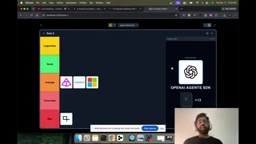
OpenAI Agents SDK was called "one of the most widely used orchestration frameworks today." Its strengths lie in clear tool definition and task delegation mechanisms between Agents—the orchestrator main Agent with multiple sub-Agents underneath is precisely the mainstream design for multi-Agent systems today. The author openly admits "I don't like OpenAI as a company," but still acknowledges this SDK is "genuinely good."
Claude Agent SDK follows similar logic: model vendors want to use their own schemas and specifications to control how developers use their models, hence the official SDK. The verdict is "good," with no further elaboration.
Agno was evaluated as "a very good orchestration framework, no question." Its platform-oriented approach is obvious—built-in API, MCP support, Agent OS handling authentication, plus emphasis on observability and enterprise-grade capabilities like role-based access control and checkpointing.
DSPy's selling point is different: "don't prompt, program." It replaces hand-written prompts with structured signatures, making code modular and reusable, close to object-oriented design principles. The author believes it's "genuinely good" in scenarios requiring engineering organization.
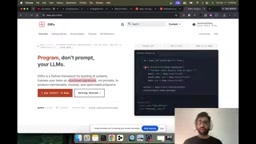
DSPy's structured signatures deserve separate explanation. The traditional approach is hand-writing natural language prompts and iterating on parameters; DSPy declares the "input→output" contract as typed signatures in code—for example, "given a question, return the answer and confidence"—and the framework automatically selects or optimizes prompting strategies and examples. Developers can therefore build pipelines through module composition and evaluate each module like unit tests, transforming prompt engineering into versionable, reusable software engineering practice. This is why the author considers it "genuinely good" in scenarios requiring engineering organization—the trade-off is a steeper learning curve and an abstraction layer that's somewhat heavy for simple tasks.
Average Tier: Cloud Vendor SDKs and Vercel AI SDK
Strands Agents (AWS), Microsoft Agent Framework, Google ADK are grouped together: hyperscaler "binding-type" frameworks. The author says outright that these frameworks "mostly copy each other," because the underlying implementations are nothing more than functional or object-oriented paradigms—there's no proprietary technical moat to speak of.
But that doesn't mean they're worthless. The author points out that at large IT services companies like TCS, Infosys, and Capgemini, employees heavily use Google ADK or Strands Agent, because these firms have deep partnerships with GCP, Azure, and AWS—tight coupling with the cloud ecosystem actually brings convenience. Microsoft's path went from AutoGen to Semantic Kernel to Agent Framework, primarily serving .NET stack developers; "if you're not in the Microsoft ecosystem, basically nobody uses its Agent Framework."
Vercel AI SDK was rated average. Vercel was originally a deployment infrastructure company that saw the AI opportunity and moved into AI gateways and SDKs—a natural extension, but not particularly outstanding in orchestration capabilities.
On small model/lightweight frameworks, Hugging Face's smolagents was described as a "barebone library"—you can build and run an Agent in a few lines of code, and integration with open-source models on Hugging Face Hub is convenient, but its overall positioning is lightweight. The author explicitly states it won't be placed in "good" or "legendary."
MCP (Model Context Protocol) is key background for understanding many of the evaluations in this article. It's an open protocol proposed by Anthropic and gradually adopted by the industry, used to let models or Agents connect to external tools, data sources, and services in a unified way—essentially defining a cross-vendor interface specification for "function calling." Supporting MCP means a framework can reuse existing tool servers in the ecosystem without having to adapt each integration separately. In the article, Agno gets points for "built-in API, MCP support," Mastra is recommended for "outstanding MCP support," and the homogenization of cloud vendor SDKs is partly attributed to everyone wrapping similar protocols. MCP's adoption level is becoming a de facto standard for measuring a framework's integration capabilities.
Overrated: LlamaIndex and Cloudflare Agents
LlamaIndex was rated "overrated." Three to four years ago when RAG was rising, LangChain and LlamaIndex were the two major choices for building retrieval systems, with prominent status. But the author believes that in today's Agent development context, LlamaIndex no longer has the competitiveness it once had. This evaluation may surprise newcomers—after all, many people's first tutorials when entering the field were about LlamaIndex.
Cloudflare Agents was similarly tagged "overrated." The author's view is that these SDKs have highly similar code structures with no technical moat to speak of—cloud vendors entering the space is more about "everyone else is doing it, so we should too."
Garbage Tier: Haystack, Pydantic AI, and "Seasonal" Frameworks
The harshest evaluations went to Haystack and Pydantic AI. Haystack was indeed excellent in the naive RAG era, but it's out of its depth for today's multi-Agent systems. Pydantic AI, despite inheriting Pydantic's reputation in data validation and offering structured prompt and tool definition approaches, was still placed in the "bad" tier.
The author also coined a vivid term—"bursati tools" (seasonal tools)—to describe frameworks like LlamaIndex and Haystack that "burn bright for a month or two and then get forgotten." Whether this is fair is debatable, but it points to a real problem: AI frameworks iterate far faster than traditional software, and today's star project may be unmaintained next year.
The TypeScript Exception: Mastra
If your team doesn't do Python, Mastra is the author's top recommendation. It's built specifically for TypeScript (LangGraph has a TS version, but wasn't designed for it), has outstanding MCP support, and is suitable for building browser-side Agents. The author places Mastra "below legendary, above average"—not quite legendary, but clearly better than average.

Why Custom Frameworks Made "Legendary"
An easily overlooked detail: the author also placed "Custom" in the legendary tier. The reasoning is practical: in real large-scale complex projects, teams often need to define their own tool calling, registries, observability, authentication, and event buses, building orchestration patterns that fit their business needs from scratch rather than depending on a third-party framework. This echoes the criticism of cloud vendor SDKs—a framework's value ultimately depends on how well it matches the business and team, not on its reputation.
It's worth noting that the author also introduced his free AI learning community (AI Anytime Academy) and AI engineer roadmap resources during the stream, but the core content remains this tier list. A caveat: the above ratings carry strong personal and community experience bias, and the author himself repeatedly emphasized "this is my experience and choices, yours may differ." Framework selection ultimately comes back to the team's language stack, deployment environment, and long-term maintenance costs.
Background Note
Hyperscaler deserves a brief explanation here. It typically refers to cloud providers like AWS, Microsoft Azure, and Google Cloud that have global-scale data centers and complete managed services. Their motivation for launching Agent frameworks is often not just to provide development tools, but to keep developers within their ecosystem—model calls, identity authentication, observability, and billing all going through the same set of services. This explains the "binding-type framework" judgment: limited technical moat, but migration costs and ecosystem convenience create real lock-in effects. For enterprises deeply invested in a particular cloud, this coupling is an advantage; for teams pursuing portability, it's a risk to weigh.
Related articles

OpenAI to Shut Down Agent Builder and Two Other Services on November 30, Developers Must Migrate Urgently
OpenAI will shut down Agent Builder, the evals dashboard, and reusable prompts on November 30; evals is already read-only. Here's the scope, OpenAI's migration paths (Agent SDK, PromptFu, your own code), and what developers should export and rebuild this week.

RankSpot: A Pay-Per-Use SEO & AI Search Execution Layer That Lets Agents Write, Publish, and Build Backlinks for You
RankSpot is an SEO & AI search execution layer for AI Agents. Connect via MCP to Claude or ChatGPT to write, publish & build backlinks. Pay-per-use, $3/article.

Appxiom: Giving AI Coding Assistants Production Context
Appxiom gives AI coding agents production context—crashes, jank, memory leaks, failed network calls—across Android, iOS, Flutter, KMP, and Web, ranking bugs by Goal Friction Impact.