AI Agent Tool Call Failing? Three Moves to Avoid a Crash
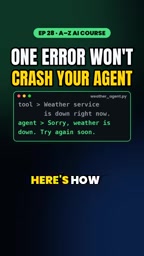
A three-layer defense—timeout, catch, fallback—keeps the Agent from crashing even when tool calls fail.
The article notes that tool call failures are the norm rather than the exception: outages, hanging requests, and bad input can crash the whole Agent. It offers three defenses—set timeouts for every tool call, explicitly catch expected errors and return clear messages, and rely on the SDK's generic error fallback for uncaught exceptions—to build a robust error handling flow for production.
Why Do Tool Calls Fail?
When building AI Agents, calling external tools (such as APIs, database queries, and web scraping) is one of the core capabilities. But real-world tool calls are far from ideal—services can go down, requests can hang, and user input can be wrong. According to the YouTube tutorial series Handle Tool Errors Without Crashing, these failures are the norm rather than the exception. If the Agent doesn't handle them properly, a single failed call can crash the entire Agent, and the user experience drops to zero in an instant.
Move One: Always Set a Timeout
The most easily overlooked yet most critical defensive measure is setting a timeout. A slow-responding service, if waited on indefinitely, will freeze the entire Agent and prevent it from handling other requests. By setting a reasonable timeout for each tool call, the Agent can fail fast when a service is unavailable instead of getting stuck. The tutorial emphasizes: "Always set a timeout, so a slow service can't freeze your agent."
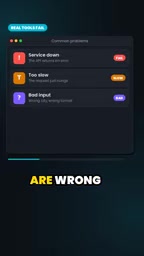
In engineering practice, timeouts are usually divided into two types: connection timeout and read timeout. The former limits the maximum wait time for establishing a TCP connection, while the latter limits the maximum time to wait for response data. Reasonable values should be determined based on the service's normal latency distribution, generally slightly above the P99 latency; for interactive Agents, a single tool call timeout of 5–30 seconds is common. When a timeout is triggered, a timeout exception that can be caught by upper layers should be thrown rather than silently returning an empty value—otherwise the Agent will mistakenly believe the call succeeded. In addition, timeout values should not be hardcoded in business logic but injected through configuration, making it easy to adjust per environment (development, testing, production).
Move Two: Catch Expected Errors and Return Clear Messages
A timeout is only the first step. For errors you expect may occur (such as network exceptions, API rate limiting, and parameter errors), you should explicitly catch them and return a clear message instead of letting the exception propagate upward and cause a crash. This message will be read by the Agent, which then explains to the user what happened. For example, when a weather API returns "city not found," the Agent can reply, "Sorry, I couldn't find weather information for that city. Please check the city name." This design both avoids a crash and maintains conversational continuity.
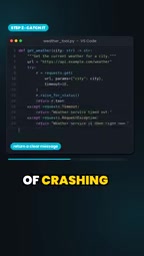
In the architecture of an AI Agent, a tool call failure does not directly terminate the flow as an exception; instead, it is usually serialized as a "tool result" (tool result / function response) message sent back to the large model. This means the error message itself is part of the prompt: it needs to be concise, structured, and contain actionable clues, such as the error type, the parameters involved, and the suggested next step. Stuffing the raw stack trace directly back into the model context both wastes tokens and easily induces the model to produce hallucinated explanations. Therefore, when catching errors, you should distinguish between "retryable" (such as rate limiting and timeouts) and "non-retryable" (such as invalid parameters and nonexistent resources) categories, and clearly label them in the message so the Agent can decide whether to retry or clarify with the user.
Move Three: Rely on the SDK's Generic Error Handling
For exceptions that are not explicitly caught, the SDK typically returns them to the Agent as generic tool errors. This fallback mechanism ensures that even if an unexpected error occurs, the Agent won't crash outright but will receive a standardized error message. Developers should understand this SDK behavior and ensure the Agent can parse such generic errors and provide a friendly user prompt.
Mainstream Agent development SDKs (such as OpenAI Agents SDK, LangChain, Vercel AI SDK, etc.) generally provide a tool execution wrapper layer that converts uncaught exceptions into structured error results returned to the model, rather than interrupting the entire run loop. This mechanism is often used in conjunction with "max turns" and retry policies to prevent the Agent from falling into an infinite loop when repeatedly calling a failing tool. The key to understanding this fallback logic is that generic errors usually contain only the error type and a brief description, and the model has limited ability to infer specific causes—so it is suitable as a last line of defense but cannot replace the two layers of explicit handling above. Developers should also pay attention to the SDK's fail-fast and error-passing configuration options to avoid the fallback mechanism masking program defects that should have been exposed.
Practical Advice for Building Robust Agents
Combining the above three points, you can summarize a tool error handling flow: set a timeout for each tool call; catch known error types and return custom messages; and finally rely on the SDK to handle unknown errors. This way, the Agent can keep running when tool failures occur and guide the user toward the next step. The next episode of the tutorial series will explore Structured Outputs, ensuring clean and reliable JSON formats.
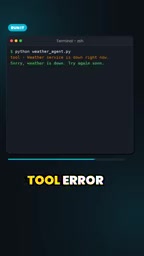
Tool error handling is a key step for AI Agents moving from demo to production. Through timeouts, catching, and fallbacks, your Agent will be more reliable and the user experience smoother.
One-line Summary
A three-layer defense—timeout, catch, fallback—keeps the Agent from crashing even when tool calls fail.
Paragraph Summary
The article points out that tool call failures are the norm rather than the exception in the real world—service outages, hanging requests, and input errors can all crash the entire Agent. To address this, it proposes three defensive moves: first, set a timeout for each tool call so a slow service fails fast without freezing the Agent; second, explicitly catch predictable errors (network exceptions, API rate limiting, parameter errors, etc.) and return clear messages for the Agent to relay to the user, maintaining conversational continuity; third, for uncaught exceptions, rely on the SDK's generic error fallback mechanism so the Agent receives standardized error messages instead of crashing outright. Together, these three form a robust error handling flow for moving from demo to production, and the article previews that the next episode will discuss structured outputs.
Related articles

Multi-Agent Collaborative Development: Task Card-Driven Practices for Medium-to-Large AI Projects
A Bilibili creator shares a task card-driven, PM-orchestrated multi-Agent collaboration model with local-first repository state, so any Agent tool can take over a project anytime.
Cursor vs Copilot vs Claude Code: How Laravel Developers Should Choose
Compare Cursor, GitHub Copilot, and Claude Code for Laravel development: an AI-first editor, a plugin for existing editors, and a terminal agent for multi-file tasks and testing — plus workflow-based recommendations.
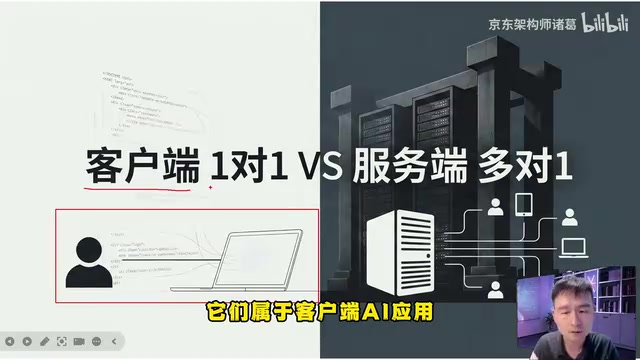
AgentScope Java Edition: A Practical Guide to Enterprise-Level Agent Frameworks
An in-depth analysis of Alibaba's AgentScope Java enterprise agent framework: contrasting client-side AI and server-side AI, explaining Java's natural advantages in high concurrency and distributed state management, and outlining a complete learning path from core principles to multi-agent collaboration.