AI Agent vs Large Models: Why CS Freshmen Should Install Codex and Claude Code First

AI Agents are permeating the four core scenarios of college life, and freshmen should master them early to build a capability edge.
The article centers on an AI tutorial video for CS freshmen, noting that AI is evolving from a "chat tool" into a "work tool." It covers the four most core activities for CS majors — competitions, papers, research projects, and building projects — arguing that AI is rapidly infiltrating all of them. The key distinction is between large models (passive Q&A) and AI Agents (autonomous multi-step execution), whose productivity gap is orders of magnitude. The video recommends freshmen install Agent tools like Codex and Claude Code first, as their learning curve rewards early adoption.
A Bilibili AI tutorial video aimed at incoming computer science students made a fairly controversial suggestion: the first thing to do when freshman year starts isn't installing an IDE or setting up a development environment — it's getting Codex and Claude Code installed. At first glance this sounds like clickbait, but the author's core argument actually points to an increasingly clear industry reality — AI is evolving from a "chat tool" into a "work tool," and most students haven't yet woken up to this shift.
Over Four Years of College, What's Being Infiltrated by AI
The video's author lists the four most core activities for computer science majors: competing, writing papers, doing research projects, and building projects. By his observation, AI is rapidly permeating all four.
When it comes to competitions, mathematical modeling has already been dubbed a "water competition" by many, and according to the video, last year someone won a provincial — even national — award relying on AI. Electronic design competitions are also being gradually infiltrated by Agent tools like Codex. Business plans and PPTs need no elaboration — those are things AI excels at anyway.

The infiltration into papers and research projects goes even deeper. The fact that AI plagiarism detection keeps getting stricter is itself evidence that AI use in writing has become widespread enough to warrant dedicated defenses. And as for projects — the product development and coursework that schools require — AI's ability to write code hardly needs explanation anymore.

This isn't fearmongering. The infiltration is a fact; the only difference is whether someone uses AI to passively get through homework or to actively boost their output efficiency.
Why Is AI Plagiarism Detection Getting Stricter?
In recent years, universities have broadly upgraded their paper detection systems, expanding from traditional character comparison to AIGC detection, which judges whether text was generated by a large model through statistical features like perplexity and burstiness. The direct backdrop for this change is that large models have driven the cost of "generating a structurally complete, grammatically smooth article" to near zero, making traditional plagiarism detection ineffective. For students, this means the boundaries of AI writing are being redrawn — using AI for literature review, language polishing, or idea brainstorming is generally allowed, but submitting generated content directly as original work carries significantly higher risk. Understanding the detection logic is what allows you to use AI appropriately in compliant ways.
The Gap Between Large Models and AI Agents Is No Small Matter
One of the most valuable distinctions in the video is this: Codex and Claude Code are not large models — they're AI Agents. Many people conflate the two concepts, but their productivity gap is orders of magnitude.
The interaction mode of a large model is "you ask, it answers; if you don't ask, it doesn't act." This mode is essentially passive response — you still need to break down tasks yourself, organize the workflow, and land the results. It's like a knowledgeable consultant who won't proactively do the work for you.
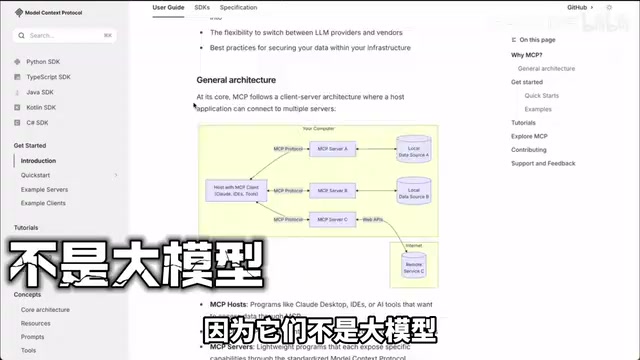
AI Agents are different. They can automatically open web pages, operate folders, generate Word documents, make PPTs — completing the entire workflow on their own. You give a goal, and they break down the steps and execute them. This is what "working on your behalf" truly means.
Why does this distinction matter? Because university courses teach data structures and operating systems, but almost no course teaches you how to use AI to complete actual workflows. This capability gap will become the most striking dividing line among classmates four years from now.

What Are Codex and Claude Code?
Codex was originally a code generation model released by OpenAI in 2021, later evolving into a cloud-based Agent product for code tasks; Claude Code is a command-line AI programming assistant launched by Anthropic that can directly read and write local files, execute terminal commands, and run tests. What they have in common is their positioning: using a large language model as the reasoning core, wrapped with tool use, file system access, command execution, and a loop feedback mechanism, thereby upgrading "generating a piece of code" into "completing an engineering task." Understanding this makes it clear why they feel completely different from models in an ordinary chat window — they have "hands" (tools) and "memory" (context and file state), while chat models only have "a mouth."
How Freshmen Should Get Started
The video's action advice is very direct: when you first enter college, don't rush into long-term planning — first get Agent tools like Codex and Claude Code installed and start using them.
The reasonableness of this advice lies in the fact that Agent tools have a learning curve of their own. You need to understand how to describe tasks, how to break down workflows, how to verify output quality, and how to embed Agents into your existing development and learning workflows. The earlier you accumulate this experience, the better — starting only in junior year when you're doing projects will cost far more time.
That said, it's worth noting that the video's description of AI infiltrating competitions and papers is somewhat simplified. AI can assist with a lot of work, but the evaluation dimensions of competitions and the innovation requirements of papers still require human judgment and deep thinking. Treating Agents as a productivity lever rather than a replacement is the more pragmatic positioning.
The video's author says he has compiled complete learning materials covering everything from large model fundamentals to Agent development, available in the comments section. For incoming computer science freshmen, rather than agonizing over "will AI replace programmers," it's better to spend a week getting comfortable with Agent tools.
One-line Summary
AI Agents are permeating the four core scenarios of college life, and freshmen should master them early to build a capability edge.
Paragraph Summary
The article centers on an AI tutorial video aimed at computer science freshmen, noting that AI is evolving from a "chat tool" into a "work tool." The author walks through the four most core activities for CS majors — competing, writing papers, doing research projects, and building projects — arguing that AI is rapidly infiltrating all of them, and the only difference is whether students use it passively or actively for efficiency. The article highlights the distinction between large models and AI Agents: the former respond passively to questions, while the latter can autonomously break down and execute multi-step tasks such as opening web pages, operating files, and generating documents and PPTs — a productivity gap of orders of magnitude. Based on this, the video recommends that freshmen prioritize installing Agent tools like Codex and Claude Code, since they carry a learning curve and the earlier you accumulate experience, the lower the time cost. At the same time, the author reminds readers that competition judging and paper innovation still require human judgment, and Agents should serve as a productivity lever rather than a replacement.
Related articles

Random Pruning of the DPO Computation Graph: 1.4x Training Speedup and Lower Peak Memory
DPO training too slow and memory-hungry? This paper proposes a random pruning framework for the DPO computation graph, sampling independently across position, sequence, and branch dimensions; branch pruning achieves a 1.426x step-time speedup and cuts training time by about 30%, with in-depth attribution of memory and time gains.

Why Does JEPA Underperform MLM in Longitudinal EHR Representation Learning?
New study compares JEPA and MLM for longitudinal EHR representation learning on MIMIC-IV: three JEPA variants train stably without collapse but underperform MLM; target size, not heterogeneity, drives prediction error.

Transfer Learning + Visible Light Communication: A New Approach to Energy-Efficient Indoor Positioning
A study proposes a transfer learning-based visible light communication indoor positioning method, achieving 47% accuracy improvement on the BOSCH factory dataset, 67.5% model efficiency under high noise, and introducing the ME composite metric for energy-efficient positioning in energy-constrained industrial IoT scenarios.