AI App Development in Practice: Why Prompts Are the Core of Your Product

Why prompt engineering, not model selection, is the true core of AI application development.
Most AI developers start out obsessing over model choice, then vector databases — only to discover that prompts are what truly make or break the product. This article explores why prompt engineering is the critical last mile in AI app development, how System Prompts function as an app's "constitution," and why prompts must be treated as versioned, iterated product assets just like code.
From Model Worship to Prompt Awakening
Almost everyone new to AI application development falls into the same trap: believing that the model is what determines the quality of your app. Pick a more powerful LLM, and results will naturally follow. This Bilibili creator went through the same detour while building his own AI knowledge base.
He initially thought the model mattered most, then shifted focus to the vector database — until the project actually shipped and he discovered something severely underestimated: the prompt. This shift from "model worship" to "prompt awakening" is a rite of passage nearly every AI app developer goes through.
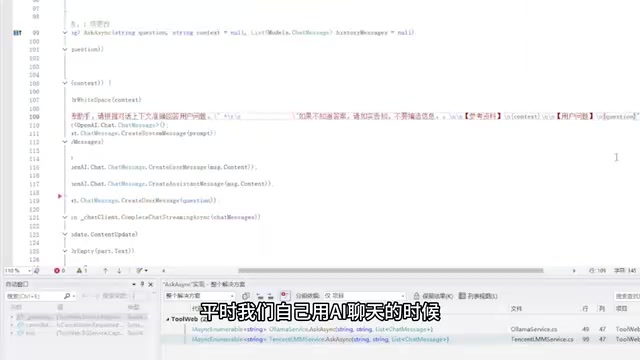
The reason isn't hard to understand: models and vector databases are more like "infrastructure" — they define the capability ceiling. But the "last mile" that actually converts that capability into a usable product is carried by the prompt.
It's worth noting that vector databases play a central role in AI knowledge bases by powering Retrieval-Augmented Generation (RAG) architectures. RAG works by converting user queries into vectors, retrieving semantically similar document chunks from the database, and injecting those chunks into the prompt sent to the model. Vector databases like Pinecone, Weaviate, and Chroma handle the efficient storage and retrieval of these embeddings. However, the bottleneck in a RAG system usually isn't the retrieval itself — it's how the prompt instructs the model to use the retrieved content. This is exactly what many developers initially overlook, and it's the deeper reason why "model worship" and "vector database worship" inevitably give way to a prompt awakening.
Casual Chatting vs. Building a Product — They're Fundamentally Different
When we use ChatGPT or DeepSeekAd in daily life, we're remarkably casual about it — vague questions are fine, and if the answer isn't satisfying, we just rephrase and try again. This "human in the loop" interaction style has an extremely high tolerance for error.
Building an AI application is an entirely different matter. Whether it's a customer service bot, an AI knowledge base, or an Agent, you need to design the interaction rules upfront — end users won't know to adjust their phrasing the way a developer would.
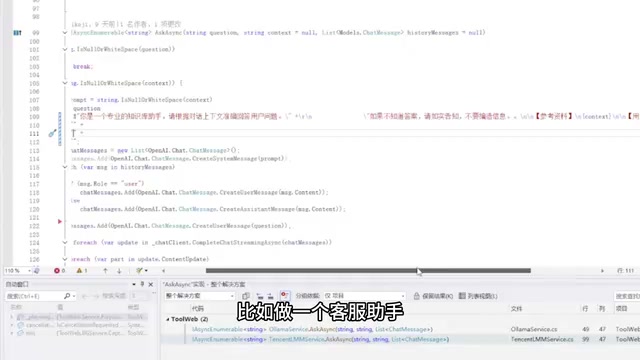
Modern LLM APIs typically distinguish three message roles: system, user, and assistant. The System Prompt is injected into the conversation context with special weight, carrying higher "instruction priority" at the technical level — models are trained to prioritize system-level instructions. This is why AI app developers encode core rules like identity definition, response standards, and boundary constraints into the System Prompt: it functions as the app's "constitution," silently active throughout every conversation and completely invisible to the user.
Specifically, a well-designed prompt must answer the following questions in advance:
- Who is it: The AI's identity and role
- How should it respond: Tone, style, and level of expertise
- Where are the boundaries: What it can and cannot answer
- What happens when the knowledge base has no answer: A fallback strategy to prevent hallucination
- What format should responses follow: Standards for structured output
None of this can be left to users to decide in the moment — it must be locked in at the system level through the prompt. This is the fundamental reason Prompt Engineering has emerged as an independent discipline in AI application development.
Prompt engineering as a distinct technical field took off after GPT-3 launched in 2020. The core principle: large language models are essentially conditional probability distribution models, and the input context (the prompt) directly shapes the model's output distribution. Early research — like the 2021 "Chain-of-Thought Prompting" paper — demonstrated that including reasoning step examples in a prompt could improve mathematical reasoning accuracy by tens of percentage points. This discovery made the industry realize that prompts aren't simple "question descriptions" — they're precise programming of model behavior. The discipline grew organically from engineering practice.
Prompts Are a Product Asset That Requires Continuous Iteration
Here's the more critical point: prompts are absolutely not a "write once and forget" thing.

This creator's hands-on experience reveals an important pattern — with the same model, changing just a few lines of the prompt can produce dramatically different results. This means prompt design is fundamentally a cycle of continuous testing, ongoing adjustment, and repeated optimization.
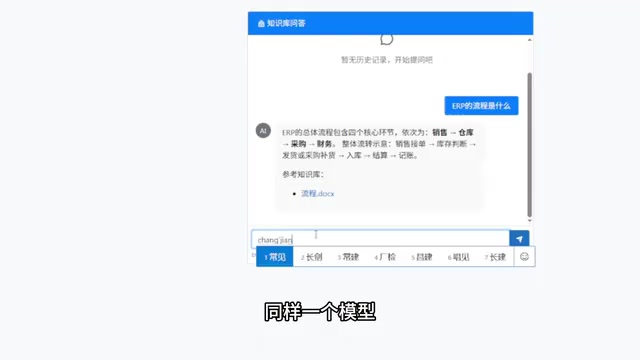
This closely resembles traditional software product iteration: no one expects the first version to be perfect — you refine it based on feedback from real-world usage. The difference is that traditional development tunes code logic, while AI application development tunes natural language instructions. This introduces new challenges: prompt effectiveness is hard to quantify, and the same wording can perform very differently across models and contexts, requiring systematic testing and evaluation frameworks.
Mature AI application teams have developed engineering best practices around prompt work. For version control, prompts are typically committed to Git alongside code, with each change documenting the reason and a performance comparison. For evaluation, the industry widely uses the "golden test set" method: prepare a set of standard Q&A pairs in advance, run automated regression tests after each prompt change, and quantify the effect using LLM-as-Judge (another model as evaluator) or human scoring. Anthropic, OpenAI, and others have introduced prompt management tools that treat prompts as first-class citizens in the development workflow — no different, in practice, from how core code modules are handled.
Code Is Just the First Step — Prompt Design Is Also Part of the Product
This creator's summary carries real weight: Code is just the first step. Prompt design is also part of the product.
This statement captures a fundamental shift in the AI application development paradigm. In traditional software, product behavior is entirely determined by code — logic is fixed and predictable. In AI applications, model behavior is largely guided by prompts, which carry an inherent degree of uncertainty.
This requires developers to make three mindset shifts:
From "Writing Logic" to "Giving Instructions"
In the past, you hardcoded every handling scenario with if-else logic. Now, you describe rules in natural language and let the model understand and execute them. This approach is more flexible, but also requires much more careful design. From a computer science perspective, this is a migration from imperative programming to declarative programming — developers no longer tell the machine how to do something, but describe what the result should look like, leaving the execution path to the model's own decision-making. This paradigm brings expressive flexibility, but also demands deep familiarity with the model's "comprehension boundaries" and "reasoning tendencies."
Manage Prompts the Way You Manage Code
Since prompts directly determine the product experience, they deserve the same version control, testing, and review processes as code. Mature AI application teams maintain dedicated prompt libraries and evaluation pipelines, treating prompts as core product assets. This isn't just an engineering discipline question — it's a reflection of competitive advantage. A prompt system validated across large volumes of real-world scenarios and continuously optimized is often the true moat that separates one AI application from another.
Guardrails and Fallback Strategies Are Non-Negotiable
What happens when the knowledge base has no answer? How should out-of-scope user questions be handled? How you handle these edge cases directly determines whether your product is reliable — and most of these "guardrails" are built through prompts. In the industry, this type of design is commonly called Guardrails, encompassing things like refusing to answer questions outside the knowledge scope, detecting and handling adversarial inputs, and proactively acknowledging limitations under uncertainty. Well-designed guardrails not only protect user experience — they're also a critical component of AI application compliance.
Closing Thoughts
The journey from "model worship" to "prompt awakening" is a necessary path from theory to practice, and a shared experience among a large number of frontline AI application developers.
For developers who are building or planning to build AI applications, this lesson is especially worth internalizing: don't pour all your energy into model selection and database setup. Prompt design is equally central to whether your product succeeds or fails. It may look like "just a few sentences," but behind it lies a deep understanding of product logic, user needs, and model characteristics.
On the road to building Agents and knowledge bases, what pitfalls have you fallen into with prompts? That's probably a question every AI application developer deserves to seriously reflect on.
Key Takeaways
Related articles

Frontend to AI Agent Development: A Frontline Architect Explains Career Paths and Opportunities
A frontline AI architect explains the industry changes and practical paths for frontend developers transitioning to AI Agent development: why pure frontend jobs are disappearing, why Agent + full-stack has become mainstream in hiring, and three transformation routes—Agent development engineer, FDE, and remote contracting—along with corresponding learning strategies.

How to Choose an AI Agent Development Course: Five Pitfall-Avoidance Guidelines
A mechanical-engineering career changer's two-year pitfall-tested checklist for screening AI Agent development courses: complete delivery pipeline, resume-worthy projects, real development perspective, update frequency, and coaching feedback—with concrete judgment methods and pitfall-avoidance tips.

Coze AI Agent Building for Beginners: A Zero-Code AI Agent Development Guide
Coze, ByteDance's one-stop AI application development platform, supports zero-code drag-and-drop AI agent building. This article outlines Coze's core concepts, three advantages, differences between the domestic and international versions, and the distinction between agents and apps, helping beginners quickly get started with AI Agent development.