AI as a Cross-Party Political Issue? What Voter Focus Groups Reveal About Data Centers and Job Anxiety

Focus group research reveals AI has become a cross-party political issue driven by energy, jobs, and existential anxiety.
In a Texas Tribune Festival interview on Vox's America, Actually podcast, The Bulwark publisher Sarah Longwell shared focus group findings showing AI has rapidly become a top voter concern in 2025. Three overlapping anxieties drive this: data centers pushing up electricity bills, rural land use disruptions, and fear of job displacement by billionaire-owned technology. Using the concept of "schema activation," Longwell argues AI is following the same political trajectory as immigration — connecting to existing voter insecurities to become a powerful mobilizing issue that Democrats ignore at their peril.
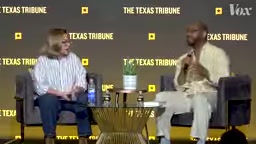
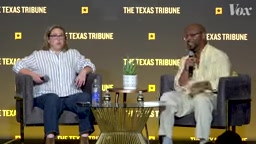
This is an in-depth political strategy conversation from the Texas Tribune Festival, where Vox podcast America, Actually host Ested Herndon interviewed Sarah Longwell — publisher of The Bulwark, focus group researcher, and author of the new book How to Eat an Elephant. While the discussion centered on the 2026 midterm elections and anti-authoritarian strategy, her analysis of how artificial intelligence has emerged as a brand-new cross-partisan political issue offers a uniquely valuable lens for understanding AI's broader social impact.
AI Is Becoming a Cross-Party Political Issue
Longwell revealed during the conversation that her extensive focus group research has found AI surfacing repeatedly in campaigns like those of Abigail Spanberger and Mikey Sherrill — and rapidly climbing to become one of voters' top concerns starting in 2025. This is a counterintuitive finding: tech issues are usually considered remote from ordinary voters, but AI is different.
Her core explanation: AI has the potential to become a political flashpoint because it simultaneously activates three distinct "vectors." This layered impact gives it the same powerful mobilizing force as an issue like immigration.
Three Converging Anxieties
The first is energy costs. Data centers are driving up residential electricity bills, and voters are acutely sensitive to prices — it hits them directly in the wallet.
The second is land use and quality of life. Longwell cited her hometown in central Pennsylvania — deep-red Trump country — where "banned data center" signs are popping up everywhere. Data centers consume vast amounts of rural land, create environmental impacts, and degrade community quality of life.
The third, and in her view the most powerful, is job threat. Voters are asking: "Will these billionaires get richer while I lose my job?" Layered on top of that is an apocalyptic undercurrent — "and there's a 10% chance it destroys all of us" — and these emotions combine in voters' minds into one enormous issue.
From "Build the Wall" to "Ban the Data Center": How an Issue Gets Activated
Longwell used the concept she calls "schema activation" to explain how Trump once weaponized the immigration issue. When Trump said immigrants were "bringing drugs, bringing crime, they're rapists," he was effectively bundling immigration together with fentanyl, jobs, crime, and insecurity — a whole cluster of things voters already cared about, even though fentanyl didn't primarily enter through the southern border. Those anxieties "combined like Transformers" into one massive issue.

She believes AI is heading down the same path. The fascinating contradiction: voters oppose data centers while being unable to put down their AI tools — "They'll use ChatGPT at a town hall meeting against data centers to ask ChatGPT, 'How much do I hate data centers?'" The deeper implication is that voters are already turning to AI to make voting decisions: "You know what voters are going to do with AI? They're going to type in 'Who should I vote for?' That's already happening."
"Schema activation" is a core concept in cognitive psychology and political communication. A "schema" refers to a pre-stored knowledge framework and associative network in the brain — when a trigger word appears, the brain automatically retrieves the full set of emotional memories and value judgments linked to it, rather than evaluating new information piece by piece. Political communication researcher George Lakoff described a similar mechanism as "framing," arguing that voter behavior is driven more by activated emotional frames than by rational policy analysis. Trump's 2015 immigration speech worked precisely because it successfully attached the word "immigrant" to crime, unemployment, and drugs — negative schemas voters already held — creating a self-reinforcing loop of association. Longwell borrows this framework to analyze AI, arguing that AI's political energy doesn't come from the public's deep understanding of the technology, but from its schema connections to existing voter anxieties (electricity bills, job loss, wealth inequality). Once those connections are deliberately activated by politicians, the emotional energy of the issue amplifies exponentially.
The Democrats' Strategic Divide: Should They Talk About AI?
The conversation touched on a telling piece of political news: the Democratic Congressional Campaign Committee (DCCC) reportedly advised candidates to avoid focusing on AI and instead concentrate on "affordability" issues.
Both Longwell and the host saw this as a miscalculation. In voters' minds, AI and the economy — and the cost of living — are not separate issues. "They're the same thing in people's minds, viewed through the same lens." Driving up electricity bills, threatening jobs, enriching billionaires — these are all components of economic anxiety.
She even offered a strategic argument: Democrats should feel free to go on offense with AI, because "you're not demonizing brown-skinned people to win an election — you're just demonizing billionaires and computers. Have at it." She did concede, however, that serious AI policy solutions are still a long way off: "I don't know what the serious answer is."
The DCCC (Democratic Congressional Campaign Committee) is the central body responsible for coordinating campaign resources and messaging strategy for House Democratic candidates, and its guidance carries significant authority within the party. The DCCC's advice to avoid AI and focus on "affordability" reflects a deeply ingrained strategic instinct within the party: simplify complex tech issues into economic-cost language to reduce communication risk. But Longwell's focus group data suggests this "issue segmentation" strategy underestimates voters' capacity for cognitive integration. Ordinary voters don't think in isolated policy silos — they connect different issues through emotional schemas. Data centers raising electricity bills and AI eliminating jobs are, in voters' minds, simply different chapters of the same story: "billionaires are making me poorer." By ignoring AI, Democrats risk going absent from a battlefield where emotions are already running high.
Listening to Voters: The Methodology Washington's Elites Ignore
The methodological thread running through the entire conversation is Longwell's repeated insistence on "listening to real voters." She flatly stated that Washington's commentariat is "one hundred percent not listening to voters" and is instead "packaging their own views about how the world should be as analysis."

The origin story for her focus group work is surprisingly dramatic. In 2018, she and Bill Kristol tried to challenge Trump in a Republican primary, crisscrossing the country to recruit candidates like Mark Cuban and Larry Hogan. A focus group in New Hampshire became her "scales falling from my eyes" moment — she realized the Republican voter base she had imagined, one that cared about the same issues she did, simply didn't exist.
Her core insight: most voters don't vote along ideological lines — they go on "weird animal instincts." Ordinary voters — and she repeatedly emphasized that "the median voter in a general election is a 55-year-old white man without a college degree" — care about the most basic human needs: being able to afford gas, having a job they can move up in, their kids getting a good education, and safe communities.
Replace "Democracy" with "America"
Longwell offered a specific messaging recommendation: Democrats should replace the word "democracy" with "America."
Her reasoning: "democracy" is an abstract, elevated concept for most voters, and it's become deeply polarized — Republicans think Democrats stole the 2020 election; Democrats think Republicans tried to overthrow the government. But voters actually like the specific elements of democracy: free speech, rule of law, checks and balances. They practice democracy through "America" without attaching those concrete things to the label "democracy." This also explains why Democrats' 2024 messaging around "defending democracy" and "opposing January 6th" failed to resonate.
Democrats Might Win 2026 — But Could Lose the Bigger War
Longwell's deepest worry is that the 2026 midterms may go well for Democrats — and that this will lead them to believe "everyone loves us again." She warned this is exactly the mistake of 2022: extrapolating midterm results to a presidential race, when the two elections draw on completely different voter coalitions.
She identified a structural challenge: population is flowing from California to Texas, from New York to Florida, and after the 2032 census, the electoral map will be even less favorable to Democrats. But there is a "once-in-a-generation opportunity" right now — the post-Trump Republican Party will be hollowed out, with no heir capable of replicating his "parasocial relationship" with voters.
On the long-running debate over mobilization versus persuasion, she offered a sharp verdict: if more people had voted in 2024, "Trump would have won by more." High turnout once benefited Democrats, but as the white working class shifted to Republicans over cultural issues, that dynamic has reversed. This is the fundamental reason her book bets on "persuasion" rather than pure "mobilization."
"Parasocial relationship" was first described by communication scholars Horton and Wohl in 1956 to describe the one-sided emotional attachment audiences form with media figures — the audience feels they know the person, while that person is unaware the audience exists. In the social media era, politicians have exploited this dynamic extensively. Trump, through Truth Social, rallies, and informal language, created a sense of "direct dialogue" with supporters, making them feel seen and represented. Longwell argues this parasocial bond is the hardest-to-replicate core asset of Trump's political power — it's not a policy position or a party label, but something closer to a personal cult of loyalty. Potential Republican successors (as DeSantis's failure has already confirmed) broadly lack this ability, creating a structural window of opportunity for anti-authoritarian forces — though how long that window stays open depends on when and whether a rival manages to rebuild a new emotional mobilization.
Conclusion
Although this conversation was framed around electoral strategy, its analysis of AI offers a rare perspective: while tech experts are still debating model capabilities and compute, ordinary voters have already packaged AI together with electricity bills, jobs, land use, and existential risk into a concrete — and angry — political issue. Understanding this bottom-up technological anxiety may do more to predict AI's social future than any technical white paper ever could.
Related articles

AI Digital Twin in Action: Using DOT to Automatically Track Bugs and User Feedback
DOTS engineers demonstrate how AI digital twin DOT collects cross-platform user feedback, categorizes issue themes, opens threads to investigate bug root causes, and submits PRs—showcasing a complete AI agent workflow for defect triage with auditable design.

Why Transistors Are No Longer Flat: The Evolution from Planar to Gate-All-Around
Transistor evolution from planar to FinFET to gate-all-around: why gates went from three-sided to four-sided wrapping to suppress short-channel effects and leakage current, extending Moore's Law.

Swarm Intelligence = a Single RL Agent? A Proof of Multi-Armed Bandit Equivalence
A paper proves that collective decision-making through local imitation in swarms is mathematically equivalent to single-agent reinforcement learning: N blind imitators act as N parallel environment samples, with an effective learning rate of 1/N. This article explains the derivation and implications of the Maynard-Cross Learning algorithm.