AI Assistant Showdown: Grok vs. Claude vs. ChatGPT — Which One Comes Out on Top?
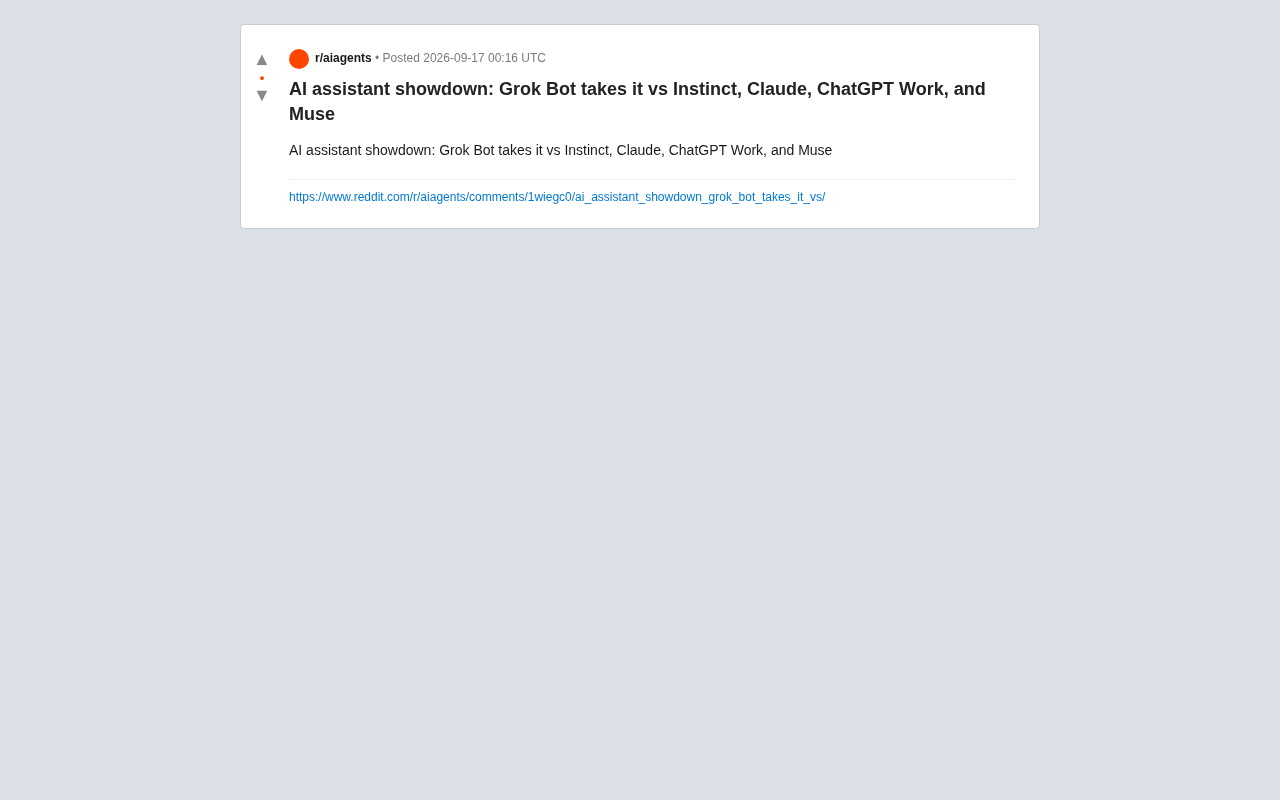
Grok tops a Reddit AI assistant comparison, highlighting the market's growing diversity and increasingly pragmatic user standards.
A Reddit post sparked discussion by declaring xAI's Grok the winner in a head-to-head comparison against Claude, ChatGPT Work, Instinct, and Muse. The article uses this as a jumping-off point to map the AI assistant landscape, analyzing the key dimensions users apply in real-world evaluations — including accuracy and hallucination rates, context understanding, real-time information access, and overall user experience. It also cautions that single-source community comparisons have limited generalizability, and encourages users to test tools against their own specific needs rather than following rankings blindly.
AI Assistant Showdown: A Comparison Worth Paying Attention To
A lively discussion recently surfaced on Reddit, with a post claiming that Grok Bot came out on top in a head-to-head comparison against Instinct, Claude, ChatGPT Work, and Muse. Threads like this reflect just how heated the AI assistant market has become — users are now putting these tools through real-world scenarios rather than relying solely on official benchmark scores.
It's worth noting upfront that the original post is light on detail — it offers a conclusion without breaking down the specific test criteria or data. So rather than analyzing scores that weren't shared, this article takes a broader industry perspective: what does this kind of comparison actually tell us, and what should users really be paying attention to when choosing an AI assistant?
The AI Assistants in the Ring
Based on the products mentioned in the post, this comparison covers several of the most prominent AI assistants on the market today:
- Grok: Developed by xAI, Grok is known for its access to real-time information and a relatively open conversational style. It was deemed the top performer in this particular comparison.
- Claude: Anthropic's flagship product, long praised for its long-context handling, reasoning capabilities, and strong safety track record.
- ChatGPT Work: A work-focused version of ChatGPT, designed around enterprise collaboration and productivity.
- Instinct and Muse: More niche assistants representing the wave of new players continuously entering this space.
The very makeup of this lineup speaks volumes: AI assistants have evolved well beyond the generic chatbot, branching into specialized products tailored to different use cases and user profiles.
To add some context: Grok was launched by Elon Musk's xAI in late 2023, initially exclusive to X (formerly Twitter) Premium+ subscribers. Its core differentiator is deep integration with the X platform, enabling real-time access to social media content — a meaningful edge over competitors whose training data has a fixed cutoff date. Claude, meanwhile, comes from Anthropic, an AI safety-focused company backed by major investors including Google. The Claude family is recognized for its exceptionally large context windows (up to 200K tokens) and relatively low hallucination rates, earning strong loyalty among users in professional writing and academic research contexts. ChatGPT Work — essentially the ChatGPT Team/Enterprise tier — is OpenAI's paid offering for business users, featuring enhanced data privacy, larger context windows, and team collaboration tools, clearly positioned apart from the free consumer product.
Why User Comparisons Are Worth Taking Seriously
Official benchmarks are typically run on standardized tasks, but real users have wildly varied needs. Community-driven comparisons on platforms like Reddit carry value precisely because they're grounded in everyday use cases — writing assistance, code generation, information lookup, logical reasoning, and more.
Whether an assistant "wins" usually comes down to a few key dimensions:
Answer Quality and Accuracy
Reliability is still what users care about most. Does the model hallucinate? Are the facts correct? Is the reasoning sound? These factors directly determine whether a tool is actually usable.
"Hallucination" is a term of art in the large language model world, referring to instances where a model generates information that is confidently stated but factually wrong or entirely fabricated — inventing paper citations, manufacturing historical events, or producing incorrect calculations. This happens because language models are fundamentally built to predict the next most likely token, not to retrieve verified facts from a knowledge base. Hallucination rate is one of the most closely watched quality metrics in the AI assistant space, and a critical evaluation point for enterprise buyers. The stakes vary significantly by task: hallucinations in open-ended creative writing are relatively low-risk, but in medical, legal, or financial contexts, they can have serious consequences.
Context Understanding and Memory
Maintaining coherence across a multi-turn conversation — and accurately tracking user intent throughout — is one of the clearest dividing lines between a good assistant and a great one.
The context window determines how much text an AI assistant can "see" in a single conversation, measured in tokens (roughly 0.5–0.75 tokens per English word). A larger window means the model is less likely to "forget" earlier parts of a long conversation or document. That said, window size and actual memory quality aren't the same thing — research has shown that many models pay significantly less attention to content in the middle of very long contexts, a phenomenon known as "Lost in the Middle." It's also worth noting that most AI assistants today don't retain memory across separate conversations; each new session starts from scratch, which often falls short of users' intuitive expectation that the assistant will "remember" them.
Access to Real-Time Information
This is where Grok has a built-in advantage — its ability to pull in up-to-date information may well be a key reason it performed strongly in certain comparisons.
User Experience and Response Speed
Interface design, response latency, and customizability all play a real role in shaping a user's final preference.
Treat Any Single Comparison with Caution
Even though this particular post concluded that Grok came out on top, it represents a single community perspective with limited generalizability. The tasks tested, the evaluation criteria applied, and individual preferences all significantly affect outcomes. One assistant might shine on writing tasks but fall short on code generation or mathematical reasoning.
Rather than taking any one ranking at face value, the more practical approach is to identify your core needs and try a few tools yourself. Most AI assistants offer free tiers or trial credits — hands-on experience remains the most reliable guide.
Closing Thought: Competition Drives Progress
Regardless of who won this particular round, the fierce competition in the AI assistant space ultimately benefits users. Products are iterating rapidly as each player races to outpace the others, and the capability ceiling keeps rising. For everyday users, the practical strategy is simple: stay informed, choose based on your actual needs, and try things out yourself. That's the most grounded way to navigate a field that's changing this fast.
Related articles

The Return of Wind Power: How Cargo Ships Are Embracing Wind Energy to Cut Emissions
Why are cargo ships embracing wind power again? Explore rotor sails, hard wing sails, and other modern wind-assisted technologies driving shipping's emission-cutting comeback.
Scarier Than AI Agents Taking Over the Internet: A CEO Cartel Monopolizing AI
A Hacker News piece argues that a CEO cartel monopolizing AI is scarier than agents taking over the internet. This article examines AI concentration, open source, and governance.
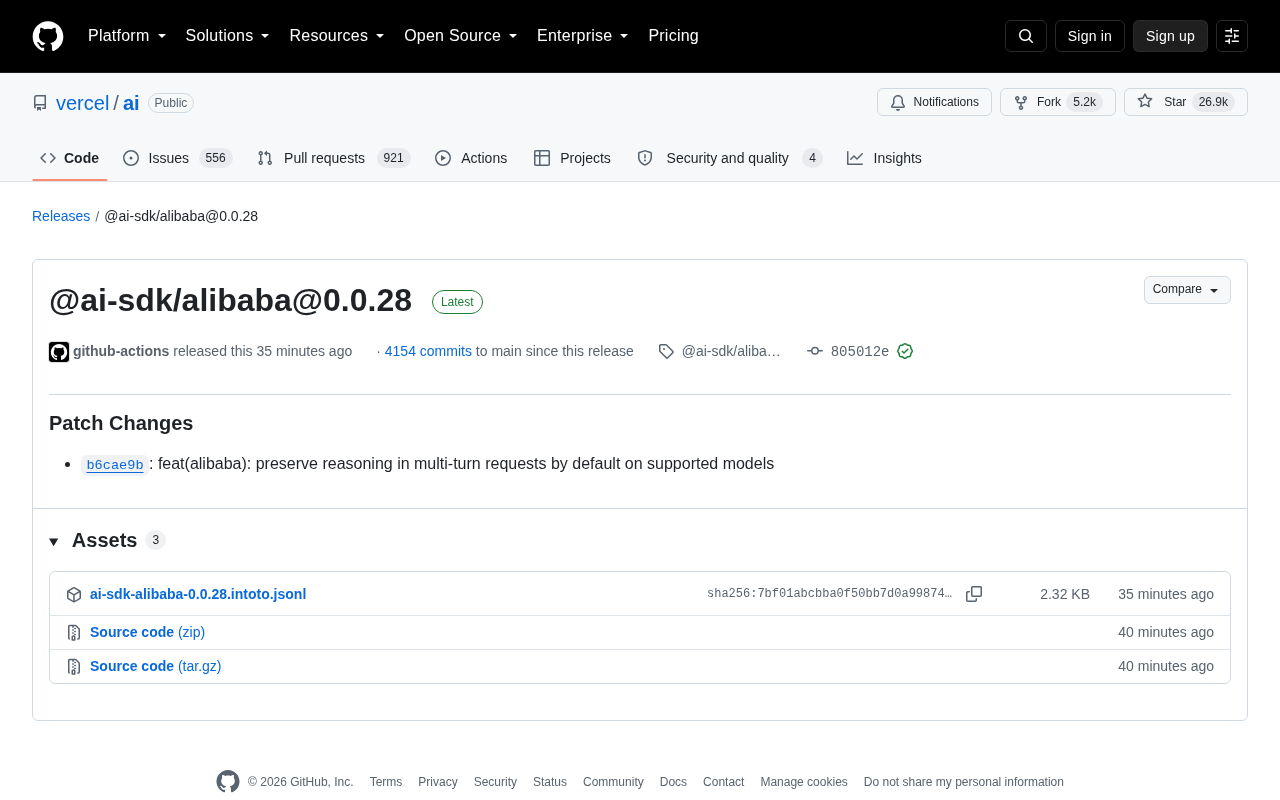
Vercel AI SDK Alibaba Adapter Update: Multi-Turn Conversations Now Preserve Reasoning Chain by Default
Vercel AI SDK's @ai-sdk/alibaba adapter v0.0.28 now preserves reasoning chain by default in multi-turn conversations on supported models, improving coherence.