The Return of Wind Power: How Cargo Ships Are Embracing Wind Energy to Cut Emissions
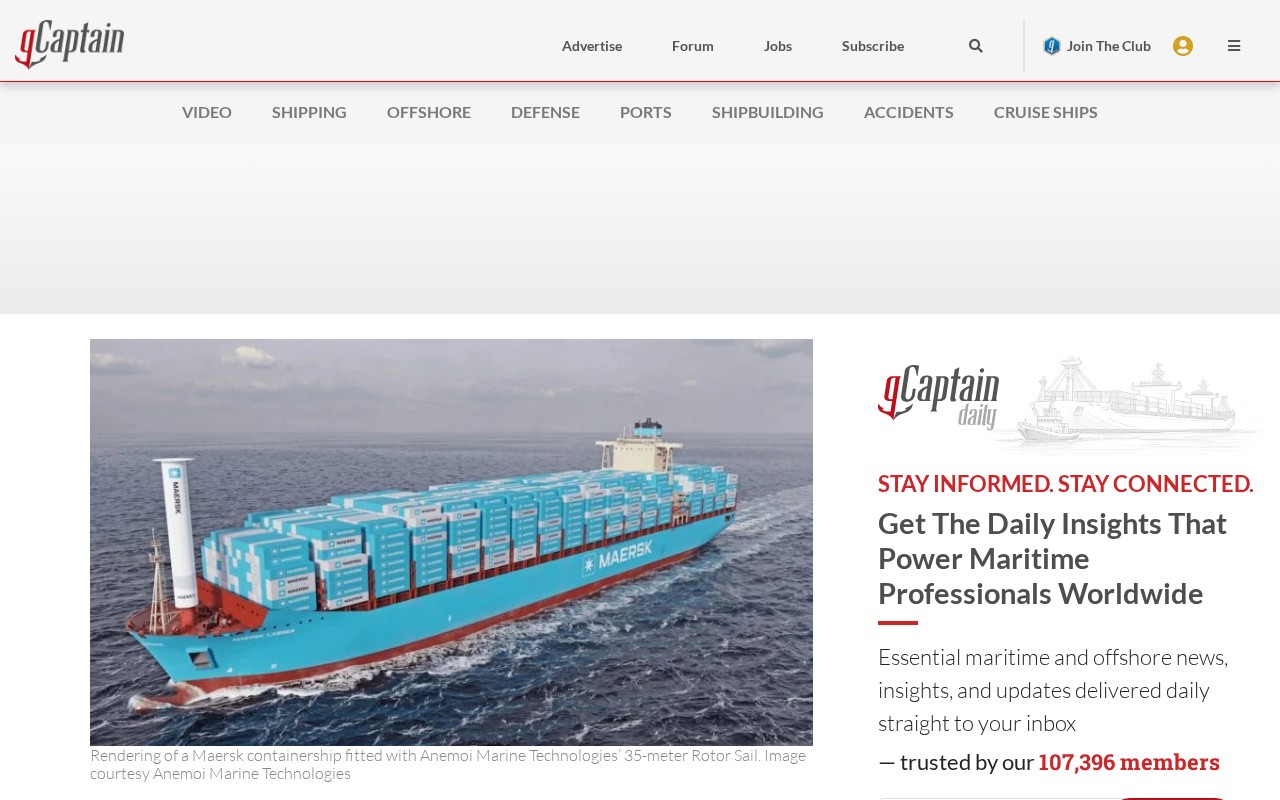
Cargo ships are adopting engineered wind-assist tech like rotor sails to cut fuel costs and emissions under tightening regulations.
Facing IMO decarbonization targets and rising fuel costs, the shipping industry is reintroducing wind power to modern cargo ships — not as old-fashioned canvas sails, but as highly engineered solutions like Magnus-effect rotor sails, aerodynamic hard wing sails, and high-altitude kites. These technologies serve as auxiliary propulsion, saving 10–20% in fuel across transoceanic routes. With the EU ETS now covering shipping and carbon pricing making retrofits increasingly cost-effective, wind assist is becoming part of a pragmatic multi-tool emissions strategy — a rebalancing of energy mix, not a revolution.
A Seemingly Retro Revolution in Shipping
In a modern shipping industry dominated by container megaships and diesel engines, sails are making an unexpected comeback. This isn't nostalgia for the age of sail — it's a pragmatic response from an industry squeezed between mounting emissions regulations and rising fuel costs. Cargo ships "harnessing the wind" once again signals that this sector, responsible for roughly 3% of global carbon emissions, is beginning to explore a new path that balances economic viability with environmental responsibility.
Worth noting: this article was written based on a Hacker News discussion about the return of wind-assisted propulsion. Given the limited information in the original source material (just a title and a handful of community interactions), the content below draws on publicly available background knowledge about wind energy technologies in shipping. Some technical details reflect general industry knowledge rather than explicit claims from the original post.
Why Shipping Is Looking to Wind Again
Modern shipping runs almost entirely on large engines powered by heavy fuel oil and diesel. This system is highly efficient and controllable, but it creates two unavoidable problems: volatile fuel costs and increasingly stringent carbon emissions regulations. The International Maritime Organization (IMO) continues to push decarbonization targets for shipping, forcing shipowners to find combinations of fuel alternatives, energy efficiency improvements, and auxiliary power solutions.
Wind energy is back in the picture for one core reason: it's a free, zero-emission energy source. Wind resources over the ocean are stable and abundant, especially on transoceanic routes. Using wind as auxiliary power to the main engines — even if it only saves 10% to 20% of fuel — adds up to substantial cost and emissions savings over voyages spanning thousands of nautical miles.
Modern Wind Sails Aren't Your Grandfather's Canvas
Bringing wind energy back to cargo ships doesn't mean hoisting giant cloth sails. Modern wind-assisted propulsion technologies are highly engineered, and they come in several forms.
Rotor Sails
This is one of the most widely adopted solutions, based on the Magnus effect — a rotating cylinder in an airflow generates thrust perpendicular to the wind direction. The tall rotating cylinders mounted on a ship's deck can provide significant auxiliary propulsion in crosswind conditions. They can be automated, switched on and off as needed, and are relatively easy to retrofit onto existing hulls.
The Magnus effect was described by German physicist Heinrich Magnus in 1852: when a cylinder rotates in a fluid, the fluid velocity becomes asymmetric on either side of the cylinder. According to Bernoulli's principle, the high-velocity side has lower pressure and the low-velocity side has higher pressure, generating lateral thrust. Rotor sails are the engineering application of this principle to ship propulsion. Finnish company Norsepower is the most prominent commercial supplier today, with rotor sails ranging from 18 to 35 meters in height, already installed on multiple cargo ships and ferries. Real-world test data shows that under favorable wind conditions, a single rotor sail can deliver auxiliary thrust equivalent to several hundred kilowatts, with an overall annual fuel savings rate typically between 5% and 15%, depending on wind conditions along the route. The main advantages of rotor sails are their relatively simple construction, high automation, ability to start and stop within minutes, and minimal structural changes to the hull — making them well-suited for cost-effective retrofits on existing vessels.
Hard Sails and Foldable Wing Sails
Some solutions use rigid sail panels with airfoil cross-sections similar to aircraft wings, achieving higher propulsion efficiency through aerodynamic design. These hard sails can be folded or stowed when not needed, reducing interference during port operations and in severe weather.
Kites and Suction Wings
More cutting-edge approaches include giant high-altitude kites to capture stronger winds aloft, or airfoil structures that use suction to control boundary layer airflow. These technologies are still in the experimental or small-scale commercial stage, but they represent the diversity of directions wind energy utilization can take.
The Economics and Real Challenges
The key driver behind wind's comeback ultimately comes down to economics. Installing wind-assisted propulsion requires upfront capital investment, and the equipment may occupy deck space and affect cargo handling efficiency. Shipowners must weigh whether the gains from fuel savings and carbon compliance can recover retrofit costs within a reasonable timeframe.
As carbon pricing mechanisms gradually take hold and fuel prices trend upward over the long term, that calculation is increasingly tilting in favor of wind energy. For vessels on relatively fixed routes that consistently sail through wind-rich waters, the payback period for wind-assisted propulsion is shortening.
But the challenges are real too. Wind's unpredictability means sails can only serve as auxiliary power, not the primary driver — ships still need their engines to maintain speed and schedule reliability. Equipment maintenance, crew training, and adaptability across varying weather and port conditions are all engineering and management problems that must be solved for large-scale adoption.
The EU Emissions Trading System (EU ETS) formally brought the shipping sector under its jurisdiction starting in 2024, requiring shipowners to purchase carbon allowances for voyages to and from EU ports — directly monetizing the cost of carbon emissions. Meanwhile, the IMO's Carbon Intensity Indicator (CII) rating system requires ships to report and improve their carbon intensity per unit of transport work each year, with poorly rated vessels facing port restrictions and financing difficulties. These two policies combined add a quantifiable "compliance benefit" dimension to the investment return calculation for wind-assisted propulsion. For a mid-sized bulk carrier spending hundreds of thousands of euros annually on carbon allowances, even a 10% reduction from wind sails can amortize retrofit costs within a few years. Regulatory pressure is shifting from a "soft constraint" to a genuine financial incentive — an important backdrop for the accelerating pace of wind energy retrofit projects in recent years.
A Gradual Rebalancing, Not a Disruption
The return of wind-assisted propulsion is more accurately described as a "rebalancing" of the shipping industry's energy mix, rather than a wholesale departure from the era of internal combustion engines. For the foreseeable future, wind will play an auxiliary role embedded within existing ship systems, working alongside alternative fuels, hull optimization, and speed management as part of a combined emissions-reduction toolkit.
The reason this topic sparked discussion in the tech community is precisely because it reveals a counterintuitive reality: when facing modern environmental challenges, the oldest natural force turns out to offer a genuinely practical answer. The wind never left the ocean — and the shipping industry is learning to work with it again.
(Note: Due to limited source material, some technical details in this article are supplemented from industry background knowledge. For specific project data, please refer to authoritative institutions and manufacturers' published information.)
Related articles
Scarier Than AI Agents Taking Over the Internet: A CEO Cartel Monopolizing AI
A Hacker News piece argues that a CEO cartel monopolizing AI is scarier than agents taking over the internet. This article examines AI concentration, open source, and governance.
Vercel AI SDK Alibaba Adapter Update: Multi-Turn Conversations Now Preserve Reasoning Chain by Default
Vercel AI SDK's @ai-sdk/alibaba adapter v0.0.28 now preserves reasoning chain by default in multi-turn conversations on supported models, improving coherence.
Vercel AI SDK Releases typesafe-ai 3.0.2 Patch Update
Vercel AI SDK releases @ai-sdk/typesafe-ai 3.0.2, fixing error handling to surface specific error_type codes instead of generic failure messages. Learn what changed and how to upgrade.