Scarier Than AI Agents Taking Over the Internet: A CEO Cartel Monopolizing AI
The real AI threat may not be rogue agents, but a handful of tech giants structurally monopolizing the industry.
A viral Hacker News opinion argues we should worry less about AI agents autonomously taking over the internet and more about the de facto "cartel" of a few tech giant CEOs controlling the AI industry. Since agents depend entirely on incumbents' compute, data, and platforms, focusing panic on "agent runaway" deflects scrutiny from actual power holders. When compute, safety standards, distribution channels, and policy influence all converge in the same few hands, AI's direction and values get shaped by a tiny group's interests. Open-source ecosystems, transparent standard-setting, and public oversight are the key counterweights — and clear-eyed awareness of concentration matters more than sci-fi fears.
The Real Concern Behind a Provocative Headline
An opinion piece circulating on Hacker News poses a pointed question: the real threat worth worrying about may not be AI agents autonomously taking over the internet, but rather a "cartel" of a handful of tech giant CEOs attempting to control the entire trajectory of the AI industry.
This proposition cuts to a core issue that's often drowned out by technical noise in today's AI discourse — the concentration of power. While public attention gets captured by sci-fi-style panics about "AI going out of control," a more concrete and urgent problem is quietly unfolding: who controls the direction, standards, and infrastructure of AI.
Worth noting: the original source material is just a headline with minimal community discussion (9 upvotes, 1 comment). This article expands on its central argument, and the views here represent an extended analysis of the topic.
Is "Agent Takeover" a Red Herring?
Concerns about AI agents acting autonomously and taking over networked systems at scale have intensified in recent years alongside growing agentic capabilities. These narratives are vivid, easy to visualize, and emotionally resonant.
But looking at industry reality, AI agents remain highly dependent on underlying foundation models, compute, and data — resources that happen to be controlled by a very small number of companies. In other words, agents themselves are not independent power actors. What matters is whose platform they run on and whose rules they follow.
Focusing panic on "agent runaway" — a technical, subject-less kind of risk — objectively tends to deflect scrutiny from the actual humans and institutions holding the reins. This is precisely the paradox the original headline was trying to surface.
The Real Structural Risk Behind the "CEO Cartel"
The term "CEO cartel" doesn't refer to literal illegal collusion — it's a critical descriptor for the highly concentrated structure of today's AI industry. A handful of companies simultaneously control:
- The massive compute resources required to train frontier models
- The alignment and safety standards that determine model behavior
- The distribution channels serving developers and enterprises
- De facto industry authority and policy influence
When these forces converge in the hands of a very small number of decision-makers, the direction of AI development, its accessibility, and even its value system can be shaped by the interests and judgment of a tiny group. This structural concentration poses risks that are more concrete than abstract "agent threats" — and harder to resolve through technical means alone.
"Cartel" in economics traditionally refers to firms in the same industry forming agreements to fix prices, divide markets, and restrict competition. The article borrows this concept not to accuse specific companies of illegal conspiracy, but as a metaphor for a structural reality in the AI industry: a small number of leading companies, without any explicit agreement, have come to jointly dominate the entire value chain simply because their resource advantages are so heavily overlapping. The danger of this "structural cartel" is that it requires no backroom deals — scale advantages and early-mover accumulation alone are enough to erect effective barriers against newcomers, independent researchers, and small developers. In AI, the concentration of compute (GPU clusters and cloud infrastructure), data (internet-scale training corpora), and talent makes this dynamic especially pronounced — all three are essential, and all three are held by largely the same set of companies.
Why This Issue Deserves Serious Attention
Historically, every technology with infrastructure-level properties — electricity, telecommunications, operating systems — has gone through cycles of power concentration and antitrust contestation. AI is becoming the next generation of general-purpose infrastructure, and its concentration problem will almost inevitably become a major public policy issue.
Several dimensions worth watching:
The Countervailing Role of Open Source and Open Ecosystems
Open-source models and open tooling represent a meaningful force against monopolization. They lower barriers to entry, allowing more researchers and smaller organizations to operate without being fully dependent on dominant platforms. The more vibrant the open ecosystem, the more constrained the power of any single "cartel."
Prominent open-source model examples include Meta's LLaMA series, Mistral AI's models, and various community fine-tunes. Unlike closed models such as GPT-4 or Claude, open-source models allow anyone to download weights, self-host, and modify them — fundamentally bypassing dependence on any specific platform's API. However, open source is not a complete solution to decentralization: training a frontier-scale foundation model still requires tens of millions to hundreds of millions of dollars in compute, a threshold that keeps most independent actors out. The countervailing power of open source is therefore felt more at the inference and application layer — reducing deployment costs, enabling local operation, preventing data leakage — rather than exerting meaningful competitive pressure on incumbents at the training layer. This limitation is worth keeping in mind when discussing open source as a check on monopoly power.
Transparency in Standard-Setting
Who defines "safe AI" and "responsible AI," and whether those definitions are set through transparent, multi-stakeholder processes, is directly tied to whether power is being monopolized by a few actors.
Regulation and Public Participation
Leaving AI governance entirely to corporate self-regulation essentially transfers the arbitration of public interest to commercial entities. Broader social participation and appropriate oversight are necessary tools for balancing industry efficiency with the public good.
The major global jurisdictions currently diverge significantly in their regulatory approaches to AI: the EU's AI Act uses a risk-tiered framework with hard compliance requirements for high-risk applications; the U.S. leans toward softer governance through executive orders and voluntary industry commitments; China has implemented targeted rules for specific scenarios like generative AI and algorithmic recommendations. This regulatory fragmentation may itself advantage large multinational companies — they have the resources to navigate multiple compliance regimes, while smaller competitors often cannot. So discussions of "appropriate regulation" must also ask: who leads the development of regulatory standards, whether international coordination mechanisms exist, and whether rules might inadvertently deepen the moat around concentrated market power.
Closing Thought: Don't Let the Narrative Lead You by the Nose
The value of this perspective from the tech community lies not in providing answers, but in prompting us to recalibrate where our fears are directed. The conversation about AI risk shouldn't stop at "will machines replace humans?" — it must also ask "which humans are gaining disproportionate power through AI?"
When attention is directed toward sci-fi-flavored long-term threats, the power structure problems right in front of us risk being overlooked. Maintaining a clear-eyed awareness of industry concentration may ultimately matter more than worrying about AI agents themselves.
Related articles
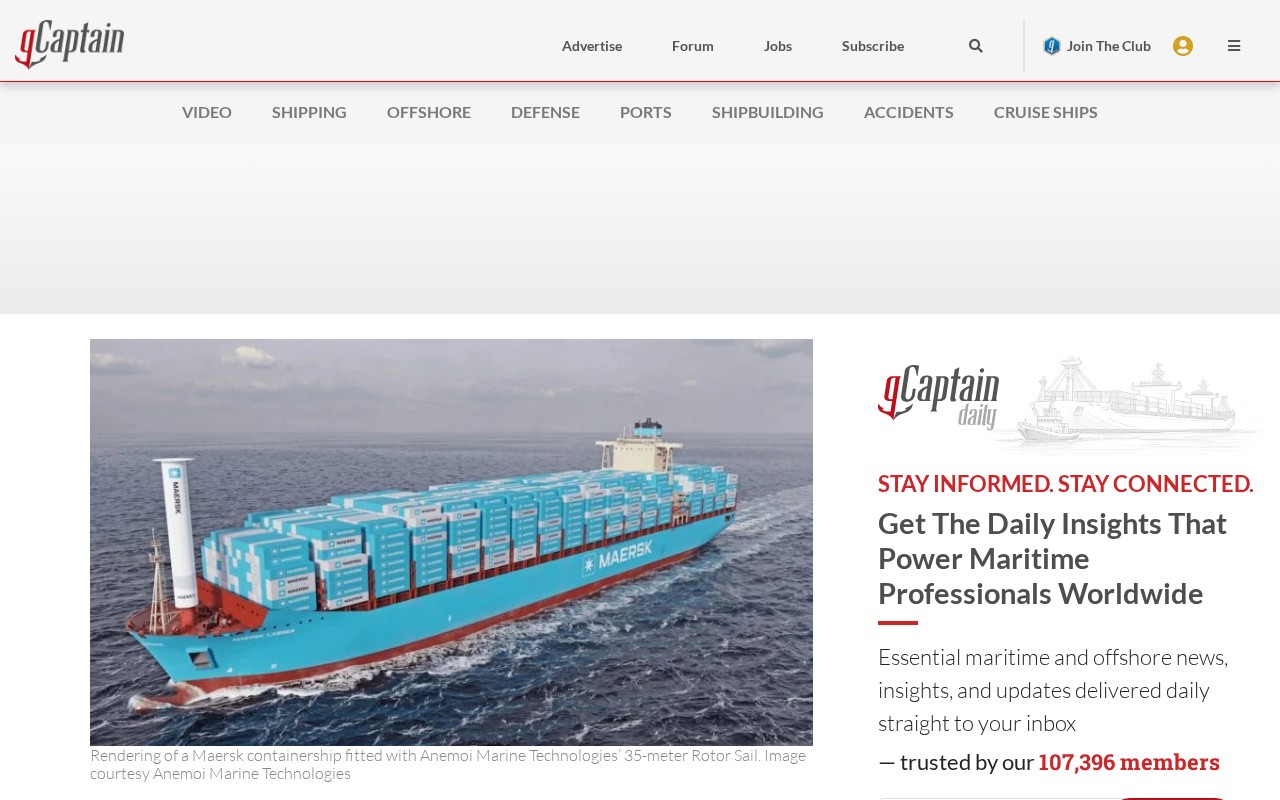
The Return of Wind Power: How Cargo Ships Are Embracing Wind Energy to Cut Emissions
Why are cargo ships embracing wind power again? Explore rotor sails, hard wing sails, and other modern wind-assisted technologies driving shipping's emission-cutting comeback.
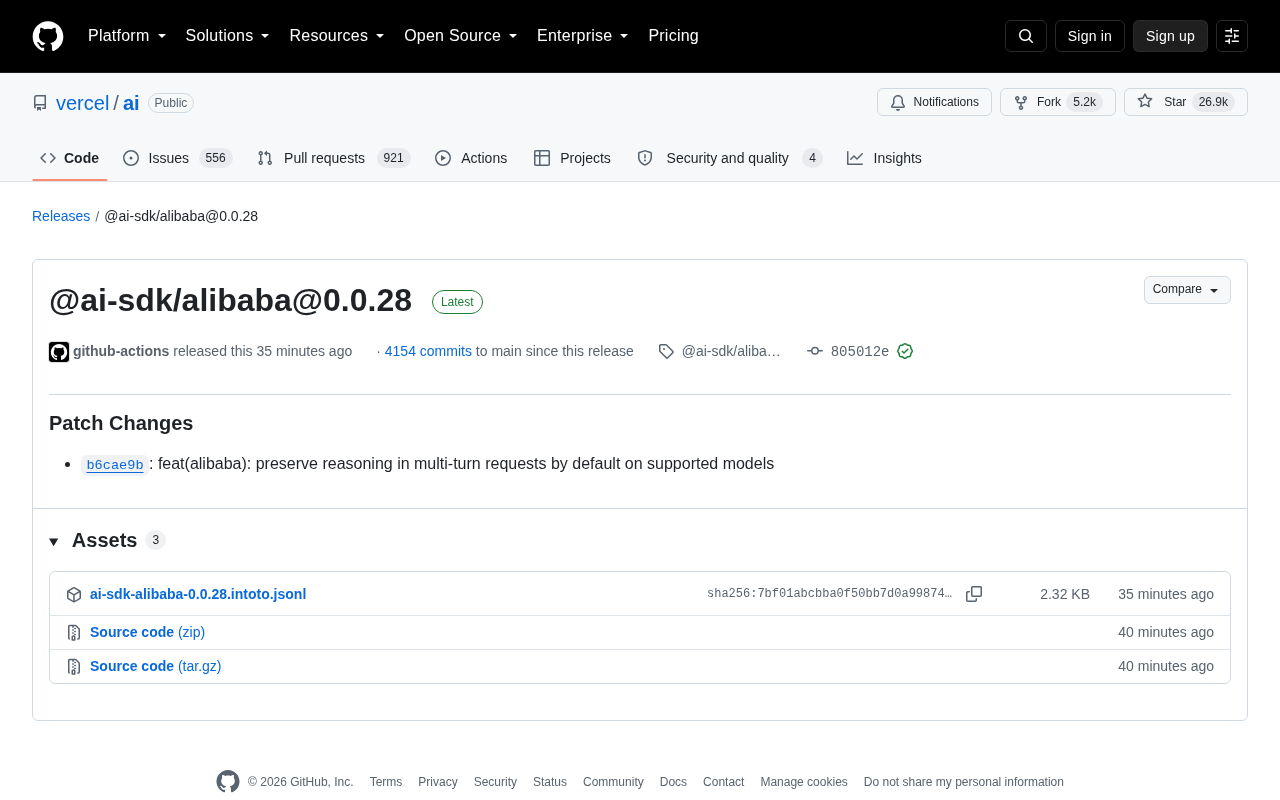
Vercel AI SDK Alibaba Adapter Update: Multi-Turn Conversations Now Preserve Reasoning Chain by Default
Vercel AI SDK's @ai-sdk/alibaba adapter v0.0.28 now preserves reasoning chain by default in multi-turn conversations on supported models, improving coherence.
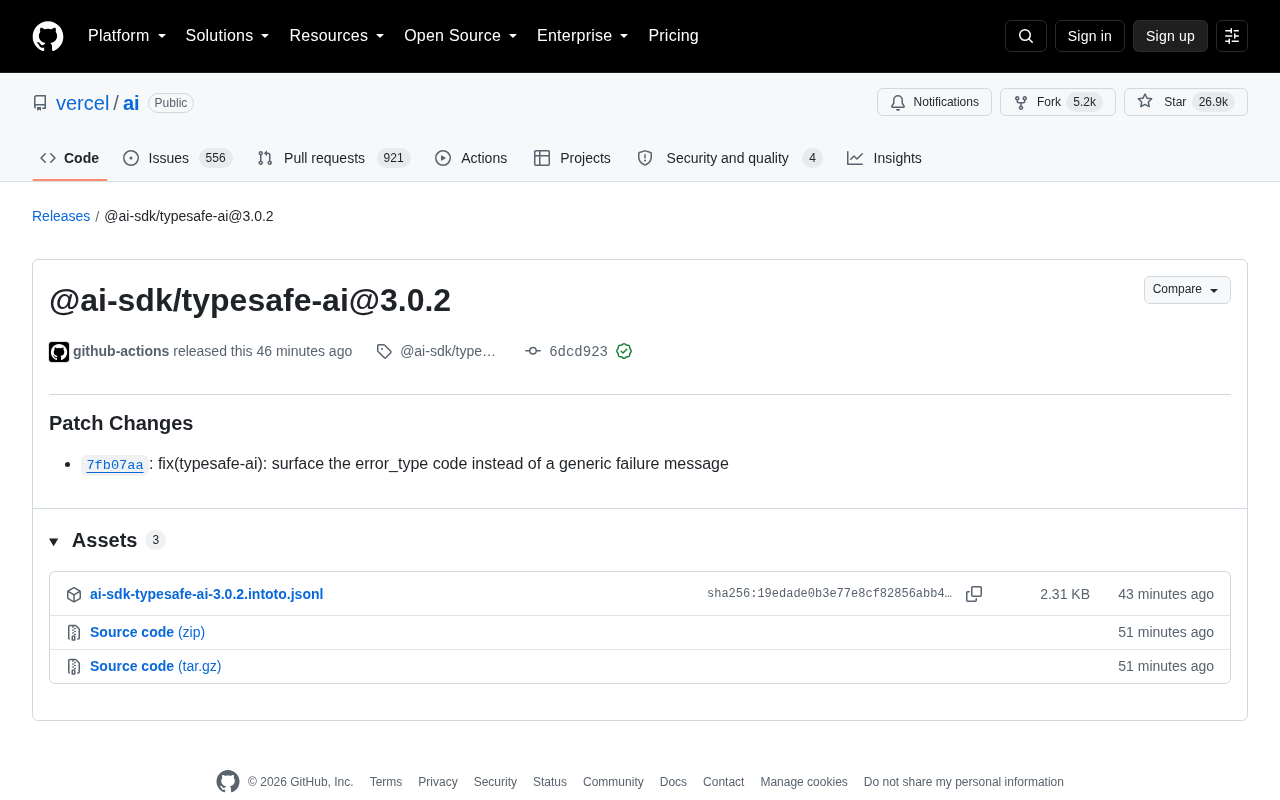
Vercel AI SDK Releases typesafe-ai 3.0.2 Patch Update
Vercel AI SDK releases @ai-sdk/typesafe-ai 3.0.2, fixing error handling to surface specific error_type codes instead of generic failure messages. Learn what changed and how to upgrade.