AI Automated Vulnerability Discovery Tutorial: A Beginner's Path from Agent Building to SRC Practice

A Bilibili course guides beginners through four stages to find their first bug using AI agents.
The article introduces a Bilibili AI automated vulnerability discovery course for absolute beginners and part-time bug hunters, split into fundamentals, vulnerability principles, AI tools, and hands-on hunting. Agent building gets its own section, showing AI's shift from query assistant to orchestrated executor; hands-on covers CVE reproduction and SRC practice with asset collection and tools, plus study materials to lower startup friction. The author notes agents can't replace understanding of vulnerability principles and SRC practice must stay within authorized scope.
Title
AI Automated Vulnerability Discovery Tutorial: A Beginner's Path from Agent Building to SRC Practice
Meta Description
A beginner-friendly breakdown of an AI automated vulnerability discovery course: from Agent building and high-frequency vulnerability principles to CVE reproduction and SRC hunting practice, with a four-stage learning path and supporting resources to help you understand where AI tools actually fit in vulnerability discovery.
Article Content
For beginners just stepping into cybersecurity, the biggest barrier to vulnerability discovery is often not the technology itself, but not knowing where to start: what the high-frequency vulnerabilities are, how to collect assets, how to use the tools, and how to reproduce vulnerabilities. This beginner-oriented AI automated vulnerability discovery course on Bilibili attempts to lay out this entire path in one go—covering everything from Agent building to SRC vulnerability reproduction.
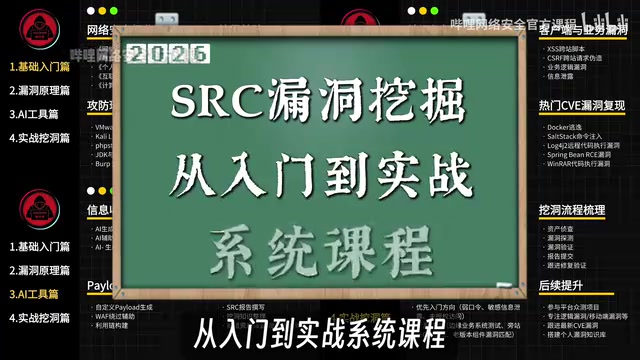
Course Positioning: An Entry Path for Absolute Beginners and Part-Time Bug Hunters
The course states its audience plainly from the start: one group is absolute beginners just getting into cybersecurity, and the other is working people who want to use their spare time to hunt bugs and earn some pocket money. This determines that the content won't pile on advanced techniques right away, but is organized around "you can get started and you can get results."
The instructor splits the course into four parts: fundamentals, vulnerability principles, AI tools, and hands-on bug hunting, and promises to walk students step by step to their first vulnerability. For beginners, setting "find your first bug" as the end goal is far more motivating than talking about security concepts in general terms.
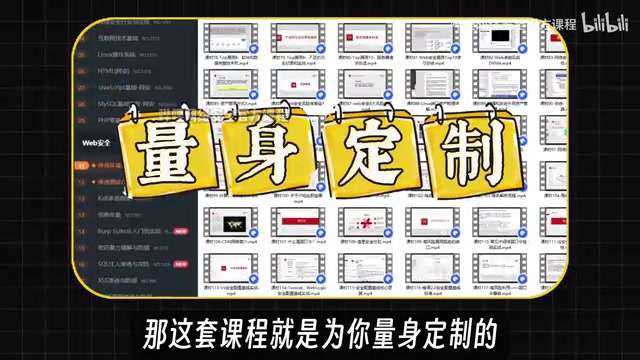
Breaking Down the Four-Stage Course Structure
Fundamentals and Vulnerability Principles
The first two parts lay the foundation. The fundamentals section addresses environment and mindset issues, while the vulnerability principles section focuses on the causes and exploitation logic of high-frequency vulnerabilities. The materials don't elaborate on specific vulnerability types, but judging from the course's overall positioning, the goal of this part is to help students understand why vulnerabilities arise, rather than memorizing payloads.
AI Tools: Agents Are the Core Variable
This is what sets the course apart from traditional bug-hunting tutorials. The course title puts "Agent building" front and center, indicating that AI is no longer just an auxiliary query tool, but is treated as an orchestrated execution unit for bug hunting. For beginners, this means some repetitive information gathering and verification work can be handed off to agent workflows, reducing the manual workload.
It should be noted that the original materials do not disclose the specific architecture of the Agent, the models used, or toolchain details, so no excessive speculation about implementation is made here. What is certain is that the course dedicates a separate section to AI tools, showing that they occupy considerable weight in the overall methodology.
Agent (AI Agent) refers to a program entity that uses a large language model as its decision-making core and can autonomously plan steps and call external tools to complete tasks. Unlike simple conversational Q&A, an Agent typically has closed-loop capabilities for task decomposition, tool invocation (such as executing commands, making HTTP requests, calling scanner APIs), result observation, and iterative correction. In vulnerability discovery scenarios, such agents can chain information gathering, fingerprinting, payload probing, and response judgment into automated workflows, and dynamically adjust the next action based on intermediate results. Their effectiveness depends heavily on prompt design, the available toolset, and the model's understanding of security semantics, so human-defined boundaries and review of conclusions are still required.
Hands-On Bug Hunting: CVE Reproduction and SRC Practice
The hands-on section covers two tracks: CVE vulnerability reproduction and SRC bug hunting practice. CVE reproduction is a shortcut to understanding real vulnerabilities; by recreating the trigger conditions of public vulnerabilities, beginners can build an intuitive understanding of exploit chains.
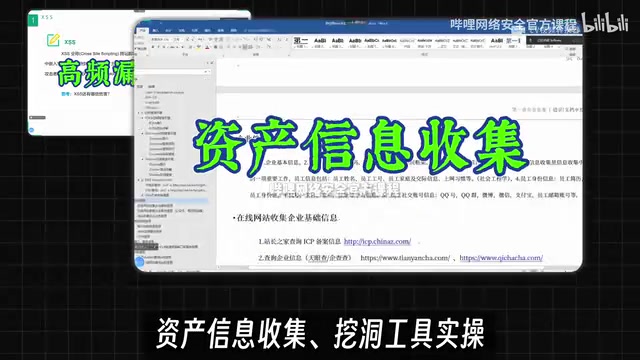
SRC bug hunting practice then shifts the perspective to real targets, involving asset information gathering and hands-on use of bug-hunting tools. The materials explicitly list these keywords, indicating that the course covers the complete workflow from information gathering to vulnerability verification. As for which specific tools are used and which vendors' SRCs are covered, the original text doesn't elaborate.
CVE (Common Vulnerabilities and Exposures) is a public vulnerability numbering system maintained by MITRE, where each number corresponds to a confirmed security flaw and is usually linked to vendor advisories, patch information, and public PoCs or exploit code. The general process for reproducing a CVE is: identify the affected version, set up the corresponding environment, recreate the trigger conditions, observe abnormal behavior, and verify the impact. For beginners, the value of CVE reproduction lies in grounding abstract vulnerability principles in concrete code and requests, while also training the ability to set up environments, analyze traffic, and chain together exploit paths. Note that the public details for some CVEs are incomplete, and the reproduction process may require reverse-engineering the trigger point from the patch diff.
SRC (Security Response Center) is a vulnerability collection and reward platform set up by major internet companies, where white hats earn points or cash bounties by submitting valid vulnerabilities. The biggest difference between SRC bug hunting and CVE reproduction is that the target is unknown and the scope is controlled: participants can only test within the asset scope defined by the vendor and must follow platform rules. A typical workflow includes asset collection such as subdomains and ports, fingerprinting and service identification, targeted testing of high-frequency vulnerability types (such as broken access control, SQL injection, file upload, SSRF), and writing reproducible vulnerability reports. Report quality, severity rating, and vendor review standards directly affect bounty outcomes.
Supporting Resources and Learning Path
The instructor mentions that the study plan, video tutorials, study notes, and tool installation packages involved in the learning process have all been packaged together. For self-taught cybersecurity learners, environment configuration and tool installation are often the first step that drives people away; supporting installation packages can reduce the friction of getting started to some extent.
The course offers two exit paths: switch careers into cybersecurity and become a white hat at a big company, or hunt bugs from home and earn bounties. These two directions have different capability requirements—the former emphasizes systematic knowledge, while the latter relies more on familiarity with specific target assets and sensitivity to vulnerabilities. The course presents them side by side; the actual outcome depends on how much effort students put into the hands-on section.
Authorized testing is an indispensable prerequisite for vulnerability discovery. Probing, scanning, or exploiting real systems without authorization may, in China, violate the Cybersecurity Law, Article 285 of the Criminal Law (the crime of illegally intruding into computer information systems, the crime of illegally obtaining computer information system data, etc.), and may incur legal liability even without actual damage. Compliant practices include: testing only within the asset scope explicitly published by the SRC platform, following platform prohibitions (such as no destructive testing, no database dumping), not touching user privacy data, and promptly reporting vulnerabilities through official channels while keeping test records. Before hands-on practice, beginners should first read the target platform's vulnerability collection rules and disclaimers.
A Rational View of AI Bug-Hunting Tutorials
AI automated vulnerability discovery is a hot direction in security today, but beginners need to stay clear-headed: agents can accelerate information gathering and preliminary verification, but they cannot replace an understanding of vulnerability principles. The course places the vulnerability principles section before the AI tools section, and the order itself illustrates this logic—understand vulnerabilities first, then talk about automation.
In addition, SRC bug hunting involves real targets and must be conducted within an authorized scope—a prerequisite that no tutorial should omit. The materials do not mention compliance-related content, so learners must confirm the authorization boundaries of target assets themselves during hands-on practice.
Overall, the value of this course lies in stringing scattered introductory knowledge into an executable path and using AI tools to reduce repetitive labor. For zero-foundation students, whether they can persist through all four stages is more critical than how many tools the course itself covers.
One-line Summary
A Bilibili course guides beginners through a four-stage path to complete their first vulnerability discovery using AI agents.
Paragraph Summary
The article introduces a Bilibili AI automated vulnerability discovery course aimed at absolute beginners and part-time bug hunters, breaking it into four stages: fundamentals, vulnerability principles, AI tools, and hands-on bug hunting, with the goal of walking students step by step to their first vulnerability. Agent building is given its own section, reflecting AI's upgrade from an auxiliary query tool to an orchestrated execution unit; the hands-on section covers CVE reproduction and SRC bug hunting, involving asset collection and tool practice, with a study plan, notes, and tool installation packages to reduce startup friction. The author also reminds readers that agents can only accelerate information gathering and preliminary verification, cannot replace understanding of vulnerability principles, and that SRC practice must be limited to authorized scope.
Related articles

AI SDK Workflow 2.0.95 Update: Stream Transform API Removed
AI SDK Workflow 2.0.95 removes the experimental_transform option from WorkflowAgent.stream() and the StreamTextTransform type export, as stream transforms cannot reliably cross workflow step boundaries. This article covers the reasons, migration points, and upgrade advice.

AI SDK Vue 4.0.163 Patch Released: Full Dependency Chain Update
AI SDK Vue releases patch 4.0.163, synchronously upgrading dependencies including ai@7.0.163 and @ai-sdk/provider-utils@5.0.75. This article analyzes the practical impact of this dependency chain update.

AI SDK Voyage 2.0.75 Patch Release: What the Dependency Chain Update Means
AI SDK's Voyage Provider releases patch version 2.0.75, syncing only @ai-sdk/provider and provider-utils deps. We analyze the impact and upgrade guidance.