AI Climate Pledges Branded a Cruel Joke: Big Tech's New Greenwashing Tactic?
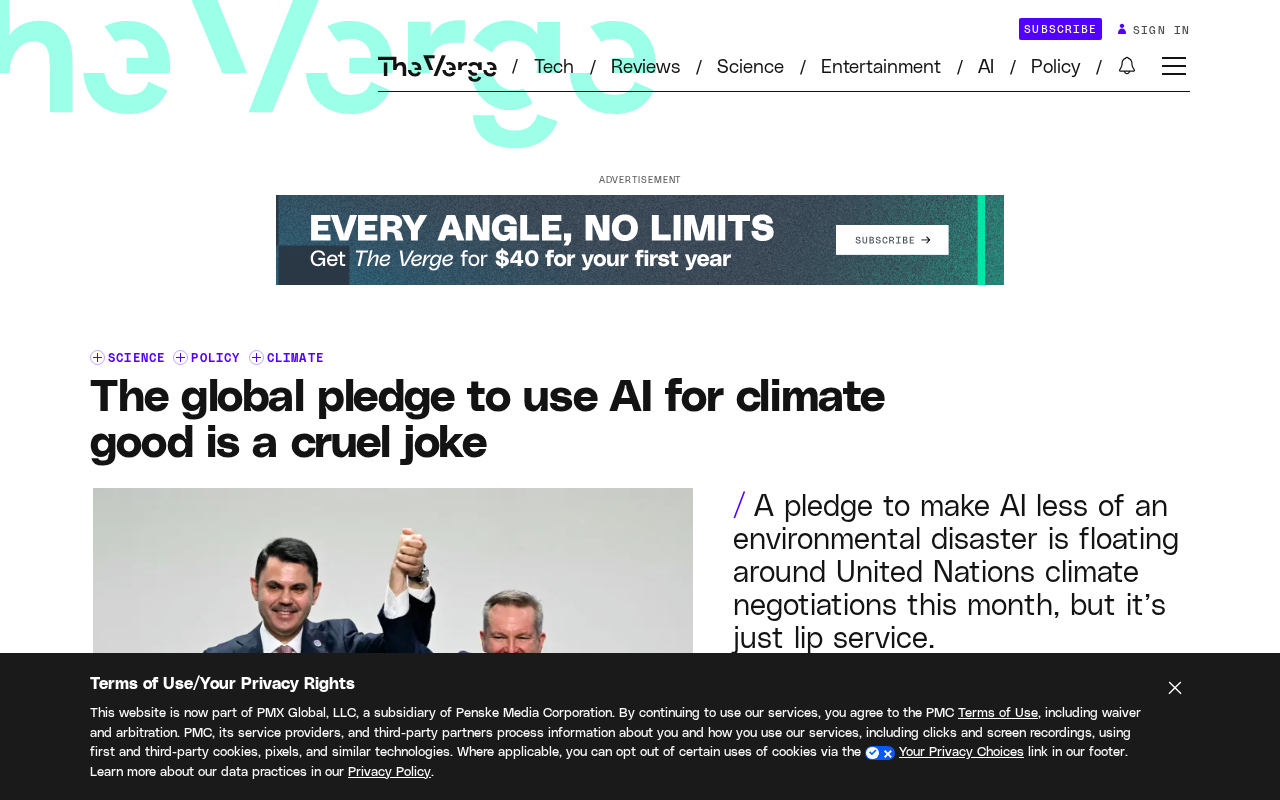
The Verge commentary criticizes AI climate pledges as non-alcoholic beer—all form, no substance—an upgraded form of greenwashing.
The Verge commentary compares tech companies' joint global pledge to "use AI to benefit the climate" to non-alcoholic beer—it smells like beer but has no substance when you drink it. The article notes that the tech industry is expanding energy-intensive AI computing infrastructure while casting itself as a climate solution provider, a narrative that cleverly shifts public attention from AI's own environmental costs to the imagination of "helping others reduce emissions." The author sees this as greenwashing upgraded from product labels to algorithmic emissions-reduction narratives, making it more deceptive. Public skepticism stems precisely from understanding AI's energy consumption issues. Judging a pledge's sincerity should focus on three things: whether specific energy data is disclosed, whether climate goals are tied to executive compensation or expansion plans, and whether independent audits are accepted.
When Environmental Pledges Become Non-Alcoholic Beer
Tech companies have recently co-signed another global pledge to "use AI to benefit the climate." A commentary piece in The Verge used a precise metaphor: reading this pledge feels like drinking a non-alcoholic beer—it smells like beer, but there's no substance when you drink it. The author admits to being skeptical from the start, but out of love for both beer and the planet, decided to "take a sip." This conflicted mindset is exactly how the public generally feels when confronted with Big Tech's environmental declarations.
The Huge Gap Between Promises and Action
The problem with this global pledge isn't that the wording isn't pretty enough—it's that there's an irreconcilable contradiction between it and the tech industry's actual actions. Training large AI models consumes enormous amounts of electricity and water, and data centers are expanding at an unprecedented rate. Meanwhile, tech companies are casting themselves as solution providers in their climate pledges. The cleverness of this narrative shift lies in diverting public attention from "AI's own environmental costs" to the imagination of "AI helping others reduce emissions."
The Verge commentary cuts to the core—such pledges are more of a PR gesture than a verifiable action roadmap. There are no mandatory carbon accounting standards, no binding clauses on AI's own energy consumption, and no independent third-party oversight mechanisms. The grander the pledge, the vaguer the implementation.
The energy and water consumption of large AI models is the key context for understanding this contradiction. Training a large language model can consume hundreds to thousands of megawatt-hours of electricity; GPT-3's training was estimated at approximately 1,287 megawatt-hours. The cumulative energy consumption during the inference phase (each time a user calls the model) often exceeds that of training itself. Beyond electricity, data centers also require massive amounts of water for cooling; Google disclosed that its global data centers used about 5.6 billion gallons of water in 2022. The International Energy Agency (IEA) estimates that global data center electricity consumption could double by 2026. These figures form the basic reference frame for assessing the authenticity of AI climate pledges—any emissions-reduction narrative that doesn't disclose its own energy consumption lacks a comparable baseline.
Greenwashing 2.0: From Products to Algorithms
"Greenwashing" in the environmental space is nothing new, but AI has added a new dimension to the term. In the past, companies shaped their environmental image by slapping green labels on products; now, by claiming that algorithms can optimize climate prediction, improve energy efficiency, and assist carbon capture, they've upgraded greenwashing from the marketing level to the technical narrative level.
This new form of greenwashing is more deceptive. That's because AI has indeed demonstrated emissions-reduction potential in certain scenarios, such as grid dispatch optimization or climate model simulation. The problem is that these isolated cases get amplified into industry-level solution pledges, while AI's own carbon footprint is deliberately or inadvertently downplayed. The commentary's author summed up the experience in one phrase: a cruel joke.
Greenwashing was first coined by environmentalist Jay Westerveld in 1986, referring to companies making misleading claims that their products or policies are environmentally friendly in order to gain public goodwill and commercial benefit. Common tactics include selective disclosure, vague wording, and self-promotion without third-party verification. On the regulatory side, the EU's Green Claims Directive, passed in 2023, requires companies to provide verifiable evidence for environmental claims, and the U.S. Federal Trade Commission's (FTC) Green Guides also regulate environmental marketing. What's new about greenwashing in the AI era is that the subject of claims has shifted from physical products to intangible algorithmic capabilities, raising the verification threshold and making it harder for the public to distinguish truth from falsehood.
Why the Public Isn't Buying It Anymore
Skepticism doesn't come from ignorance—it comes precisely from understanding. As discussion of AI's energy consumption enters the mainstream, the public is beginning to realize a basic fact: if a company is simultaneously doing two opposite things—expanding energy-intensive computing infrastructure while signing environmental pledges—then the sincerity of those pledges deserves a question mark.
The value of The Verge's commentary isn't in providing data or solutions, but in capturing a spreading sentiment: fatigue and distrust toward Big Tech's environmental rhetoric. When pledges can be easily signed but not effectively measured, they degrade from vision to noise. Breaking this cycle requires not another prettier pledge document, but auditable energy disclosure and hard constraints tied to commitments.
After the Pledge, What to Watch
To judge whether an AI climate pledge deserves serious consideration, watch for a few signals: whether it discloses specific energy consumption data for AI training and inference; whether it ties climate goals to executive compensation or business expansion plans; and whether it accepts independent audits. If the answer to all these questions is no, then no matter how moving the pledge's wording, it's probably still a non-alcoholic beer—good for raising a glass for a photo, but not for quenching thirst.
Auditable energy disclosure refers to companies publicly disclosing, according to unified standards, the electricity consumption, carbon intensity, and water usage of their AI training and inference, subject to independent third-party verification. Several frameworks already exist for reference: the Greenhouse Gas Protocol (GHG Protocol) distinguishes Scope 1, 2, and 3 emissions; the Science Based Targets initiative (SBTi) requires companies to set emissions-reduction targets consistent with a 1.5°C pathway; and CDP (Carbon Disclosure Project) provides standardized disclosure questionnaires. The problem is that the energy attribution of AI computing is often split between cloud service providers and model developers, leading to double-counting or omission. Without mandatory disclosure rules, companies tend to publish only favorable data—this is precisely the institutional root of what the commentary calls "pledges that cannot be effectively measured."
Related articles
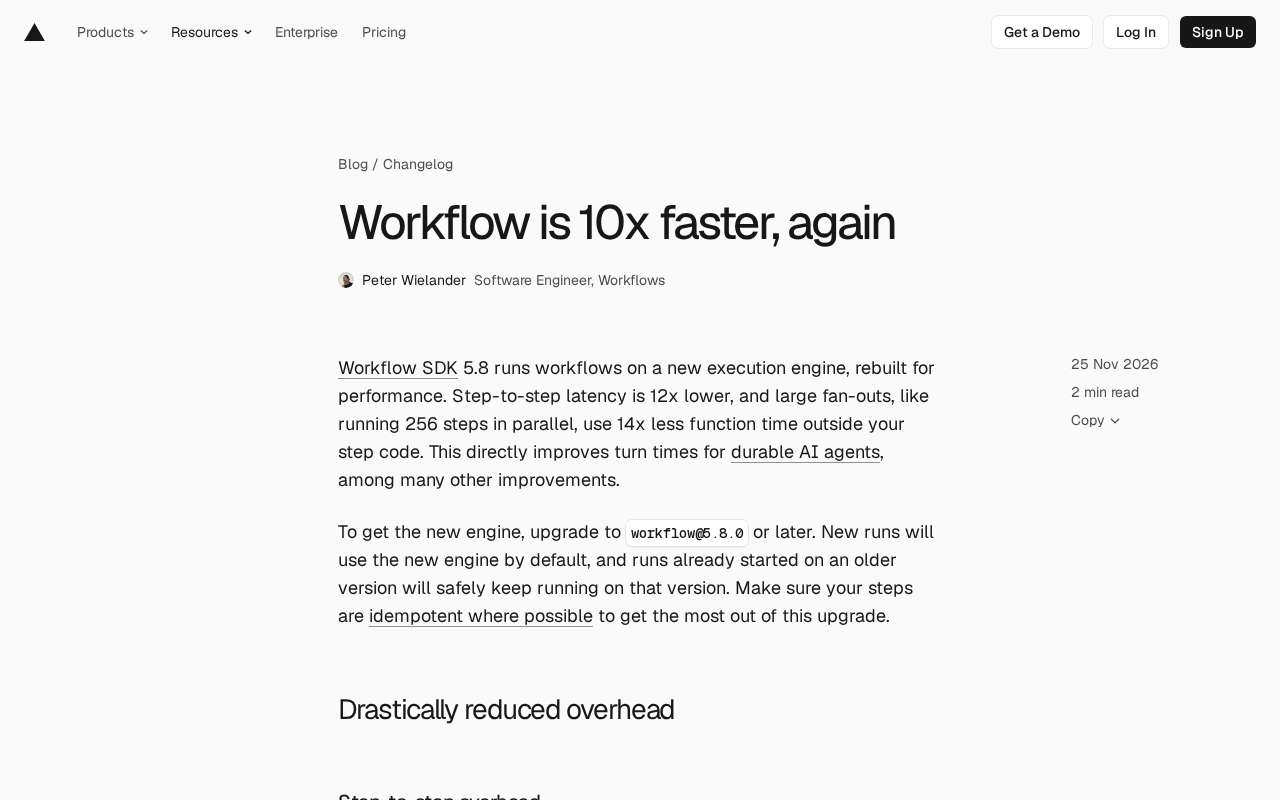
Workflow SDK 5.8 Performance Benchmark: Step Latency Reduced 12x
Workflow SDK 5.8 rebuilds its execution engine, cutting p75 inter-step latency from 85ms to 7ms and 256-way parallel fan-out overhead by 14x, improving durable AI agent turnaround.

David Fincher's New Film Accused of Being AI-Generated? The Truth Behind the Controversy
David Fincher's new film *The Further Misadventures of Cliff Booth* is accused of using AI, with a carriage shot in the trailer sparking controversy. Netflix's acquisition of Ben Affleck's AI company and Fincher's own openness to AI keep suspicions alive. This article sorts out the controversy and the views of all sides.

FCC Clears SpaceX's Space-Based AI Data Centers: A Debate Over Regulatory Boundaries
The FCC approved SpaceX's plan to deploy AI data centers in space but dismissed opponents' key concerns about scientific research impacts as beyond its regulatory authority. This article analyzes the regulatory boundary issues behind the decision, the deeper tensions of space-based AI infrastructure, and its implications for the industry.