David Fincher's New Film Accused of Being AI-Generated? The Truth Behind the Controversy
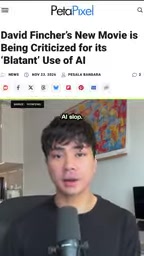
Fincher's new film is accused of using AI; behind the controversy is widespread audience vigilance toward AI traces.
After the release of David Fincher's new film *The Further Misadventures of Cliff Booth*, a carriage shot in the trailer showing a figure facing away from the camera was screenshotted and went viral, cited as evidence of AI generation and even labeled "AI slop." The suspicion isn't unfounded: Netflix previously acquired Ben Affleck's AI post-production company Interpositive for about $600 million, showing the platform does have AI tools in reserve. Fincher said in an interview "I'm not a Luddite," widely interpreted as openness to AI, but not a statement of use, and Netflix has neither confirmed nor denied it. Other critics believe the disputed shots are simply bad CGI. The article notes that what's truly noteworthy is that viewers have become accustomed to examining imperfect frames through the "AI traces" framework. This scrutiny may cause collateral damage, but with studios staying silent, suspicion will continue to fester.
After the release of David Fincher's new film The Further Misadventures of Cliff Booth, accusations quickly emerged on social media: the movie used AI. A carriage shot in the trailer—with a figure seated facing away from the camera—was screenshotted and went viral, becoming "evidence" of "AI slop." But the story is far more complicated than a single screenshot.
Where the Controversy Comes From
This film, starring Brad Pitt, is the sequel to Once Upon a Time in Hollywood and immediately sparked discussion upon release. Some early viewers and critics described it as "AI slop." YouTuber and director Patrick Tommaso was particularly sharp in his criticism, saying outright that it was "the kind of thing you can mass-produce from Higgs field."
The repeatedly cited carriage shot does appear in the official trailer, and its unusual composition instinctively brings to mind the "logic errors" of generative AI. But jumping from an anomaly in a single shot to the conclusion that the entire film was made with AI doesn't hold up.
"AI slop" is an internet pejorative that became popular around 2024 with the spread of generative image and video tools. It refers to visual content mass-produced from prompts, lacking manual refinement, and bearing obvious generation artifacts (such as distorted perspective, merged objects, or extra limbs). It binds "AI involvement" and "poor quality" together, so in discussion it often carries a double accusation: that the production method is suspect and that the aesthetic standard has declined. In the Hollywood context, the term also carries anxiety about screenwriters' and actors' jobs being replaced, so when viewers use it to evaluate a famous director's work, they're expressing not just concerns about the visuals but distrust of transparency in the production pipeline.
Netflix's AI Strategy Makes the Suspicion Seem "Reasonable"
Suspicion of Fincher doesn't come out of nowhere. Previously, Netflix acquired Ben Affleck's AI company Interpositive for about $600 million. The company's technology focuses on making detail adjustments to already-shot footage easier—in other words, it serves post-production rather than generating images from scratch.
The significance of this acquisition is that Netflix introducing AI tools into the production pipeline is already a publicly stated strategic direction. When the platform has such capabilities in reserve, viewers making associations about its directors' work is actually reasonable vigilance, not pure speculation.
Ben Affleck's Interpositive is positioned not as a text-to-video generation model but as a "controllable editing" tool for existing footage: changing lighting, composition, prop positions, or character details in already-shot scenes without reshooting. This type of technology falls under post-production and visual effects, heavily overlapping with compositing and retouching in traditional VFX workflows. It sparks associations because once a platform possesses the ability to make fine adjustments to the final image, viewers can hardly reverse-engineer which pixels came from the camera and which from algorithms. If the studio doesn't disclose it voluntarily, it's nearly impossible for outsiders to verify.
Fincher's Own Attitude: Open, But Unconfirmed
In an interview with the Los Angeles Times, Fincher said: "I'm not a Luddite, so I don't fear the unknown." He also asked rhetorically: "It exists—shouldn't we use it?"
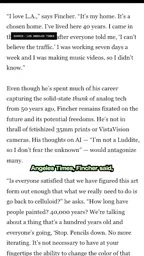
These remarks have been widely cited as "Fincher admitting to using AI," but strictly speaking, they express an openness to technology, not a specific statement of use. As of now, Netflix has neither confirmed nor denied using AI in the film.
The term "Luddite" originates from the legend of Ned Ludd, a 19th-century British textile worker, and refers to workers who protested industrialization by destroying machines; it later came to mean anyone opposed to new technology or who rejects mechanization. Fincher's self-identification is actually drawing a line between himself and technophobia: he emphasizes openness to tools, not announcing that he's already using a specific one. In the interview context, such statements are often edited into clickbait-style "admissions," but there's a clear factual distinction between that and "this film used AI." Readers need to distinguish between statements of attitude and declarations of action.
Another Possibility: Just Bad CGI
Not all critics point to AI. Some commentators believe the questioned shots may simply be poor-quality CGI.
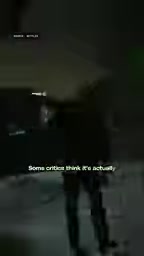
This explanation is equally harsh for a Fincher film—Fincher is known for visual precision and control, and the accusation of "bad CGI" is in some sense more damaging than "used AI." But it reminds us: visual anomalies have multiple causes, and AI is just one hypothesis.
What This Controversy Is Really About
Whether the carriage shot was AI-generated has not been confirmed. But the value of this discussion isn't in finding the answer—it's in exposing a shift in audience mentality: when platforms invest heavily in AI post-production tools and when directors publicly state they're open to AI, viewers begin to examine every imperfect frame through the framework of "AI traces."
This scrutiny itself may cause collateral damage—bad CGI, compression artifacts, or even deliberate stylistic choices can all be lumped under the "AI slop" label. But with studios staying silent, suspicion will continue to fester. For viewers, the question has become: even if a film might involve AI, will you still go see it?
One-line Summary
Fincher's new film is accused of using AI, and behind the controversy is widespread audience vigilance toward AI traces.
Paragraph Summary
After the release of David Fincher's new film The Further Misadventures of Cliff Booth, a carriage shot in the trailer showing a figure facing away from the camera was screenshotted and went viral, cited as evidence of AI generation and even labeled "AI slop." The suspicion isn't unfounded: Netflix previously acquired Ben Affleck's AI post-production company Interpositive for about $600 million, showing the platform does have AI tools in reserve. Fincher said in an interview "I'm not a Luddite," widely interpreted as openness to AI, but not a statement of use, and Netflix has neither confirmed nor denied it. Other critics believe the disputed shots are simply bad CGI. The article notes that what's truly noteworthy is that viewers have become accustomed to examining imperfect frames through the "AI traces" framework. This scrutiny may cause collateral damage, but with studios staying silent, suspicion will continue to fester.
Related articles

FCC Clears SpaceX's Space-Based AI Data Centers: A Debate Over Regulatory Boundaries
The FCC approved SpaceX's plan to deploy AI data centers in space but dismissed opponents' key concerns about scientific research impacts as beyond its regulatory authority. This article analyzes the regulatory boundary issues behind the decision, the deeper tensions of space-based AI infrastructure, and its implications for the industry.

Why Are Latinos Nearly Half of the U.S. Border Patrol?
Latinos hold nearly half of the U.S. Border Patrol and about 30% of ICE. Vox's Khalil Green explores their motivations, identity tensions, and why enforcement work ≠ MAGA.
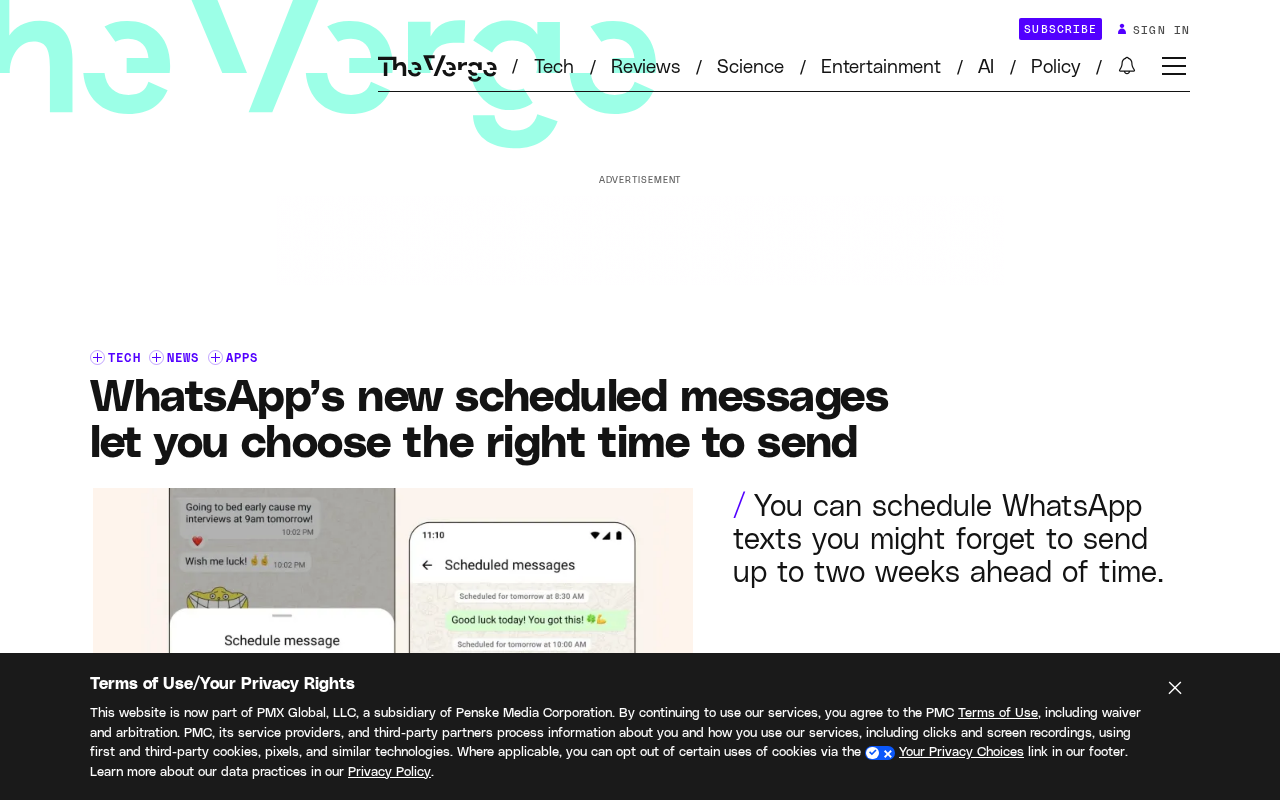
WhatsApp Finally Launches Scheduled Messages: A Must-Have Feature for 3 Billion Users
WhatsApp rolls out scheduled messages to 3 billion users, supporting preset send times in private and group chats. Meta calls it one of the most requested features. This article analyzes use cases, WhatsApp's product cadence, and what it means for ordinary users.