FCC Clears SpaceX's Space-Based AI Data Centers: A Debate Over Regulatory Boundaries
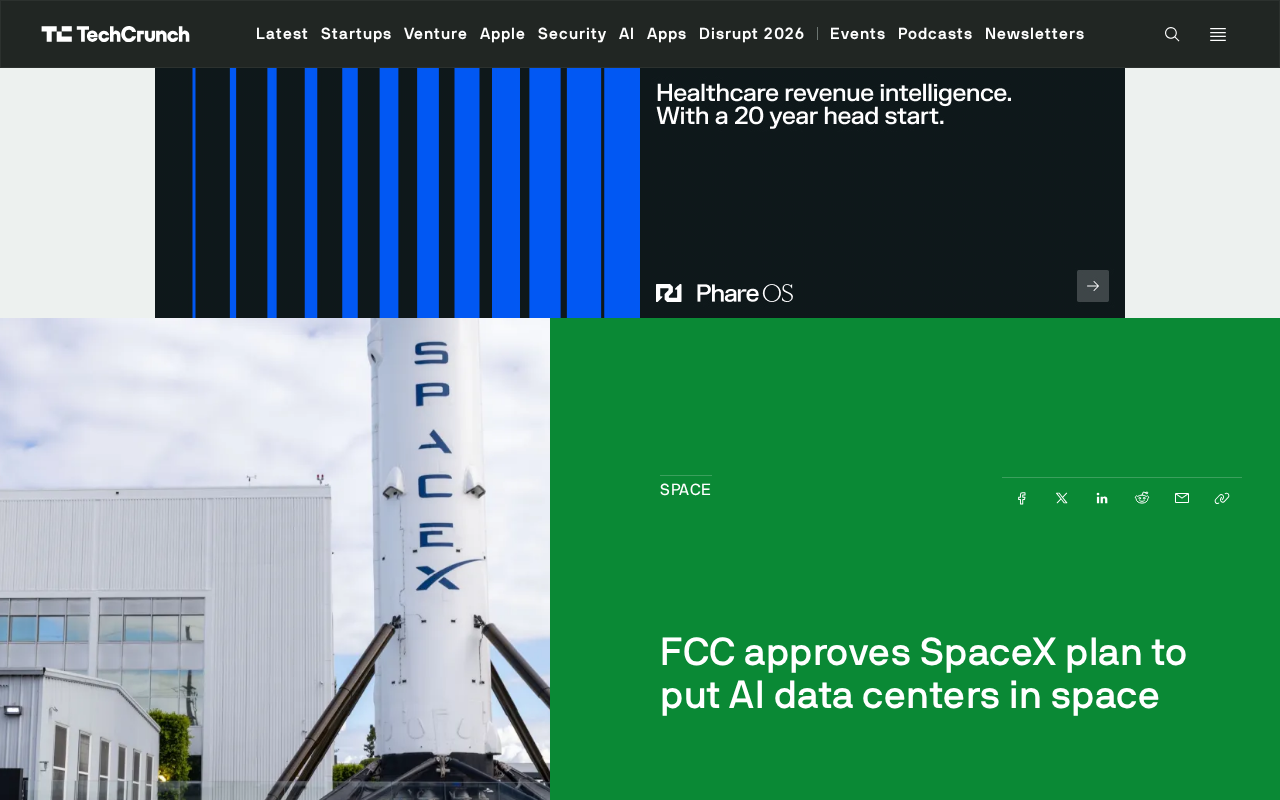
FCC approves SpaceX's space-based AI data centers while sidestepping scientific research concerns on jurisdictional grounds, leaving a regulatory vacuum.
The U.S. Federal Communications Commission (FCC) has approved SpaceX's plan to deploy AI data centers in space, while dismissing key concerns from opponents about scientific research impacts on the grounds of "exceeding regulatory authority." The decision clears spectrum and operating licensing hurdles for space-based compute infrastructure, but also exposes boundary issues in emerging technology regulation: a single agency grants approval within its own authority while leaving cross-domain risks (such as orbital resource occupation, astronomical observation interference, and space sustainability) to other agencies or future frameworks. The article analyzes the deeper tensions facing space-based AI infrastructure — the conflict between compute demand and orbital resources, the balance between commercial interests and the public nature of scientific research, and the uncertainty of fragmented regulation — noting that this regulatory precedent benefits innovation in the short term but may accumulate hidden costs in the long term due to the regulatory vacuum.
FCC Clears SpaceX's Space-Based AI Data Centers: A Debate Over Regulatory Boundaries
The U.S. Federal Communications Commission (FCC) has approved SpaceX's plan to deploy AI data centers in space, while dismissing several key concerns raised by opponents. This decision concerns more than just one company's commercial ambitions — it touches on a fundamental question in the regulation of emerging technologies: when innovation outpaces regulation, who is responsible for the risks that fall "outside the scope of authority"?
Plan Approved: A Regulatory Green Light for Space-Based Compute
The FCC's approval clears the spectrum and licensing hurdles for SpaceX to send AI computing infrastructure into orbit. Although publicly available information is limited, the decision itself sends a clear signal: regulators currently lean toward providing a pathway for frontier projects like space-based AI infrastructure rather than erecting roadblocks.
The concept of space-based data centers is not new, but combining it with the explosive growth in today's AI compute demand gives it fresh real-world significance. Ground-based data centers face multiple constraints — land, power, cooling — while the orbital environment offers theoretical advantages on these dimensions. The FCC's clearance means this concept is moving from paper into an executable regulatory framework.
The FCC's Scope of Regulatory Authority: The U.S. Federal Communications Commission (FCC) has jurisdiction under the Communications Act over radio spectrum use, communications satellite licensing, and interstate communications services. In the commercial space sector, the FCC is primarily responsible for approving satellite spectrum applications and launch licenses to ensure signals do not interfere with existing communications systems. However, the FCC's authority does not cover issues such as national security, space traffic management, astronomical observation protection, or environmental impact assessment — these fall under the purview of the Department of Defense, the Federal Aviation Administration (FAA), the National Science Foundation (NSF), or international treaty frameworks. This division of labor means that the FCC's approval of space-based AI data centers represents compliance only at the spectrum and communications level, not a comprehensive endorsement of the project's overall safety and societal impact.
Dismissed Concerns: The Agency's Self-Limiting of Regulatory Authority
What is most telling about this approval is how the FCC handled the objections. According to the original report, the FCC dismissed key concerns raised by some opponents, including potential threats to scientific research.
The FCC's reasoning was not that these concerns were invalid, but that they "exceed the agency's regulatory authority." This is a classic regulatory boundary problem: an agency grants approval within its own jurisdiction while explicitly stating "that's not our responsibility" regarding impacts beyond it. This approach is legally unimpeachable, but in practice it leaves a vacuum — who will assess and regulate those identified potential risks?
The impact on scientific research is one of the core concerns of opponents. Space-based AI data centers may involve a range of issues that intersect with scientific activities — orbital resource occupation, interference with astronomical observation, spectrum use, and more. By classifying these as outside its authority, the FCC is effectively punting to other agencies or future regulatory frameworks — and whether these mechanisms are currently in place is a question the public information does not answer.
Jurisdictional Authority: This refers to the scope of powers that a regulatory agency lawfully possesses. In U.S. administrative law, agencies may only act within their statutory authorization, and regulatory actions beyond that authority may be overturned by courts. The FCC's dismissal of objections on the grounds of "exceeding regulatory authority" is based on this legal principle. While this approach conforms to administrative rule of law, it can also lead to a "regulatory vacuum" — when the impacts of an emerging technology span multiple agencies' jurisdictions, no single agency is responsible for a comprehensive assessment. Common solutions include establishing interagency coordination mechanisms, having the White House Office of Science and Technology Policy take the lead, or passing congressional legislation to grant one agency lead authority — but these mechanisms have not yet been clearly established in frontier areas like space-based AI data centers.
The Deeper Tensions of Space-Based AI Infrastructure
Setting aside regulatory procedure, this event reflects several layers of tension facing space-based AI infrastructure.
The conflict between compute demand and orbital resources. AI training and inference have an ever-growing hunger for compute. Shifting some workloads to space could theoretically relieve ground-based pressure, but orbital resources themselves are limited public resources. Large-scale deployment of data center constellations will inevitably trigger discussions about orbital congestion and space sustainability.
Balancing commercial interests with the public nature of scientific research. Space has long been regarded as a hub for scientific research, with astronomy, Earth science, and other fields relying on relatively pristine orbital and spectrum environments. The influx of commercial AI infrastructure could change this landscape. The FCC's avoidance of this issue on jurisdictional grounds means that balancing mechanisms need to be established at a higher level.
Uncertainty caused by fragmented regulation. When a technology spans multiple regulatory domains — communications, scientific research, commerce, security — a single agency's approval cannot cover all risk dimensions. The FCC license SpaceX obtained resolves spectrum and operating licensing issues, but does not answer questions about scientific research impacts, space traffic management, and others. This fragmented regulation is both an opportunity and a hidden risk for rapidly iterating space AI projects.
Orbital Resources and Space Sustainability: The satellite capacity and spectrum resources of Earth's orbit (especially low Earth orbit) are limited public resources. With the deployment of mega-constellations (such as Starlink), orbital congestion, collision risk, and space debris problems are becoming increasingly prominent. Large-scale deployment of space-based AI data centers would further intensify competition for orbital resources and could interfere with astronomical observation (satellite light pollution affects optical astronomy; radio frequency interference affects radio astronomy). The International Telecommunication Union (ITU) coordinates global spectrum and orbital position allocation, but its rules mainly target communications satellites and lack clear standards for new types of payloads like data centers. Space sustainability also involves deorbit disposal at end of satellite life, which currently relies mainly on voluntary guidelines without mandatory constraints.
What This Means for the Industry
The FCC's decision sets a regulatory precedent for the space-based AI data center category. For SpaceX, it extends its space infrastructure footprint; for the entire industry, it is a signal worth watching — regulators, when facing cross-boundary innovation, tend to grant clearance within their own authority rather than proactively expanding their regulatory scope.
This model is conducive to innovation in the short term, but in the long run, the concerns blocked by "jurisdictional boundaries" will not simply disappear. The scientific community's concerns, discussions about space sustainability, and the absence of interagency coordination mechanisms could all become hidden costs of this plan in the future. The real test for space-based AI data centers may not be whether they can obtain a license, but whether the questions beyond the license can be properly addressed.
Background
Fragmented Regulation: This refers to a situation where a technology or activity involves multiple regulatory agencies, but each agency is only responsible for matters within its own jurisdiction, lacking unified coordination. In the space sector, the FCC handles spectrum, the FAA handles launch safety, NOAA handles remote sensing licensing, the Department of Defense handles national security, while scientific research impacts and space traffic management are scattered across NASA, the Department of Commerce, and other departments. For rapidly iterating innovation, this fragmented model may mean a complex approval process with incomplete regulatory coverage — companies must deal with multiple agencies, but some risks fall through the cracks. For space-based AI data centers, fragmented regulation could lead to "fast approval, little oversight" — good for innovation in the short term, but accumulating hidden risks in the long term.
One-line Summary
FCC approves SpaceX's space-based AI data centers while sidestepping scientific research concerns on jurisdictional grounds, leaving a regulatory vacuum.
Paragraph Summary
The U.S. Federal Communications Commission (FCC) has approved SpaceX's plan to deploy AI data centers in space, while dismissing key concerns from opponents about scientific research impacts on the grounds of "exceeding regulatory authority." The decision clears spectrum and operating licensing hurdles for space-based compute infrastructure, but also exposes boundary issues in emerging technology regulation: a single agency grants approval within its own authority while leaving cross-domain risks (such as orbital resource occupation, astronomical observation interference, and space sustainability) to other agencies or future frameworks. The article analyzes the deeper tensions facing space-based AI infrastructure — the conflict between compute demand and orbital resources, the balance between commercial interests and the public nature of scientific research, and the uncertainty of fragmented regulation — noting that this regulatory precedent benefits innovation in the short term but may accumulate hidden costs in the long term due to the regulatory vacuum.
Related articles

David Fincher's New Film Accused of Being AI-Generated? The Truth Behind the Controversy
David Fincher's new film *The Further Misadventures of Cliff Booth* is accused of using AI, with a carriage shot in the trailer sparking controversy. Netflix's acquisition of Ben Affleck's AI company and Fincher's own openness to AI keep suspicions alive. This article sorts out the controversy and the views of all sides.

Why Are Latinos Nearly Half of the U.S. Border Patrol?
Latinos hold nearly half of the U.S. Border Patrol and about 30% of ICE. Vox's Khalil Green explores their motivations, identity tensions, and why enforcement work ≠ MAGA.
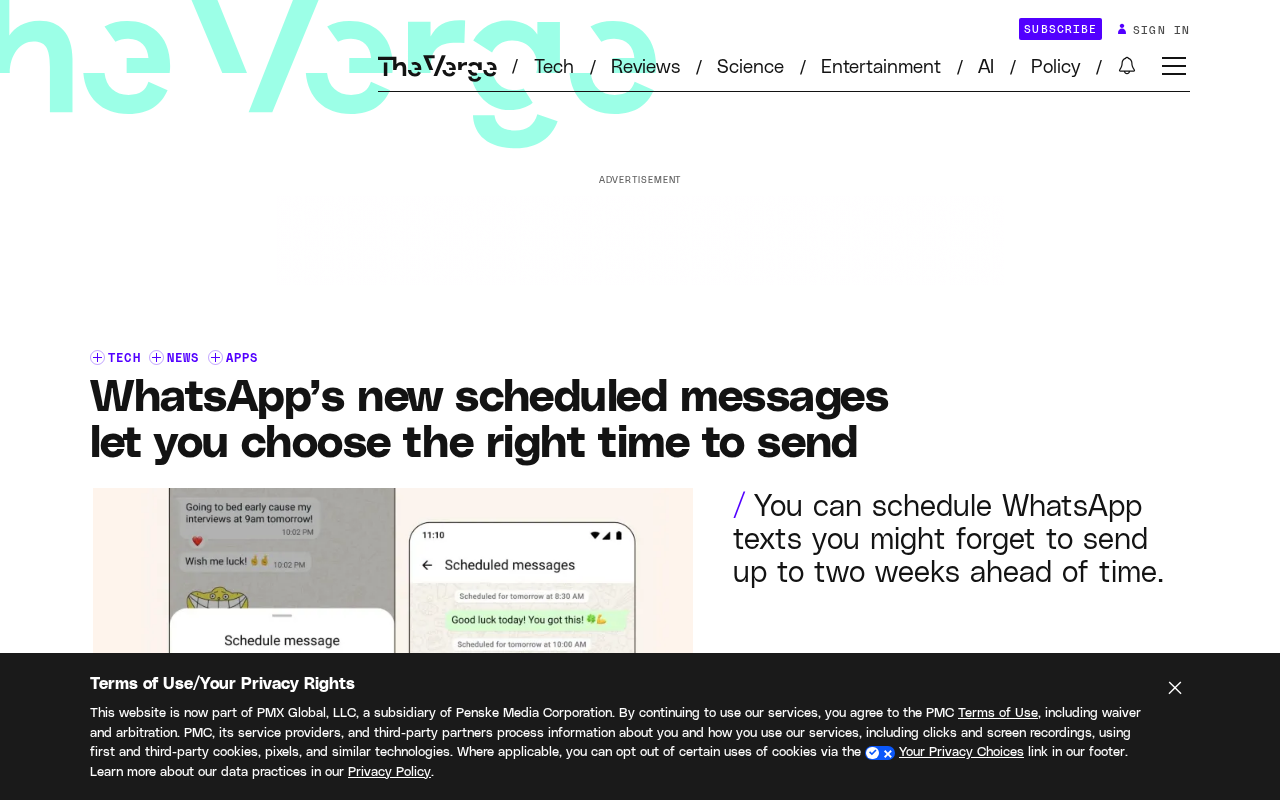
WhatsApp Finally Launches Scheduled Messages: A Must-Have Feature for 3 Billion Users
WhatsApp rolls out scheduled messages to 3 billion users, supporting preset send times in private and group chats. Meta calls it one of the most requested features. This article analyzes use cases, WhatsApp's product cadence, and what it means for ordinary users.