AI Coding Agents Help Integrate SGLang into IBM Spyre in One Week

A two-person team used AI coding agents to complete a plugin-based integration of SGLang with IBM Spyre in one week.
This article reports that a team of just two people, assisted by AI coding agents, completed the integration of the SGLang inference framework with the IBM Spyre accelerator in under a week, producing about 1,500 lines of plugin code. It analyzes the background and significance of the integration, noting that traditional cross-stack adaptation relies on deep understanding of both codebases and involves long cycles and high costs, while AI agents played a key role in code understanding, scaffolding generation, and debugging assistance. This collaborative model of "humans set direction, AI fills in details" allows small teams to focus on architectural decisions and validation. The article argues that this case reveals the potential impact of AI-assisted programming on the development paradigm for low-level system software: hardware integration tasks have clear patterns and rich context, making them well suited for AI agents, thereby lowering the barrier to cross-stack integration. At the same time, the article notes that public information lacks performance data and long-term maintainability details, and that AI remains an accelerator rather than a replacement, with team domain knowledge still important.
Introduction: A Big Challenge for a Small Team
Integrating SGLang—a high-performance large language model inference framework—into a specialized AI accelerator like IBM Spyre typically requires weeks of engineering effort. But according to a report on the official PyTorch blog, a team of just two people, assisted by AI coding agents, completed this integration in under a week and built approximately 1,500 lines of plugin code. This case demonstrates how AI-assisted programming can substantially change the pace of development for low-level system software.
Background and Significance of the Integration
SGLang focuses on efficiently serving large language models, and its scheduling and memory management mechanisms impose specific requirements on hardware. Spyre, as an IBM AI accelerator, already has some software stack support. But to run SGLang efficiently on it, a series of low-level details still need to be handled, including operator mapping, memory layout, and communication interfaces. Traditionally, this kind of adaptation work relies on deep understanding of both codebases, with long development cycles and high debugging costs.
The team's success shows that AI coding agents can significantly lower the barrier to cross-stack integration. They did not rewrite existing support; instead, they developed a plugin on top of existing Spyre support, achieving core SGLang functionality integration with about 1,500 lines of code.
SGLang is a high-performance inference framework for large language models. Its core innovation lies in optimizing KV cache reuse through technologies such as RadixAttention, and it provides a flexible front-end language for orchestrating complex generation workflows. It includes an efficient scheduler responsible for request batching, memory management, and multi-GPU/multi-hardware coordination.
IBM Spyre is a specialized AI accelerator introduced by IBM Research, employing chip stacking and near-memory computing architecture to improve energy efficiency. Its software stack includes a compiler, runtime, and operator libraries, but its ecosystem is relatively closed and requires adaptation for specific frameworks.
Porting a framework like SGLang to Spyre is essentially a cross-stack integration problem: it requires mapping SGLang's computation graphs and memory access patterns onto Spyre's instruction set and storage hierarchy, while also handling the communication interface between host and device.
How AI Coding Agents Helped
Although the blog does not disclose specific workflow details, inferring from the results, AI agents most likely provided key help in the following areas:
- Code understanding and navigation: Quickly analyzing both the SGLang and Spyre codebases to locate interfaces and data structures that needed modification.
- Scaffolding generation: Generating plugin skeletons, build scripts, and test cases based on existing patterns, reducing repetitive work.
- Debugging assistance: Providing possible fixes when compile-time or runtime errors occurred, accelerating iteration.
This collaborative model of "humans set direction, AI fills in details" allowed the small team to focus on architectural decisions and validation rather than getting bogged down in tedious glue code.
AI coding agents refer to tools built on large language models that can complete programming tasks autonomously or semi-autonomously, such as GitHub Copilot, Cursor, and Claude Code. They typically possess capabilities such as code generation, code explanation, error diagnosis, and refactoring suggestions, and improve development efficiency by integrating with IDEs or version control systems.
In system software integration scenarios, the advantage of AI agents lies in their ability to quickly digest large amounts of code context (for example, interface definitions and call relationships across two codebases) and generate pattern-conforming code snippets based on natural language instructions. However, their output still requires human engineers to oversee architecture-level concerns and perform final validation, especially in areas involving hardware semantics and concurrency correctness.
Implications for the Development Paradigm
The value of this case is not only about speed. It suggests that the development of low-level system software is undergoing a toolchain upgrade. AI coding agents excel at tasks with clear patterns and rich context, and hardware integration fits this profile well: interfaces are clearly defined, there are many reference implementations, and error feedback is direct.
For teams working on AI infrastructure, this means they can more aggressively experiment with combinations of new hardware or new frameworks without worrying about manpower being tied up for long periods. At the same time, the amount of plugin code (about 1,500 lines) also shows that AI did not replace engineering judgment; the final output is still real code that needs to be maintained and tested.
Plugin architecture plays a key role in this kind of integration: it allows new hardware to be connected by defining clear extension points (such as custom operators and backend registration interfaces) without modifying the core code of the upstream framework. The integration of SGLang and Spyre, implemented as a plugin of about 1,500 lines, is an embodiment of this pattern. Plug-inization reduces coupling, allowing subsequent maintenance and upgrades to proceed independently, but it also requires plugin developers to deeply understand the framework's extension contracts and the hardware's runtime behavior.
Limitations and Points to Watch
Currently available public information is relatively brief and lacks performance data, test coverage, and long-term maintainability details. Whether AI-generated code fully complies with SGLang's semantic requirements and how stable it is in edge cases still need time to verify. In addition, this approach still places high demands on team members' domain knowledge—AI is an accelerator, not a replacement.
Conclusion
Completing the integration of SGLang and Spyre in one week with two people is a signal worth watching. It demonstrates the practical productivity of AI coding agents in the system software domain and gives more small teams confidence to participate in building hardware ecosystems. As the toolchain matures, similar integration cases may become increasingly common.
Related articles
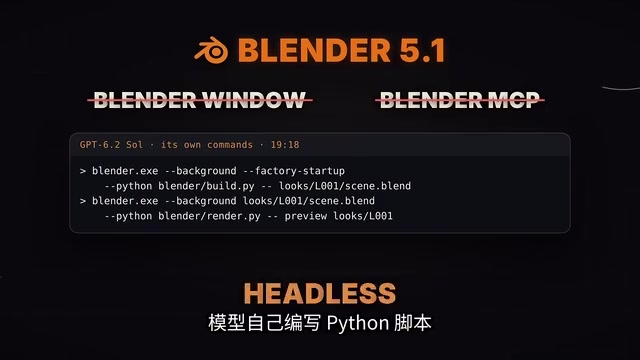
GPT-6.2 Dual-Model Hands-On Test: Astra Burns $419, Sol Just $5
OpenAI GPT-6.2 Astra vs Sol tested on Blender clock, neon shooter, and Formula racing. Astra costs $419, Sol $197, cheapest clock under $5. Cost comparison and selection advice.

After GPT-6 Ultra's Launch: A Complete Guide to Plus/Pro Subscriptions
How to subscribe to GPT membership after GPT-6 Ultra's launch? This article covers the complete Bilibili tutorial: registering a Google account from scratch, Alipay top-up walkthrough, and a comparison of Go, Plus, and Pro plans.

Real-World Test: Subscribing to ChatGPT Plus/Pro 5x/10x in China — Self-Service Channels and Account Maintenance Guide
A Bilibili creator tests self-service top-up channels for ChatGPT Plus and Pro 5x/10x in China, covering Session acquisition, plan selection, credit card and mobile in-app purchase pitfalls, plus account maintenance tips like fixed devices and networks to reduce ban risk.