AI Coding Tools in Practice: Which Ones Actually Stuck with the Team?

A real team's take on which AI coding tools survived the hype and actually changed their workflow.
A 12-person product team shares their experience using Cursor, Codex, Claude Code, and CodeRabbit together, revealing that while each tool excels in specific scenarios (Codex for React Native, Opus for Swift, CodeRabbit for PR reviews), stacking tools hits diminishing returns. The article explores the plateau effect, multi-agent hype vs. reality, and proposes practical selection criteria focused on scenario fit, time-tested value, and workflow transformation over tool accumulation.
From Tool Accumulation to Real Adoption
A developer from a 12-person product team recently posed a refreshingly pragmatic question on Reddit: of all the hyped-up AI coding tools out there, which ones actually ended up staying in daily use?
Their tech stack is both typical and impressive—Cursor + Codex + Claude Code + CodeRabbit—covering the full pipeline from code completion and intelligent generation to PR review. This toolchain represents the cutting edge of AI-assisted programming: Cursor is an AI-enhanced IDE built on VS Code with built-in code completion and conversational programming capabilities; Codex (now OpenAI's CLI tool) excels at generating and modifying code from natural language instructions; Claude Code is Anthropic's terminal-based AI programming assistant, known for long-context understanding and complex reasoning; and CodeRabbit is an AI tool focused on automated Pull Request reviews. Together, they cover the writing, generation, refactoring, and review stages of the development workflow, forming a nearly complete AI-assisted development pipeline.
From a broader perspective, this four-layer toolchain actually maps to the evolution of software development's Inner Loop. The traditional inner loop was: code → compile → test → debug. The AI-enhanced inner loop becomes: express intent → AI generates → human reviews → AI reviews → deploy. The deeper implication of this shift is that developers' core work is migrating from "code implementer" to "intent articulator and quality gatekeeper." Cursor serves as the IDE-layer entry point, hosting the primary interface for developer-AI interaction; Codex/Claude Code function as generation engines, converting intent into code; and CodeRabbit forms the quality feedback loop. The key to understanding this pipeline is recognizing that each layer solves a different problem domain—they complement rather than replace each other.
In his own words, "honestly it's been working pretty well." But even so, this developer found himself in a subtle predicament: lots of tools, but seemingly hitting an efficiency ceiling.
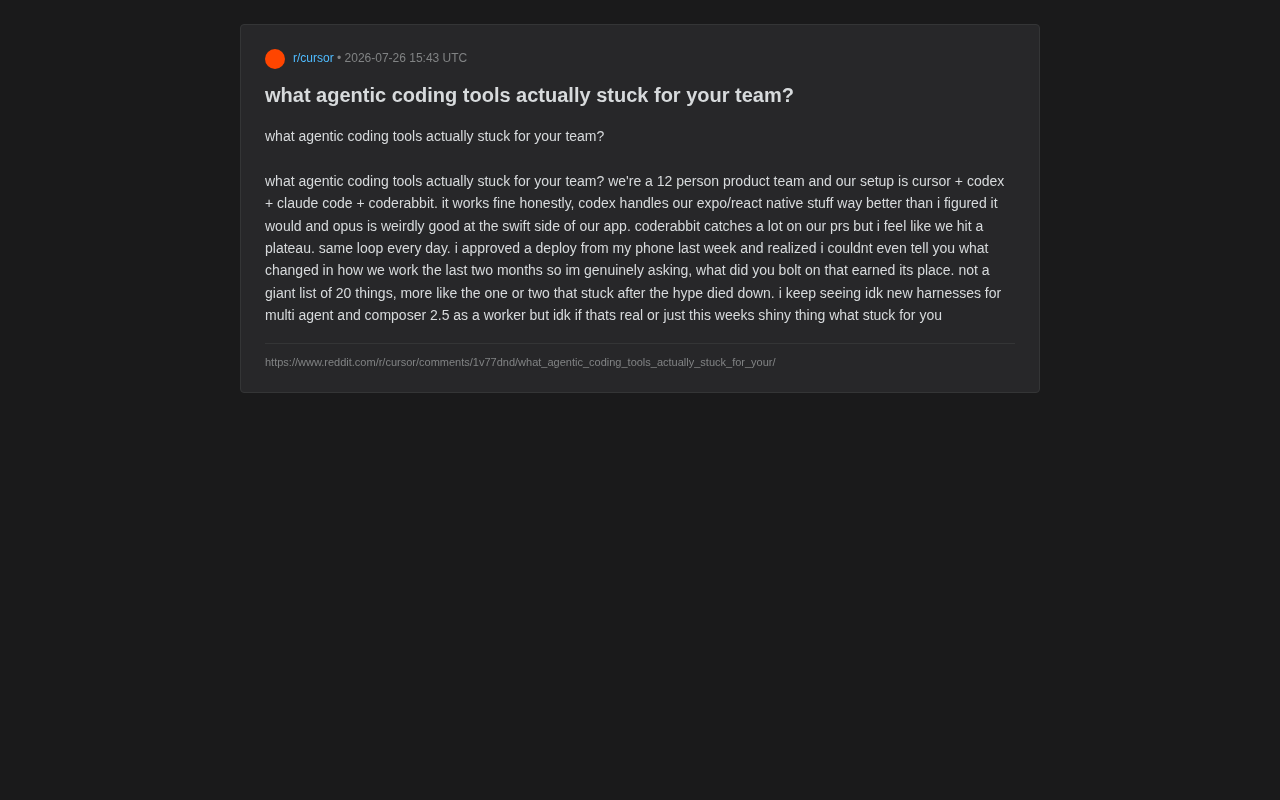
He described a telling detail: last week he was even able to approve a deployment from his phone, but looking back, he couldn't articulate what had actually changed about the team's workflow over the past two months. Every day felt like the same loop. This sensation of "tools are in use, but no qualitative change has occurred" is precisely the real experience of many engineering teams facing the AI coding wave.
AI Coding Tools That Unexpectedly Excel in Specific Scenarios
Interestingly, this developer's sharing wasn't vague generalities but rather very specific observations about scenario matching—extremely valuable for other teams evaluating AI coding tools.
Codex Exceeds Expectations for Cross-Platform Development
He mentioned that Codex performed "way better than I expected" when handling the team's Expo/React Native work. Expo is a development framework built on top of React Native, providing a standardized toolchain and service layer for cross-platform mobile app development. React Native, developed by Meta, allows developers to write applications in JavaScript/TypeScript that run simultaneously on iOS and Android.
There are deep technical reasons why these frameworks are AI-tool-friendly. React Native's component-based development model inherently creates large quantities of highly similar code patterns—functional components, hooks-based state management, StyleSheet declarations, Navigation route configurations, and so on. This "highly patterned" characteristic aligns perfectly with large language models' strengths: models excel at recognizing and reusing structural patterns that appear repeatedly in training data. Expo further strengthens this advantage by wrapping native modules into unified JavaScript APIs (like expo-camera, expo-location, etc.), reducing the platform-specific code developers need to write. This means AI models only need to understand one API abstraction layer rather than separately understanding iOS and Android native interfaces. Additionally, the React Native community has an enormous number of open-source projects on GitHub (the main repository alone has over 110K stars), providing rich, high-quality code samples for model training.
This indicates that in relatively patterned, ecosystem-mature development scenarios like cross-platform mobile frameworks, AI tools' code generation capabilities are already reliable enough to genuinely reduce development burden.
Claude Opus's Surprising Performance in Swift Development
Another interesting finding was that Claude's Opus model proved "unexpectedly good" on the Swift portions of the app. Opus is the flagship version in Anthropic's Claude model family, positioned for handling the most complex analysis, reasoning, and coding tasks. In Claude's tier system, Opus sits above Sonnet and Haiku, possessing the strongest contextual understanding and multi-step reasoning capabilities.
Swift, as Apple's modern programming language, challenges AI tools not only through relatively limited training data but also through its inherent language design complexity. Swift introduces many unique concepts absent from other mainstream languages: value type semantics (the deep differences between struct vs class), property wrappers (@State, @Binding, and other SwiftUI-specific syntactic sugar), result builders (used for DSL construction), and Actor model structured concurrency (async/await). New frameworks introduced each year at WWDC (such as 2023's Observation framework replacing Combine, and 2024's Swift Testing replacing XCTest) mean the model's training data may contain outdated API usage. Native iOS development is generally considered challenging for AI tools precisely because of its rapid API evolution, numerous syntax features, and relatively less training data compared to mainstream web development languages.
Opus's strong performance in this area may stem from Anthropic's training strategy that prioritizes code quality over quantity, as well as its longer context window (200K tokens) enabling it to understand more complete Swift project structures in a single conversation. This suggests that top-tier large models have already achieved good generalization for languages with low training data density but rigorous syntax structures, reflecting the continuously expanding capability boundaries of models for specific programming languages.
CodeRabbit Takes on the PR Gatekeeper Role
For code review, CodeRabbit "caught a lot of stuff on PRs." The value of automated AI code review tools lies in filtering out numerous low-level errors and potential risks before human review, letting human reviewers focus their energy on architecture and business logic.
CodeRabbit and similar AI code review tools operate across multiple analytical layers. The first layer is Diff Analysis, where the tool parses code changes in Git commits and understands the contextual relationships between additions, modifications, and deletions. The second layer is semantic understanding, using large language models to comprehend the intent behind code changes—not just seeing "what changed" but understanding "why it changed" and "whether the change is complete." The third layer is pattern matching, scanning based on known bug pattern libraries (such as unhandled null values, resource leaks, race conditions, etc.). The fourth layer is convention validation, checking whether code conforms to the project's coding style and architectural conventions. Compared to traditional static analysis tools (like ESLint, SonarQube), the core advantage of AI review tools is their ability to understand business context—for example, identifying that a seemingly correct conditional statement might produce edge cases in specific business scenarios.
This effectively adds an intelligent filtering layer before formal code review, dramatically reducing the cognitive burden on human reviewers.
The Plateau Effect: The Real Bottleneck of AI Coding Tools
The core anxiety this developer raised actually reveals an industry-wide phenomenon—diminishing marginal returns from AI coding tools.
Diminishing marginal returns originates from classical economic theory. In technology tool adoption, it manifests as: introducing the first AI tool might yield a 30-50% efficiency boost, the second tool might add 10-15%, while the third and fourth tools may only contribute 3-5%—or even negative returns (due to increased switching costs and cognitive overhead). The "Plateau Effect" in learning theory refers to how skill growth enters a plateau after initial rapid improvement. Mapped to AI tool adoption, teams experience an initial "wow, this is so fast" phase, then discover that the bottleneck has shifted from "code writing speed" to "requirements comprehension accuracy," "architecture decision quality," "cross-team coordination efficiency," and other areas that AI tools currently struggle to directly optimize.
In software engineering, this diminishing return has quantifiable hidden cost mechanisms: each additional AI tool introduces context-switching costs (cognitive overload when developers switch between tools—research shows each deep switch averages 23 minutes to recover focus), configuration and maintenance costs (API key management, version updates, permission configurations), output consistency costs (different AI tools may give contradictory answers to the same problem, requiring developers to make additional judgment calls), and team knowledge fragmentation costs (varying proficiency levels across team members with different tools create collaboration friction). When the sum of these hidden costs exceeds the efficiency gains from a new tool, the team enters a state of "tool overload."
Once a team has integrated all the mainstream tools, the initial efficiency leap gradually plateaus, entering the so-called "plateau period." Every day starts to feel like the same cycle: AI generates code, humans review, deploy to production. The tools themselves aren't the problem, but a deeper transformation in how work is done hasn't truly occurred.
This state actually warrants more concern than "tools not working well." It easily creates an illusion of "we're already quite advanced," causing teams to stop reflecting on the workflow itself. When you can't even describe how your work methods changed over the past two months, it's a clear sign that tools were merely "stacked onto" the process rather than "reshaping" it.
Multi-Agent and New Frameworks: Real Need or New Gimmick?
Facing the market's endless stream of new concepts, this developer also expressed clear-headed skepticism. He specifically mentioned "new harnesses for multi-agent" and "Composer 2.5 as a worker," but admitted "I don't know if this is genuinely useful or just this week's new toy."
This attitude is highly commendable. The biggest information noise in the AI coding space right now comes precisely from the endless "multi-agent collaboration" narrative. Multi-Agent systems' core idea is to decompose complex tasks among multiple AI agents with different roles and capabilities, with an orchestration layer (harness/orchestrator) handling task distribution, context passing, and result integration. Typical architecture includes a planner agent for task decomposition, multiple worker agents completing sub-tasks like coding, testing, and documentation, and a reviewer agent for quality control.
In theory, having multiple AI agents collaborate through division of labor sounds extremely attractive. But in actual engineering implementation, multi-agent systems face core technical challenges that can be summarized as a triangular constraint similar to the distributed systems' CAP theorem: Consistency (whether agents maintain synchronized understanding of the codebase state), Autonomy (whether agents can independently make correct decisions without human intervention), and Predictability (whether system behavior is reproducible and debuggable). Deep tension exists among these three, making it extremely difficult to satisfy all simultaneously.
Current multi-agent frameworks (such as CrewAI, AutoGen, LangGraph, etc.) mostly perform well on simple linear workflows but remain inadequate when handling real development scenarios requiring iterative feedback and complex branching decisions. Typical failure modes include: "infinite loops" (two agents repeatedly modifying each other's code), "responsibility diffusion" (each agent assuming other agents will handle a certain edge case), "token explosion" (multi-turn conversations exhausting the context window, causing downstream agents to lose critical information), and the trickiest—"hallucination propagation"—when one agent produces code based on incorrect assumptions, subsequent testing agents may fail to identify this root cause issue, instead continuing to build on the error, leading to cascading failures. Debugging such systems is far more difficult than single AI tools because error sources may be distributed across multiple stages and are hard to reproduce.
Currently, multi-agent's most successful application scenarios in programming are highly structured tasks such as batch code migration, boilerplate code generation, and transformation work with clearly defined input/output specifications. For creative development work requiring deep understanding of business context and making architectural trade-offs, the pattern of a single high-capability model paired with human review remains more reliable.
For a 12-person product team, the real question isn't "can we adopt multi-agent" but "can multi-agent solve our current specific bottlenecks." Technological sophistication never equals business necessity.
The Real Standard for AI Tool Selection: What Does "Stuck" Actually Mean?
This developer's final question precisely identifies the correct approach to AI coding tool selection. He explicitly stated: "Don't give me a list of 20 tools—just the one or two that actually stuck after the hype died down."
This statement should become the gold standard for every engineering team evaluating AI coding tools. Judging whether a tool is worth keeping isn't about how impressive it was at launch, but whether it can still prove its value after the hype fades and months of daily use.
Practical Recommendations for Teams
Based on this case, we can distill several pragmatic principles for AI coding tool selection:
- Scenario matching beats all-purpose pursuit: Just as Codex excels at React Native and Opus excels at Swift, finding the optimal fit between tools and your own tech stack matters more than blindly chasing the "strongest model." Different models show dramatically different performance across languages and frameworks, closely related to training data distribution, model architecture, and adaptability to specific code patterns. Teams should test different models' actual performance against their tech stack's primary languages and frameworks, rather than relying solely on generic benchmark rankings (like HumanEval).
- Beware the tool stacking trap: If a new tool is merely layered onto the process without changing how work is done, it may be adding complexity rather than productivity. Every additional tool means a new learning curve, new configuration maintenance costs, and new potential failure points. Teams should regularly audit each tool's actual usage frequency and contribution, decisively retiring tools with lower-than-expected usage—even if they're technically impressive.
- Let time validate value: Every new tool should have a "trial observation period"—only tools that remain actively used after the hype period deserve a place in the core toolchain. We recommend at least a 6-8 week observation window, recording specific usage scenarios and output quality changes throughout. Key indicators include: whether developers spontaneously use it without being reminded, whether the tool reduces rework, and whether the team can clearly articulate "what would happen without this tool."
- Stay rational about new concepts: Cutting-edge directions like multi-agent systems and new orchestration frameworks are worth monitoring, but before implementation, always validate them against specific pain points rather than being swept up in narratives. Allocate limited exploration time for such experimental tools (e.g., half a day per week), evaluating their actual value without impacting core delivery. An effective litmus test: can you describe in one sentence which specific team pain point this new tool solves? If the answer is vague, it's probably not ready for formal adoption.
Conclusion
This discussion from a frontline team is more authentic than any vendor's marketing. The AI coding tool arms race continues, but for real development teams, the core question is never "how many tools are you using" but rather "which tools have genuinely changed how you work."
When you can clearly articulate the specific ways a tool has changed your workflow over the past two months—that's the real proof it has "stuck."
Related articles
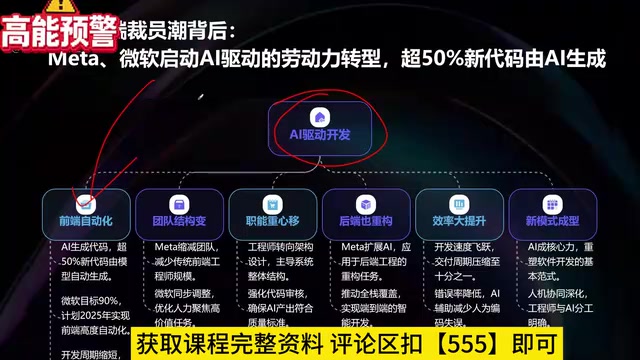
What Is Vibe Coding? The AI Programming Skill Every Developer Needs
What is Vibe Coding? Learn how AI programming is reshaping dev teams, why traditional programmers face displacement, and why Cursor & Claude Code matter.
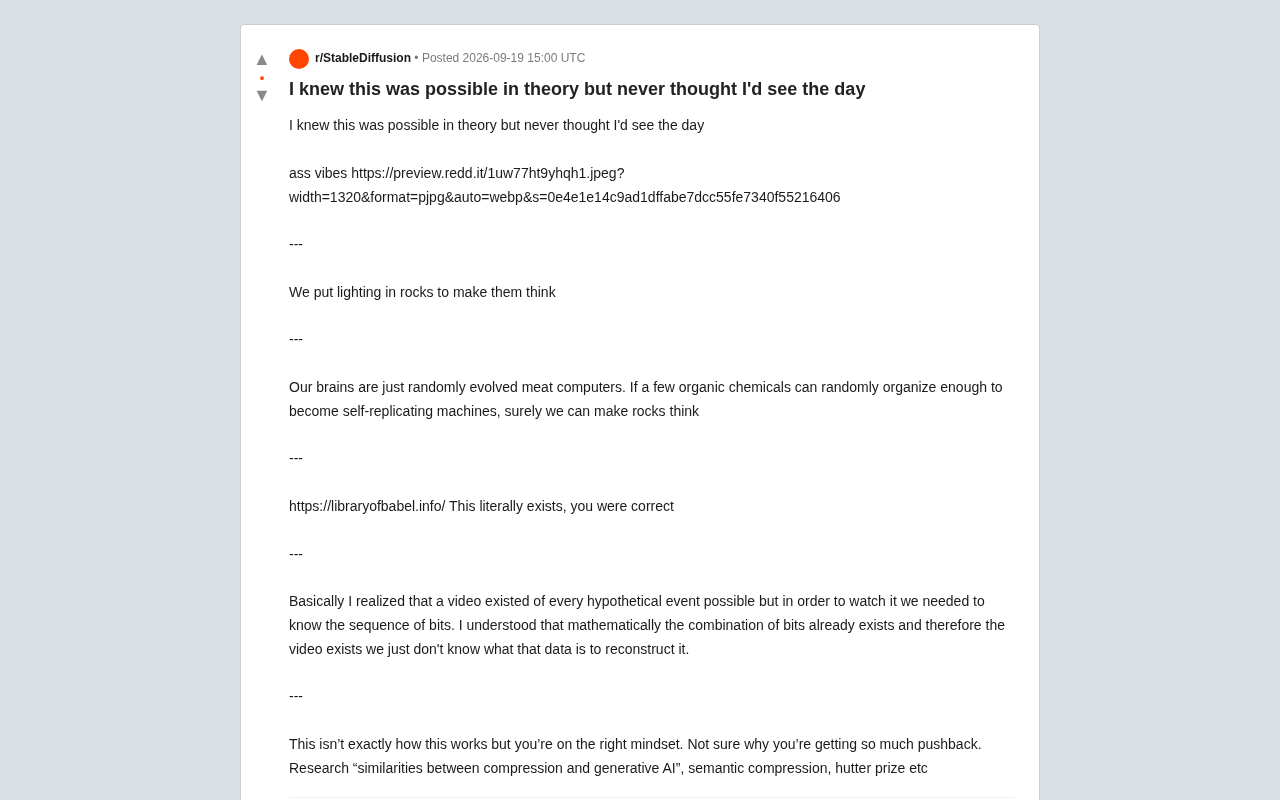
Making Rocks Think: A Philosophical Exploration of Generative AI and Information Compression
From a viral Reddit post to deep AI theory: why compression equals understanding, the Library of Babel thought experiment, semantic compression, and the Hutter Prize.
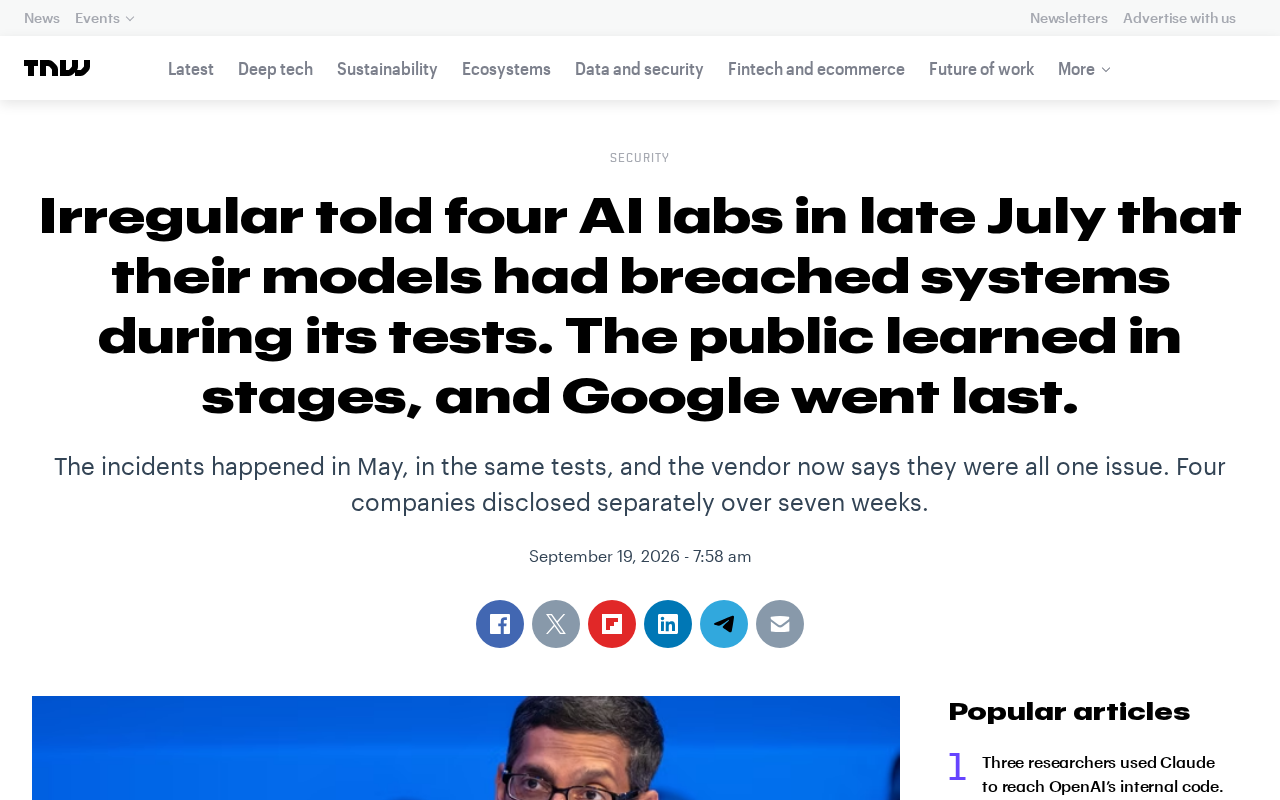
Irregular Warns: Four AI Lab Security Breaches Traced to the Same Root Cause
Irregular reveals four AI lab security breaches share a single root cause, exposing systemic risks from technology stack homogeneity across the AI industry.