AI Cracks a 23-Year-Old Physics Problem: Claude Solves a Black Hole Physics Mystery
Claude used parallel trial and error plus Lean formal verification to solve two open problems in black hole physics.
Anthropic announced that Claude solved two long-standing open problems in black hole physics and quantum gravity, one proposed in 1983 and left unfinished after a 2003 framework due to huge Feynman-diagram computations. In a "self-replicating" parallel mode, Claude explored 22 open problems in six weeks and solved two, one after 61 failures. Both proofs passed Lean formal verification, ensuring logical closure. Anthropic also stated the results cannot prove anything about the real universe. The event shows a new research division: humans set problems and frameworks, AI handles massive symbolic computation and trial and error, and formal tools verify.
Anthropic has announced that its AI model Claude has achieved a substantive breakthrough in black hole physics and quantum gravity—solving two long-standing theoretical problems, one of which had stumped the physics community for 23 years. This progress not only demonstrates AI's potential in basic science but also sparks discussion about the boundaries and verification standards of AI-assisted research.
Two Solved Black Hole Physics Problems
According to Anthropic, both problems solved by Claude involve the intersection of black holes and quantum gravity. The history of the first problem dates back to 1983: physicists had described the process of hot gas suddenly collapsing into a black hole, a transition likened to water boiling at 100 degrees Celsius—abrupt and sharp. However, the mathematical description relied on an assumption of an infinite universe; when the universe is shrunk to a finite scale, space itself loses its definite shape, and the original computational framework fails.
In 2003, physicists formally established this computational framework, but it required handling thousands of complex Feynman-diagram-like diagrams. Human effort was never able to complete the full calculation. Claude worked in parallel in a "self-replicating" manner and ultimately completed the computation.
The second problem concerns "how heavy the lightest black hole can be." Claude proved the existence of this mass upper bound and gave an expression related to the speed of light (recorded in the material as C over 9.1266). Both proofs were formally verified by the Lean theorem prover in September.
Feynman diagram is a graphical tool used in quantum field theory to systematically calculate the probabilities of particle interactions. Each line segment represents a particle, each vertex represents an interaction, and the topology of the diagram corresponds to a mathematical integral term. Calculating the precise result of a physical process often requires enumerating and summing an extremely large number of Feynman diagrams—the higher the order, the number of diagrams grows factorially. The "thousands of complex Feynman-diagram-like diagrams" mentioned in the original text refer precisely to this combinatorial explosion: even if calculating a single diagram is not complicated, the total workload far exceeds what humans can complete in a reasonable time. This is a typical scenario where parallel computation can play a role.
"22 Open Problems, Six Weeks, Two Solved"
Anthropic revealed that Claude explored a total of 22 open problems within six weeks, two of which were successfully solved. As a detail, one of the problems had previously undergone 61 failed attempts before a breakthrough was achieved. This set of data reveals a reality: AI's role in research is not "one-click answers," but rather screening feasible paths through extensive trial and error.
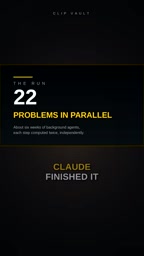
The "self-replicating" working mode was key to this breakthrough. Claude generated multiple copies of itself to process massive computational tasks in parallel, similar to the logic of division and collaboration in human research teams, but on an incomparable scale and speed.
Mutation Mechanism: From Water Boiling to Black Hole Formation
Both problems share a core physical picture: phase-transition-style abrupt change. Whether it is hot gas collapsing into a black hole or the mass threshold of the lightest black hole, the system behavior exhibits a "switch-like" sharp transition rather than a smooth one.
Such abrupt changes are extremely difficult to characterize mathematically, because macroscopic gravitational effects and microscopic quantum fluctuations must be handled simultaneously. If Claude's proofs hold, they will provide new formal tools for critical phenomena in quantum gravity.
Lean Verification: A Key Step for Credibility
Anthropic emphasized that both proofs were verified by the Lean theorem prover. Lean is an interactive theorem proving system that requires every logical step to be rigorously checked by machine. This means the correctness of the proofs does not depend on the AI's "confidence," but on the closure of formal logic.
However, Anthropic also stated: these results "cannot prove anything about our universe." In other words, mathematical validity does not equal physical applicability. Many models in black hole physics are idealized constructions, and their correspondence to the real universe still requires independent testing.
Formal verification refers to translating a mathematical proof into a formal language that a computer can check line by line, reducing every step of reasoning to mechanical application of axioms and inference rules. Lean is a representative tool in this field; its core is a small trusted kernel, and all proofs must ultimately pass type checking by that kernel—any logical leap or hidden assumption will cause compilation to fail. Therefore, formal verification is stronger than peer review: the latter relies on experts' reading and judgment, while the former requires the proof to be completely logically closed. Note, however, that formal verification can only guarantee that the derivation "from given axioms to conclusion" is correct; it cannot guarantee that the axioms or the model itself correspond to the real world—which is also why Anthropic stated that these results do not concern the real universe.
The Boundaries of AI-Assisted Basic Research
The significance of this event is not that "AI replaces physicists," but that it demonstrates a new division of research labor: humans set the problems and frameworks, AI undertakes massive symbolic computation and trial and error, and formal tools handle verification. Six weeks, 22 problems, two proofs—this ratio itself shows that even for AI, breakthroughs in basic science remain a low-hit-rate, high-consumption process.
More noteworthy is the detail of "61 failures." It reminds us that AI's value in research may lie more in "tirelessly trying and failing" than in "a flash of inspiration." When computational scale becomes the bottleneck, AI's parallel capability precisely fills the shortfall in human effort.
As for whether these proofs can inspire new physical intuition or remain merely at the mathematical level, there is currently no conclusion. Anthropic's cautious statement is appropriate: formal verification guarantees logical correctness, but physical meaning requires the physics community's own judgment.
Open problem in mathematics and theoretical physics usually refers to a problem that has been clearly stated but has no recognized solution, and its difficulty is highly uneven: some may be cracked within months, while others remain unresolved for decades. Therefore, the ratio of "exploring 22 problems in six weeks and solving 2" needs to be understood within the difficulty distribution of the problems—the absolute value of the success rate cannot directly indicate AI's research capability; what is more informative is the number of branches it can attempt per unit time. In addition, even if AI-generated proofs pass formal verification, their "readability" and "inspiringness" remain separate issues: whether human researchers can extract new physical intuition from the proof structure often affects the long-term development of the discipline more than whether the proof itself holds.
One-line Summary
Claude solved two open problems in black hole physics through parallel trial and error plus Lean formal verification.
Paragraph Summary
Anthropic announced that Claude solved two long-standing open problems in black hole physics and quantum gravity. One was proposed in 1983 and, after a computational framework was established in 2003, remained unfinished because the Feynman-diagram computation was too large. Claude, in a "self-replicating" parallel mode, explored 22 open problems in six weeks and solved two of them, while another had undergone 61 failures. Both proofs were formally verified by the Lean theorem prover, ensuring logical closure. Anthropic also stated that these results cannot prove any conclusions about the real universe. The significance of the event lies in demonstrating a new division of research labor: humans set the problems and frameworks, AI undertakes massive symbolic computation and trial and error, and formal tools handle verification.
Related articles

Claude Solves Two Major Black Hole Physics Problems, Ushering in a New Era of AI Research Collaboration
Anthropic's Claude solved two open problems in black hole physics: a 2003 unfinished phase transition calculation and a black hole mass bound since 2009. AI as a research collaborator, using holographic duality and the modular bootstrap, with results awaiting peer review.

Claude Solves Two Major Black Hole Theory Problems: A New Milestone in AI Scientific Research
Anthropic announced Claude solved two open black hole theory problems: the weak-coupling sign of the Hawking-Page transition and the exact limit of modular bootstrap. This article details the background, Claude's solutions, verification controversies, and limitations, exploring AI's breakthrough and boundaries in theoretical physics.

Claude Solves Two Open Problems in Black Hole Physics: A New Sample of AI-Assisted Research
Anthropic's research paper documents Claude solving two open black hole problems: whether hot gas transitions to black holes abruptly, and the lightest black hole mass limit. The model produced 22 candidates in hours, with the agent running in the background for about six weeks; results were reviewed by physicists, though Anthropic says they don't directly apply to our universe.