AI Daily: DeepSeek Harness Secret Redaction Upgrade and Codex Model Adjustment

AI Daily nine items: DeepSeek Harness update, Codex deprecates GPT-5.5, Ant open-sources 560 billion model.
This issue's AI Daily summarizes nine developments. DeepSeek Harness alpha.3 supports automatic secret redaction, independent sub-agent presets, and brings breaking changes to Headless and Azure configurations. OpenAI deprecates GPT-5.5 for ChatGPT-logged-in Codex starting October 15, recommending GPT-6.1, with API Key path unaffected. On the engineering side, GitHub Actions workflow lock files enter public preview, Cloud API launches OpenTelemetry export Beta. Google releases technical document review Agent Deep Review, Kimi Code 1.1.0 official version adds Linux support and mobile remote control. Ant InclusionAI open-sources 03.1 Flash weights, with 560 billion total parameters, 25 billion activated, and 1 million context. GitHub Copilot adds multi-model collaboration and Max reasoning tier, xAI Grok Voice 3.0 claims voice index 86.9 ranking first but data not independently reproduced.
Introduction
According to Bilibili creator "马上花生"'s AI Daily (October 15, 2026), this issue covers nine AI industry developments, spanning developer tool updates, model releases, and platform strategy adjustments. Among these, DeepSeekAd Harness alpha.3's secret redaction and sub-agent preset features, along with Codex deprecating GPT-5.5, are the most critical. Here is the detailed breakdown.
DeepSeek Harness alpha.3: Automatic Secret Redaction and Independent Sub-agent Presets
On October 14, DeepSeek released Harness 0.2.1-alpha.3 pre-release on GitHub. This version brings three core improvements: the Web interface can now log into DeepSeek accounts during local HTTP access, keys and tokens in messages are redacted by default and can be viewed when needed; a minimalist mode has been added that can read images and automatically compress long conversations; Compact commands have been added to both Web and desktop, supporting manual compression. Additionally, sub-agents can each be configured with independent Agent presets, and task delegation comes with advance notification, so pointing out tasks no longer consumes new goal rounds.
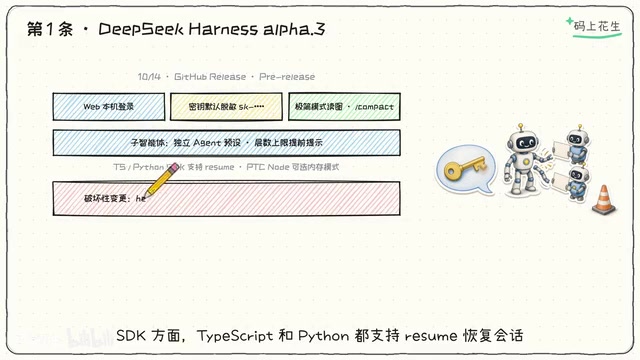
On the SDK side, both TypeScript and Python support Resume for session recovery, and the Node environment for PTC adds an optional memory mode. Two breaking changes need attention: Headless mode now reads environment variables and ENV files by default, no longer reading saved keys; Azure provider has been renamed uniformly, and old-name configurations need migration. It's recommended to run through a test environment before upgrading Alpha.
What are sub-agents and Agent presets?
A sub-agent is a subordinate execution unit relative to the main agent (Orchestrator/Main Agent). In development frameworks like Harness, the main agent is responsible for understanding user intent, breaking down tasks, and then delegating specific subtasks to one or more sub-agents for execution—similar to "a project manager assigning work to specialists." Each sub-agent typically has independent context, tool sets, and reasoning budget.
Agent presets are a set of reusable configuration templates that define which model the agent uses, how system prompts are written, which tools can be called, and how high the reasoning intensity is. Previously in Harness, all sub-agents often shared the same default configuration, but alpha.3 allows "each to be configured with independent presets," meaning you can customize different models and tool permissions for each sub-agent for scenarios like code review, document retrieval, and test generation, achieving more refined trade-offs between cost and effectiveness. This is especially critical for teams building multi-agent collaboration pipelines.
OpenAI Codex Deprecates GPT-5.5
OpenAI's official changelog shows that as of 3:00 AM Beijing time on October 15, Codex using ChatGPT login has deprecated GPT-5.5, and users are advised to switch to GPT-6.1 as the default model. Hosted configurations, custom Agent scheduled tasks, and hardcoded 5.5 in scripts all need modification. OpenAI API and Codex logged in with API Key are unaffected—this is not an API takedown.
Why distinguish "ChatGPT login" from "API Key login"?
Codex offers two authentication methods: one through ChatGPT subscription account login (OAuth flow), with credentials issued by ChatGPT; the other directly entering an OpenAI API Key, using an independent billing and model quota system. The lifecycles of these two systems are managed separately.
This adjustment only affects the former: the list of callable models under ChatGPT login status has been updated, GPT-5.5 has been removed and users are guided to switch to GPT-6.1. The API Key path accesses OpenAI API's model catalog, which is unaffected by ChatGPT-side model additions and removals, so subscription users and API users often have inconsistent "available models." When troubleshooting compatibility issues, developers should first confirm which channel they're using, then check the corresponding channel's model announcements, to avoid misjudging platform-side plan adjustments as model deprecation.
Other Notable Tool Updates
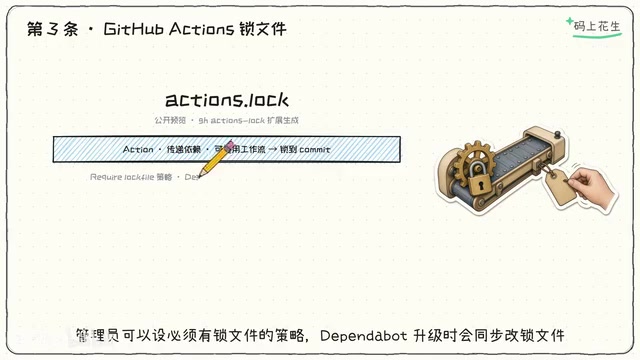
GitHub Actions workflow lock files in public preview: Lock files are generated through the GH Actions Lock extension, locking Action transitive dependencies and reusable workflows to specific Commits, Tags, or branches, so even if addresses are changed, locked versions still run. Administrators can set policies requiring lock files, and Dependabot updates lock files synchronously during upgrades. Available on Free, Team, and Enterprise Cloud. Note that official locking does not judge whether the dependency itself is safe—review before locking.
Cloud API launches OpenTelemetry export Beta: Messages API requests and Managed Agents Traces can be exported to your own observability backend, adding export destination SDKs in the Console, supporting seven languages. Beta fields may change, and exported telemetry does not equal complete audit logs.
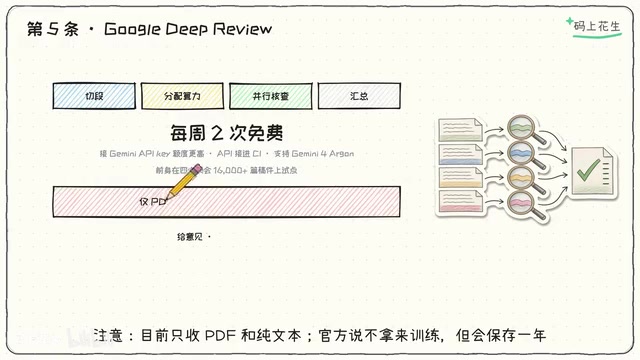
Google releases Deep Review: A technical document review Agent that first segments documents, allocates compute by difficulty, conducts parallel verification, then summarizes into opinions. Added Gemini 4 Argon support, free twice per person per week, with higher quota when connected to Gemini API Key and can use API close to CI. Previously piloted on over 16,000 submissions at four top conferences. Currently only accepts PDF and plain text, officially stated not used for training but retained for one year—confidential documents require caution.
Kimi Code 1.1.0 official version: Desktop adds Linux support for X86-64, with AppImage, DEB and RPM available. Can remotely control local Agent from mobile via link or QR code, added file count and Kimi App commands. Security-wise, file tools can no longer read out of the working directory through symbolic links, and project local configurations only take effect after the workspace is trusted. File monitoring is now disabled by default; to hot-update Agent files you need to manually enable it. Full-screen interface is still an experimental feature.
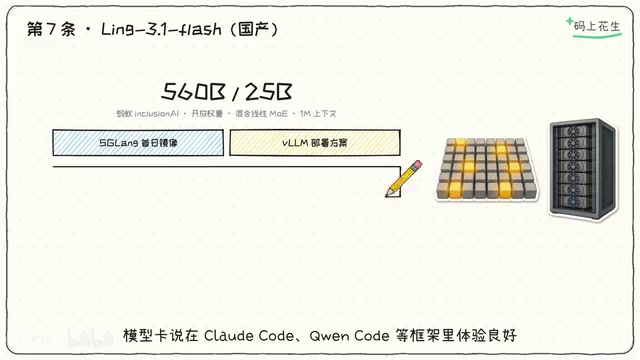
Ant InclusionAI releases 03.1 Flash weights: Hybrid linear MOE model released on Hugging Face, with 560 billion total parameters, 25 billion activated, and 1 million context. There are first-day mirrors, and VLLM also provided deployment solutions. The model card claims good experience on frameworks like Cloud Code and Coin Code. Official recommended configuration is 8-card H200 or 4-card GB300—ordinary computers can't run it. The evaluation conclusion is officially self-reported, and Harness Link Code is only considering open-sourcing.
GitHub Copilot Hydrofusion update: Research preview of multi-model collaboration, model pool swapped to OPUS 5.5 and GPT-6 series. Drafting uses medium reasoning, review uses high reasoning. Cascade added a referee step, Critic changed to multiple reviewers in parallel directly checking the workspace. Added Max tier for deeper reasoning. Only available to Pro, Pro+, Business, and Enterprise, and preview features must first be enabled.
xAI releases Grok Voice 3.0: The voice model announcement cites Artificial Analysis data, with voice-to-voice index at 86.9 ranking first, latency under one second, and price the same as 2.0 at 8 cents per minute. Use Grok Voice Latest for automatic switching. Note that the ranking and the claim that 70% of Starlink calls don't need human transfer both come from xAI's announcement, without independent reproduction.
What problem do GitHub Actions lock files solve?
GitHub Actions workflows typically reference Actions in the form uses: owner/repo@v3, where v3 is a mutable tag that maintainers can point to a new commit at any time—in supply chain attack scenarios, this means your CI might execute tampered code without your knowledge.
The lock file mechanism borrows from package managers like npm and Cargo: resolving all Actions and their transitive dependencies to specific Commit SHAs, Tags, or branches, writing them into a lock manifest that can be committed to the repository, with CI execution strictly following locked versions even if upstream addresses change. Administrators can also set policies mandating lock files. Note that locking solves the "version drift and replacement" problem, but does not audit whether dependencies themselves have vulnerabilities or malicious code, so manual auditing is still required before deployment.
Why has OpenTelemetry become the universal standard for observability?
OpenTelemetry (OTel) is an open-source project under CNCF, aiming to unify the collection and transmission formats of three types of telemetry data—Traces, Metrics, and Logs—and provide vendor-neutral SDKs and Collector. Previously, each monitoring platform had its own proprietary protocol, locking you in with each integration; OTel lets the application side instrument once and export data to any backend like Jaeger, Datadog, Grafana.
Cloud API launching OTel export Beta means developers can send Messages API requests and Managed Agents execution Traces directly into their existing observability systems, viewing them alongside other call chains in business systems. Two things to note: Beta-stage field definitions may change, so production environments need version compatibility; second, what's exported is telemetry data, with sampling and retention policies under your control, so it cannot be equated with complete audit logs in a compliance sense.
Summary
This issue's daily shows that developer tools continue to evolve in security and collaboration: DeepSeek Harness's secret redaction and sub-agent presets improve flexibility and security, Codex's model adjustment reminds developers to update configurations promptly. GitHub Actions lock files and Cloud API telemetry export enhance engineering reliability. Domestic models Ant 03.1 Flash and Kimi Code 1.1.0 demonstrate open-source and cross-platform capabilities. xAI's voice model data is impressive but requires independent verification.
One-line Summary
AI Daily nine items: DeepSeek Harness update, Codex deprecates GPT-5.5, Ant open-sources 560 billion model.
Paragraph Summary
This issue's AI Daily summarizes nine developments. DeepSeek Harness alpha.3 supports automatic secret redaction, independent sub-agent presets, and brings breaking changes to Headless and Azure configurations. OpenAI deprecates GPT-5.5 for ChatGPT-logged-in Codex starting October 15, recommending GPT-6.1, with API Key path unaffected. On the engineering side, GitHub Actions workflow lock files enter public preview, Cloud API launches OpenTelemetry export Beta. Google releases technical document review Agent Deep Review, Kimi Code 1.1.0 official version adds Linux support and mobile remote control. Ant InclusionAI open-sources 03.1 Flash weights, with 560 billion total parameters, 25 billion activated, and 1 million context. GitHub Copilot adds multi-model collaboration and Max reasoning tier, xAI Grok Voice 3.0 claims voice index 86.9 ranking first but data not independently reproduced.
Related articles

Free Unlimited Claude Code Solution: Agnes AI + CC Switch Setup Guide
No paid subscription needed — pair the free AI platform Agnes AI with the open-source tool CC Switch to provide a backend for Claude Code, enabling unlimited free calls to text, image, and video models. This guide covers the full setup, test results, and usage boundaries.

A Complete Zero-Cost Guide to Getting Started with Claude Code for Beginners in China
A beginner's guide to Claude Code for users in China: two installation methods (command line and IDE plugin), full configuration steps for replacing the official API with the free domestic LongCat model, and a hands-on demo of building a small tool with natural language, plus tips.

When the NSA Gets Involved: The AI Supply Chain Crisis Behind Open-Source CVEs and API Key Hijacking
Multiple open-source projects disclosed severe CVEs in one day, PHP flaws alarmed the FBI, and Railway and OpenCode were breached with API keys stolen. This article breaks down the vulnerability window, AI-accelerated exploitation, and the AI supply chain crisis behind the API key black market, with a developer defense checklist.