AI Data Center Natural Gas Consumption Forecast: Could Surpass Germany and Japan Combined

AI-driven compute demand may push U.S. data center gas consumption past Germany and Japan combined by 2035.
The rapid rise of generative AI is driving a surge in data center power demand. Because intermittent wind and solar cannot reliably power around-the-clock compute operations on their own, natural gas has become the preferred bridging solution thanks to its flexibility and short build times. Industry forecasts suggest U.S. data center gas consumption could surpass Germany and Japan combined by 2035, making AI infrastructure a significant macroeconomic energy variable — one that directly conflicts with tech companies' net-zero pledges. Grid-scale storage, SMR commercialization, and improvements in AI model efficiency offer potential paths forward, but none are likely to displace natural gas's dominant role in the near term.
The Energy Black Hole Fueled by the AI Boom
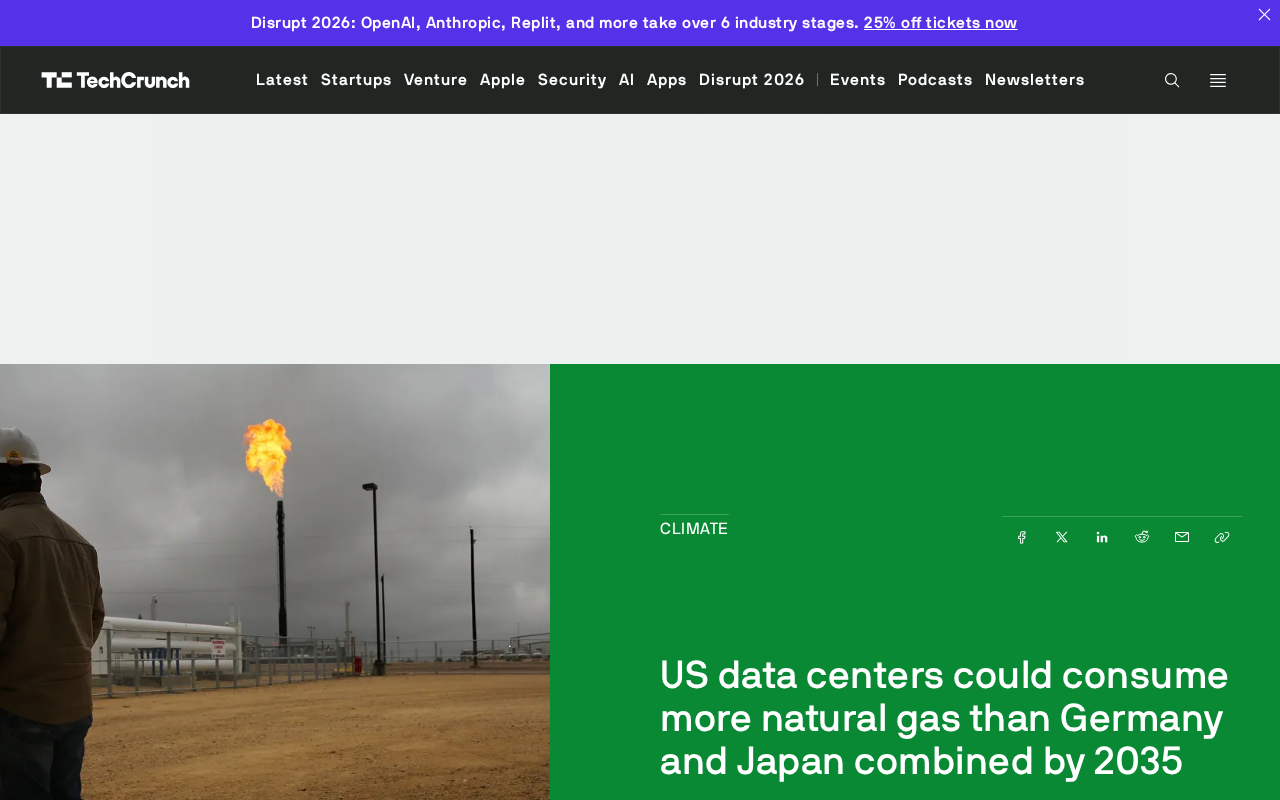
The explosive growth of artificial intelligence is reshaping the global energy landscape. According to industry forecasts, U.S. data centers could consume more natural gas by 2035 than Germany and Japan combined — a trajectory that would place American data centers among the world's largest natural gas consumers.
This projection sounds dramatic, but the underlying logic is straightforward. Generative AI training and inference are driving exponential growth in computing demand, and computing demand is fundamentally a power consumption problem. When renewable energy deployment can't keep pace with data center expansion, natural gas generation becomes the practical choice to fill the gap.
Why Natural Gas
Data centers have near-uncompromising requirements for their power supply — they need stable, continuous, and predictable baseload electricity. Wind and solar are clean, but their intermittent nature makes them insufficient on their own to support AI clusters running 24/7. With grid-scale storage still maturing and nuclear construction timelines measured in decades, natural gas generation — with its flexible load-following capability and shorter build times — has become operators' transitional, and in some cases long-term, choice.
This explains why several major tech companies, when expanding data centers, are choosing to co-locate or partner with nearby natural gas power plants. This approach sidesteps the lengthy queue for grid interconnection and rapidly meets the power needs of newly built compute facilities.
Baseload Power refers to electricity sources that can deliver stable, around-the-clock output regardless of weather or time of day. Server racks in data centers require continuous power — any outage risks service interruption and data loss — making their dependence on baseload power far greater than typical industrial users. Combined-cycle gas turbines (CCGT) can start and stop within minutes to hours, far more flexibly than coal plants, and can rapidly adjust output in response to real-time fluctuations in compute load. This "dispatchability" is a characteristic that wind and solar cannot currently provide on their own, and it is the core reason natural gas remains difficult to displace during the energy transition. Some hyperscale data center operators — including Microsoft and Google — have already built on-site gas turbines or signed dedicated power agreements with natural gas plants to avoid public grid capacity constraints and interconnection backlogs.
A Double Blow to Energy Markets and Climate Goals
If these forecasts prove accurate, the implications will extend far beyond the energy sector. Comparing U.S. data center natural gas consumption to that of two major industrialized nations — Germany and Japan — signals that AI infrastructure has become a macroeconomic variable that can no longer be overlooked.
From a climate perspective, this trend is in direct tension with global decarbonization goals. Natural gas is cleaner than coal, but it remains a fossil fuel. Large-scale reliance on gas-fired generation will increase carbon emissions, potentially undermining the net-zero commitments that tech companies have previously made. Striking a balance between meeting compute demand and delivering on emissions reduction pledges will be an unavoidable challenge for the entire industry.
A Structural Mismatch That Won't Resolve Quickly
There is a significant timing mismatch between the growth curve of compute demand and the growth curve of clean energy supply. This mismatch is nearly impossible to resolve in the short term — the AI race won't wait for grid upgrades, and natural gas happens to be the most readily available fuel to bridge that window.
Several variables will determine whether this forecast materializes: the deployment speed of renewables and energy storage, the commercialization timeline of new power sources such as small modular reactors (SMRs), and the rate at which AI model efficiency improves. A breakthrough in any one of these variables could rewrite the energy mix for data centers. But given current technology and industry timelines, natural gas will continue to play a pivotal role over the next decade.
Small Modular Reactors (SMRs) have become a frequently cited potential solution. Unlike traditional large-scale nuclear plants that often require more than a decade to build, SMRs are typically rated below 300 MW, are designed to be factory-fabricated and assembled on-site, and could reduce construction timelines to three to five years. Microsoft has already signed an agreement with Constellation Energy to restart the Three Mile Island nuclear plant to power its data centers; Google and Amazon have also struck power purchase agreements with SMR startups. However, no commercially operating SMR project exists anywhere in the world today, and significant uncertainty remains around technical readiness and actual costs. Whether SMRs can achieve large-scale deployment by the early 2030s is one of the pivotal bets that will determine whether data centers can break their dependence on natural gas.
Related articles

LynnReal-Omni: 32B Unified Video Diffusion Model Goes Open Source with Multi-Task Coverage in Four Steps
LynnReal-Omni is a 32B unified video diffusion model on MiniMax H3, covering text-to-video, pose guidance, style transfer, restoration in 4 steps. Flash version generates 540p video in 377ms on one H100.

Anthropic Co-Founder: AI 'Kill Switch' May Need to Be Mandatory by Law
Anthropic's co-founder tells the BBC that AI 'kill switches' may need to be legally mandated. We analyze the industry logic, technical challenges, and the tension between regulation and innovation.

The AI Data Center Boom Is Colliding With Cities Scarred by Heavy Industry
The AI data center boom is clashing with post-industrial communities. Philadelphia's case reveals structural conflicts between AI growth, energy use, water, and environmental justice.