AI Doomerism: The New Hype Tool in Tech Leaders' Hands
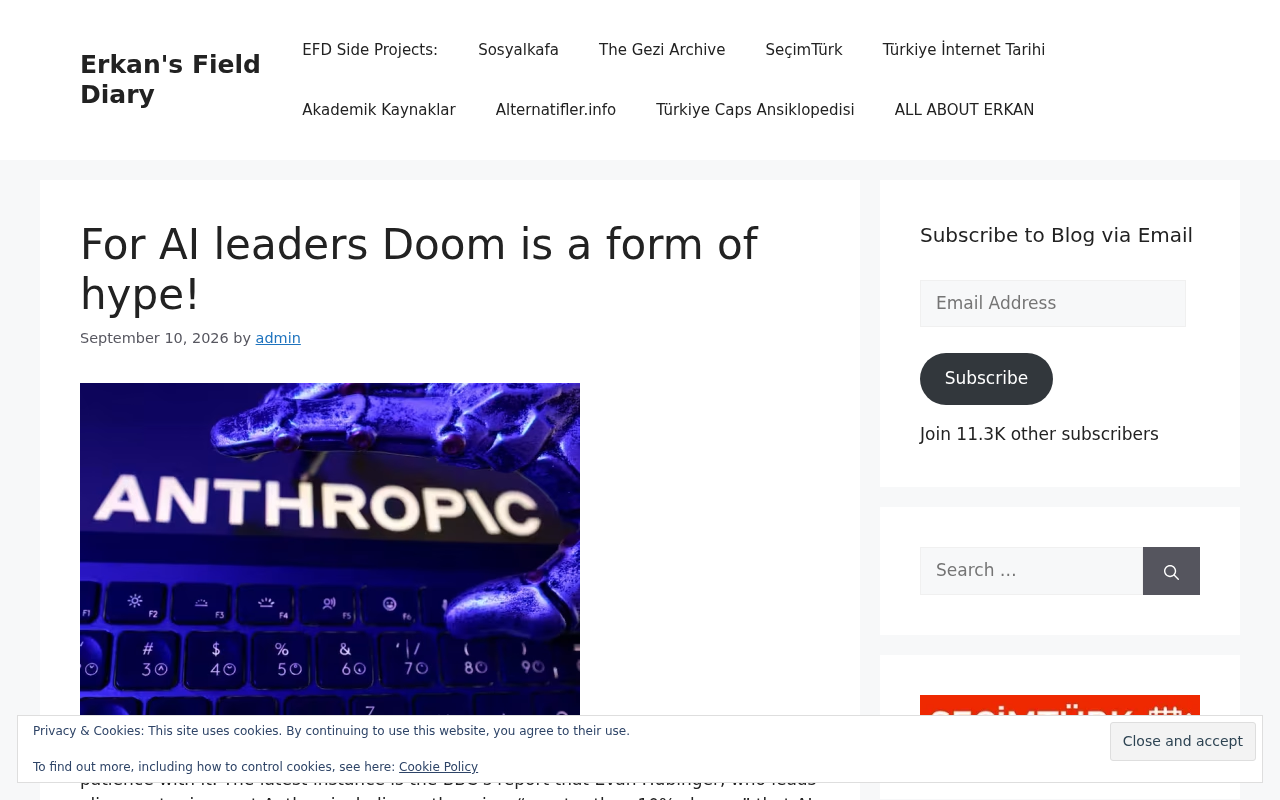
AI leaders' doomsday warnings may serve as a hype strategy to attract investment and dominate regulatory conversations.
This article examines a deeply ironic pattern in the AI industry: the voices most eager to warn that "AI will destroy humanity" often belong to the very leaders commercializing these technologies. The "dangerous equals powerful" narrative serves multiple business purposes — attracting sky-high valuations, securing authority in regulatory discussions, and shifting public attention away from actionable concerns like data privacy and algorithmic bias toward abstract superintelligence threats. Questioning doomerism as hype doesn't mean denying AI's real risks; the key is distinguishing evidence-based near-term concerns from dramatized grand narratives. The article ultimately calls on the public, policymakers, and investors to think critically and focus on verifiable, governable issues rather than being driven by emotionally charged storytelling.
When "Doomsday Warnings" Become Marketing Speak
A fascinating pattern has been drawing attention in public discourse around AI: the loudest warnings about artificial intelligence posing an existential threat often come from the very leaders of companies building these technologies. An article that sparked heated debate on Hacker News (earning 104 upvotes and 82 comments) put forward a sharp thesis — for AI leaders, Doom itself is a form of hype.
This argument cuts to the heart of a central contradiction in today's AI narrative. When a company's CEO simultaneously declares that their product might "end human civilization" while continuing to raise funding, scale operations, and push commercial products, the tension between words and actions demands scrutiny. The core challenge the article poses is this: if you genuinely believe a technology will destroy the world, why are you accelerating its development?
The Business Logic Behind the Fearmongering
The logic of doomerism as a hype tool isn't complicated. When tech leaders publicly claim their products are powerful enough to threaten human survival, they are effectively sending a message to the market: this technology is extraordinarily powerful, extraordinarily important, and extraordinarily indispensable.
This implicit equation of "dangerous equals powerful" serves commercial interests on multiple fronts. It captures investor attention — after all, only world-changing technology justifies astronomical valuations. It also establishes authority in regulatory conversations, since only those who control the "dangerous technology" deserve a seat at the table when the rules are being written.
In the Hacker News discussion, many commenters noted the dual nature of this narrative: doomerism both diverts public attention away from real, present-day problems (data privacy, algorithmic bias, labor displacement) and steers the conversation toward distant, abstract threats of "superintelligence" — giving companies room to breathe in the face of more concrete regulatory pressure.
The Line Between Real Risk and Marketing Narrative
To be clear, questioning "doomerism as hype" is not the same as denying that AI carries genuine risks. The key distinction lies between two fundamentally different categories of concern: those grounded in evidence and actively unfolding in the real world, and those that have been dramatized and packaged to serve specific commercial and narrative purposes.
When doomsday warnings come from the party with the greatest incentive to exaggerate its own technology's capabilities, their credibility deserves a question mark. This isn't a simple case of crying wolf — it's a more subtle strategy: by acknowledging (or even amplifying) potential dangers, tech leaders reinforce the importance of the technology and cement their own position as indispensable leaders.
The debate in the comment section reflects this tension. Some argued that even if hype motives exist, AI safety concerns remain real and urgent, and questioning motives shouldn't lead us to dismiss the risks. Others emphasized that precisely because the narrative is dominated by interested parties, the public needs to maintain critical thinking and be wary of manufactured panic.
Why This Perspective Matters
The value of this discussion lies in how it prompts us to examine the distribution of power in AI discourse. Today's public conversation about AI risk is largely shaped by a small number of leaders at a handful of dominant companies. They are simultaneously the developers of the technology, its primary beneficiaries, and the definers of its risk narrative — a combination of roles that constitutes an inherent conflict of interest.
Reframing "doom" as a form of "hype" is, at its core, an act of disenchantment: it pushes us to interrogate the motivations and interests behind every grand warning, rather than being swept along by emotionally charged narratives. For practitioners, investors, and policymakers who follow AI development, maintaining this kind of clarity is especially important.
The genuinely constructive stance may be to neither blindly accept doomsday prophecies nor dismiss potential risks outright — but to redirect attention toward concrete, verifiable, governable issues. That is the pragmatic path around the hype trap.
Related articles
iOS 27, iPadOS 27, and macOS 27: The Information Gap Behind a Discussion
A Hacker News post about iOS 27, iPadOS 27, and macOS 27 sparked speculation about Apple unifying its version numbering. Here's how to read it with limited info.
ComfyUI Prompt Studio: A Workflow for Turning Reference Images into Production-Ready Prompts
ComfyUI Prompt Studio is an open-source workflow that auto-generates production-ready image prompts, multi-model custom prompts, and MiniMax video scripts from reference images.
K2 Horizon 7B: A Small Model Punching Above Its Weight
K2 Horizon 7B ranks between Qwen 3.6 27B and 35BA3b on the Artificial Analysis Intelligence Index, delivering near-mid-tier intelligence at 7B parameters — a strong local deployment option.