AI Executives Call for Regulation: A Familiar Play Worth Scrutinizing
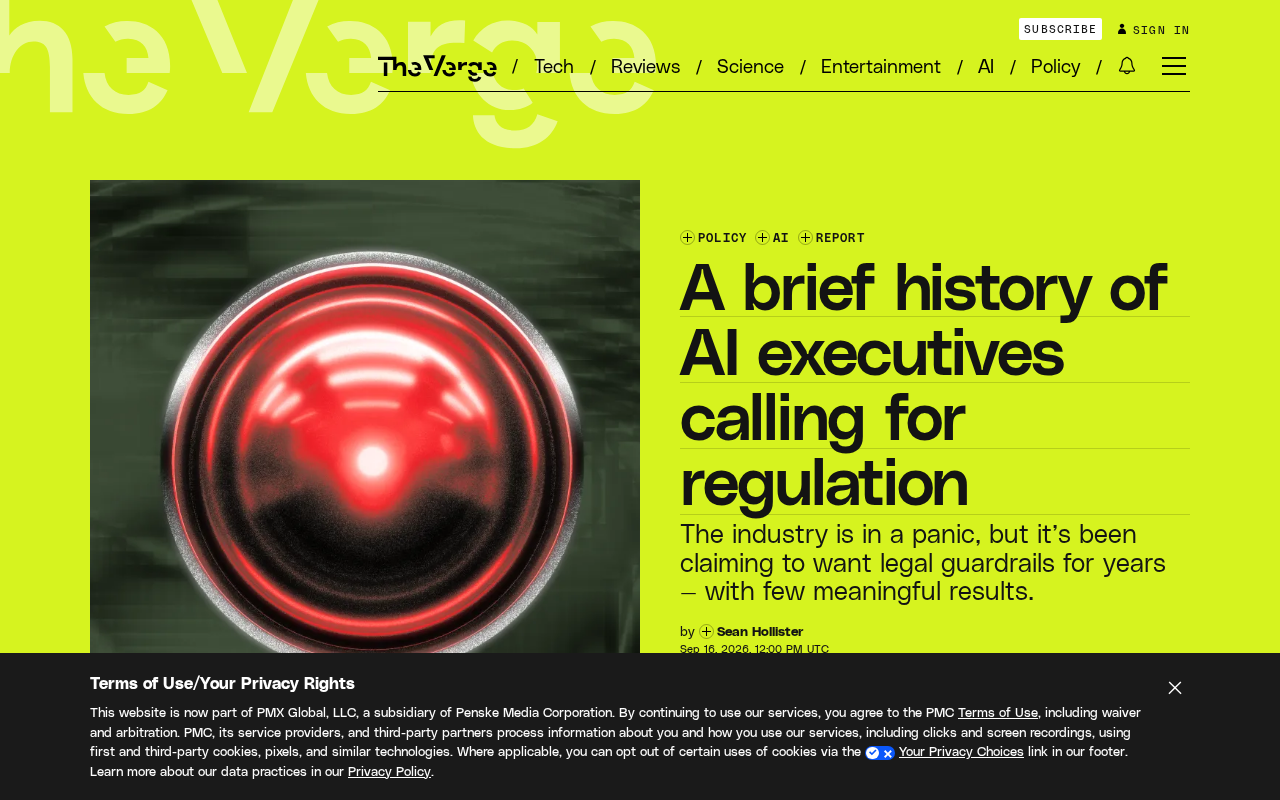
Behind Big Tech's calls for AI regulation lie three strategic motives: image, market barriers, and rule-making power.
Top AI executives from OpenAI, Anthropic, Google DeepMind, and Microsoft have again called for stronger industry regulation. The article identifies three strategic layers behind these appeals: building a "safety-first" public image, using compliance costs to raise entry barriers for competitors, and shaping legislation before it's finalized. More fundamentally, "slowing down" serves incumbents by locking in their lead, while potentially sidelining challengers and open-source communities. The piece doesn't reject the need for AI regulation — it warns that healthy oversight must come from independent, public-interest perspectives, not from the very players who stand to benefit most from the rules they're proposing.
Over the past few days, some of the biggest beneficiaries of the AI boom have once again gone public with a familiar message: it's time to slow down and prevent technology from spiraling out of control. The list reads like a who's who of the AI industry — OpenAI CEO Sam Altman, Anthropic CEO Dario Amodei, Google DeepMind co-founder Demis Hassabis, Microsoft CEO Satya Nadella, and key figures from companies like X.
When the people who control the most powerful models and the largest reserves of compute start calling for regulation in unison, it's worth pausing to ask: what exactly are they calling for, and who does it serve?
A Familiar Script
AI executives calling for regulation is nothing new. Looking back over the past few years, industry leaders have reliably stepped forward to emphasize "risks" and "responsible development" at nearly every major capability milestone. Sam Altman has voluntarily urged Congress to regulate AI on multiple occasions. Dario Amodei has long positioned "safety first" as Anthropic's core brand identity. Demis Hassabis has consistently stressed the far-reaching implications of artificial general intelligence.
What makes these statements noteworthy is that they break from the traditional tech industry instinct to resist oversight and pursue unfettered growth. When the regulated parties are the ones asking to be regulated, people naturally start asking why.
Three Layers of Logic Behind the Call for Regulation
From a strategic business perspective, leading AI companies' calls for regulation typically involve several layers of calculation — each worth unpacking.
Building a Public Image of Safety and Responsibility
AI technology inherently triggers public anxiety about loss of control, job displacement, and misinformation. Proactively discussing risks and calling for oversight allows these companies to occupy the moral high ground in public discourse, crafting a narrative that says "we care about safety more than anyone." This translates into real value for brand trust and long-term user relationships.
Raising the Bar for Market Entry
More practically, strict regulatory frameworks tend to favor large, resource-rich incumbents. Compliance costs, safety evaluations, and audit requirements are manageable burdens for companies that already have legal teams, compute reserves, and data infrastructure in place — but they can become nearly insurmountable barriers for startups and open-source projects. In other words, calling for regulation is, to some extent, also a way of erecting obstacles for potential competitors.
This phenomenon is known in economics as regulatory capture — where regulatory bodies or policies gradually come to be dominated by the very industries they are supposed to oversee, ultimately serving industry interests rather than the public good. History offers plenty of precedents: aviation, finance, and telecommunications all saw large incumbents actively push for industry-wide legislation, ostensibly in the name of safety and quality, but effectively building moats against new entrants. In the AI space, this risk is particularly acute. Potential regulatory requirements around model safety evaluation, compute thresholds, and data compliance obligations almost perfectly align with the existing capabilities of the leading players — while open-source communities and smaller startups would struggle to bear the associated costs independently.
Shaping the Rules Before They're Written
When regulation is inevitable, the best position to be in is that of a co-author rather than a passive recipient. By engaging proactively in regulatory discussions, these companies can influence the direction of standards at an early legislative stage, ensuring that the final rules don't undermine their core business models.
Who Pays the Price for "Slowing Down"
Calling for a slowdown sounds measured and responsible — but the real question is: who slows down, and by how much?
For companies that have already established technological and market leadership, an industry-wide deceleration effectively locks in the current competitive landscape. For challengers, open-source communities, and emerging-market players, any form of slowdown may mean permanently losing the chance to close the gap. This is precisely why outside observers tend to view these collective statements with caution — they may reflect genuine safety concerns, or they may be a carefully packaged business strategy. The two are not mutually exclusive.
It's also worth noting that calls to "slow down" carry asymmetric effects at the geopolitical level. If the regulatory frameworks being advocated by leading U.S. AI companies are codified into law, they would primarily constrain companies operating within the U.S. legal system — while foreign competitors not subject to these rules, particularly large AI labs in China, could continue accelerating their R&D in the interim. This logic has been cited repeatedly in U.S. congressional hearings on AI policy by those opposed to heavy-handed regulation. The real geopolitical implications of "slowing down," in other words, are far more complex than the phrase suggests.
Regulation Itself Isn't Wrong — But the Motives Deserve Scrutiny
To be clear: AI genuinely needs a sound regulatory framework. The rapid escalation of technical capabilities, the opacity of large models, and the potential for misuse are all real and serious challenges. Calling for regulation isn't inherently wrong.
What deserves vigilance is allowing the regulated to design the regulation. Healthy oversight should come from an independent, public-interest perspective — one that incorporates the voices of academia, civil society, small and medium-sized businesses, and open-source developers, rather than being set by a handful of large-company CEOs in closed-door meetings. When the primary beneficiaries of a proposed regulatory regime happen to be the same people calling for it, both the public and legislators have every reason to be a little more skeptical.
Conclusion
This wave of collective statements from AI executives is both a sign of industry maturation and a mirror worth examining carefully. The vision of technology serving the greater good is admirable — but history reminds us repeatedly: when the giants all speak with one voice and ask everyone to "slow down," it's always worth asking who, exactly, is doing the slowing.
Related articles

AI Agent Fundamentals: The Three Core Components — Brain, Memory, and Tools
A beginner's guide to AI Agents: covering the three core components (brain, memory, tools), four stages of LLM deployment, and why Agents matter for real business use cases.

Boycotting Software That Doesn't Support Linux: One Developer's Philosophy of Choice
A Linux-only developer shares his philosophy of boycotting non-Linux software — without sacrificing productivity — and explains how coding agents like Claude Code are closing the gap with commercial tools.

Why Do All AI-Generated Projects Look the Same? The Aesthetic Homogenization Problem in Vibe Coding
Why do vibe coding projects all use purple gradients and dark glassmorphism? We break down the technical roots of AI aesthetic homogenization and how to escape it.