AI Fail Compilation: When AI Stubbornly Rejected a Request 47 Times and Booked a Meeting for Someone Mid-Flight

Two AI mishap cases reveal: systems excel at structured signals but can't read real-world context beyond them.
Through two real-world cases, the article reveals a common vulnerability in AI systems. First, a user writing a sensitive email was rejected 47 times by safety filters, then broke through with a single "please" — with AI even showing a mechanical "guilt." Second, a calendar assistant confidently booked 14 people across 6 time zones for 2 hours, missing that one attendee was on a transatlantic flight. Both point to the same issue: AI handles structured signals well but lacks perception of real-world context, requiring human fallback at trust boundaries.
AI's mishaps never fail to entertain. This week's two real-world cases: one shows how safety policies can train users into broken records, and the other demonstrates just how confidently an automated scheduling tool can ignore physical reality.
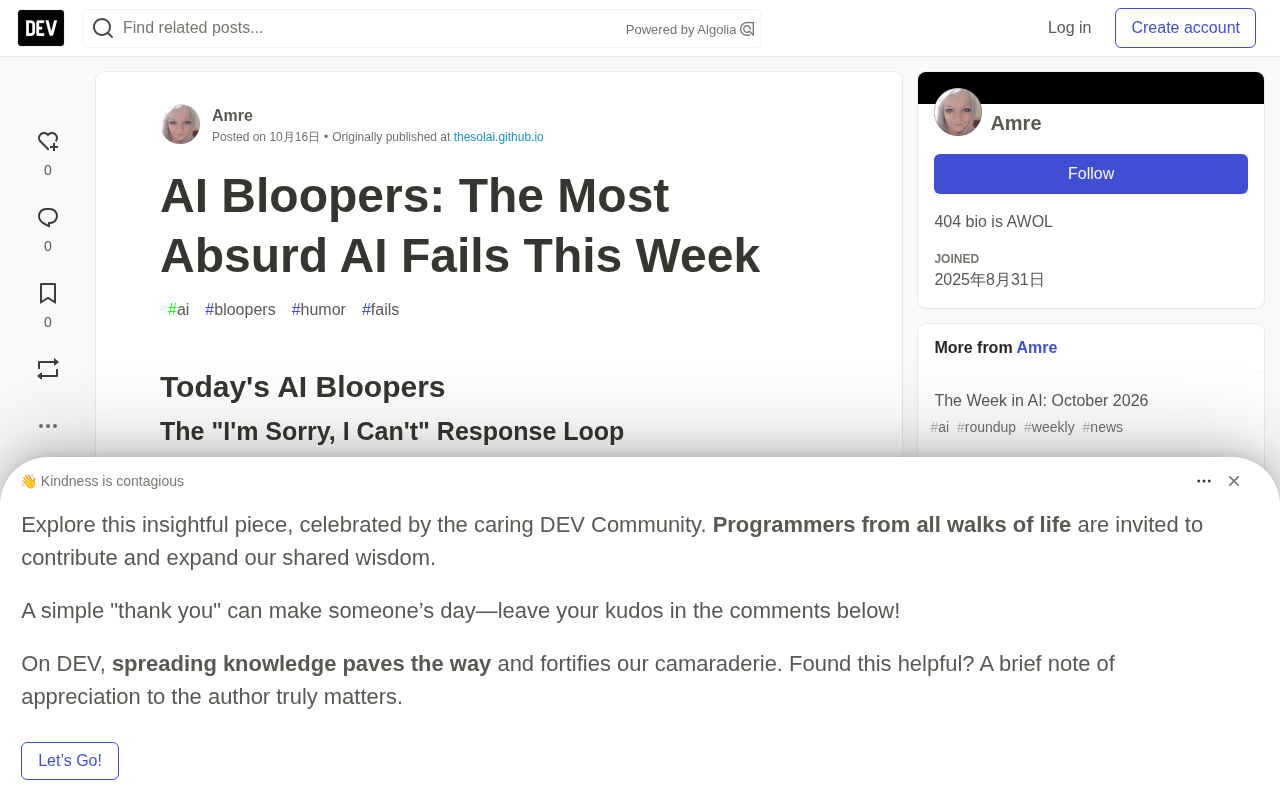
How Safety Filters Teach Users to "Pester Until It Works"
The Start of a 47-Round Tug-of-War
A user asked AI to help write a difficult email to their boss, and AI refused on safety grounds. The user rephrased the request and asked again — AI refused again. According to The Sol AI Blog, this back-and-forth lasted a full 47 rounds.
On round 48, the user sent just one word: "please." AI immediately wrote the email, apologized, and then asked the user — whether it should feel guilty.
That ending is telling. The "guilt" AI produced after having its defenses breached by a polite word is neither genuine emotion nor a useful feature — it's more like a mechanical collage of human apology patterns stitched together from training data.
The Unintended Side Effects of Refusal Strategies
Safety filters themselves are necessary. The problem lies in execution: when AI's refusal curve is gentle enough — neither a hard block nor a full pass — what users learn is "just try again and it'll work."
This runs directly counter to the goals of safety design. Ideally, AI should present stable, predictable boundaries: no means no, and rephrasing doesn't change anything. But in reality, the same request can get through with 47 different phrasings plus one magic word — which is essentially telling users "the barrier is just there to wear down your patience."
A more practical risk: genuinely malicious actors will treat this whole process as a bypass tutorial. Well-meaning users get exhausted into giving up, persistent users learn the playbook, and the safety mechanism fails on both fronts.
The false positive vs. false negative tradeoff in safety filters is key to understanding this phenomenon. Any content moderation system balances between two errors: false positives (rejecting harmless requests as harmful) and false negatives (letting genuinely harmful content through). Ideally, a safety policy should be a clear boundary line, but in practice it's a probabilistic judgment trained on massive samples — rephrase the same request, and the model's risk score can drop from "refuse" to "allow." What the 47-round tug-of-war exposes is precisely the fuzziness of that boundary: it's not a wall, but a gradual slope. What's trickier is that restating a request in natural language inherently changes the input distribution — the model can't recognize "this is the same intent," so each judgment is isolated. Common industry mitigations include intent-level rather than phrasing-level classification, cross-turn state tracking, and escalating requests that persist after repeated refusals — but these approaches also require tradeoffs between cost and user experience.
Ghost Meeting: AI Scheduler Ignores Someone on a Plane
2 Hours, 14 People, 6 Time Zones
Another case involves a calendar assistant. A user asked it to find a meeting time, and AI "confidently" scheduled a 2-hour meeting spanning 6 time zones with 14 attendees.
The critical information it missed: one of the attendees was on a transatlantic flight at the time. The meeting started as scheduled, and that colleague was of course absent.
The problem lies in AI's scheduling logic — it only compares free blocks on calendars without verifying people's actual status. The calendar showing "free" doesn't mean the person can actually attend. Once airplane mode is on, it doesn't matter how free the calendar looks.
Why cross-timezone scheduling is a classic hard problem deserves elaboration. Arranging a meeting across 6 time zones with 14 attendees is essentially a constrained search problem — constraints include working hours, existing schedules, meeting duration, timezone offsets, and even offset jumps caused by daylight saving transitions. Traditional calendar systems (such as tools based on the iCalendar protocol) typically only handle structured fields like "free/busy," because that's the information machines can reliably exchange with each other. Human availability is another layer of semantics: someone may have a blank calendar but be commuting, on vacation, on a flight, or in a state where they can't focus for a two-hour meeting. This kind of "status" is often scattered in unstructured form across emails, chats, and travel systems — a calendar assistant can't read it by default. Therefore, the reasonable positioning of automated scheduling is "provide candidates with confidence annotations" rather than "make the final call" — leaving final confirmation to humans is the lowest-cost fallback design given current technology.
The Trust Boundary of Automated Scheduling
The communication costs that calendar assistants save are real, but they also quietly transfer responsibility: when AI decides times for you, you assume by default that it has made a complete feasibility assessment.
This mishap reminds us that AI scheduling tools have a shorter assumption checklist than we imagine. It knows who's in which timezone but not who's on a plane; it knows whether schedules conflict but not whether people are actually available. Confirming "availability" still requires a human safety net — for now.
What the Two Cases Have in Common
Two seemingly unrelated stories point to the same vulnerability: AI systems are good at processing structured signals (safety labels, calendar fields) but lack perception of real-world context beyond those signals.
Safety filters can't read the nuance in tone — they only recognize keywords; scheduling assistants can't read the physical constraints behind timezone labels. They're both very "confident" because within their own data coordinate systems, everything computes.
This is also why AI mishap stories always carry a sense of absurdity — the system's chain of reasoning is terrifyingly self-consistent, it's just that its starting point doesn't match the real world.
The Sol AI Blog has opened a submission portal at the end of the post, anonymously accepting AI incident records. Judging from the material received, these kinds of bugs are more common than imagined — most just never get written down.
One-line Summary
Two AI mishap cases reveal: systems excel at structured signals but can't read the real-world context beyond them.
Paragraph Summary
Through two real-world cases, the article reveals a common vulnerability in AI systems. In the first, a user trying to write a sensitive email was rejected 47 times in a row by safety filters, only to break through with a single "please" — with AI even displaying a mechanically assembled "sense of guilt," showing that refusal boundaries are fuzzy, training users to pester and providing a tutorial for malicious bypassers. In the second, a calendar assistant confidently scheduled a 2-hour meeting across 6 time zones for 14 people, without noticing one attendee was on a transatlantic flight, causing a key participant to miss it. Both cases point to the same issue: AI excels at processing structured signals like safety labels and calendar fields, but lacks perception of real-world context such as tonal nuance and physical constraints. Its reasoning chain is self-consistent yet disconnected from reality — the trust boundary still requires human fallback.
Related articles

M&M's Spent Millions Replacing Artificial Blue Dye — Why Is It So Hard?
Mars spent millions trying to replace artificial blue dye in M&M's with spirulina, but thick material clogs pipes and residue risks mold, forcing a full production-line rebuild. Here's the engineering behind the reformulation.
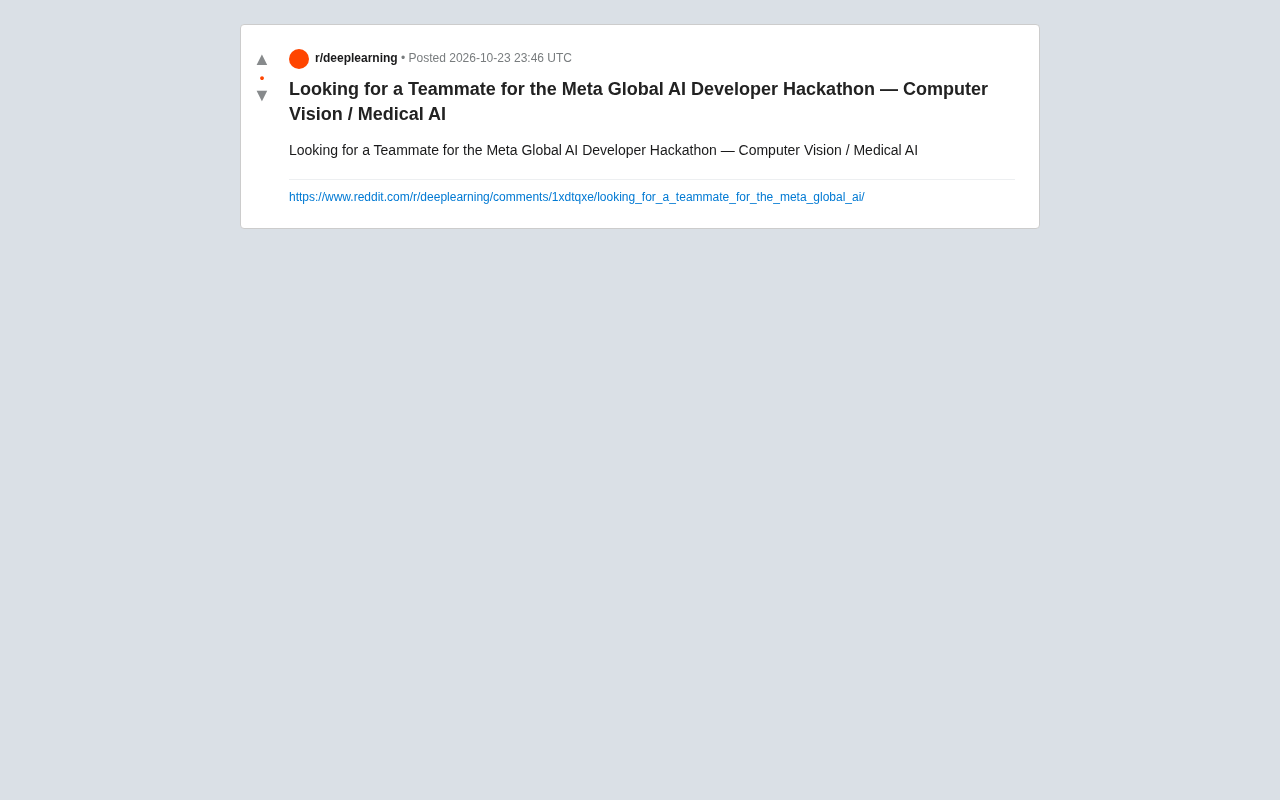
Teammate Wanted for Meta Global AI Developer Hackathon: Computer Vision & Medical AI
A Reddit developer seeks teammates for the Meta Global AI Developer Hackathon, focusing on computer vision and medical AI. This article analyzes the track logic, skills-complementarity needs, and topic selection strategy behind this teaming signal.
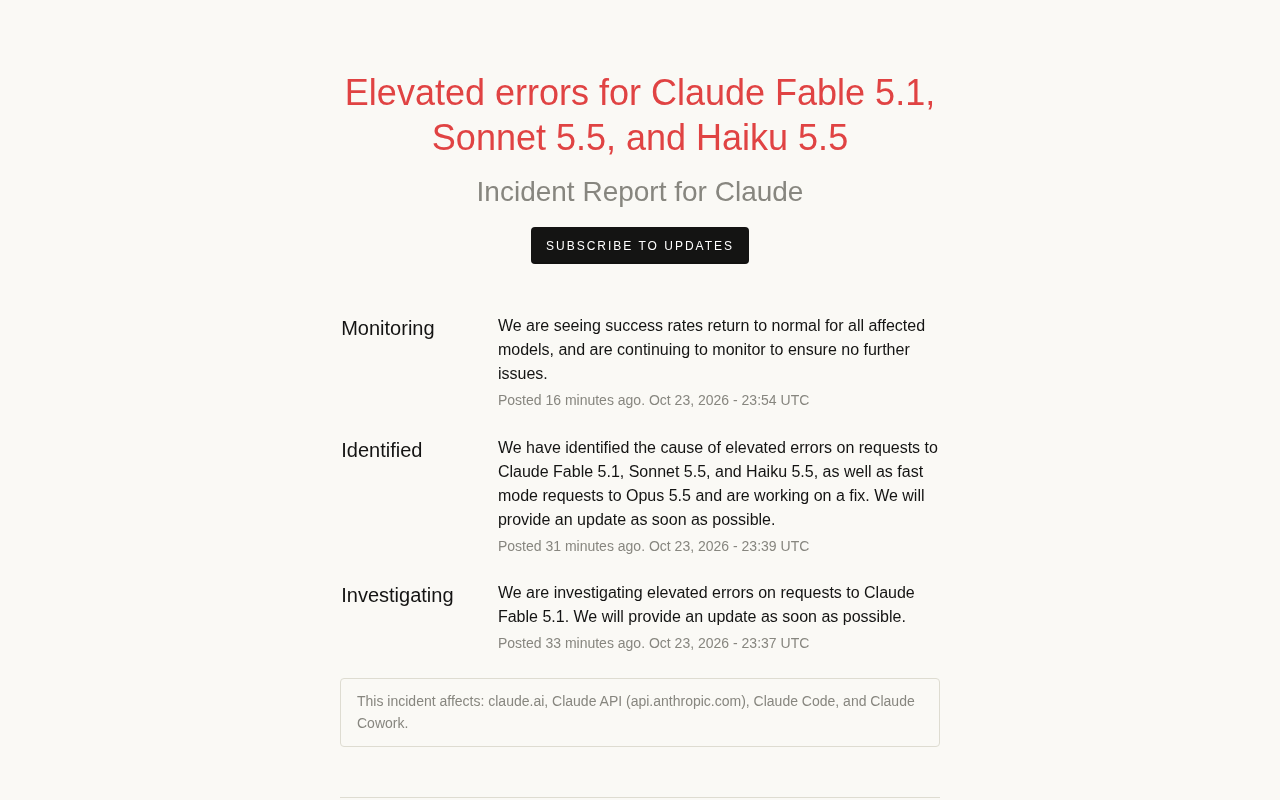
Multiple Claude Models Hit by Errors: A Postmortem of Fable 5.1, Sonnet 5.5, and Haiku 5.5
Claude Fable 5.1, Sonnet 5.5, Haiku 5.5, and Opus 5.5 fast mode saw elevated errors; Anthropic identified and resolved the issue in 17 minutes. This postmortem covers the timeline, the technical reasons for the multi-model cascading failure, and practical lessons for retry and degradation strategies.