Teammate Wanted for Meta Global AI Developer Hackathon: Computer Vision & Medical AI
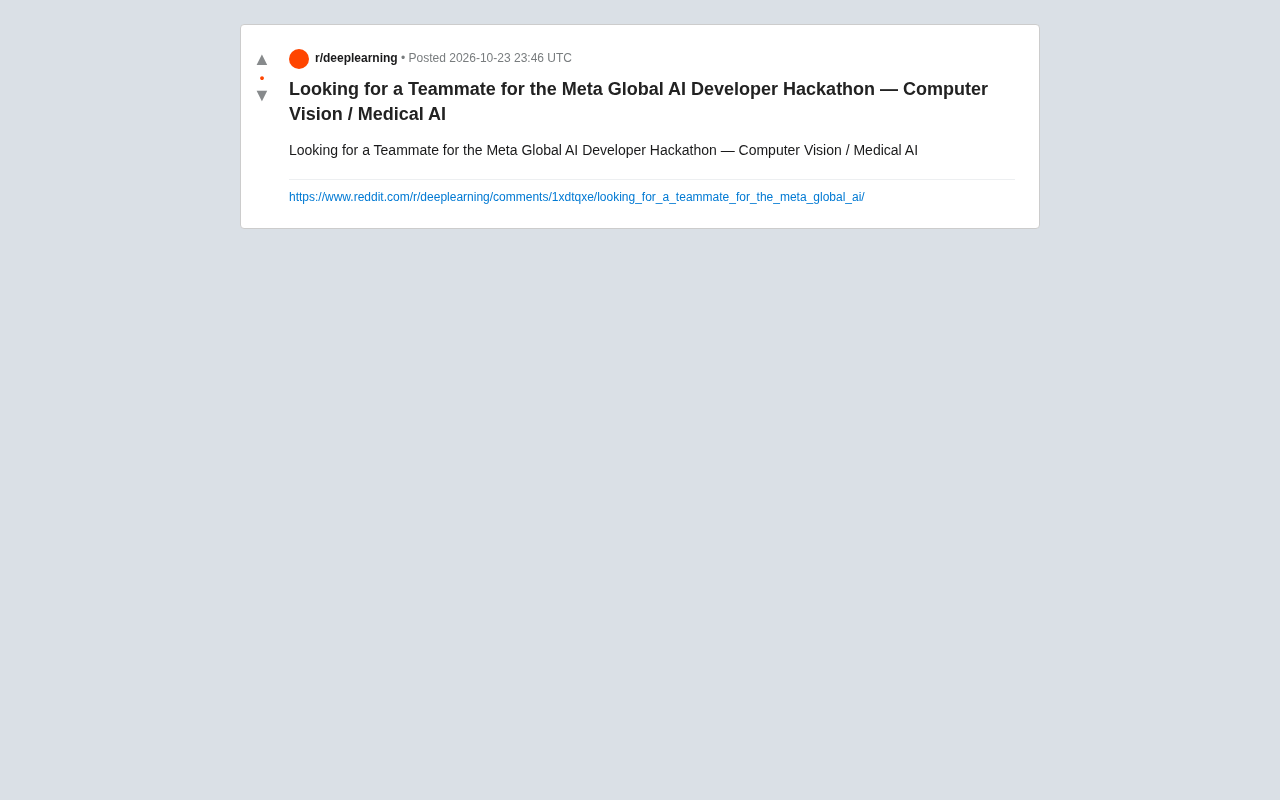
A Reddit teammate post reflects the rising trend of medical AI combined with computer vision in hackathons.
Starting from a Reddit post recruiting teammates for the Meta Global AI Developer Hackathon, this article analyzes why combining computer vision and medical AI has become a popular hackathon direction. Medical imaging is the most mature scenario for vision model deployment, and pre-trained models lower the barrier to entry; medical AI's compliance and interpretability requirements actually create differentiation, with engineering rigor mattering more than model scale. Under short-format events, skills-complementary small teams are more common, and topic selection must match available data and open-source resources. The article reminds developers to clarify their role in interdisciplinary projects in advance rather than finding teammates at the last minute.
A Hackathon Teammate Post Reflects the Rising Heat of the Medical AI Track
A short teammate-recruitment post has appeared on Reddit: a developer is looking for teammates for the Meta Global AI Developer Hackathon, with a focus on the intersection of Computer Vision and Medical AI. The post itself does not disclose project details, tech stack, or team status, but this single piece of information is enough to serve as a window into the current AI developer ecosystem—hackathon teaming preferences often reveal what technologists are truly betting on better than product launches do.
From public information, this post is a typical "skills-complementary" recruitment: the poster needs a partner who can bridge vision models and medical scenarios. The barrier in medical AI is not the algorithm itself, but the closed loop of data compliance, annotation quality, and clinical validation—which also explains why such projects rely more on cross-background teaming in hackathons rather than solo efforts.
Why Computer Vision + Medical AI?
Vision Models Are the Fastest Entry Point for Medical AI Deployment
Medical image analysis has always been one of the most mature application scenarios for computer vision. From X-rays and CT scans to pathology slides, vision models can handle preliminary triage in screening, focusing radiologists' attention on high-risk cases. Meta's continued investment in open-source vision models provides hackathon participants with bases that can be fine-tuned directly, greatly reducing the cost of "training from scratch."
For short-format hackathons, choosing a direction with mature data pipelines and pre-trained weights means teams can spend limited time on scenario refinement rather than infrastructure. Medical imaging is one of the few tracks that simultaneously satisfies three conditions: "standardized data formats," "clear evaluation metrics," and "perceivable clinical value."
Typical computer vision tasks in medical imaging include classification (e.g., determining whether an X-ray is abnormal), detection (e.g., localizing lung nodules), and segmentation (e.g., delineating tumor boundaries). Public medical datasets such as CheXpert (chest X-rays), NIH ChestX-ray14, and ISIC (dermoscopic images) provide hackathon teams with directly usable annotated data. Meta's open-source vision models (such as DINOv2 and SAM) support zero-shot or few-shot transfer, so participants only need to fine-tune the last layer or use prompt engineering to adapt to medical scenarios, greatly shortening the development cycle.
The Constraints of Medical Scenarios Actually Shape Product Differentiation
Medical AI has high compliance requirements and low fault tolerance, which may seem like a disadvantage in hackathons but actually constitutes a differentiated moat. A team that can clearly explain its data anonymization process, model interpretability approach, and misdiagnosis risk control strategy in a demo is often more likely to win judges' recognition than a project that simply stacks accuracy numbers. The post's emphasis on the medical AI direction suggests the poster may already realize that the winning factor in this track is not model scale but engineering rigor.
Compliance requirements for medical AI involve data privacy (such as HIPAA and GDPR), model interpretability (such as Grad-CAM heatmaps), and clinical validation processes. In hackathon demos, teams that can showcase data anonymization pipelines, misdiagnosis risk control strategies (such as setting confidence thresholds and escalating to human review) often demonstrate engineering maturity better than those simply chasing accuracy. This rigor is precisely the key difference between medical scenarios and other CV applications (such as facial recognition).
Practical Considerations for Hackathon Teaming
Skills Complementarity Over Headcount
Judging from the wording of the post title, the poster is looking for a "Teammate" rather than "Team members," which usually means a smaller team with higher demands on each member's capability density. An interdisciplinary project combining computer vision and medical AI ideally requires three types of capabilities: model training and tuning, medical domain knowledge, and productization and presentation skills. It is difficult for one person to cover all of these, making teaming essential.
Time Windows Determine Topic Selection Strategy
Hackathon time limits directly compress the space for technology choices. Mature open-source vision frameworks plus public medical datasets are the lowest-risk combination; teams attempting to complete data collection and annotation within the event period are almost destined to fail to deliver a complete demo. The poster locking in on CV + medical AI most likely means they have already assessed the available resources.
Hackathons typically last 24-48 hours, and teams need to complete the entire process from topic selection to demo in an extremely short time. Mature open-source frameworks (such as PyTorch and MONAI) and pre-trained weights (such as ImageNet and RadImageNet) can save substantial training time. Although public medical datasets require compliance with usage agreements, they eliminate the need for self-collection and annotation, making them the lowest-risk choice. Conversely, attempting to complete data collection and ethics approval within the event period makes it nearly impossible to deliver a working prototype.
What Developers Can Take Away from This Post
A single teammate-recruitment post carries limited information, but it provides a window: hackathons within the Meta ecosystem are attracting developers with vertical domain backgrounds, not just those with general AI skills. The emergence of the medical AI direction shows that participants' topic choices are shifting from "showing off skills" to "deployable scenario value."
For developers interested in participating in similar events, the signal from this post is clear—thinking ahead about where your skills fit in an interdisciplinary project is more effective than finding teammates at the last minute. Computer vision skills, medical data processing experience, or the product narrative ability to connect the two—any one of these can become a bargaining chip for joining a team.
It should be noted that the post does not disclose specific project plans or technical details; the above analysis is based on the title and direction positioning and does not represent the poster's actual plans.
One-line Summary
A Reddit teammate-recruitment post reflects the rising trend of combining medical AI and computer vision in hackathons.
Paragraph Summary
This article starts from a Reddit post recruiting teammates for the Meta Global AI Developer Hackathon and analyzes why the combination of computer vision and medical AI has become a popular hackathon direction. The article points out that medical imaging is the most mature scenario for deploying vision models, and pre-trained models lower the barrier to entry; the compliance and interpretability requirements of medical AI actually constitute a differentiating advantage, with engineering rigor influencing judging more than model scale. Under short-format events, skills-complementary small teams are more common, and topic selection must match available data and open-source resources. Finally, it reminds developers that clarifying their position in interdisciplinary projects in advance is more effective than finding teammates at the last minute.
Related articles
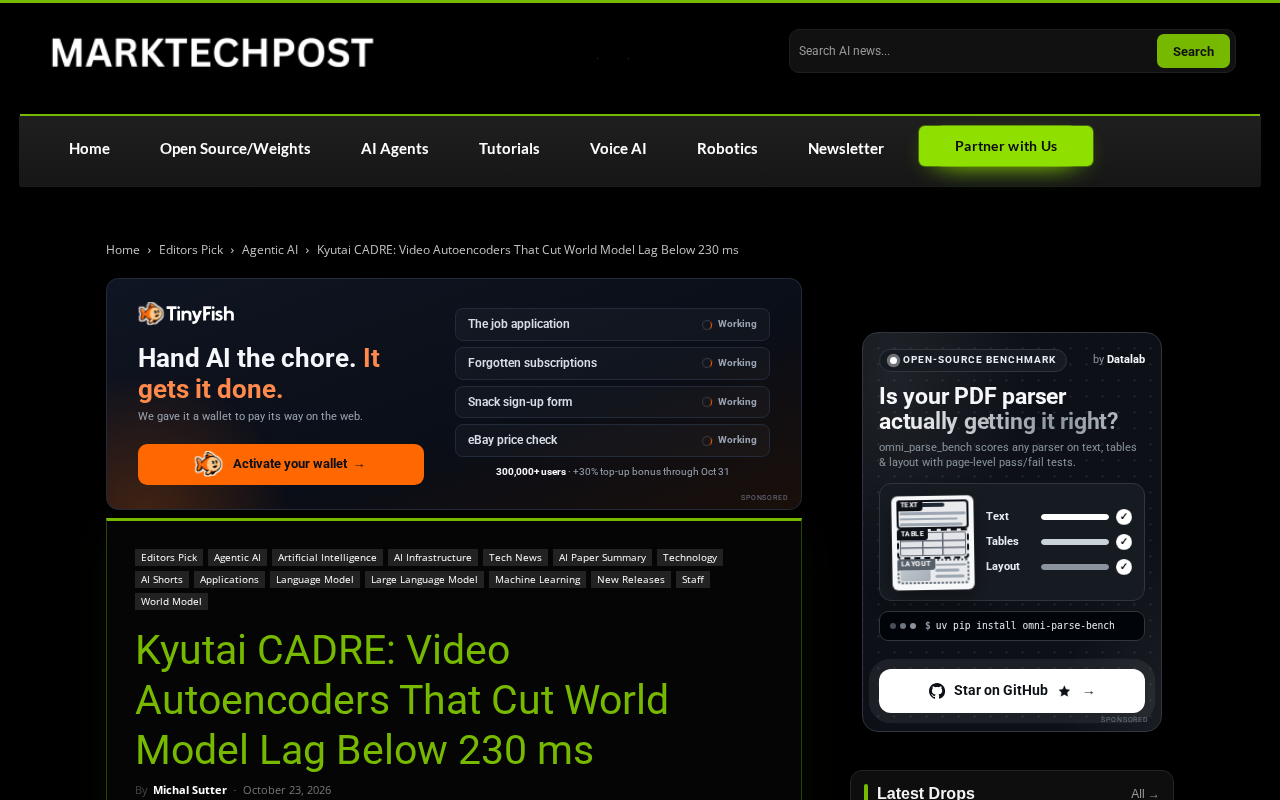
Kyutai Releases CADRE: An Interactive World Model Video Autoencoder with Latency Cut to 230ms
Kyutai releases CADRE, an open family of 7 causal diffusion video autoencoders. CADRE-based world models run at 20 fps on a single H100 with under 230 ms reaction latency, offering a low-latency, reproducible open frontend for interactive world models.
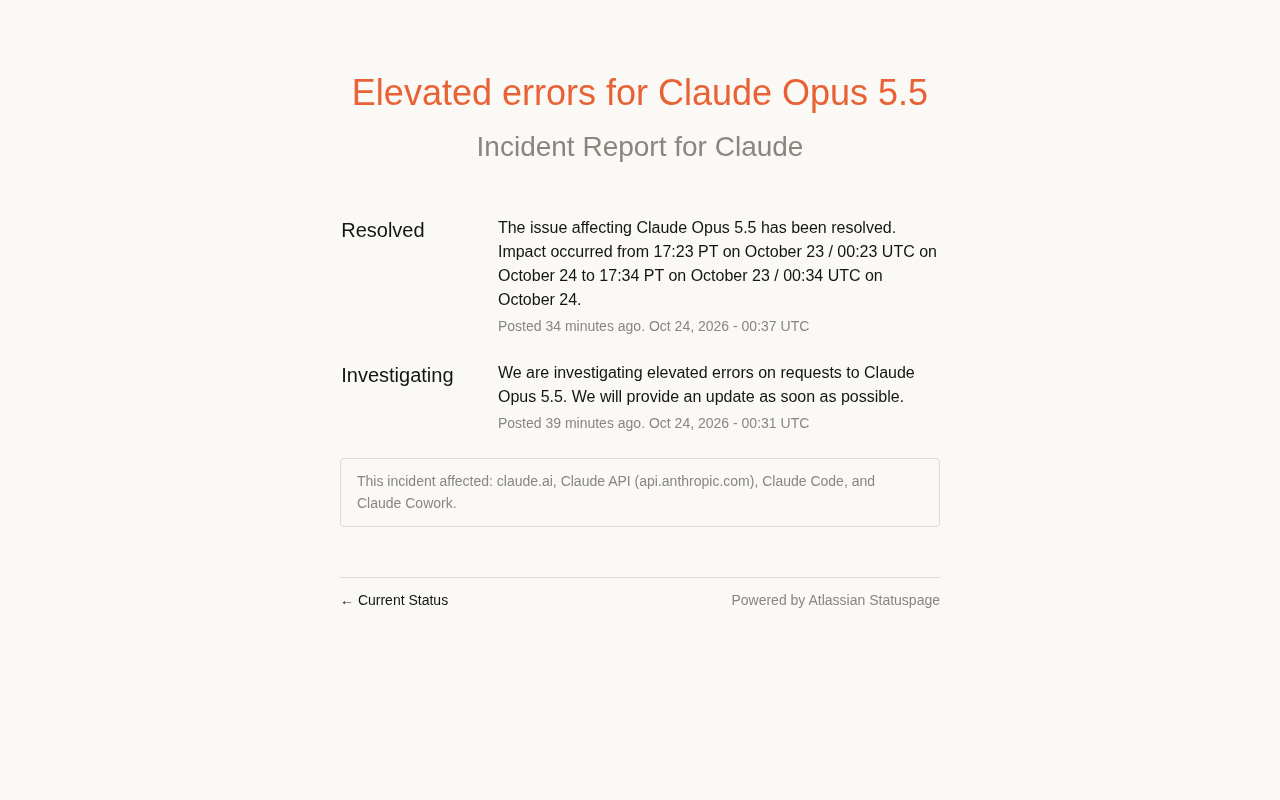
Claude Opus 5.5 Error Spike: Officially Resolved, an 11-Minute Incident Retrospective
Claude Opus 5.5 experienced elevated request error rates; the official status page shows the incident lasted about 11 minutes before being resolved. This article covers the event timeline, scope of impact, and offers developers retry, fallback, and multi-model redundancy recommendations for handling short model outages.

M&M's Spent Millions Replacing Artificial Blue Dye — Why Is It So Hard?
Mars spent millions trying to replace artificial blue dye in M&M's with spirulina, but thick material clogs pipes and residue risks mold, forcing a full production-line rebuild. Here's the engineering behind the reformulation.