AI for Beginners: A Five-Step Practical Path That Skips the Math and Python Syntax Traps
A pragmatic five-step path to learning AI from zero—skip the math and syntax traps, get it working first.
Many beginners give up on AI by getting stuck on math or Python syntax. This article maps out a five-step entry path: understand core concepts, learn just enough Python, grasp ML and deep learning principles, get hands-on with PyTorch, and deepen skills through project-driven practice. The key: use it first, then dig deeper.
Why So Many People Give Up on Learning AI
As the hype around artificial intelligence continues to climb, more and more people are eager to jump in—only to give up during the very earliest stages. The reason, in most cases, is that they fall into the same category of traps. From a cognitive science perspective, this giving up isn't a failure of willpower; it has a deep psychological mechanism behind it. According to Cognitive Load Theory, when learners simultaneously confront three unfamiliar bodies of knowledge—mathematical notation, programming syntax, and algorithmic logic—their working memory easily becomes overloaded, and frustration rises sharply.
Cognitive Load Theory was proposed by Australian educational psychologist John Sweller in 1988. It divides cognitive load into three types: intrinsic load (the inherent complexity of the learning material), extraneous load (interference caused by irrelevant information), and germane load (the deep processing that genuinely promotes learning). The high dropout rate in AI education perfectly illustrates this framework: mathematical notation, programming syntax, and algorithmic logic all act on working memory at once, pushing intrinsic load near its ceiling, while lengthy mathematical derivations—acting as extraneous load—further squeeze out the space for germane load, causing learning efficiency to plummet. It's worth noting that Sweller later worked with Paas, van Merriënboer, and others to develop the "cognitive load effects" framework, proposing several experimentally validated instructional design principles. Among these, the Worked Example Effect is especially important: for beginners, studying worked examples is more effective than solving problems independently, because it concentrates limited working memory resources on understanding the structure of a solution rather than searching for problem-solving strategies. This principle directly supports the approach of "get the code running first, then understand the theory": by observing complete, runnable examples, beginners can build an overall impression of algorithmic logic without overloading their working memory.
This mechanism also has traces at the neuroscience level. Working memory is the human brain's "scratchpad" for processing current information, and research shows its capacity is extremely limited—Miller's Law states that human working memory can only handle about 7±2 chunks of information at a time. When a beginner's working memory is fully occupied by three bodies of new knowledge simultaneously, the brain has almost no capacity left for higher-order knowledge integration and transfer, and can only struggle to maintain basic comprehension. Psychological research further shows that self-efficacy—an individual's belief in their ability to complete a specific task—is a core predictor of learning persistence. Diving too early into mathematical derivations continuously sends learners negative feedback signals of "I can't do this," creating a vicious cycle that ultimately leads to giving up.
Trap One: Over-studying math. Some AI textbooks emphasize theoretical derivations and are extremely dense with formulas. When beginners can't follow along, they go back to shore up their math—a detour that easily takes three to six months. Math itself is dry, and as they study it, they lose sight of their original goal: they set out to learn AI but end up trapped in linear algebra and calculus, unable to climb back out.
Trap Two: Grinding through programming syntax. AI code is predominantly written in Python, so many people spend three months learning Python syntax first. The problem is that AI code isn't something you can understand just because you know Python—it requires combining theory and code to grasp the logic behind each line. Learning syntax in isolation still won't get you off the ground.
The Right Approach: Combining Theory and Practice
The effective response to the two traps above is straightforward: as much as possible, don't get bogged down in math, and don't grind away at Python syntax for its own sake. Instead, focus your attention on AI-related theory and code, combine the two, and start "using" them first.
Math and syntax are both tools; when you need them, you can look them up on the spot. For a beginner starting from zero, the most precious resource is enthusiasm for learning—you must first build an understanding of AI's big picture to avoid burning through all your motivation on supporting skills. Building on this idea, the following five steps form a practical entry path.
Step One: Understand the Basic Concepts of AI
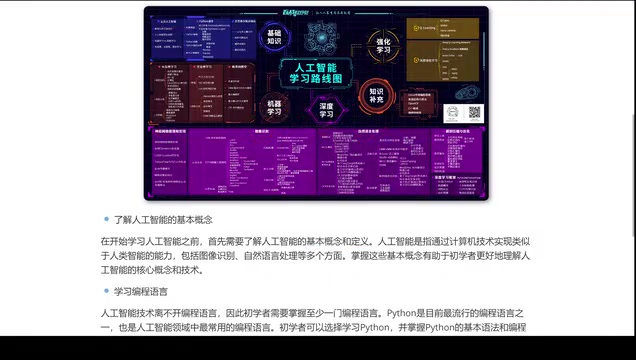
Before writing any code, you first need to clarify the relationships among several core concepts: what artificial intelligence, machine learning, deep learning, and reinforcement learning each are, what kinds of problems image recognition and natural language processing respectively solve, and what neural networks are built on.
These concepts form a strict hierarchical containment relationship, with a clear historical trajectory behind them. Artificial Intelligence (AI) is the broadest concept, formally introduced by John McCarthy at the 1956 Dartmouth Conference. It broadly refers to the technologies that enable machines to simulate human intelligent behavior. Early AI was dominated by symbolic reasoning and expert systems, and after weathering the "AI winter" of the 1980s, connectionist neural networks subsequently revived. Machine Learning is the primary path to achieving AI. Rising in the 1980s-90s, its core idea is to let machines automatically "learn" patterns from data rather than relying on hand-written rules; representative algorithms include Support Vector Machines (SVM), decision trees, and Naive Bayes. Deep Learning is a subfield of machine learning, built on multi-layer neural networks as its core architecture. It only truly entered the mainstream after AlexNet won the ImageNet competition in 2012—in that competition, the CNN architecture dramatically slashed the error rate from 26% to 15%, marking a historic turning point in the deep learning era. Its breakthrough depended on the simultaneous maturation of three key factors: large-scale labeled datasets, the exponential increase in GPU parallel computing power, and the engineering-scale implementation of the backpropagation algorithm. Reinforcement Learning represents yet another paradigm, in which an agent optimizes its decision strategy by interacting with an environment and receiving reward or penalty signals. When fused with deep learning to form Deep Reinforcement Learning (DRL), its landmark applications emerged—AlphaGo defeating human Go champions and OpenAI Five's performance in esports.
It's especially worth noting that understanding this hierarchy also helps beginners better locate the technical coordinates of the current large language model boom. Large language models represented by GPT and Claude are essentially the concentrated embodiment of deep learning (specifically, deep learning models based on the Transformer architecture) in the field of natural language processing. Their capability boundaries and limitations can all find reasonable explanations within this hierarchical framework.
You don't need to fully master these concepts right from the start, but you must have a basic impression of them. They are the foundation running through the entire AI learning process—every time you learn a new topic, you'll keep returning here to deepen your understanding.
Step Two: Master Python Basics (But Only the Basics)
AI development is inseparable from programming, and Python is currently the most mainstream language choice in the field. Python's dominance in AI wasn't predestined; it's the result of a positive feedback loop driven by the community ecosystem: the more researchers use Python, the more high-quality libraries are developed for it; the better the libraries, the more developers are drawn in, further expanding the ecosystem's advantage.
The formation of this positive feedback loop has a clear technical history. In terms of language features, Python's dynamic type system and interactive execution naturally fit the exploratory workflow of data science—researchers can rapidly prototype ideas without going through the cumbersome compile-link-execute cycle. More crucially, top AI research institutions like Google, Meta, and OpenAI adopted Python as their primary R&D language, meaning the most cutting-edge algorithm implementations were first made public in Python form, creating a powerful "first-mover ecosystem lock-in" effect. Notably, the Python interpreter's execution speed is far below that of C++ or Julia, but the core computation layers of libraries like NumPy and PyTorch are implemented in C/CUDA, with Python merely serving as a "glue language" for scheduling; the actual performance bottleneck is typically GPU computation rather than the Python interpreter itself. Specifically, the maturation of NumPy around 2007 gave Python efficient numerical computing capabilities; around 2010, scikit-learn systematically wrapped statistical learning algorithms into a unified API, dramatically lowering the barrier to applying algorithms; and in 2016-2017, PyTorch and TensorFlow were successively released with Python as their primary interface, definitively cementing Python's central position in the ecosystem. Pandas simplified data processing workflows, while Jupyter Notebook's interactive execution environment made the "write a line, see a line of results" style of exploratory learning possible, further lowering experimentation costs.
This ecosystem lock-in has one often-overlooked dimension: the culture of code reproducibility in academic papers. The proliferation of the ArXiv preprint platform alongside GitHub made "paper + code" the de facto standard for top-conference publications, and the vast majority of open-source implementations are written in Python. This means an AI beginner learning Python can directly read and run the reference implementations of cutting-edge research—something nearly impossible in other language ecosystems. Furthermore, the emergence of free cloud-based Jupyter environments like Google Colab further eliminated the local GPU compute barrier, making the Python + Jupyter combination the world's lowest-barrier AI experimentation environment, further reinforcing the community's positive feedback loop.
The key is to strike the right "dose" of learning: you only need to grasp Python's basic syntax and programming mindset—there's no need to go through every module. The Python ecosystem is enormous; many libraries and modules can simply be looked up in the documentation when needed, so there's no need to memorize them all in advance. This point cuts directly to the pain point where beginners tend to "drift further off track the more they study"—Python is just a tool; AI is the goal.
Step Three: Learn Machine Learning and Deep Learning
Once you've covered the basic concepts and gotten started with programming, you can move into the core of AI.

It's worth clarifying the hierarchical relationship among the three: Machine learning is one of the most core technologies of artificial intelligence, encompassing a large number of algorithms; deep learning is a subset of machine learning, essentially a collective term for a broad class of algorithms extended from neural networks.
The goal at the entry stage is to master the basic principles and common methods of machine learning and deep learning, then go deeper according to your area of interest. For example, the image recognition direction requires understanding Convolutional Neural Networks (CNNs)—whose design was inspired by neuroscientists Hubel and Wiesel's research on the visual cortex of cats. They revealed the hierarchical processing mechanism of the visual cortex: the V1 region responds to edges, the V2 region responds to shapes, and higher layers respond to complex patterns; the two won the 1981 Nobel Prize in Physiology or Medicine for this work. CNNs digitize this mechanism: convolutional kernels slide over an image to extract local features, sharing the same set of parameters (translation invariance), then progressively abstract through pooling layers, ultimately outputting classification or detection results. Compared to fully connected layers, the parameter-sharing mechanism greatly reduces the amount of computation. The natural language processing direction, meanwhile, requires a basic understanding of Recurrent Neural Networks (RNNs) and the Attention mechanism—RNNs are designed for sequential data, passing information between time steps through hidden states. However, standard RNNs suffer from the vanishing gradient problem (gradients approach zero after being multiplied across long time steps during backpropagation), making it difficult to capture long-range dependencies. This gave rise to improved variants like LSTM (Long Short-Term Memory networks) and GRU, which maintain long-range information flow through the triple control of input gates, forget gates, and output gates. The attention mechanism, on the other hand, allows the model to dynamically focus on different positions of the input when generating each output, fundamentally bypassing the sequential bottleneck of RNNs and supporting fully parallelized training.
This idea was later evolved by Google in the 2017 paper "Attention Is All You Need" into the Transformer architecture—an architecture that completely abandons RNNs, instead using the Multi-Head Self-Attention mechanism to directly establish associations between any two positions in a sequence. This made the training of ultra-large-scale models engineeringly feasible and ultimately gave birth to paradigm-shifting models like BERT and the GPT series, becoming the direct technical foundation of today's large language model (LLM) era. A key engineering reason Transformers can support the training of GPT-3's 175 billion parameters and even larger scales is that its self-attention computation pattern allows all positions in a sequence to be computed in parallel simultaneously, aligning highly with the massively parallel architecture of GPUs/TPUs, so GPU utilization can approach the theoretical ceiling—a stark contrast to the inherently serial sequential dependency of RNNs. Understanding the evolutionary logic from RNNs to the attention mechanism to Transformers is not only a key to comprehending the current wave of AI applications, but also helps one recognize that the capability boundaries of current LLMs are, to a considerable extent, still constrained by computational architecture and scale, not merely by algorithm design itself.

Build a panoramic understanding first; then, once you've clarified a specific research direction or business need, dive deeply into a particular class of algorithms in a targeted way.
Step Four: Get Hands-On with Mainstream Frameworks (Using PyTorch as an Example)
To complete actual projects, you need to use deep learning frameworks to implement algorithms and train models. The two most commonly used frameworks in the industry are TensorFlow and PyTorch, which represent fundamentally different design philosophies.
TensorFlow was open-sourced by Google in 2015. It initially used a static computation graph (Define-and-Run) model—similar to a compiled language, where the complete computation logic must first be "compiled" into an optimized computation graph before execution. This approach favors cross-platform deployment (such as mobile-side TensorFlow Lite) and graph-level optimization (such as operator fusion), but during debugging it's impossible to step through and inspect intermediate variables, and error messages are cryptic and hard to understand. PyTorch was released by Meta AI Research in 2016, using a dynamic computation graph (Define-by-Run)—similar to an interpreted language, building the computation graph in real time with each forward pass. Developers can use print() or breakpoints to inspect tensor values just like debugging ordinary code, and it naturally supports dynamic-topology models such as variable-length sequences and tree structures, quickly winning favor in academia.
The competition between the two frameworks reflects a core contradiction in AI engineering: the trade-off between research flexibility and production deployment efficiency. PyTorch's dynamic graph mechanism greatly improves research efficiency, enabling researchers to quickly experiment with new architectural ideas; TensorFlow's static graph still holds irreplaceable engineering advantages in scenarios such as edge-device deployment and cross-language inference. TensorFlow 2.0 introduced a dynamic graph mode in 2019 in an attempt to catch up, but PyTorch's dominant position in the research community was already largely established—according to statistics from platforms like Papers With Code, PyTorch's usage rate in top-conference papers has stabilized above 70% in recent years. As PyTorch introduced TorchScript and torch.compile, and standardization tools like ONNX (Open Neural Network Exchange) matured, models trained with either framework can be exported for production deployment, further eroding the moat of TensorFlow's deployment advantage. Given the current trends, PyTorch is the more pragmatic choice as an entry framework.
In terms of learning method, the recommended approach is to run "theory + projects" in parallel: for each topic you learn, pair it with a small hands-on project, get the knowledge running first, then gradually go deeper in a particular direction. This approach effectively avoids the frustration of "learning a lot but being unable to do anything."
Step Five: Continuous Practice and Project-Driven Learning
After completing the first four steps, the most important driving force in AI learning remains extensive practice.

This advice has solid grounding in cognitive science. Constructivist learning theory holds that knowledge is not passively received but actively constructed by the learner in the process of solving real problems. Vygotsky's concept of the "Zone of Proximal Development" further points out that learners achieve the best learning outcomes when tackling tasks slightly beyond their current ability with the help of appropriate scaffolding (such as open-source code and documentation examples). The complete cycle of "get the code running—debug the errors—understand the theory" corresponds in cognitive science to two efficient memory strategies: spaced repetition and retrieval practice. Each time you debug an error and resolve it, it's equivalent to actively retrieving the relevant knowledge once, with a memory retention rate several times higher than passively reading documentation.
This mechanism has a deeper explanation at the neuroscience level. The Ebbinghaus forgetting curve shows that passively read knowledge has a forgetting rate as high as 70% within 24 hours, whereas the "Generation Effect" triggered when actively solving problems can boost the memory retention rate by 2-3 times. More importantly, real projects can activate the "Situated Learning" mechanism—knowledge acquired in the context of being used to solve a specific problem is encoded into long-term memory together with rich contextual cues, making it easier to retrieve and transfer in similar scenarios. This is precisely the core advantage that merely doing exercises or watching videos cannot replicate: when you're debugging an overfitting problem in an image classification model on Kaggle, concepts like regularization, Dropout, and data augmentation get activated simultaneously in an interconnected way, forming a knowledge network rather than isolated memory points.
In terms of practice resources, the Kaggle competition platform has accumulated over 15 million registered users since its founding in 2010. Its unique value lies not only in providing real datasets and gradient task design (aligning with the "Zone of Proximal Development" principle), but even more in its "Notebook" feature—any user can publicly share complete, executable code notebooks, forming a vast library of solutions. For beginners, this means every competition problem comes with hundreds of reference implementations of varying levels; you can start by reading the simplest baseline solutions and gradually understand the improvement approaches of high-scoring ones, forming a natural "scaffolded learning" path. The Hugging Face model community, meanwhile, uses a unified pipeline API to compress the invocation of models like BERT and GPT into three to five lines of code, enabling beginners to complete real tasks like text classification and summary generation before truly understanding the internal mechanisms of the Transformer. This builds self-efficacy through positive feedback and then motivates learners to delve into the underlying principles—its library of pre-trained models compresses the barrier of building a model from weeks to hours, allowing learners to concentrate their cognitive resources on understanding task logic rather than engineering details, reducing extraneous load while preserving germane load, in line with optimal learning design principles. Open-source projects on GitHub provide abundant reference implementations, greatly compressing the time cost of "building from scratch."
Whether it's face recognition, object detection, speech recognition, or text classification—whatever the specific direction—you must combine real projects with code practice. Only by going through this complete cycle can you truly internalize the core logic of AI, rather than remaining at the level of paper concepts.
Summary: Get It Working First, Then Dig In
The overall logic of this entry path is clear: start from basic concepts, then cover machine learning and deep learning in turn, letting learners first build a holistic understanding of the AI big picture, and then understand "what each direction can do and how to do it" through hands-on projects.
The core philosophy can be summed up in one sentence: Get it working first, then dig in. Don't burn through your enthusiasm too early on mathematical derivations and programming syntax. Use the combination of theory and code to build intuitive understanding, and once you've found a direction that interests you, then dive into algorithmic details in a targeted way. This philosophy is highly consistent with core findings in cognitive science: the human brain learns most efficiently in meaningful contexts, and the acquisition of abstract symbolic systems requires concrete experience as an anchor. Building an intuitive perception of AI first, then going back to dig into the mathematical principles, not only won't compromise your ultimate depth of learning—it actually gives the mathematical derivations "a place to be put to use," transforming them from dry symbols into powerful tools for explaining real phenomena. For learners starting from zero who want to break into AI, this is a proven, genuinely feasible path.
Key Takeaways
Related articles

Apple HomeView Hands-On Review: Is the $300 Smart Home Hub Worth It?
Apple HomeView hands-on: a $300 smart home hub with facial recognition for quick account switching, but no App Store or voice recognition. Is the wall-mounted version worth it? Should you buy the first generation?

Meta Muse Wonder Launch: What It Means for Meta's Return to the Frontier AI Race
Meta releases Muse Wonder and WonderFull, benchmarks reach the frontier, community feedback is polarized. An in-depth look at Meta's return to the frontier AI race, its personal agent strategy, and Zuckerberg's different path.

Apple Home Smart Home Lineup Leaked: LG and Schneider Team Up, UWB Door Lock on Board
Apple Home ecosystem gains new LG and Schneider devices: UWB smart lock with proximity unlock, 2.5K dual-camera doorbell, privacy indoor camera, and AirPods-like seamless pairing.