AI-Generated 2.5-Hour Odyssey Film: Technical Gimmickry Can't Hide Creative Emptiness
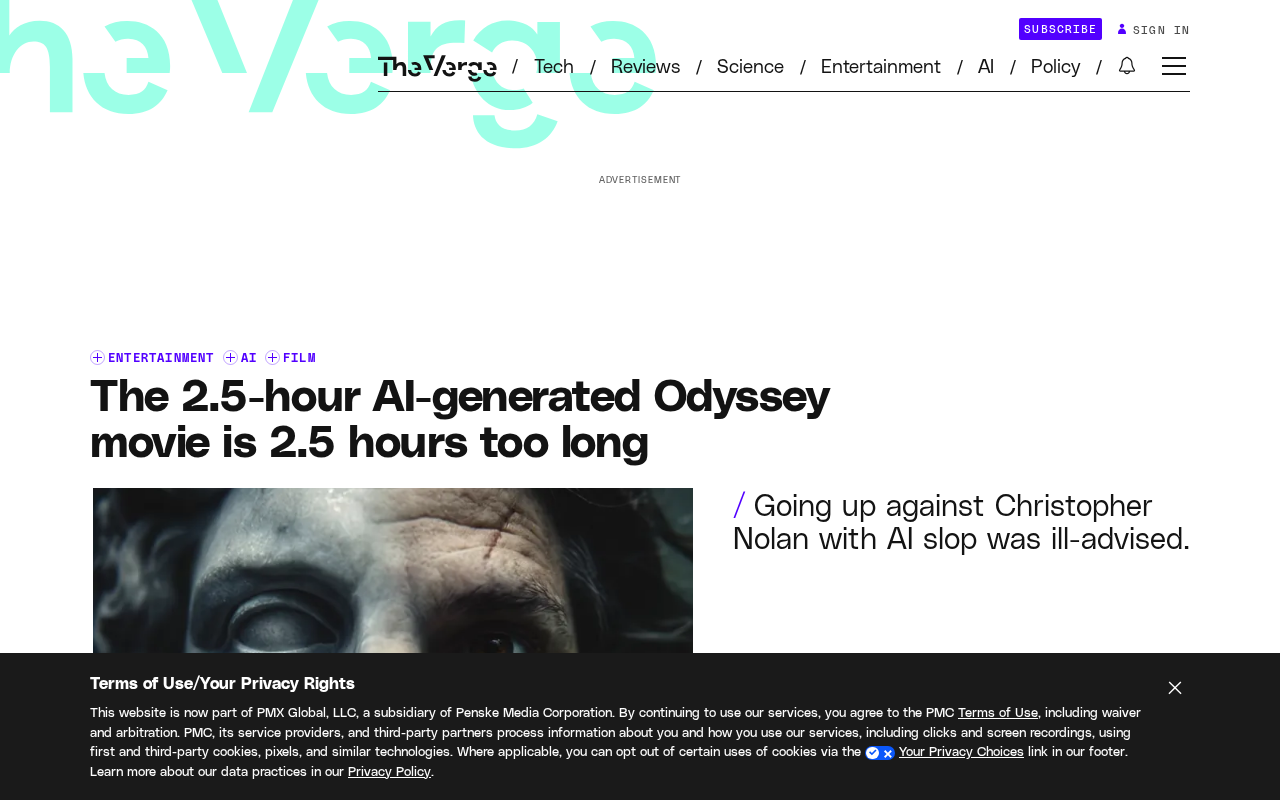
A 2.5-hour AI-generated Odyssey film bombs, exposing AI video tech's fundamental limits in long-form narrative.
The AI-generated *Odysseus: The Fall* sparked widespread discussion after receiving dismal reviews, standing in stark contrast to Christopher Nolan's acclaimed big-budget adaptation of the same epic. The article argues that while AI video generation has reached a respectable level for short clips, it remains fundamentally deficient in maintaining the character consistency, narrative causality, and emotional depth required for feature-length films. The technology is essentially visual pattern matching — it doesn't truly understand storytelling. The article concludes that AI is best deployed as an assistive tool within specific production stages, not as an end-to-end filmmaking solution.
An AI Film's Awkward Debut
Christopher Nolan's adaptation of The Odyssey is a box office triumph that has even rekindled audience interest in classical literature. Yet a fully AI-generated film on the same subject — Odysseus: The Fall — has landed at the opposite extreme, performing so poorly that critics suggest it might put viewers off the source material entirely.
The 2.5-hour AI film has been bluntly described by reviewers as "too long even at 2.5 hours." Behind this sardonic verdict lies a reflection of the fundamental challenges AI video generation technology still faces in the realm of long-form storytelling.
The Gap Between Technical Capability and Narrative Quality
Progress in AI video generation tools has been undeniable in recent years. From short clips lasting seconds to coherent footage running minutes long, models have made substantial strides in image quality, motion consistency, and scene transitions. But a work like Odysseus: The Fall — one that attempts to conquer a full-length feature narrative — exposes the enormous gap that still exists between technical capability and content quality.
Generating a handful of stunning visual fragments is an entirely different order of challenge from sustaining two and a half hours of emotional tension, narrative pacing, and character arcs. Homer's Odyssey has resonated across millennia because of its complex human fates, moral dilemmas, and emotional depth — precisely the elements that current AI struggles most to genuinely understand and reproduce.
On a technical level, the dominant AI video generation models today (such as Sora, Runway Gen-3, Kling, and others) are largely built on diffusion model or video Transformer architectures. They learn through statistical analysis of massive video datasets to predict "the next visually plausible frame" — fundamentally a form of pattern matching and interpolation. This means models excel at generating locally coherent clips, but have no mechanism for maintaining semantic consistency across scenes. The model doesn't "know" who Odysseus is, nor does it understand what his situation means within the narrative arc. As clip duration expands from seconds to hours, this fundamental limitation — the absence of any global state tracking — is amplified exponentially. Character appearance drift, props vanishing into thin air, and broken cause-and-effect in the plot become nearly unavoidable.
Why Long-Form AI Films Still Don't Hold Up
The reason AI-generated short videos can achieve decent results is largely due to audience tolerance and the fragmented nature of the content. Viewers don't demand logical coherence from a 15-second showreel, but a feature film must sustain character consistency, narrative causality, and sustained emotional engagement throughout.
When AI attempts to independently execute such an ambitious undertaking, problems converge: characters may subtly drift between scenes, plot beats lack genuine dramatic motivation, dialogue feels hollow and flat, and the overall pacing drags. Nolan's version is "compelling" precisely because it is backed by accomplished screenwriting, directorial vision, and performance — elements that a purely AI-driven pipeline cannot yet replace.
It's worth noting that Nolan's Odyssey (released in 2025) itself represents an extreme concentration of human creative effort. Nolan is known for nonlinear storytelling and visual spectacle, and his films are completed through the collaboration of hundreds of professionals across script development, casting, practical photography, and post-production. Placing such a meticulously crafted studio blockbuster alongside an experimentally AI-generated feature makes the gap obvious — but it also sets an exceptionally demanding benchmark. A fairer comparison might be: can AI-assisted low-budget short films, versus traditionally produced work at equivalent cost, achieve acceptable narrative quality within specific vertical use cases? That is the practical question the industry actually cares about.
Implications for AI Content Creation
The failure of this film doesn't mean AI has no value in the film and television space. On the contrary, it clearly delineates the boundaries of current technology: AI is better suited as a creative assistance tool — for concept design, storyboard previsualization, visual effects augmentation, or asset generation — rather than independently producing a complete feature film from start to finish.
Treating AI as a magic "one-click filmmaking" solution tends to produce work that dazzles in form but rings hollow at its core. Content that genuinely moves people still cannot do without human creators' command of story, emotion, and rhythm. Odysseus: The Fall as a cautionary tale provides the industry with a pragmatic reference point: the maturity of a technology must be matched to the appropriate application context.
There are already validated use cases where AI has proven effective within film and television production pipelines: using image-to-video tools to rapidly generate storyboards, reducing early-stage communication costs by over 60%; applying AI for virtual set extensions and background expansion as a partial substitute for green screen location shoots; leveraging AI voice cloning and lip-sync technology to compress dubbing costs; and using AI in post-production for denoising, frame interpolation, and color matching. These "human-led, AI-empowered" hybrid models are becoming the mainstream path to cost efficiency for independent filmmakers and small-to-medium production companies — and represent the most rational intersection between current technological maturity and real production demands.
Conclusion
From Nolan's blockbuster Odyssey to the critically panned AI-generated Odysseus: The Fall, the divergent fates of two adaptations of the same classical story illuminate the central question of content creation in the age of human-machine collaboration: no matter how powerful the tool, it cannot replace the ability to tell a story well. For those eager to use AI to disrupt the film and television industry, this may be a reminder that is low in cost but high in value.
Related articles
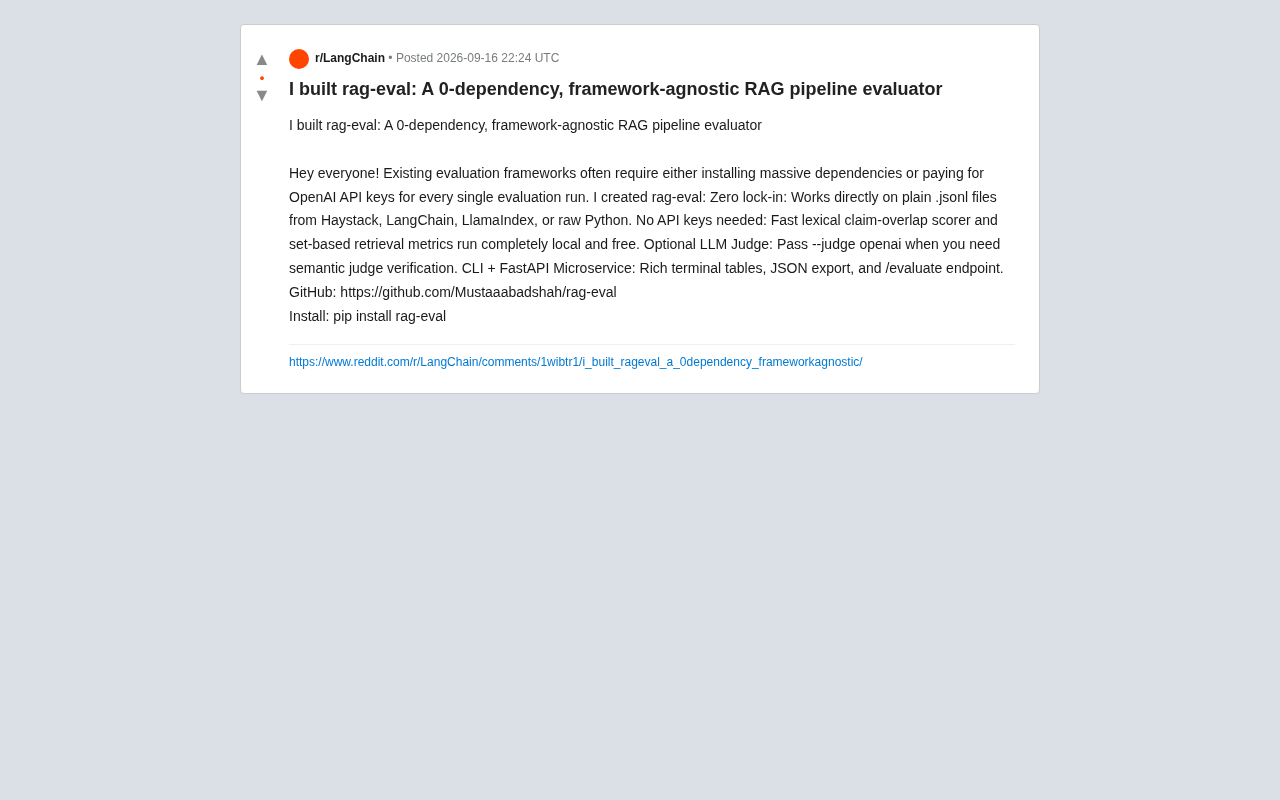
rag-eval: A Zero-Dependency, No-API-Key RAG Evaluation Tool
rag-eval is a zero-dependency, framework-agnostic open-source RAG pipeline evaluation tool. It supports free local lexical and retrieval metrics with no API keys required, and offers optional LLM Judge for semantic validation. Compatible with Haystack, LangChain, and LlamaIndex.
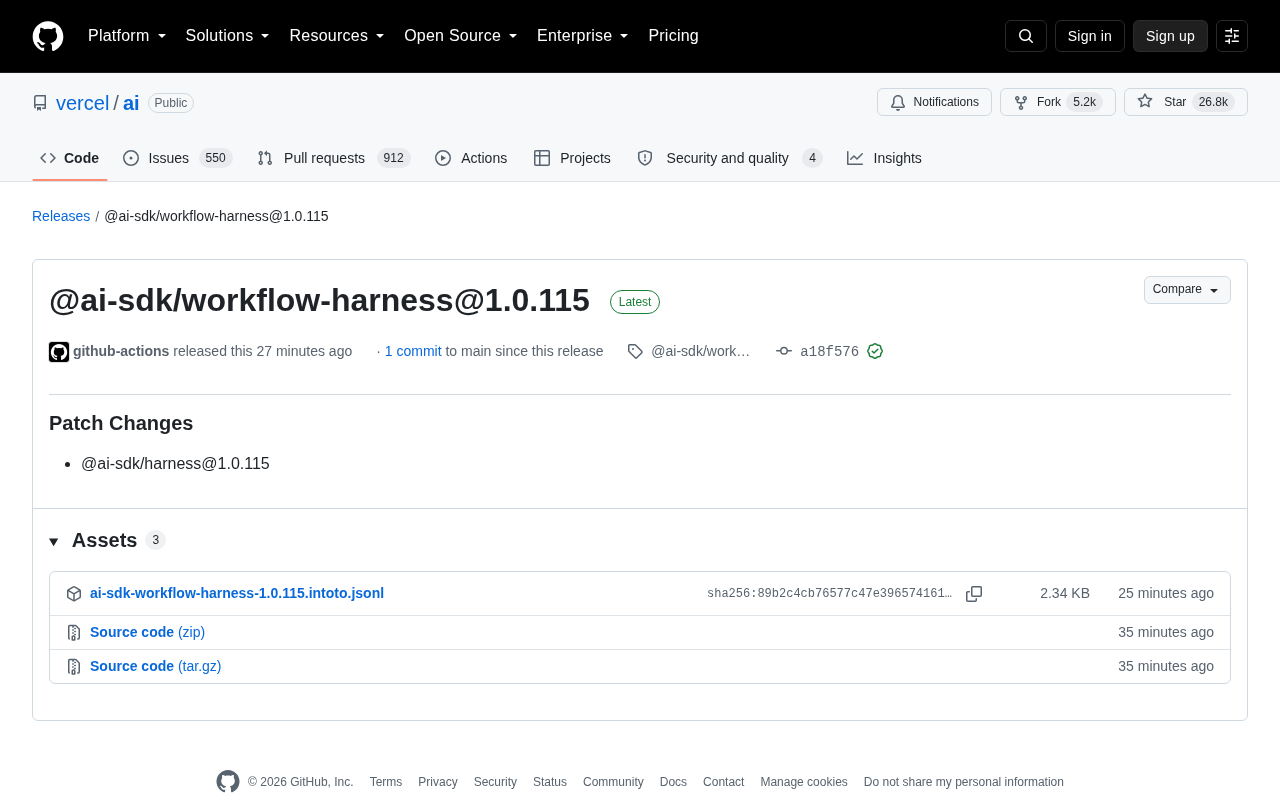
Vercel AI SDK Releases workflow-harness 1.0.115 Patch Update
Vercel AI SDK releases @ai-sdk/workflow-harness 1.0.115 patch update, syncing the @ai-sdk/harness dependency. Learn about the update, release mechanism, and what it means for developers.
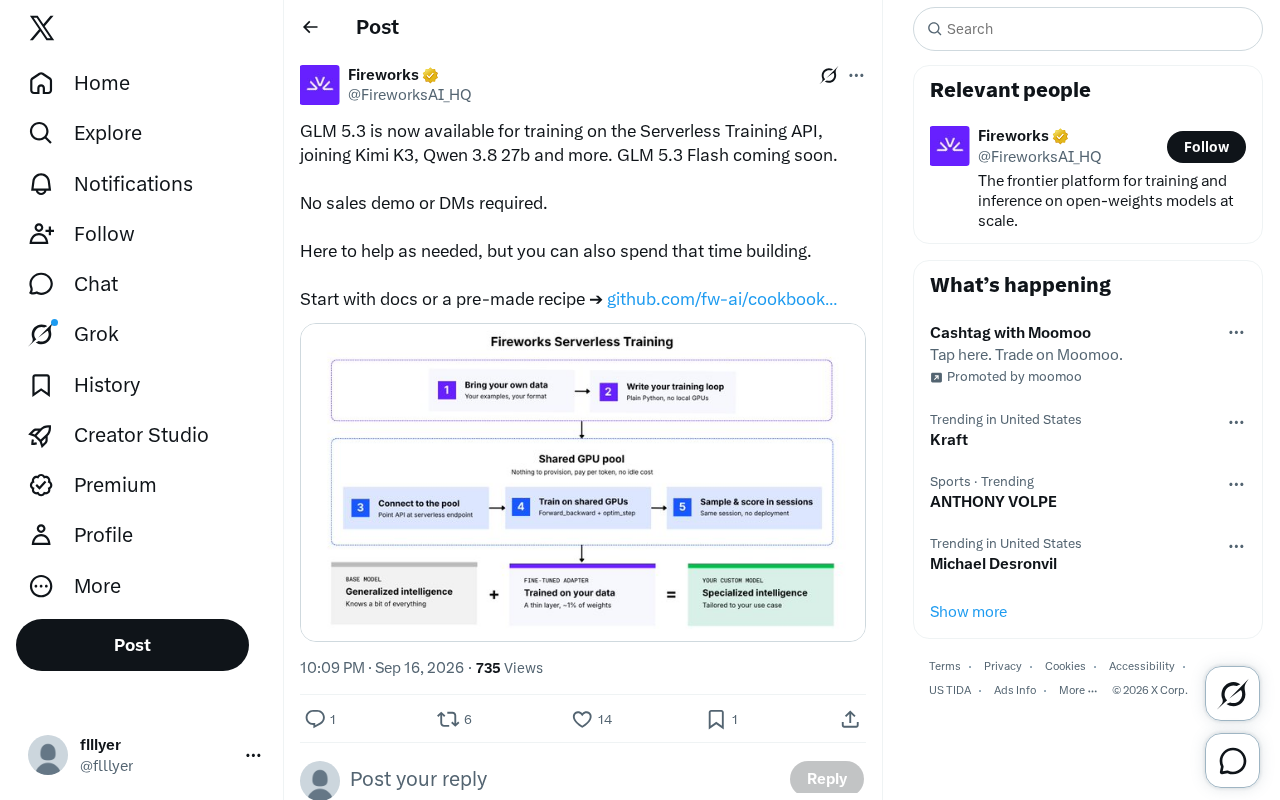
GLM 5.3 Now Available on Serverless Training API — No Sales Process Required
GLM 5.3 is now available on Serverless Training API alongside Kimi K3 and Qwen 3.8 27b. No sales process needed — start fine-tuning directly via docs or pre-made recipes.