AI-Generated Spanish-Language Series Nido de Villanas: Analyzing a New Form of Short-Video Narrative

Analyzing how AI-generated Spanish short dramas blend Telenovela tradition with cutting-edge content production.
This article examines Nido de Villanas Episode 9, an AI-generated Spanish-language web series on YouTube. It explores the show's narrative design rooted in Telenovela traditions, its layered visual and textual metaphors around power and deception, and the broader trend of AI tools enabling low-cost serialized drama production for the 590-million-strong Spanish-speaking market.
An AI-Driven Spanish-Language Web Series
Nido de Villanas (Nest of Villainesses), Episode 9, A Timely Accident, is a Spanish-language web series segment distributed on YouTube. This type of content represents an emerging format at the intersection of short-form video and AI generation technology — using AI to assist in creating characters, scenes, and even narrative pacing to rapidly produce serialized dramatic content.
Current AI video generation technology primarily relies on the collaborative work of Diffusion Models and Large Language Models (LLMs). On the video generation side, tools like Runway Gen-3, Pika Labs, and Kling can already produce coherent short video clips from text prompts. For voice synthesis, platforms such as ElevenLabs and Fish Audio support multilingual, multi-emotion voice cloning and generation. These combined technologies enable creators to produce cinematic-quality serialized content without live actors or on-location shooting. The Spanish-language market covers 590 million native speakers worldwide, and since professional film and TV production resources are relatively concentrated among a handful of major studios, small and mid-sized creators have an especially strong incentive to use AI tools to fill the content supply gap.
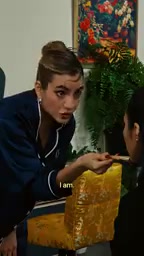
Looking at the content itself, this is a tension-filled dialogue scene. The lady of the house (señorita) summons the maid Lupis to her side, ostensibly to comfort her over the loss of Tomás, but in reality launching a carefully orchestrated psychological manipulation. This classic melodramatic setup of "wealthy villainess + lower-class maid," combined with AI-generated visuals, creates a highly shareable short drama format.
This narrative structure is deeply rooted in the century-long tradition of the Latin American soap opera (Telenovela). Telenovelas originated in 1950s Cuban radio dramas and were later popularized by networks like Mexico's Televisa and Brazil's Globo, forming a mature genre system centered on class conflict, identity secrets, revenge, and love. The "villainess" (villana) character is a signature element of the genre — they typically come from wealthy families or cling to the powerful, driving the plot through manipulation, deception, and betrayal. AI short dramas inherit this narrative formula, validated by decades of market success, compressing what were originally 120- to 200-episode series into micro-narrative units of 2–5 minutes per episode.

The Dramatic Core: A Psychological Game of Manipulation and Betrayal
The central conflict of this episode is built on trust and betrayal. The lady of the house uses "friendship" as bait, extending an olive branch to Lupis: "I don't want you cleaning rooms anymore. I want you by my side — as my assistant, my confidante, my best friend."
But Lupis's response reveals deeper undercurrents: "If you're saying this because of what I saw... they are not your friends. Catalina will use you. Beatriz will blame you. When the police find out Tomás died after you told him to claim the inheritance, what will they say?"
This dialogue deftly plants suspense threads — a death involving an inheritance, multiple factions jockeying for position, and a moral dilemma ensnaring every character. In just a few lines, the web of relationships and a potential criminal conspiracy are laid out. This kind of high-density narrative exposition crammed into an extremely short runtime is a product of the attention economy of short-form video. Research shows that TikTok and YouTube Shorts users have an average attention window of about 8–15 seconds per emotional beat, forcing creators to adopt an ultra-minimal three-act structure of "hook–conflict–cliffhanger." In this context, the value of AI tools lies not only in reducing production costs but also in enabling rapid iteration and testing of different narrative hooks and emotional arcs, optimizing content strategy through data feedback.
"Friendship Lesson One": A Stark Values Metaphor
The most impactful line in the episode is the lady's so-called "first lesson in friendship": "We never tell the whole truth. We only choose the truth that benefits us."
This line doesn't just advance the plot — it serves as a distilled expression of the show's entire value system. It echoes the widespread academic discourse on the "post-truth" era. The Oxford Dictionary selected "post-truth" as its word of the year in 2016, defining it as a state in which "objective facts are less influential in shaping public opinion than appeals to emotion and personal belief." In an information-overloaded digital environment, recommendation algorithms themselves perform a "selective truth" function — they don't present all information, but rather the information most likely to drive user engagement. The explosion of AI-generated content further intensifies this trend, as generative AI can rapidly produce seemingly credible narratives based on any predetermined stance.
She then applies a face mask to Lupis — one that will "leave your skin as smooth as porcelain" — while instilling her twisted life philosophy. The imagery of the face mask — covering, beautifying, disguising — echoes the "selective truth" dialogue, forming an elegant dual metaphor across both visual and textual layers.

Visual Metaphor: Power Blinds
When Lupis complains, "This thing is too bright," the lady responds: "Exactly. Power dazzles you, but afterward, everyone else becomes a blur."
This is the crowning stroke of the episode's narrative design. The blinding light symbolizes the seduction of power, while "everyone else becomes a blur" implies how power erodes empathy and moral judgment. The line that follows — "Beauty comes at a cost — sweat, blood, effort, money" — further reinforces the theme of material and moral exchange.
The episode closes with a cool, detached voiceover: "Well, that was a bit unexpected. But accidents are best enjoyed in slow motion." This darkly humorous ending drapes a layer of cruel theatricality over the suspense.

Content Production Trends and Methodology in AI Short Dramas
From a content format perspective, Nido de Villanas exemplifies the application of AI-generated content in a vertical language market (the Spanish-speaking world). The rise of AI short dramas in the Spanish-speaking world reflects the parallel trends of globalization and localization in the content industry. According to Statista, Latin American internet users now exceed 500 million, with Brazil, Mexico, Argentina, and Colombia being the largest digital content consumption markets. However, compared to the English-language market, the AI-generated content tool and platform ecosystem in the Spanish-speaking world is still in its early stages, providing a window of first-mover advantage. At the same time, Spanish-speaking audiences' deep familiarity with the Telenovela genre reduces the "uncanny valley effect" of AI content — when audiences already expect exaggerated performances and dramatized plotlines, the slight unnaturalness of AI-generated visuals doesn't pose a significant barrier.
These AI serialized short dramas share several typical characteristics:
- Intense dramatic conflict: Each episode focuses on a single conversation or event, rapidly building tension to suit the attention economy of short-form video.
- Templated narrative: Elements like wealthy families, villainesses, conspiracies, and betrayals are highly formulaic, facilitating batch production and iteration.
- Combined visual and textual metaphor: Concrete elements like face masks and bright light carry abstract themes, elevating the content's expressive depth.
As AI video generation and voice synthesis technologies mature, these low-cost, high-output serialized short dramas are becoming an important content supply format for regional platforms. They lower the production barrier for dramatic content while simultaneously placing new demands on creators' narrative design skills — in a limited runtime, how to capture an audience with a single line or a single image becomes the key to virality. From a technical workflow perspective, a typical AI short drama production pipeline includes: LLM scriptwriting and dialogue → AI voice synthesis for multi-character voiceovers → image/video generation models for visuals → post-production editing and subtitle addition. The entire process can be completed by 1–2 people in a matter of hours, whereas traditional content of equivalent length might require a team of dozens spending weeks.
Conclusion: Narrative Scarcity in the AI Era
Though Nido de Villanas Episode 9 is just a web series clip, it reflects the new possibilities of content production in the AI era. When technology can rapidly generate visuals and sound, what remains truly scarce is still good story structure and emotional tension. "We only choose the truth that benefits us" — this line from the show may also serve as a metaphorical reminder about the current wave of AI content.
In a future where generative AI drives the marginal cost of content production toward zero, the core competitive advantage for creators will shift from "can you produce it" to "can you move people." The democratization of technology means anyone can produce visually passable content, but the ability to construct a suffocating psychological chess match in two minutes, or to use the image of a face mask to carry an entire series' thematic metaphor — this craft of narrative design remains the most irreplaceable domain of human creativity.
Related articles

EmbeddedSass for .NET: A Sass Compilation Solution Without Node.js Dependencies
EmbeddedSass for .NET uses the official Embedded Sass Protocol, enabling .NET developers to compile Sass/SCSS natively without Node.js. Learn how it works and integrates with ASP.NET.

San Francisco to Singapore Time Difference: The Trans-Pacific Routine of Silicon Valley Tech Workers
SF and Singapore are 15-16 hours apart, and frequent travel between them is now routine for tech workers. Explore the time difference challenges, AI industry globalization, and talent flows.

Anthropic Launches Official Claude Code Plugin Directory: A Curated High-Quality Extension Ecosystem
Anthropic launches claude-plugins-official, a curated directory of high-quality Claude Code plugins. Learn about its positioning, core value, and impact on the AI coding ecosystem.