AI Giants Sued Over Alleged 'Slowdown' Conspiracy: Antitrust Storm on the Horizon
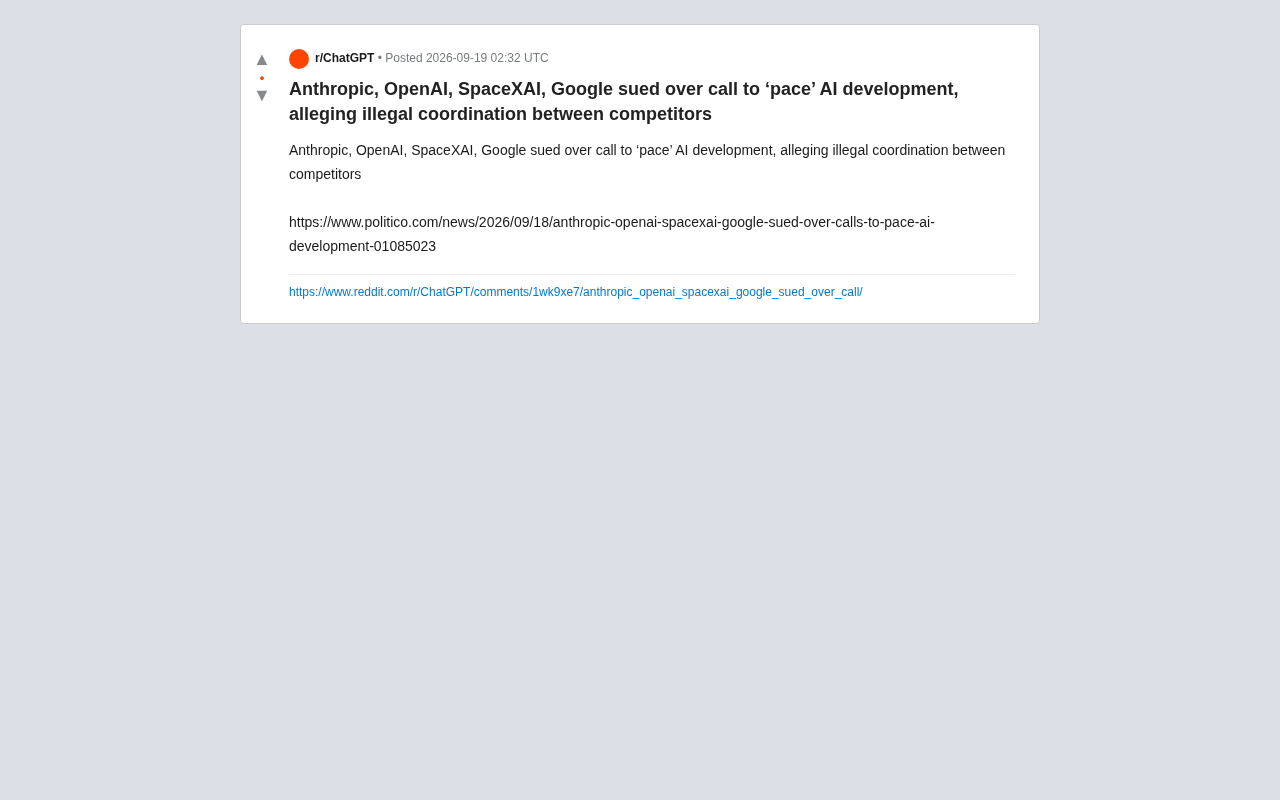
Anthropic, OpenAI, xAI, and Google are sued for allegedly coordinating AI 'slowdown' calls in violation of antitrust law.
A new antitrust lawsuit has put major AI companies in the spotlight: Anthropic, OpenAI, xAI, and Google stand accused of illegally coordinating through their public calls for a slower AI development pace. The central tension is whether "responsible advancement" rhetoric — a staple of AI safety discourse — constitutes competitor coordination that restricts market competition under antitrust law. Plaintiffs draw on historical precedents showing that safety-based industry coordination is not immune from competition law, while defendants are expected to argue these were public policy statements, not private collusion. The case remains in early stages, but it signals that collective safety narratives in AI now face heightened legal scrutiny.
A Landmark Antitrust Lawsuit Targeting AI's Biggest Players
A lawsuit involving some of the AI industry's most prominent companies has sparked widespread discussion on Reddit and other online communities. According to Politico, Anthropic, OpenAI, SpaceX's AI venture (xAI), and Google have been drawn into a case centered on a core allegation: that these companies' public calls for a slower AI development "pace" constitute illegal coordination among competitors.
What makes this case noteworthy is that it reframes the "slow down development," "responsible advancement," and "alignment-first" rhetoric that has pervaded the AI industry over the past two years — placing it under the scrutiny of antitrust law. Discourse that was once regarded as industry self-regulation and safety governance is now being reinterpreted by plaintiffs as coordinated behavior that could harm market competition.
From "Safety Narrative" to "Collusion Allegations"
Over the past several years, leading AI labs have repeatedly emphasized the need to "advance responsibly," advocating for restraint in training scale and model release cadence. In public discourse, these positions are typically understood as prudent responses to AI risk.
From a competition law perspective, however, the question becomes: when companies operating in the same space — direct competitors — publicly align on "how fast to proceed," does that constitute a form of market coordination in disguise? One of antitrust law's core concerns is exactly this: competitors synchronizing output, supply pace, or release timing — even when that synchronization is dressed up in the language of "public interest."
The plaintiffs in this case are evidently trying to argue that the collective calls for a "slowdown" could objectively suppress competitive innovation and delay product availability, thereby harming the market and consumers. This is the logical foundation for characterizing the conduct as "illegal coordination between competitors."
One key concept in antitrust law for evaluating "competitor coordination" is conscious parallelism: even without an explicit written agreement, courts may infer coordination if competitors' behavior is highly consistent and cannot be easily explained by each party's independent business judgment. U.S. courts typically look for "plus factors" in such cases — for example, conduct that runs contrary to each party's individual self-interest, or frequent industry meetings and public statements. What makes this case unusual is that the companies' "aligned statements" were entirely public policy declarations rather than private communications — a fact that presents both an evidentiary challenge for the plaintiffs and a primary line of defense for the defendants.
The Central Dispute: Where Does Safety Governance End and Competition Law Begin?
This lawsuit touches on a deep, long-unresolved tension in the AI industry — how to draw the line between safety governance and competition compliance.
The Case for Regulatory Scrutiny
From an antitrust standpoint, any initiative launched jointly by major competitors that could influence the industry's overall output pace deserves rigorous examination. Historically, there is no shortage of precedents in which coordination conducted by industry associations under the banner of "standards," "safety," or "order" was ultimately found to restrict competition. The plaintiffs will likely invoke similar reasoning.
In the history of U.S. antitrust law, landmark precedents for unlawful "industry coordination" cluster around horizontal restraints. The 1975 case Goldfarb v. Virginia State Bar established that fee recommendations by professional associations are subject to the Sherman Act; the 1978 case National Society of Professional Engineers v. United States explicitly held that an engineering association's prohibition on price competition — justified on "public safety" grounds — was unlawful. The Court noted that competition itself is the mechanism for protecting the public interest, and that safety arguments cannot be used to circumvent it. This precedent has structural similarities to the present case: plaintiffs may invoke a comparable framework to argue that the AI companies' collective "slowdown" calls, regardless of intent, objectively restrained market competition.
The Case for Safety Necessity
The other side will emphasize that AI, as a technology with potentially systemic risks, gives the industry legitimate grounds for issuing joint statements on safety practices — and that such statements are public policy advocacy, not private collusion on price or output. Equating safety advocacy with illegal coordination could have a chilling effect on technology governance.
It should be noted that current public information comes primarily from a single news source's account. The specific claims in the lawsuit, the evidentiary chain, and each defendant's defense have not yet been fully disclosed. The contested issues outlined above represent reasonable inferences based on the nature of the case, not established courtroom facts.
What This Means for the AI Industry
Regardless of the ultimate outcome, this lawsuit has already sent a signal: the AI industry's public discourse is now being subjected to more rigorous legal scrutiny.
For leading companies, future collective statements involving "development pace" or "release restraint" will require more careful antitrust compliance review — to avoid creating the appearance of "competitor coordination." For the industry as a whole, how to advance safety governance without crossing competition law's red lines will become a compliance issue that demands a direct response.
For practitioners and observers tracking AI regulation, the subsequent developments in this case are worth following closely — it may draw a clearer legal line between "safety advocacy" and "illegal coordination."
The compliance implications of this lawsuit may extend to the boundaries of lobbying and policy advocacy. U.S. antitrust law generally protects genuine government lobbying activities under the Noerr-Pennington Doctrine — meaning companies that jointly petition the government for legislation or regulation are typically not in violation of antitrust law. However, this exemption has clear limits: if the underlying activity is essentially commercial coordination among businesses rather than genuine political participation, the exemption does not apply. One potential flashpoint in this case is whether the joint public statements issued by these companies should be classified as protected policy advocacy — or as competitor coordination dressed up as advocacy.
Conclusion
This lawsuit against Anthropic, OpenAI, xAI, and Google has thrust the AI industry's long-standing "responsible advancement" narrative into the antitrust spotlight. The case is still in its early stages, with substantial uncertainty around both the facts and the legal determinations — but it has already raised an unavoidable question: when tech giants collectively call for putting the brakes on AI, is that a responsible stance on public safety, or a tacit understanding among competitors? The answer will be delivered by the judicial process ahead.
Related articles
Auto-Generate Anime Short Dramas from a Script: A Complete Skills Pipeline Tutorial
A full walkthrough of the Skills drama auto pipeline: input a script and automatically generate characters, storyboards, prompts, and video. Covers models, 12-step workflow, API costs, and hands-on tips.

Complete Beginner's Guide to Codex: How OpenAI's AI Agent Actually Gets Work Done for You
Codex is OpenAI's AI Agent that goes beyond chat to actually write code, build websites, and create games. Learn how it works, how it compares to Claude Code, and how to get started.
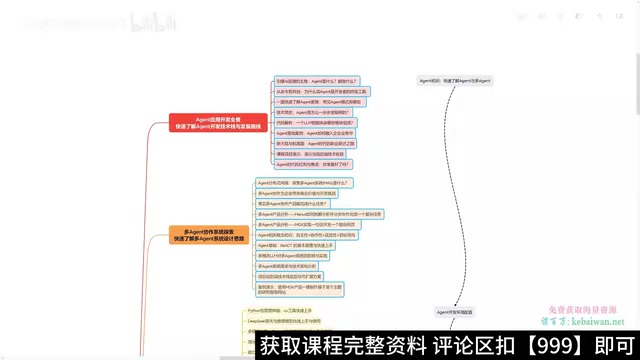
Replicating Manus with Native Python: A Complete Guide to Multi-Agent Application Development
A deep dive into a hands-on multi-Agent development course that replicates Manus using native Python, MCP, and A2A — covering 7 learning stages, the MoreManus product, system architecture, and tech stack selection without framework black boxes.