AI Image Generation Showdown: ZIT vs. Krea2T vs. Ideogram 4 — A Real-World Comparison

ZIT, Krea2T, and Ideogram 4 go head-to-head with real photos as the benchmark.
This article compares three leading AI image generation tools — ZIT, Krea2T, and Ideogram 4 — using real photography as a baseline. It evaluates each tool across photorealism, prompt adherence, lighting, and output consistency, offering practical selection guidance for creators and designers based on their specific use cases.
Introduction: When AI Image Generation Approaches Real Photography
The pace of progress in AI image generation has been nothing short of staggering. From early outputs plagued by artifacts and distorted facial features, to today's near-photorealistic results, AI image tools have entered an entirely new era. At the heart of this transformation is a fundamental architectural shift — from GANs (Generative Adversarial Networks) to Diffusion Models. GANs generate images through adversarial training between a generator and a discriminator, but have long struggled with training instability and mode collapse. Diffusion models, by contrast, synthesize images through iterative denoising, decisively surpassing GANs in detail fidelity, diversity, and training stability. This shift gave rise to landmark tools like Stable Diffusion, DALL·E, and Midjourney. Today's next-generation platforms — including Ideogram and Krea — are built on refined diffusion model architectures, with Transformer structures integrated to enhance semantic understanding of text prompts.
A Reddit user recently conducted a highly informative head-to-head comparison, testing three popular AI image generation tools — ZIT, Krea2T, and Ideogram 4 — under identical conditions. The most striking element of the experiment: the first image in each comparison set was a real photograph.
This design choice is remarkably insightful. It doesn't just reveal the gap between different AI models — more importantly, it provides a "ground truth baseline," allowing us to quantify how close current AI-generated images are to real photography.
Profiles: Three AI Image Generation Tools
ZIT: An Emerging Image Generation Engine Built for Realism
ZIT represents one of the latest directions in image generation model development. This class of models invests heavily in photorealism and detail reproduction, aiming to close the visual gap with real photography. In practice, ZIT often delivers naturally rendered lighting and material textures, making it a top candidate for users who prioritize hyper-realistic output.
Krea2T: A Designer's Tool That Balances Creativity and Realism
The Krea series has long been a favorite among designers for its strong creative generation and artistic aesthetic. Krea2T, as an iterative upgrade, continues to push photorealism while preserving its stylistic capabilities. Its output strikes a solid balance between "visually stunning" and "true to life" — well-suited for creative workflows that demand both aesthetic quality and visual accuracy.
Ideogram 4: Dual Excellence in Text Rendering and Image Quality
Ideogram has carved out a distinctive position in the AI image space thanks to its exceptional text rendering capabilities. Ideogram 4, the latest version, not only maintains this edge but also shows significant improvements in overall image quality, compositional understanding, and prompt adherence. Part of this progress stems from more advanced text-image alignment training strategies. Modern AI image tools generally rely on CLIP or its derivatives as text encoders, mapping textual descriptions to a vector space aligned with image semantics — and Ideogram 4 further optimizes this for handling complex typographic instructions. For use cases requiring accurate text embedded in images — such as posters and marketing materials — Ideogram 4 is arguably the go-to solution right now.
Why Using Real Photography as a Baseline Matters
Placing a real photograph first in each comparison directly addresses a fundamental question: In a blind test, can we still tell the difference between an AI-generated image and a real photo?
As models continue to evolve, that distinction is becoming increasingly difficult to make. Real photographs carry unique physical properties that strictly obey optical laws: bokeh effects result from physical diffraction through the lens aperture, with shape determined by the number of aperture blades; sensor noise follows a Poisson distribution rather than uniform texture; chromatic aberration is a product of differential refraction across wavelengths; and lens distortion is directly tied to focal length and optical design. AI models can learn the statistical patterns of these features from vast training data, but they don't truly "understand" the underlying physics — which is why they often give themselves away in extreme lighting or complex reflection scenarios: overly perfect skin texture, unnatural background blur, or lighting behavior that defies physical laws.
With a real photograph as a reference point, observers can more readily spot subtle tells in AI output, enabling a more precise judgment of each tool's photorealism.
Key Evaluation Dimensions for AI Image Tools
A comprehensive assessment of AI image generation tools typically spans several critical dimensions:
Photorealism and Detail Reproduction
This is the most intuitive criterion, covering skin texture, hair detail, material rendering, and more. Strong models maintain coherent detail even when zoomed in; weaker models tend to show blurring or artifacts in high-frequency detail areas.
Prompt Adherence
This measures a model's ability to understand and execute a user's description. Behind this lies complex natural language understanding and text-image alignment technology. Linguistic ambiguity, compositional semantic understanding (e.g., the subject-object relationship in "a white cat on a red hat"), and handling of negation remain persistent weak points. Professional users typically compensate through prompt engineering techniques — including weight syntax, negative prompts, and style keywords. A strong model doesn't just generate beautiful images; it generates images that match what was asked for.
Lighting and Composition
A sense of realism is largely dependent on accurate light simulation. The interplay of backlighting, side lighting, and ambient light is a key test of how deeply a model has internalized the rules of the physical world.
Output Consistency and Stability
When the same prompt is run multiple times, are the results stable and predictable? This is critically important for real-world commercial production workflows.
Practical Tool Selection Advice for Content Creators
For content creators, designers, and general users, the core value of this kind of side-by-side comparison is simple: choose the right tool for your actual needs, rather than blindly following the hype.
- If your work centers on marketing materials, poster design, or any scenario requiring precise text rendering, Ideogram 4 is currently the most reliable choice.
- If you're after artistic, stylized creative expression, Krea2T may better serve your needs.
- If maximum photorealism is your goal, you'll need to conduct careful hands-on testing, comparing newer models like ZIT against more established tools.
One important caveat: the AI image generation space iterates at a breakneck pace. Conclusions drawn today may be rendered obsolete within months by a new model release. Staying engaged with multiple tools through ongoing testing is far wiser than committing to any single platform.
Conclusion: AI Image Generation Enters the "Indistinguishable" Era
This comparison of ZIT, Krea2T, and Ideogram 4 — with real photography as a benchmark — sends a clear signal: AI image generation is rapidly approaching the quality threshold of real photography.
When AI-generated images can fool most people in a blind test, deepfake detection has become a field of research in its own right. On the technical side, researchers identify synthetic images by analyzing frequency-domain characteristics (AI-generated images often show specific anomalies in their Fourier transform distributions), facial biomechanical consistency, and global lighting direction. Meanwhile, C2PA (Coalition for Content Provenance and Authenticity) is advancing digital watermarking and metadata standards that aim to embed invisible identity markers at the point of generation. The EU AI Act also explicitly requires disclosure of AI-generated attributes in synthetic content.
We should feel energized by this technological progress — and equally serious about the challenges it brings: from verifying content authenticity to defining the ethical boundaries of creative work. For every content creator, understanding the capability limits of different AI image tools — and leveraging them wisely — will be an indispensable core skill in this new era.
Key Takeaways
Related articles
Xi Jinping Proposes Open Source AI Cooperation Zone Among BRICS Nations
Xi Jinping proposed an open source AI cooperation zone at the BRICS summit. Analyzing the strategic intent, open source rationale, and global AI governance implications.
Swift-Qwen3.8-27B: 58% Fewer Thinking Tokens, Nearly 2x Faster Inference
UkisAI open-sources Swift-Qwen3.8-27B, cutting thinking tokens by 58% and boosting inference speed 1.95x via overthinking token penalties and on-policy distillation — with under 1% accuracy loss.
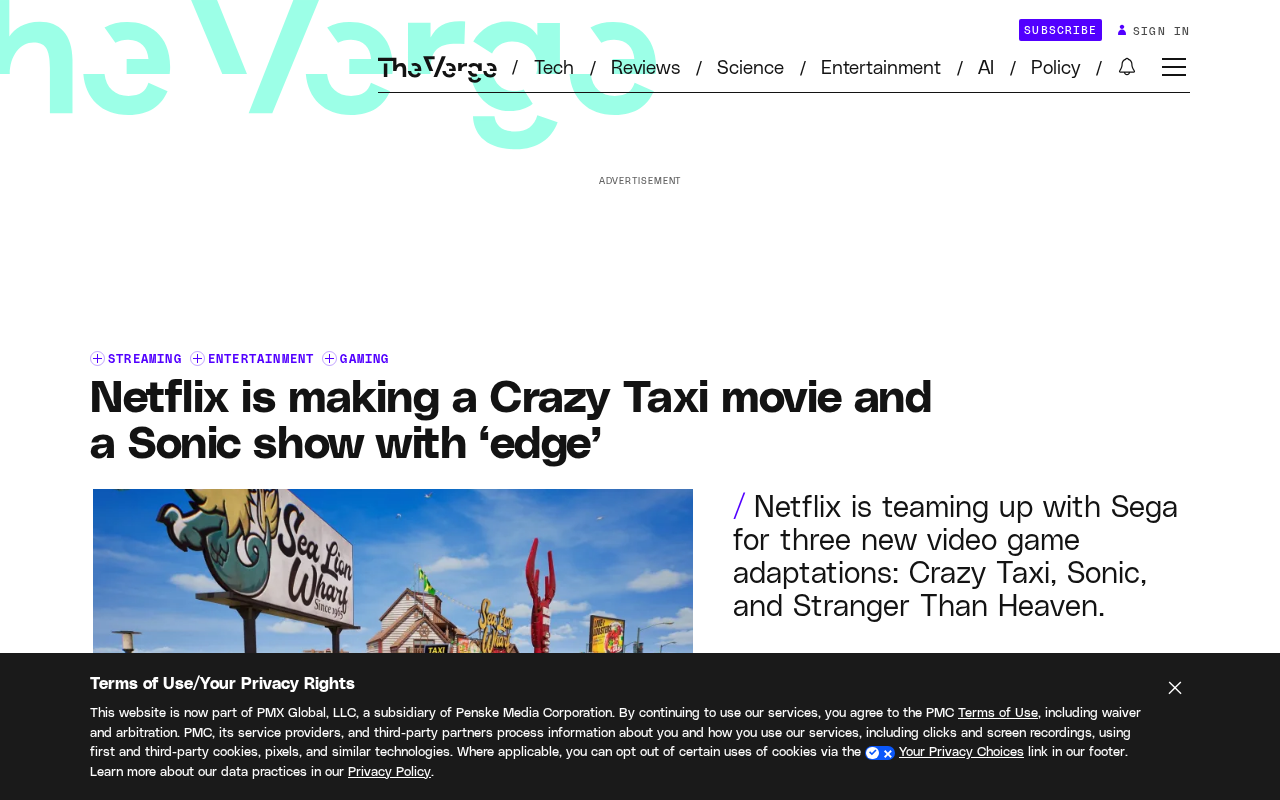
Netflix Partners with Sega: Crazy Taxi Movie and New Sonic Animated Series on the Way
Netflix announces three Sega game adaptations: a Crazy Taxi movie, a new Sonic animated series with edge, and a live-action film based on RGG Studio's Stranger Than Heaven.