AI Large Language Model Learning Roadmap: From Theoretical Foundations to Agent Development
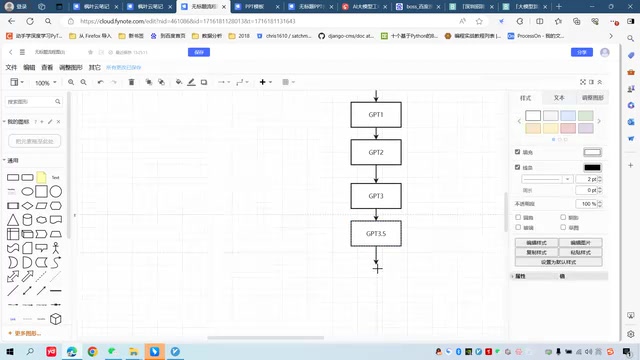
A clear four-stage roadmap from Transformer theory to Agent development for AI beginners.
This article outlines a four-stage AI large model learning roadmap for beginners and career switchers: start with Transformer theory and the BERT/GPT lineage, then master PyTorch and Hugging Face, move into practical applications via API calls and model fine-tuning, and finally advance into Agents, LangChain, and NLP tasks. The article emphasizes that strong algorithmic competition skills are not required — Python basics and hands-on fine-tuning experience are what matter most.
The explosive growth of AI large language models has inspired many people to consider a career switch or skill upgrade. But faced with an overwhelming flood of technical jargon, many beginners feel lost: Where should I even start? How strong does my programming background need to be? Based on a learning roadmap shared by a Bilibili content creator, this article outlines a clear progression path — from Transformer theory, to framework-level coding, to real-world applications and advanced Agent development — helping you understand the right order to tackle each stage.
Where It All Begins: Transformer and LLM Theory
The true turning point that brought AI large models to life was the emergence of ChatGPT. But ChatGPT didn't appear out of thin air — it evolved through the GPT series of algorithms, which trace their roots back to the Transformer architecture.
The content creator used a flow diagram to map out this technical lineage: Transformer is the foundation of all large AI models, from which two major branches emerged — BERT and GPT. BERT was proposed by Google and is fully open-source, making it a classic reference model. The GPT series, led by OpenAI, spans from GPT-1, GPT-2, and GPT-3, to the fine-tuned GPT-3.5 (i.e., ChatGPT), and on to GPT-4 and beyond — forming a complete "family tree." Unlike BERT, most GPT models are closed-source or only partially open.
For anyone looking to get started, the learning order is clear: first, thoroughly understand Transformer — it's the most critical piece. Then get familiar with classic models like BERT. Reading the early GPT series papers carefully to understand the technical details is also strongly recommended. A solid theoretical foundation is the essential first link in the entire learning chain — there's no way around it.
Transformer is a neural network architecture proposed by Google in the 2017 paper Attention Is All You Need. Its core innovation is the Self-Attention mechanism — allowing the model to simultaneously "attend" to every position in a sequence when processing text, rather than processing tokens sequentially the way earlier RNN/LSTM architectures did. This property makes Transformer highly efficient for parallel computation and much better at capturing long-range semantic dependencies.
BERT and GPT took two different approaches to applying the Transformer. BERT uses a "bidirectional encoder" that reads context in both directions, making it well-suited for understanding tasks (e.g., sentiment analysis, named entity recognition). GPT uses a "unidirectional decoder" that predicts tokens from left to right, making it naturally suited for text generation. This structural difference determined their vastly different application directions and is the underlying logic for understanding the entire large model ecosystem.
The Programming Bar Is Lower Than You Think
Many people without a CS background — or those considering a career switch — worry most about their coding skills. The content creator offered some reassurance here: learning AI large models does not require strong programming ability, and you don't need to grind LeetCode problems or tackle complex algorithmic puzzles.
The reasoning behind this is straightforward: the model architectures underlying large models have already been "built" by major research institutions and companies. Learners are mostly calling these tools according to specified formats, rather than building a large model from scratch. What truly matters is fine-tuning experience — the more training and tuning you do, the more valuable your expertise becomes.
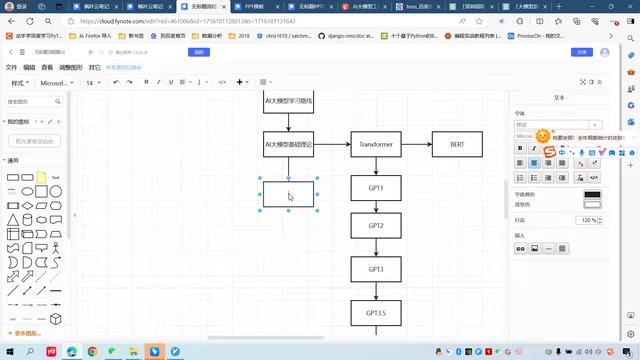
This is relatively friendly for people with flexible programming skills or those transitioning from other industries. That said, a small reality check is warranted: you can't get by with zero coding knowledge either. Python is a must, and you need to be able to read large model code and write simple scripts for data processing and training pipelines. Fortunately, this kind of code is usually not overly complex.
Master the Core Frameworks: PyTorch and Hugging Face
Once you have the theoretical foundation, the next step is learning to write code using the right tools. The key here is mastering deep learning frameworks.
The content creator pointed out a clear trade-off in tool selection: both PyTorch and TensorFlow are frameworks, but TensorFlow is increasingly less used — PyTorch is the more mainstream choice today. Among all tools, Hugging Face is the most important by far — it's essentially the go-to platform for accessing and using open-source large models.
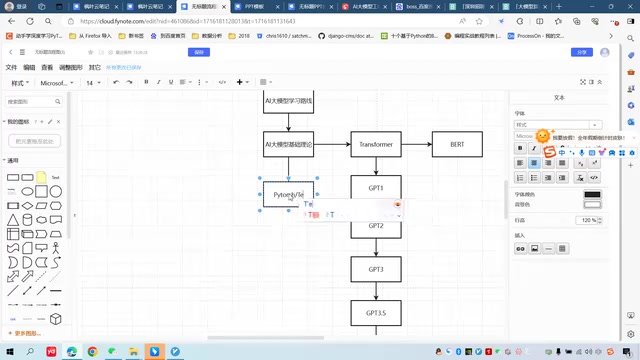
After learning these frameworks, you'll generally be able to read mainstream large model code and write your own training and preprocessing scripts. This stage is still considered "foundational" — a necessary step on the path to the application layer.
Hugging Face started by providing pre-trained NLP models, with its core product being the transformers library — with just a few lines of code, you can load hundreds of open-source models like BERT, GPT-2, and LLaMA, and use them directly for inference or fine-tuning, dramatically lowering the barrier to working with large models. Beyond the model hub, Hugging Face also provides datasets (standardized datasets), peft (efficient fine-tuning methods like LoRA), and a GitHub-like hosting platform for models and datasets — making it the de facto collaboration hub for the open-source AI community. For beginners, being proficient with Hugging Face's pipeline interface and Trainer workflow essentially equips you to handle most real-world engineering tasks.
The Application Layer: API Calls and Model Fine-Tuning
With a solid framework foundation in place, it's time to move into the application layer. The content creator broke this down into two paths:
The first is calling APIs directly. For example, using API interfaces provided by companies like OpenAI to quickly integrate large model capabilities into your own products or workflows. This is the lowest-barrier, fastest-to-results approach.
The second is model fine-tuning. You take a pre-trained model (trained on general-purpose data) provided by someone else, feed in your own company's business data, and run a round of training on top of it to adapt the model to a specific business scenario.
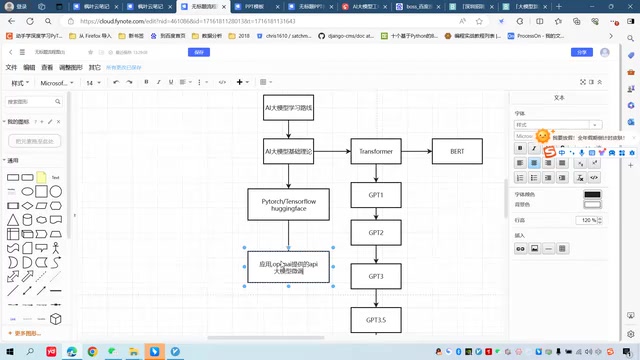
The content creator emphasized that while this type of application isn't particularly advanced, it already covers the needs of the vast majority of real-world use cases. Once you've mastered theory, frameworks, and application skills, most people will have little trouble landing a job.
The most mainstream efficient fine-tuning method today is LoRA (Low-Rank Adaptation). Rather than training all the model's parameters, LoRA inserts low-rank matrices alongside the original weight matrices and only trains these newly added parameters (typically less than 1% of the original model's parameter count), significantly reducing GPU memory usage and training costs. This means that even without high-end GPUs like the A100, consumer-grade graphics cards can fine-tune mainstream open-source models. In contrast, full fine-tuning requires extremely demanding hardware and is typically only feasible for enterprises or research institutions. Understanding LoRA and other parameter-efficient fine-tuning (PEFT) methods is an important step toward handling real business scenarios.
Advanced Directions: Agents, LangChain, and NLP Tasks
For those aiming for higher career ceilings and salary potential, deeper expertise is required.
This level includes learning about Agents, LangChain and other large-scale LLM development frameworks, as well as gaining a systematic understanding of NLP task types — translation, reading comprehension, text summarization, question answering, causal inference, named entity recognition, and more.
This material is relatively advanced and represents the key capabilities for building enterprise-grade Agent applications. The content creator was direct: mastering the first three layers will get you employed, while mastering this fourth layer will significantly raise your ceiling — both in terms of salary and the range of positions available to you.
The core idea behind Agents is enabling large models to do more than just "chat" — they can actively plan steps and call external tools (such as search engines, code executors, and databases) to complete complex tasks, forming a "perception → reasoning → action" loop. LangChain is one of the most popular Agent development frameworks today; it standardizes modules for prompt templates, tool calls, memory management, and multi-step chain reasoning, allowing developers to quickly build AI applications with real business capabilities. Also worth noting is Microsoft's AutoGen and the multi-agent collaboration paradigm it helped popularize — multiple agents working together in specialized roles can tackle complex engineering problems that a single model would struggle to handle. This is at the heart of enterprise-level AI application development.
Summary: A Clear and Actionable Learning Path
The entire learning roadmap is actually quite straightforward and can be broken down into four steps:
- Theoretical Foundation — Transformer at the core, along with BERT and the GPT series;
- Framework and Code — Focus on PyTorch and Hugging Face;
- Application Skills — API integration and fine-tuning on business data;
- Advanced Track — Agents, LangChain, and multi-task NLP.
For beginners starting from zero, the key takeaway is this: the barrier to learning AI large models isn't as high as it seems. What matters is following the right sequence, building a solid foundation, and accumulating fine-tuning experience — not grinding algorithmic competitions. With the right roadmap and a step-by-step approach, breaking into this field is entirely within reach.
Related articles
Does AI Need Antitrust Immunity to 'Avoid Destroying Humanity'? A Warning from the Former DOJ Antitrust Chief
Former DOJ Antitrust Chief Jonathan Kanter warns on the Decoder podcast: should AI companies get antitrust immunity for 'safety'? A deep dive into the risks.
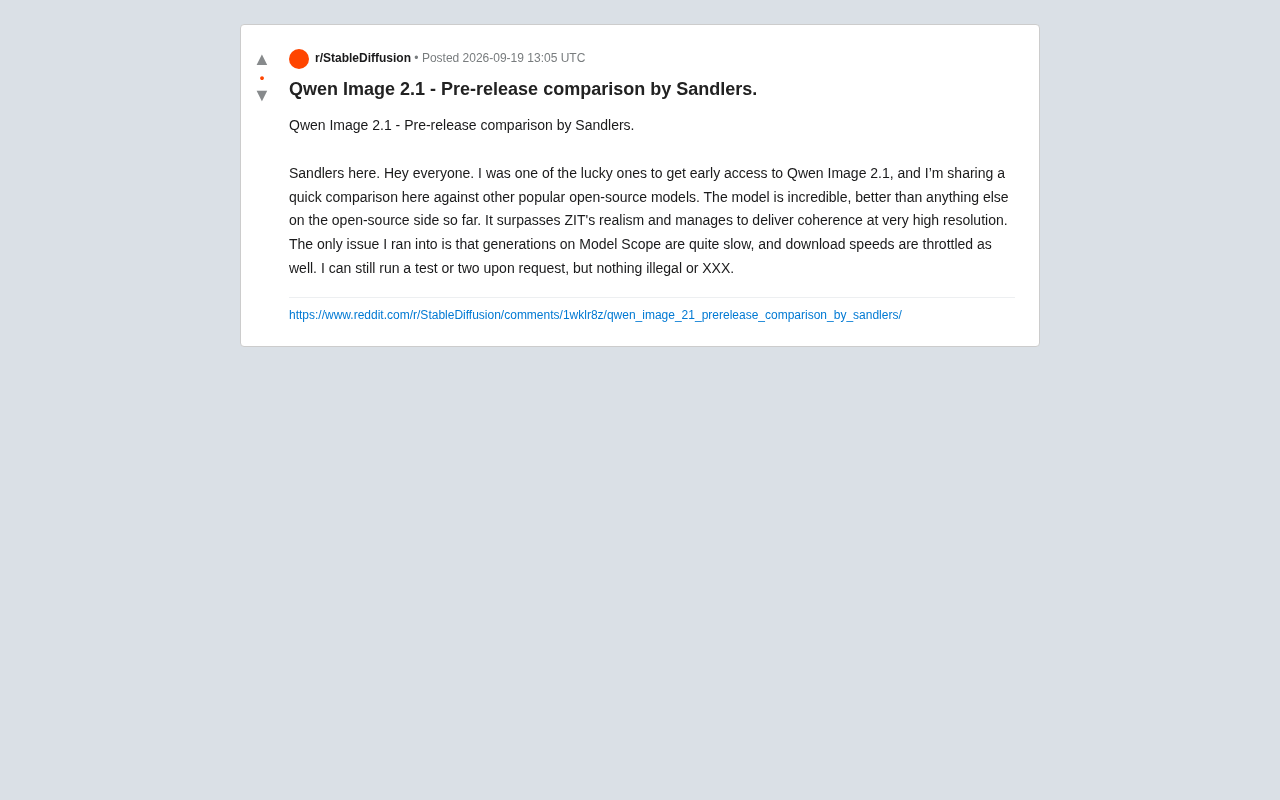
Qwen Image 2.1 Early Access: A New Benchmark for Open-Source Image Generation?
Reddit user Sandlers shares an early look at Qwen Image 2.1, praising its realism over ZIT and high-res coherence, while noting slow speeds and throttling on ModelScope.

DraftKings Uses AI to Target the Most Likely Losers: The Ethics Debate Behind the Algorithm
DraftKings reportedly uses AI to identify and target the most loss-prone gamblers. A technology that could protect addicts is being weaponized for precision marketing — raising urgent AI ethics questions.