DraftKings Uses AI to Target the Most Likely Losers: The Ethics Debate Behind the Algorithm

DraftKings uses AI to target the most addiction-prone gamblers, exposing how predictive tech can exploit human vulnerability.
Sports betting giant DraftKings has reportedly deployed AI to build behavioral profiles of users showing classic problem-gambling signals — loss-chasing, late-night activity, high sensitivity to promotions — and then concentrate marketing resources on exactly those high-risk individuals. The same predictive capability that could protect vulnerable users is being optimized for revenue and retention instead. Existing responsible gambling tools rely on passive user self-reporting, creating a severe information asymmetry versus the platform's real-time AI. The author frames this as an extreme case of "engagement maximization" logic applied to a high-stakes financial context, asking whether tech teams have a duty to build ethical guardrails when optimization goals conflict with user wellbeing.
When a Gambling Platform Learns to "Read Minds" with AI
Sports betting giant DraftKings has reportedly been using artificial intelligence to identify and target users most likely to keep losing money. The story sparked discussion on Hacker News — though the thread itself was modest (16 upvotes, 2 comments) — but it cuts to the heart of a rapidly intensifying industry question: when AI is used to amplify human vulnerability rather than constrain it, where exactly does the ethical line fall?
What sets the gambling industry apart from other consumer sectors is that its business model is fundamentally built on users acting irrationally. Traditional casinos relied on environmental design, free drinks, and psychological nudges to keep players at the table longer. AI takes that logic to a data-driven extreme — platforms no longer depend on intuition and experience. Instead, every bet placed, every deposit made, every minute spent on the app feeds into a highly personalized behavioral profile.
How AI Identifies the "Most Likely to Lose"
In algorithmic terms, users "most likely to lose" tend to share a set of quantifiable traits: chasing losses with rapidly escalating bets, increasing wager size after a losing streak, being active in the late-night hours, and responding readily to promotional triggers. These behavioral patterns happen to be the classic warning signs of problem gambling.
The irony is sharp: the same technical capability that could identify high-risk users and trigger protective interventions is instead being used for precision marketing. Platforms concentrate resources — free bet credits, cashback offers, personalized push notifications — on exactly the people who are least able to stop themselves. From a business perspective, this is simply optimized customer acquisition and retention. For the users on the receiving end, it can mean a deeper financial and psychological hole.
This "capability mismatch" is a recurring core tension in AI ethics discussions — the same predictive model can protect or exploit, and the only difference is what optimization target the company sets.
Problem gambling has a fairly rigorous definition in academic and clinical literature. Under the DSM-5, gambling disorder is classified as a behavioral addiction, with diagnostic criteria including: needing to gamble with increasing amounts of money to achieve the same level of excitement (tolerance); experiencing anxiety and irritability when attempting to cut back; repeated failed attempts to control or stop gambling; and continuing to gamble despite clear financial or interpersonal harm. Research estimates that problem gamblers represent roughly 1% to 3% of all gambling participants — yet this group contributes a disproportionate share of platform revenue. Some studies suggest that extreme high-risk users may account for 20% to 40% of total platform earnings. This is precisely why algorithmic targeting is so economically rational and so ethically troubling: the users a platform depends on most are also the most vulnerable and most in need of protection.
The Gap Between Regulation and Technology
Sports betting has exploded in multiple jurisdictions following legalization, but the regulatory frameworks governing it have clearly not kept pace with the technology. Current "responsible gambling" measures largely rely on users voluntarily setting spending limits or self-excluding — passive, defensive tools. Meanwhile, the AI capabilities platforms have built are active, real-time, and operate with a massive information asymmetry.
That asymmetry raises a fundamental fairness problem: platforms can clearly see which users are losing control, yet face no meaningful external obligation to intervene rather than exploit that knowledge. The challenge for regulators is two-fold — understanding how these algorithmic systems actually work, and designing enforceable accountability standards, such as requiring platforms to reduce marketing frequency, issue proactive warnings, or impose restrictions on users flagged as high-risk.
Self-exclusion is one of the most prominent tools in today's responsible gambling framework, allowing users to voluntarily register with a platform — or a cross-platform registry — to ban themselves from gambling, for periods ranging from months to a lifetime. But the mechanism has significant structural flaws. First, it requires users to take the initiative while in a lucid state — the very thing addiction undermines. Second, cross-platform enforcement is poorly coordinated; a user who self-excludes from one operator can still bet freely on others. Third, platforms have no obligation to proactively prompt users who are approaching self-exclusion thresholds. By contrast, the platform's AI is monitoring behavioral data in real time, can detect when a user enters a high-risk state, and bears no corresponding duty to intervene. This asymmetry in institutional design is one of the most urgent gaps in the current regulatory framework.
A Broader Warning for the AI Industry
The DraftKings case is not an anomaly — it's an extreme manifestation of "engagement maximization," the universal logic of the internet, playing out in a high-stakes context. Social media feeds, short-video recommendation algorithms, and in-app purchase mechanics in games are all, at their core, using AI to optimize for user time and spending. Gambling simply ties that logic directly to monetary loss, making the harm more visible and measurable.
For AI practitioners and product designers, this case raises an unavoidable question: when optimization targets like revenue and retention conflict with users' long-term wellbeing, do technology teams have a responsibility — and the mechanisms — to build in ethical guardrails? In the absence of mandatory regulation, this tends to come down to corporate self-restraint. And under commercial pressure, that self-restraint is usually fragile.
"Engagement maximization" as a core design philosophy can be traced back to the early social platform era, when metrics like daily active users and average session length became the dominant measure of value. The implicit assumption is that the longer users stay, the more valuable the platform. But behavioral economics and addiction research have long shown that high engagement does not equal user benefit — addicted users can rack up enormous session times while their quality of life steadily deteriorates. Former Netflix product executives, early Facebook investors, and other tech industry insiders have publicly criticized the systemic harms of this approach. What makes the gambling context distinctive is that the harm can be directly measured in money lost, making the problem impossible to ignore. But similar asymmetric exploitation exists throughout the attention economy — the damage is just harder to quantify.
Conclusion
This brief Hacker News thread reflects a growing tension at the heart of AI deployment: whose interests does the technology's powerful predictive capability actually serve? As algorithms grow sophisticated enough to identify human moments of vulnerability, ensuring they are not used to harvest those moments becomes a long-term challenge for regulators, corporate ethics, and technology design alike. The gambling industry may be the first battlefield where this plays out in plain sight — but it certainly won't be the last.
Related articles
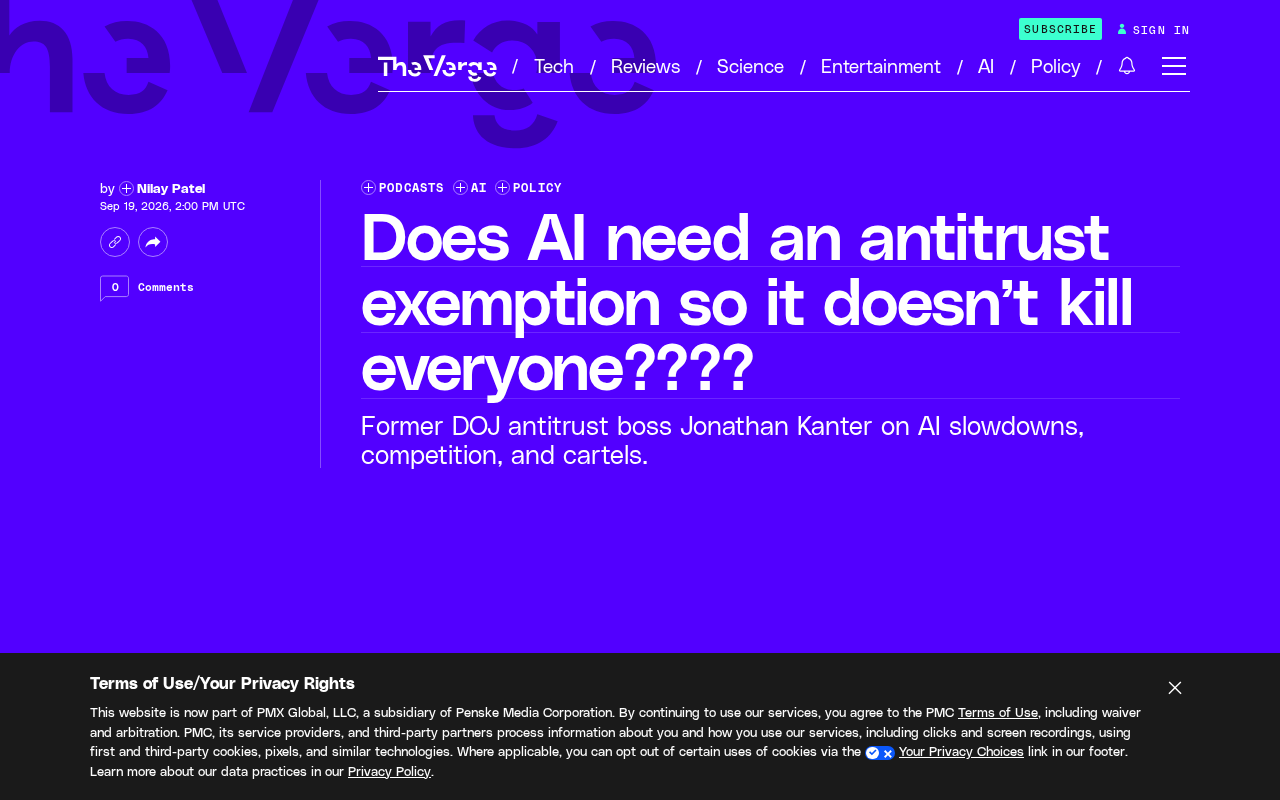
Does AI Need Antitrust Immunity to 'Avoid Destroying Humanity'? A Warning from the Former DOJ Antitrust Chief
Former DOJ Antitrust Chief Jonathan Kanter warns on the Decoder podcast: should AI companies get antitrust immunity for 'safety'? A deep dive into the risks.
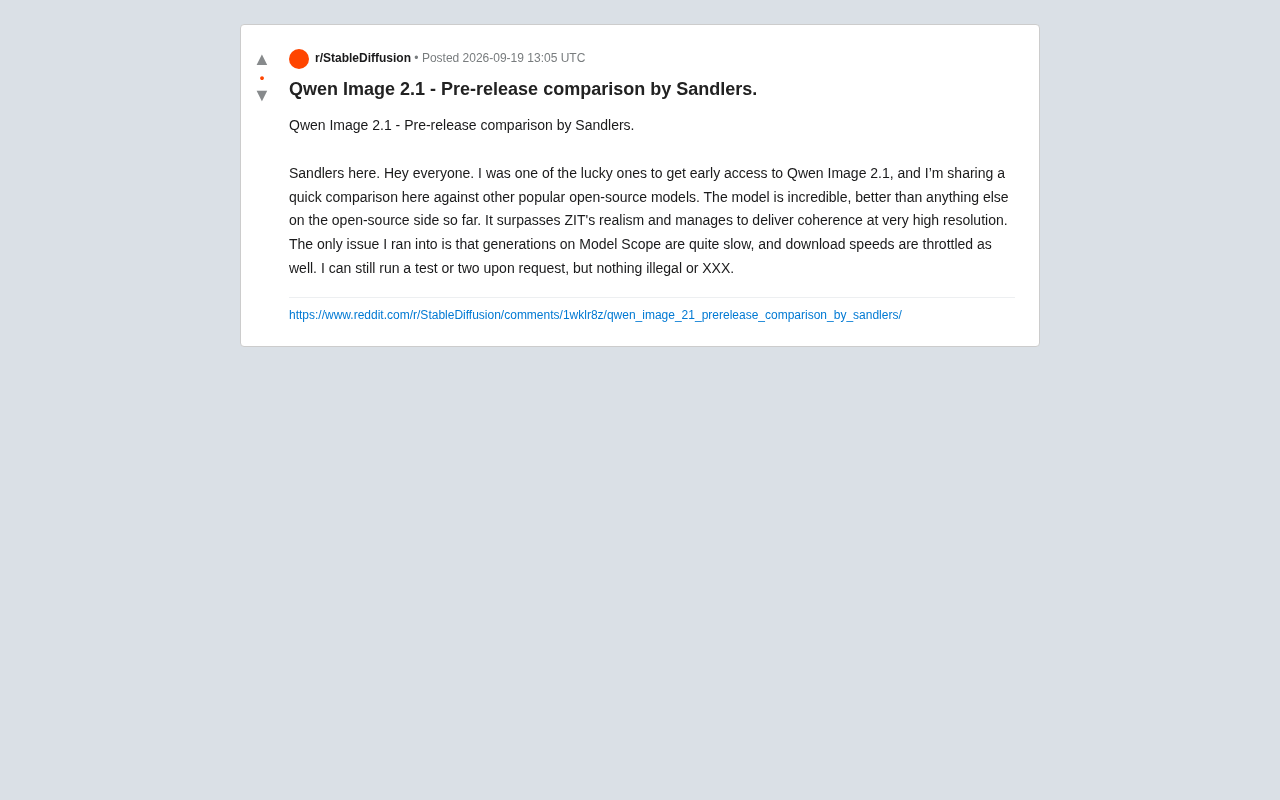
Qwen Image 2.1 Early Access: A New Benchmark for Open-Source Image Generation?
Reddit user Sandlers shares an early look at Qwen Image 2.1, praising its realism over ZIT and high-res coherence, while noting slow speeds and throttling on ModelScope.

Claude Code Adds Mods and AGENTS.md Support: A Deep Dive
Anthropic adds Mods plugin system and AGENTS.md support to Claude Code, alongside Projects redesign, background computer use, Diff panel, and Skills evaluation tools.