AI Large Language Models Explained: Principles, Strengths, Weaknesses, and a Testing Guide

A clear, beginner-friendly breakdown of how LLMs work and how testers can use them effectively.
This article demystifies AI large language models by mapping out the AI technology hierarchy, explaining how the Transformer architecture uses probability to generate text, and outlining where LLMs excel (creative tasks, test case design) versus where they fall short (precise math, factual accuracy). It also introduces key mitigation techniques like RAG and Tool Use, and offers practical guidance for software testers.
AI Large Models Are Closer Than You Think
In recent years, AI products like DeepSeek, ChatGPT, and Gemini have entered the mainstream, generating enormous public interest. Yet many people still hold a misconception — that using AI requires a dedicated role, specialized training, or a company-wide digital transformation initiative before it becomes accessible.
The reality is quite the opposite. As shared by a teacher from Mashibing Education's software testing program on Bilibili, AI large models are well within everyone's reach: if you can type a message in a chat window, you can use AI. Whether it's generating test cases, reviewing requirements, or handling everyday work tasks, any user can sign up for an account and get started immediately.
This article takes a systematic look at AI large models from three angles: their underlying principles and how to use them, the application development landscape built around large models, and how testers can approach testing AI-powered applications.
What Exactly Is a Large Model: Clarifying the Concept Hierarchy
We often use the phrase "AI large model" as if it's a single, self-contained concept — but that's not quite accurate. To truly understand it, you need to map out how the different concepts relate to one another.
The AI Technology Landscape
AI (Artificial Intelligence) is the broadest category, encompassing a wide variety of approaches. Early research dates back to the 1970s, relying primarily on statistical methods and rule-based strategies. When we talk about AI today, however, we specifically mean modern artificial intelligence.
Within modern AI, machine learning is one of the core directions. It typically encompasses three paradigms: supervised learning (training models on labeled data, such as image classification), unsupervised learning (discovering patterns in unlabeled data, such as clustering), and reinforcement learning (optimizing strategies through reward and penalty feedback from environmental interaction — the approach used by AlphaGo). Deep learning is a technique that uses multi-layer neural networks for feature extraction and can be applied across all three paradigms. ChatGPT's training process, for example, combines supervised fine-tuning with Reinforcement Learning from Human Feedback (RLHF). Large models fall squarely within the deep learning domain.
In recent years, deep learning has achieved mature, real-world deployment in three key areas:
- Computer Vision (OpenCV): Automatic face-slimming and beauty filters on TikTok, image content recognition, and more
- Speech Recognition: WeChat voice-to-text, smart speakers (Tmall Genie, Xiao Ai, etc.)
- Natural Language Processing (NLP): Deep understanding of textual semantics and contextual meaning
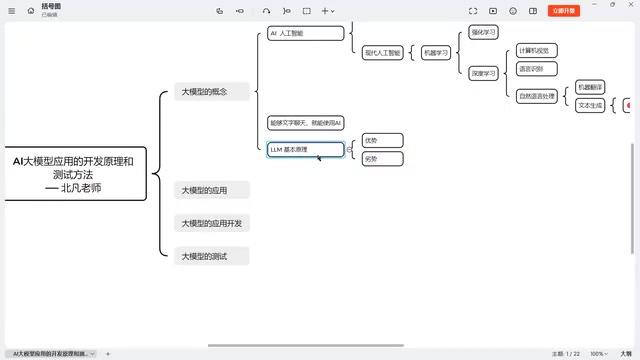
Narrowly Defined: AI Large Model = Large Language Model (LLM)
When people say "AI large model," they typically mean a Large Language Model (LLM) — a branch of NLP focused specifically on text generation.
Worth noting is that the foundational architecture underpinning the NLP field — Google's Transformer — was originally developed primarily for machine translation, offering speed but limited quality. The Transformer was introduced by the Google team in 2017 in the paper Attention Is All You Need. Prior to this, NLP relied mainly on RNNs (Recurrent Neural Networks) and LSTMs (Long Short-Term Memory networks), which processed text word by word in sequence, making computation inefficient. The Transformer introduced a "Self-Attention" mechanism, allowing the model to simultaneously consider the context of every other word in a sentence when processing any given word. This enabled parallel computation and became the foundation for modern large language models like BERT and GPT. The word-by-word generation style we see in today's LLMs is a defining characteristic of this architecture.
Broadly speaking, vision and speech can also be "scaled up" into large image models and large video models. But it is the maturation of large language models that has truly lowered the barrier to AI adoption — because text-based chat lets anyone interact naturally with AI, no technical background required.
How Transformer Works: It's Fundamentally Probability
To use large models effectively, you need to understand how they work under the hood. Using a simplified Transformer model as an example, here's an intuitive explanation for non-technical audiences.
From "I love you" to "我爱你"
Take translation as an example: input "I love you," output "我爱你." What seems like a simple input-output operation actually involves a complex computation process:
- Encoding: The English text is converted into mathematical vectors (Embeddings). At this point, it's no longer just letters — it's a set of coordinates in a vector space. Vectors are essentially sequences of numbers used to represent the semantic position of words in a high-dimensional mathematical space. Words with similar meanings sit closer together in this space — for instance, the vector difference between "king" and "queen" is nearly identical to the difference between "man" and "woman," revealing the model's implicit grasp of semantic relationships. These representations, often spanning hundreds to thousands of dimensions, allow the model to capture extremely fine-grained semantic distinctions.
- Vector Retrieval: The model searches for semantically similar expressions in high-dimensional vector space. Phrases like "我爱你," "我喜欢你," and "我稀罕你" differ in wording but are semantically close, so they sit near each other in vector space.
- Token-by-Token Decoding: From a pool of candidates, the model derives the output one character at a time based on maximum probability.

The Token-by-Token Probability Mechanism
The model's output is not a fixed mapping — it's dynamically derived. First it computes "我" (I), then uses "我" as context to derive the next character. It finds that "爱" (love) has a higher semantic match probability than "喜" (like), so it selects "爱." Then it derives "你" (you). Throughout the entire process, the model is making choices based on probability.
This mechanism explains a key phenomenon: at its core, an AI large model is a probability calculator. Ask the same question 100 times, and you may get 100 different phrasings. Ask the same thing repeatedly, and each answer will differ slightly. This isn't a bug — it's a fundamental property of how LLMs work.
Strengths and Weaknesses: The Probabilistic Nature Defines Application Boundaries
Once you understand the probabilistic nature of LLMs, you can make informed decisions about where to use them — and where to avoid them.
Where They Excel: Creative and Divergent Tasks
The probabilistic nature makes large models naturally suited for creative writing and open-ended conversation. If a person always used the same fixed phrases in conversation, it would feel dull; the fact that a large model responds differently each time actually makes it feel more fresh and creative.
Beyond that, tasks requiring divergent thinking — designing test cases, brainstorming, drafting initial documents — are all squarely in a large model's wheelhouse.
Where They Fall Short: Precise Calculation and Authoritative Judgment
Large models have two notable weaknesses:
Weakness 1: Poor at precise calculation. Early researchers often used complex math problems to benchmark a large model's "intelligence" precisely because this is where they struggle. Simple arithmetic is manageable, but solving complex equations may be less reliable than a traditional calculator. To address this, the industry has developed Tool Use technology, which allows large models to invoke actual calculator programs when performing math, or call search engine APIs when real-time information is needed. This effectively extends the model's capability boundaries and drives the evolution from "chatbot" to a capable intelligent agent (Agent).
Weakness 2: Insufficient factual accuracy. In academic circles, this has a dedicated term — "Hallucination" — referring to instances where a model generates content that sounds plausible but is factually incorrect, with high apparent confidence and no reliable basis. Examples include fabricating citations to non-existent papers or inventing historical events. The root cause of hallucination is once again the probabilistic nature: the model is optimizing for "the most linguistically plausible next token," not "the most factually accurate statement." As a result, well-trained large models in high-stakes domains like law, finance, and healthcare tend to respond with more cautious phrasing and guide users to seek professional advice.
The most widely adopted technique for mitigating hallucination is Retrieval-Augmented Generation (RAG): before the model answers a question, relevant document fragments are retrieved from an external knowledge base or real-time database and provided to the model as context. This grounds the response in verifiable sources and significantly improves reliability in specialized domains like healthcare and law.
A Tester's Perspective: Where to Put Large Models to Work
For testers, understanding the capability boundaries of large models is what enables you to extract real value from them in practice.
Testing Tasks Where They Shine
Large models are an excellent fit for requirements review and test case design. Testing work inherently requires covering all kinds of edge cases and abnormal paths — and the probabilistic, divergent nature of large models is a perfect match for this need. They can surface test scenarios that humans tend to overlook, broadening coverage across the board.
Scenarios That Require Caution
By contrast, having a large model directly locate and fix bugs (debug) tends to produce underwhelming results. The model can get "stuck" on a particular wrong direction and fail to self-correct — a pattern that traces directly back to the hallucination problem: the model keeps generating along the highest-probability path, even when that path has veered away from the actual root cause. Using it to assist with problem analysis is reasonable, but precisely locating and fixing complex defects still requires human judgment.
Summary
In terms of concept hierarchy, AI large models are a mature product along the path of AI → machine learning → deep learning → NLP → text generation. In terms of principles, the core mechanism is probabilistic token-by-token generation built on the Transformer architecture. In terms of applications, they excel at creative and divergent tasks while showing clear limitations in precise calculation and authoritative judgment — limitations the industry continues to address through techniques like RAG and tool use.
For testers and professionals across all fields, the most important takeaway is this: you don't need to wait for your company to launch an AI initiative. If you can type in a chat window, you can start today. Understanding where large models are strong and where they fall short is what lets you play to their strengths, turning AI into a genuine productivity multiplier rather than a source of costly mistakes.
Related articles
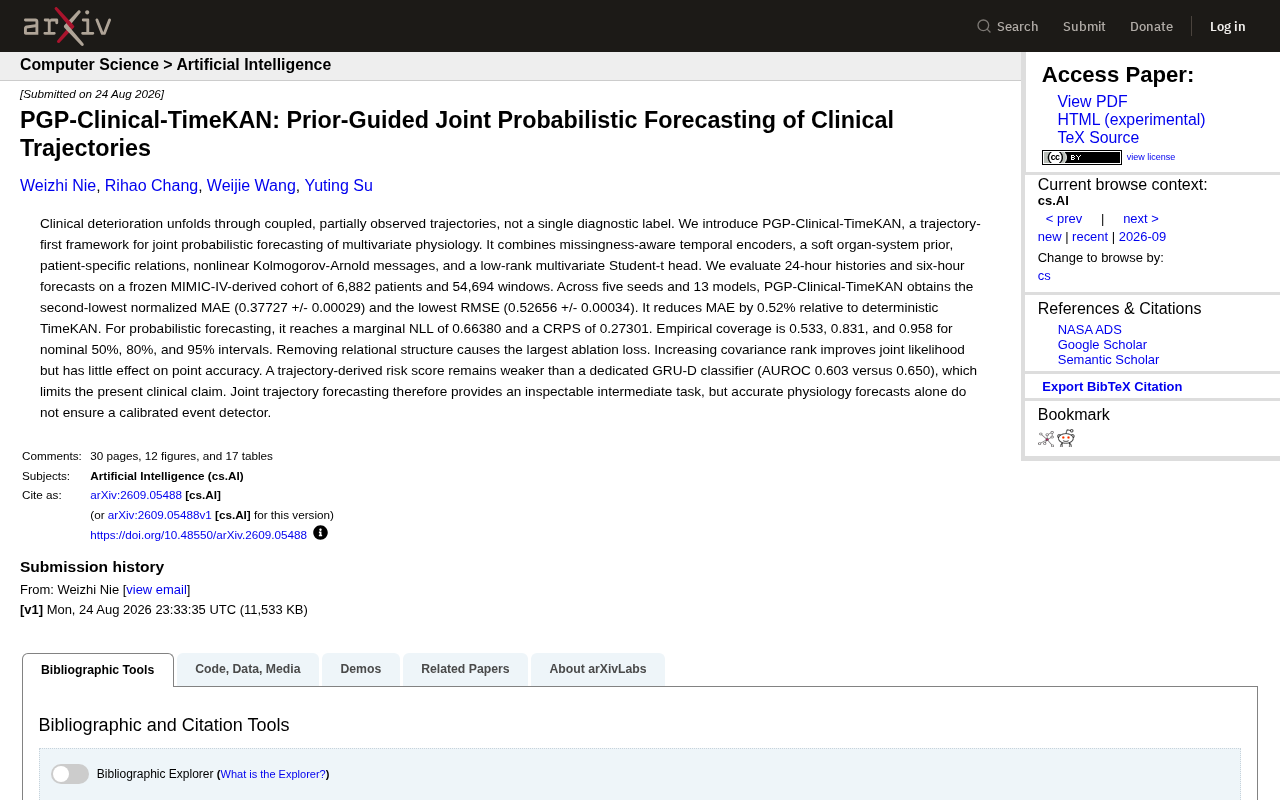
PGP-Clinical-TimeKAN: A Detailed Guide to the Multivariate Physiological Indicator Joint Prediction Framework
An in-depth analysis of the PGP-Clinical-TimeKAN framework for joint probabilistic prediction of multivariate physiological indicators, covering trajectory-first paradigm, KAN message passing, MIMIC-IV validation, and ablation studies.
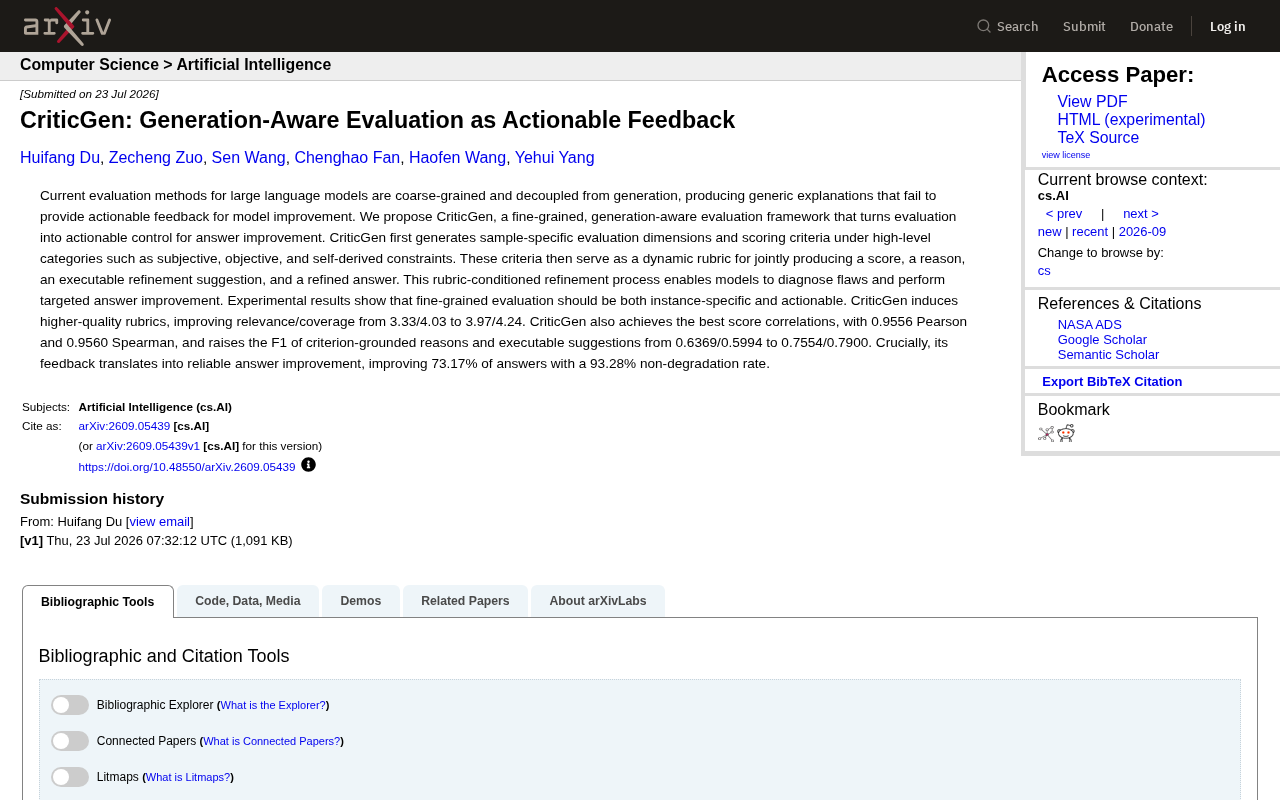
CriticGen: A New Framework That Transforms AI Evaluation into Actionable Improvement Feedback
CriticGen proposes a generation-aware evaluation framework that transforms AI assessment from passive scoring to an active optimization loop, achieving 73.17% answer improvement and 93.28% non-degradation rate.
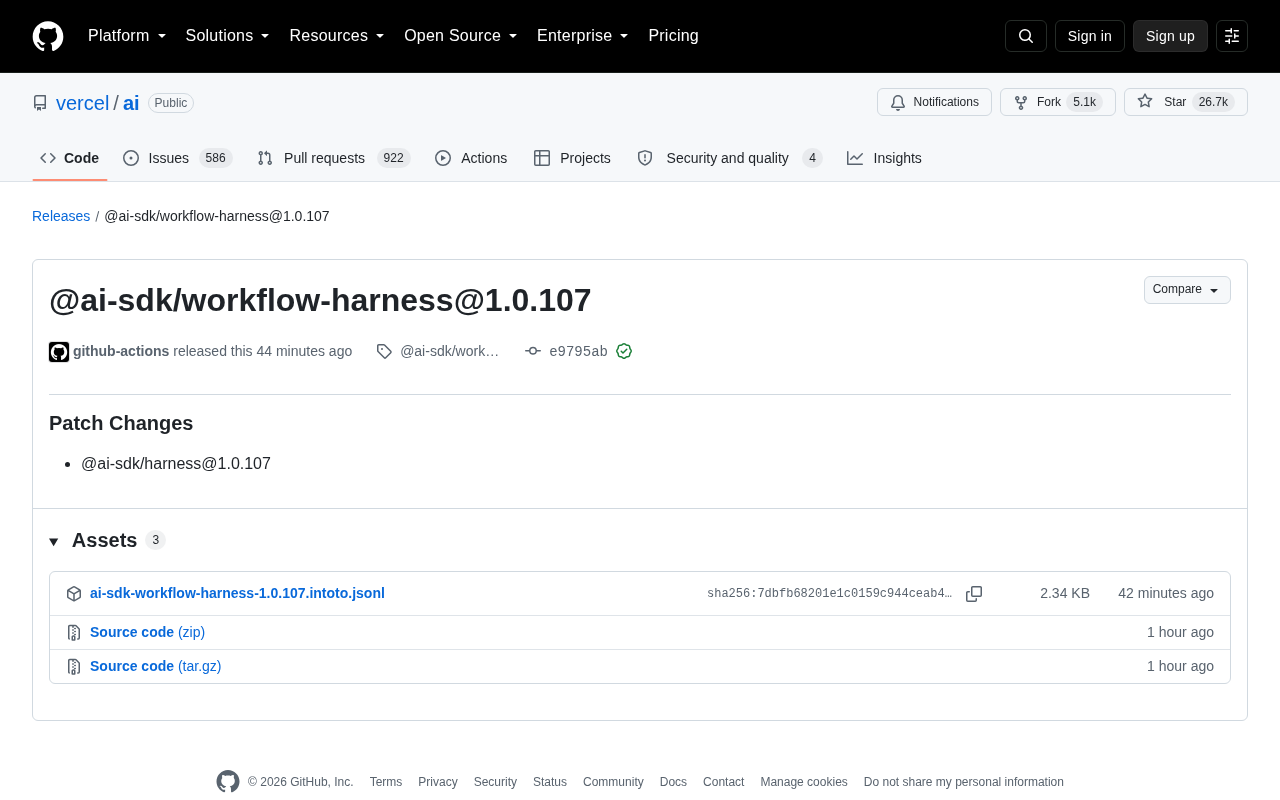
Vercel AI SDK workflow-harness Update Analysis
Deep analysis of Vercel AI SDK workflow-harness 1.0.107 update: architecture design, engineering practices, and developer value for building reliable AI apps.