AI Learns to Speak Plant: How Smart Gardening Lets Plants Talk to Us

How AI uses computer vision, sensors, and LLMs to translate plant signals into human-readable care advice.
Plants constantly communicate through wilting, yellowing, and spots — but humans rarely understand these signals in time. This article explores how AI bridges that gap using computer vision (CNNs), multi-sensor fusion (soil, light, EC sensors), TinyML, and large language models to translate plant physiology into personalized, conversational care recommendations, bringing the concept of "talking plants" closer to reality.
When Plants Start "Talking"
"Are you opening the blinds? We're wilting over here." — Imagine if your houseplants could complain about insufficient light first thing in the morning. This imaginative scenario is one of the most fascinating frontiers in the intersection of AI, agriculture, and home gardening.

The scene may feel lighthearted, but it points to a real and profound technical challenge: plants can't speak, yet they're constantly communicating through signals — wilting leaves, color changes, spots and blemishes. The problem is that humans often can't read these signals, or only notice them when it's too late.
Plants Are Always "Talking" — We Just Can't Understand Them
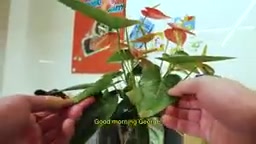
In this imagined scenario, a plant owner says good morning to a plant named "George," notices some spots on it, and sighs: "I wish you could tell me what you need." That line captures the core pain point of traditional gardening.

Botany has long established that plants express their condition in a variety of ways. These "languages" are grounded in rigorous physiological mechanisms, rooted in hundreds of millions of years of evolutionary history. When roots sense insufficient soil moisture, they synthesize abscisic acid (ABA) — a key plant stress hormone first identified in the 1960s — and transmit chemical signals through the vascular system to the leaves, triggering stomatal closure to reduce water loss through transpiration. Notably, ABA concentrations can rise several-fold within minutes of drought stress onset, meaning plants actually have a highly sensitive "early warning system" that activates far earlier than the wilting we observe with the naked eye. ABA not only regulates stomatal opening and closing, but also participates in seed dormancy, leaf senescence, and other physiological processes — it's the central signaling hub for plants responding to environmental stress.
What's remarkable is that plant "language" goes well beyond chemical signals. In 2023, a research team at Tel Aviv University published a landmark paper in Cell demonstrating that plants emit ultrasonic pulses in the 20–100 kHz frequency range when subjected to drought or mechanical damage — likely related to cavitation (air bubble formation from broken water columns) in the xylem — producing dozens of detectable sound emissions per hour. Plants can also generate electrical signals that propagate along the vascular system, analogous to action potentials in animal nervous systems, traveling at speeds of several centimeters per second. This suggests that future plant monitoring systems may no longer rely solely on visual and chemical sensors, but instead directly "listen" to plants' physical signals through microphone arrays and microelectrodes — dramatically expanding the data dimensions through which AI can perceive plant status.
Leaf yellowing (chlorosis) is directly linked to impaired chlorophyll synthesis, potentially caused by chloroplast developmental defects stemming from deficiencies in nitrogen, iron, magnesium, or other elements. The shape, color, and distribution of spots are critical indicators for identifying pathogen types — for example, circular brown lesions with yellow halos typically point to fungal leaf spot disease, while irregular water-soaked spots are more commonly associated with bacterial infections. These signals require specialized knowledge to interpret accurately, which is precisely where AI's core value lies.
- Wilting leaves: Usually indicates water deficiency or root damage
- Yellowing leaves: May signal nutritional deficiency or overwatering
- Spots: Often point to disease, pests, or specific micronutrient deficiencies
- Stunted growth: Typically reflects unsuitable light or temperature conditions
All of these are the plant's "language" — expressed chemically and morphologically rather than through the sounds and words humans are accustomed to.
How AI Acts as a "Translator" Between Plants and Humans
This is exactly where artificial intelligence shines. Recent breakthroughs in computer vision and machine learning have brought "understanding plants" from concept closer to reality.
Visual Recognition: Giving Plants a "Health Check"
By continuously observing plants through cameras, AI image recognition models can detect subtle changes that the human eye easily misses. The core technology here is Convolutional Neural Networks (CNN) — a deep learning architecture that simulates the hierarchical processing of the human visual cortex. CNNs surged to prominence after AlexNet achieved a breakthrough at the 2012 ImageNet competition. Trained on millions of labeled plant images, CNNs gradually learn to extract subtle visual patterns such as leaf texture, color distribution, and edge features. Their layered structure maps naturally onto the hierarchical nature of disease characteristics: shallow convolutional layers capture low-level features like color and texture, while deeper layers integrate them into high-level semantic features like lesion shape and distribution patterns.
The academic community has already developed large public datasets like PlantVillage, which contains over 54,000 images of diseases across more than 50 plant species, providing a critical foundation for model training. A 2016 study published in the Proceedings of the National Academy of Sciences was the first to systematically validate deep learning for plant disease diagnosis, achieving accuracy above 99% under controlled conditions. Transfer Learning has further lowered the barrier — researchers can reuse feature extractors pre-trained on ImageNet without starting from scratch, achieving solid results even on small plant datasets. Modern deployment approaches often use lightweight CNN architectures like MobileNet or EfficientNet, enabling real-time inference on smartphones without cloud servers, significantly reducing hardware requirements for consumer products. A sufficiently trained model can identify dozens of common diseases and nutritional deficiency symptoms and provide diagnostic suggestions — just like the "spots" the plant owner notices in our scenario, where AI can further determine whether this is a fungal infection, magnesium deficiency, or sunscald.
Sensor Fusion: Multi-Dimensional Perception of Plant Status
Images alone don't tell the whole story. By combining IoT devices such as soil moisture sensors, light intensity detectors, and temperature and humidity monitors, AI can build a comprehensive picture of a plant's growing environment. This technique is known as Sensor Fusion — integrating heterogeneous data from multiple sensors to achieve more accurate environmental perception than any single sensor could provide.
Common sensors used in smart plant monitoring include:
- Capacitive soil moisture sensors (accuracy up to ±2%): Indirectly calculate water content by measuring soil dielectric constant — more corrosion-resistant and longer-lasting than traditional resistive sensors
- Photosynthetically Active Radiation (PAR) sensors: Specifically measure light flux in the 400–700 nm wavelength range — the exact range that chloroplasts absorb to drive photosynthesis
- Soil EC (electrical conductivity) sensors: Indirectly reflect soluble mineral concentrations by measuring soil solution conductivity — a key indicator for assessing fertilization status
The wireless communication protocols used by these devices are also worth noting. Bluetooth Low Energy (BLE), a key feature introduced in the Bluetooth 4.0 standard, is designed for intermittent data transmission scenarios, supporting sensor nodes for months or even years on a single coin cell battery. Its native support across smartphones makes it the preferred choice for consumer products. Zigbee, based on the IEEE 802.15.4 standard, supports mesh network topology and allows dozens of nodes to relay data to each other — better suited for wide-area deployment in large greenhouses. Both protocols operate in the 2.4 GHz band and complement each other as the wireless communication backbone of smart plant monitoring. When soil moisture remains persistently low, the system can "translate" that into: "We're wilting over here."
A notable emerging frontier is deploying AI inference capabilities onto low-power embedded devices. TinyML (Tiny Machine Learning) focuses on compressing and deploying machine learning models onto microcontrollers with only a few hundred KB of memory, operating at microwatt-level power. Core techniques include model quantization — compressing 32-bit floating-point parameters to 8-bit integers, reducing model size to one-quarter of the original — and model pruning. This means a soil sensor node just 3 cm in diameter can perform preliminary local inference for disease prediction, protecting user privacy while completely eliminating dependence on cloud servers.
Natural Language Interaction: Giving Communication a Human Touch
The most imaginative step is converting sensor data into anthropomorphic, easily understandable language feedback. Technically, this is known as Data-to-Text Generation. Using large language models (LLMs) — such as GPT series or Claude — which are essentially probability models pre-trained in an autoregressive manner on massive text corpora using a Transformer architecture (where text generation involves sampling from the conditional probability distribution of the next token) — developers can use carefully crafted prompt engineering to guide the model to interpret sensor data in the plant's own voice, without modifying model weights, by defining personas, output formats, and examples.
The technical pipeline for this process looks roughly like: raw sensor values → rule engine evaluates health status thresholds → structured status description (e.g., "soil moisture 23%, below optimal range of 40-60%") → LLM combines plant species knowledge and user preferences to generate personalized recommendations → output a warm, first-person plant perspective. Retrieval-Augmented Generation (RAG) technology can further combine plant species databases with LLMs, dramatically improving the professional accuracy of recommendations while maintaining language fluency. The smart gardening assistant of the future might genuinely tell you in first person: "I need a bit more sunlight," or "Please don't water me again."

From Concept to Reality: Smart Plant Monitoring Is Already Here
This vision is not pure science fiction. A variety of smart plant monitoring devices and apps have already appeared on the market, allowing users to simply photograph a plant and receive a health diagnosis and care recommendations.
Precision Agriculture in the farming sector is also deploying similar technologies at scale. This concept originated in the 1990s in large-scale grain production in the American Midwest, initially aiming to achieve grid-based field management through GPS positioning and satellite remote sensing — enabling variable-rate fertilization and precision irrigation to boost yields while reducing chemical waste. Today, precision agriculture has evolved to include drones equipped with multispectral cameras to capture near-infrared band information reflecting plant chlorophyll content, quantitatively assessing crop health using the Normalized Difference Vegetation Index (NDVI).
The theoretical basis of NDVI comes from the optical properties of plant chlorophyll: healthy leaves strongly reflect near-infrared light (NIR, approximately 700–1300 nm) due to the spongy structure of mesophyll cells, while chlorophyll molecules absorb heavily in the red light band (approximately 620–700 nm). The NDVI formula is (NIR - Red) / (NIR + Red), first proposed by NASA scientists in 1973. Healthy vegetation typically has an NDVI above 0.6, while stressed crops often fall below 0.3, and bare soil ranges around 0.1–0.2. This elegant index transforms crop health assessment from qualitative description to a precise, quantifiable metric. The proliferation of consumer drone multispectral cameras (such as the MicaSense RedEdge series) has reduced per-operation costs to within reach of professional farms.
The core technical approach of current consumer smart gardening products is to "miniaturize" this mature agricultural-grade technology and migrate it to the home setting. Take the Xiaomi Flora Care plant sensor as an example: it compresses the cost of a professional-grade soil EC sensor to tens of yuan, and provides personalized care recommendations based on a plant species database through its companion app — this product trajectory is itself a vivid example of the "democratization" of agricultural technology, and validates the feasibility of this technical migration path from professional agriculture to home gardening.
Cutting-edge research is exploring a truly meaningful Plant-Machine Interface (PMI): combined with a Reinforcement Learning framework, AI systems can not only diagnose problems but also directly drive solenoid valves to precisely control irrigation volume, adjust LED grow light spectrum ratios, and automatically control ventilation — forming a complete closed loop of perception, decision-making, and execution. The system can autonomously learn optimal care strategies through long-term interaction with real plants, ultimately achieving fully automated precision cultivation with no human intervention — one of the most closely watched technical pathways in vertical farming and space agriculture research.
Extending these capabilities to home gardening scenarios, paired with more natural interaction methods, means "talking plants" could very realistically become a reality in the not-too-distant future. This would not only lower the barrier to care, making it easy for gardening beginners to look after plants, but more importantly, it embodies a human-centered warmth in AI technology — transforming cold sensor data into emotionally resonant, everyday companionship.
Technology Helps Us Better Understand Nature
"What if plants could talk?" — this seemingly naive question actually sketches out a wonderful direction for AI applications. It reminds us that the value of technology lies not only in improving efficiency, but in bridging the "communication gap" between humans and nature. When AI truly learns to translate the language of plants — from microscopic sensor values to macroscopic visual morphology, from the millisecond-level biochemical response of ABA signals and the physical signals of plant ultrasonic pulses, to the satellite-level macro assessment of NDVI, ultimately presented in a language humans can understand — our relationship with these silent living beings around us may become closer than ever before.
Key Takeaways
Related articles
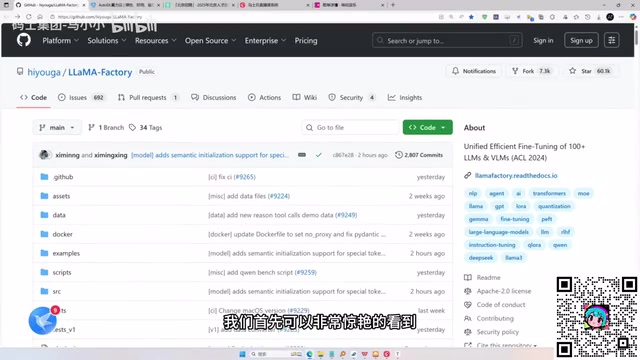
LLaMA-Factory in Practice: A Complete No-Code Guide to Fine-Tuning Large Models
An introduction to LLaMA-Factory, the open-source fine-tuning tool: its 60.1K-star background, supported models and algorithms, local vs. cloud deployment, and CUDA setup steps.

Zeng Ming's Deep Retrospective: Why OpenAI May Not Be the Ultimate Winner — and Why the Corporate System Will Disappear
Zeng Ming's deep retrospective on the AI endgame: model companies are just infrastructure, OpenAI and Anthropic won't be the final winners; the next battle is the Agent entry point standard; the corporate system will disappear as AI restructures collaboration, and only mission-driven companies can survive the cycle.

OpenHands v1.28.0: OpenCode and PI Added as Built-in Agents, API Keys Requestable In-Conversation
OpenHands ships 5 releases in 21 days: v1.27.0 adds OpenCode and PI as built-in agents, v1.28.0 enables in-chat key requests. ACP integration, credential reuse, model list changes, and upgrade advice.