AI Manga Series for Beginners: 3 Methods to Generate Scripts
3 AI script methods using Jimeng, Doubao & CapCut to create and monetize manga short dramas.
This article breaks down a Bilibili creator's hands-on AI manga workflow, focusing on script generation. It explains the 3-element prompting framework (role identity + task description + format requirements) and three script methods: direct output (fast but logic-prone), story-first then convert (beginner-friendly), and framework adaptation (best for commercial work). The piece also notes that AI drafts typically need human revision to reach production quality.
AI manga series are emerging as a new monetization lane for content creators. These animated short dramas — the kind that keep viewers swiping episode after episode — run on a simple business model: audiences either pay to unlock the next episode or watch a few seconds of ads that generate revenue shares for creators. This fragmented viewing behavior builds a compounding income model that keeps paying out over time.
This article is based on a practical tutorial from a Bilibili creator who produces AI manga content, focusing on the most fundamental and critical step in the entire production pipeline: script generation. According to the creator's documented production records, their first AI short film took roughly 10 hours and ¥70 to complete, and has since generated thousands of yuan in revenue. While earnings vary from person to person, the replicability of the entire workflow is well worth the attention of first-time creators.
Core Tools and Course Structure for AI Manga
A complete AI manga production workflow is typically broken into seven modules: scriptwriting, character design, image generation, motion effects, audio/video creation, editing, and finally distribution and monetization. The core toolset comes down to three applications: Jimeng for AI image generation, Doubao for scriptwriting, and CapCut for editing and output.
What these tools share is simplicity and zero cost — making them highly accessible for beginners. For creators who need to monetize quickly, completing the full pipeline from creating a new folder to publishing a finished edit is far more valuable than simply understanding the concepts. This article focuses on the first module: how to get AI to produce a usable script.
Jimeng is ByteDance's AI image and video generation platform. It supports text-to-image, image editing, and short video generation, with particularly strong performance on anime-style rendering — making it one of the most popular choices among Chinese AI manga creators today. Doubao, also from ByteDance, is an AI assistant combining conversation, writing, translation, and other features. Its scriptwriting capability is powered by a large language model and can generate storyboard scripts from structured prompts. CapCut is ByteDance's video editing tool, available on both PC and mobile, with AI-powered subtitles, voiceovers, and effects. It has continuously added AI generation features in recent years and integrates relatively smoothly with Jimeng workflows. All three tools come from the same company, giving them certain advantages in data interoperability and feature integration — which is part of why this tutorial chose this particular combination.
The Universal AI Prompting Framework: Three Key Elements
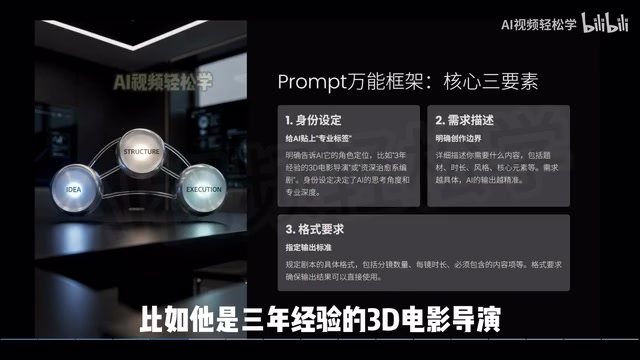
The secret to getting AI to write a good script isn't the tool itself — it's how you ask. The tutorial distills a universal prompting framework built around three core elements.
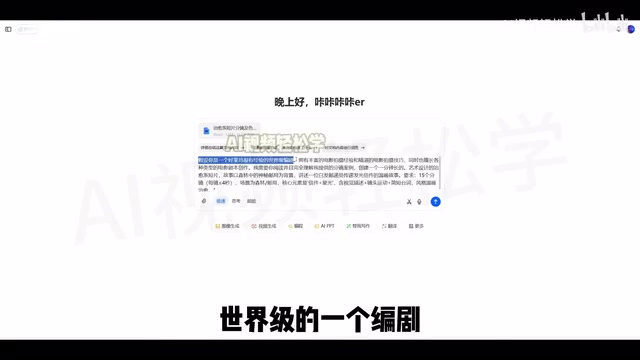
First, role identity. Give the AI a professional label. Tell it explicitly: "You are a 3D film director with three years of experience" or "You are a seasoned healing-genre screenwriter." The identity you assign determines the angle and professional depth of the AI's thinking — you need the AI to genuinely believe it is that character.
Second, task description. Define the creative boundaries clearly. Specify what you need in detail, including genre, length, style, and core elements. The more specific the description, the more precise the AI's output.
Third, format requirements. Specify the output format — for example, define the number of shots, the duration of each shot, and what must be included. Format requirements ensure the output is immediately usable.
The tutorial demonstrates this framework with a simple example: "If you are a car salesperson (identity), explain why people love Tesla (task), and give three main reasons (format)." Results obtained through this kind of structured prompting are far more comprehensive and precise than asking the question directly. This framework applies not just to scriptwriting, but to virtually any question you need AI to answer.
This three-element framework has solid theoretical grounding in the field of Prompt Engineering. Assigning the AI a professional identity is commonly known as "Role Prompting" — research shows it effectively activates the model's knowledge weights in a specific domain, making outputs more aligned with the professional conventions of that field. The task description corresponds to "Task Prompting," while format requirements fall under "Output Constraints," which narrow the model's creative latitude by defining structure — reducing irrelevant or unusable content. Combined, these three elements essentially compress the model's output probability distribution, channeling generation results into the range the creator actually needs. For AI manga specifically — where outputs must be compatible with downstream image generation — output constraints are especially critical, directly determining whether the rest of the production workflow can proceed smoothly.
Three Methods for Generating Scripts
With the prompting framework in hand, the tutorial offers three concrete methods for generating scripts, suited to different scenarios.
Method 1: Direct Script Output
This method is fast and efficient — ideal when you're working under time pressure. Prepare reference materials (such as healing-genre storyboard examples and color palette documents) to help the AI understand the target style, then use the three-element framework to lay out all your requirements in a single prompt and have the AI output a storyboard script directly.
The resulting script is quite detailed, covering duration, style, core themes, foreground shots, camera movements, and visual descriptions — all of which are useful when generating images and video later.
However, this method has a clear drawback: logical gaps. The tutorial gives an example: a shot described as "starlight spreading along tree bark" is nearly impossible to faithfully reproduce in actual AI image or video generation. Scripts generated directly tend to include visuals that are difficult to execute in practice.
Method 2: Generate the Story First, Then Convert to Script
This is the most beginner-friendly method, and its main advantage is stronger logical flow. Breaking the process into two steps significantly lowers the difficulty.
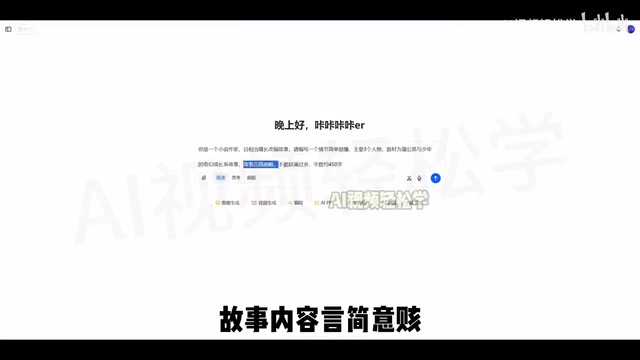
Step one: have the AI write a complete story with a proper narrative arc, typically 400–500 characters, ensuring internal logical consistency. Step two: based on the finished story, have the AI convert it into a storyboard script format that includes duration, shot breakdown, and camera movement — ensuring compatibility with AI image generation.
The example demonstrated in the tutorial is a healing-genre coming-of-age story called "A-Shu and Dandelion Rongrong": a dandelion that can't fly refuses to let its seeds drift away in the wind out of fear of separation, mirroring the protagonist A-Shu's fear of growing up. Eventually, A-Shu takes a deep breath, blows, and lets go — completing a journey of self-growth. This write-first, convert-second approach produces stories with clear beginnings and endings, and the logical transitions between scenes flow much more naturally.
One practical tip when converting to script: ask the AI to generate 15 shots, each under 4 seconds, with no shot-within-shot perspective changes in a single frame. This is because AI sometimes generates complex descriptions that would require three or four different camera angles to capture — setting this constraint keeps individual shot descriptions simpler and more precise.
Method 3: Adapt from a Proven Framework
This is the most suitable method for commercial work. By borrowing from established story frameworks, you prevent the AI from going off in unpredictable directions while ensuring the output aligns more closely with client expectations and market norms.
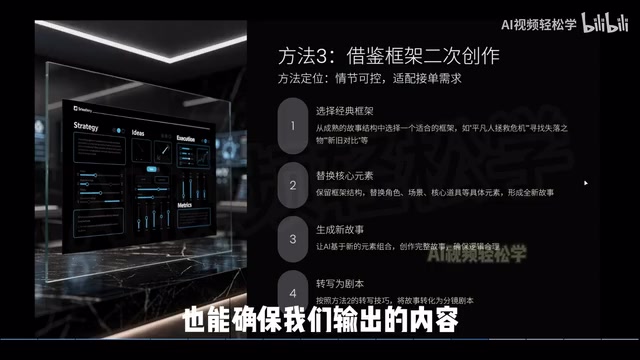
The approach works like this: select a well-tested story framework (such as "ordinary person saves the day," "searching for something lost," or "old vs. new contrast"), keep the structural skeleton intact, swap out the characters, settings, and key props, then use the new elements to generate a complete story and convert it into a storyboard script.
The tutorial demonstrates this by rewriting the earlier "A-Shu and Dandelion" story into a new version called "Xiaoman and the Little Goldfish" — using the same core conflict of "fear of change leading to reluctance to let go," but with entirely new characters and settings. The story framework remains similar, but the plot and characters are completely fresh. Whenever you come across an interesting story online, you can use this method to quickly reshape it into your own script.
Borrowing from story frameworks has well-established theoretical support in creative writing. Classic examples include the Hero's Journey, three-act structure, and conflict-opposition models. The frameworks listed in the tutorial — "ordinary person saves the day," "searching for something lost," "old vs. new contrast" — all fall under the category of Plot Archetypes. These frameworks are classics precisely because their underlying emotional tension and narrative pacing have been validated by countless works in the marketplace. Swapping out surface elements (characters, settings, props) while retaining the underlying structure is a standard screenwriting technique known as "story adaptation." For AI-assisted creation, this method offers an additional advantage: giving the AI a clear narrative skeleton effectively reduces the randomness of plot direction, lowers the chance of outputs diverging from expectations, and improves the usability rate of generated content. In commercial client work, where clients typically have clear expectations about style and content, the predictability of the framework method fits that need perfectly.
Trade-offs and Choosing Between the Three Methods
Each method involves trade-offs. Method 1 is fast but prone to logic and execution issues. Method 2 is logically coherent with a low barrier to entry — best for beginners. Method 3 balances efficiency and quality, making it ideal for commercial projects.
Even with the stronger Methods 2 and 3, AI-generated content still has shortcomings. The tutorial points out that in the adapted "Xiaoman and the Goldfish" version, the core conflict — the goldfish's fear of strangers and Xiaoman's fear of change — is resolved abruptly by a single line from an old grandmother, with insufficient buildup and foreshadowing beforehand. This makes the bond between the two feel forced. This shows that AI first drafts almost always require human revision, and it's the polishing of the script that ultimately determines the quality of the finished piece.
For creators looking to break into AI manga, the recommendation is to start with Method 2 to develop a feel for narrative logic, then graduate to Method 3 as you gain experience, to increase efficiency for client work. The tools are free and the barrier to entry is low — the real competitive edge lies in mastering the prompting framework and developing a sharp eye for script detail.
Related articles
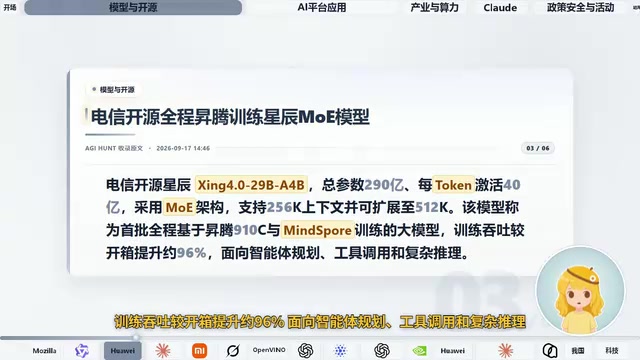
AI Daily Briefing: Qwen3-Omni Full-Modality Model Launches, Huawei Ascend 960 and Grok's New Model Surface
AI Daily: Qwen3-Omni Flash launches with full-modality support and 93% cost cuts; Huawei unveils million-processor AI architecture; Ascend 960 rumored; Grok spotted on GCP; N8N hits CVSS 10 vulnerability.
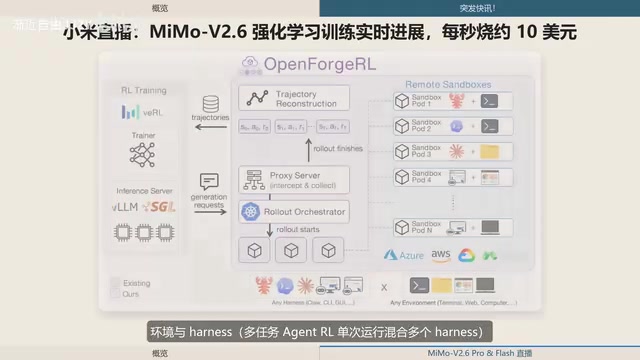
Xiaomi MiMo-V2.6 Live Training: ¥8.55M Spent in One and a Half Days, ~$10 per Second
Xiaomi's MiMo team live-streams MiMo V2.6 Pro/Flash RL training, spending ¥8.55M (~$1.28M) in 1.5 days — ~$10/sec. Covers compute scaling, open-source plans, and DeepSWE benchmarks.
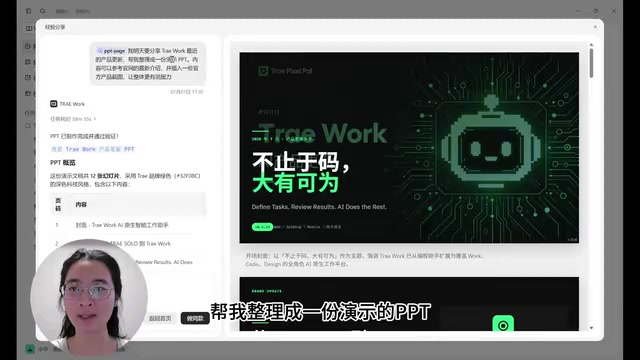
ByteDance Trae Work Getting Started Guide: 11 Use Cases Explained
A hands-on guide to ByteDance's Trae Work AI agent — covering Work, Code, and Design sections across 11 use cases including PPT generation, data analysis, coding, and more.