AI Math Book Tops Amazon Bestseller List — What Signal Is It Sending to the Industry?

An AI math book topping Amazon's bestseller list signals the industry's return to foundational math.
A math-for-AI book recently broke into Amazon's top 5 bestsellers, sparking wide discussion. This phenomenon reflects a growing recognition among AI practitioners that mastering linear algebra, probability, and calculus — not just APIs and prompts — is what truly separates capable AI professionals. As the industry matures, competition is shifting from tool usage to deep understanding, making mathematical literacy the new dividing line.
Why an AI Math Book Broke into Amazon's Top 5 Bestsellers
Recently, a technical book focused on "math for AI" shot into Amazon's top 5 bestseller list, sparking lively discussion on Reddit. On the surface, it's just a commercially successful book. But look deeper, and it reflects a collective return to foundational mathematical knowledge among AI practitioners and learners amid the current AI wave.
In an era dominated by large language models and generative AI tools, many people assume that "calling an API" and "writing prompts" is all there is to AI. However, those who truly want to go further in this field are increasingly realizing that linear algebra, probability theory, calculus, and optimization theory are the real keys to understanding how models work. The fact that a book focused on the mathematical foundations of AI can achieve such strong sales is a clear sign that the market's hunger to understand the why behind AI is on the rise.
Math Is Becoming the New Dividing Line for AI Professionals
Why Math Matters Again
Over the past few years, AI tools have become dramatically easier to use, lowering the barrier to entry. But the flip side of a lower barrier is intensified homogeneous competition — when everyone can call a large model, people who can actually understand and improve those models become far more scarce.
Matrix operations underpin the forward propagation of neural networks. Gradient descent relies on calculus and optimization. The attention mechanism is built on vector dot products and Softmax. And evaluating model uncertainty is impossible without probability and statistics. These seemingly dry mathematical concepts are precisely what separates "knowing how to use AI" from "truly understanding AI."
A Shift in Learner Mindset
The book's bestseller status also reflects a subtle shift in AI learners' mindset. The early AI learning boom leaned heavily toward "getting started fast," favoring quick, practical tutorials. Now, more and more people are willing to slow down and fill in the gaps in their mathematical foundations. This transition from "application-driven" to "principle-driven" learning is a hallmark of a maturing technical field.
What Should an AI-Focused Math Book Look Like?
It's Not Just a Traditional Textbook Repackaged
Interestingly, the AI math books that become bestsellers are typically not straight copies of university math textbooks. Traditional math textbooks emphasize rigorous proofs and abstract systems, whereas AI-focused math books need to be "problem-oriented" — starting from a concrete machine learning scenario, then working backward to the required mathematical tools, so readers understand "what role does this formula actually play in a model?"
This approach preserves the necessary rigor while giving knowledge a clear application context, greatly reducing the psychological resistance to learning. For engineers, seeing how a math formula directly maps to a code implementation is far more compelling than abstract theorem derivations.
The Value of Visualization and Building Intuition
Excellent AI math books also place strong emphasis on building intuition and visual representation. By graphically explaining abstract concepts like high-dimensional spaces, gradient directions, and probability distributions, they help readers develop geometric intuition. This type of content is popular precisely because it bridges the gap between "I can read the formula" and "I actually understand what it means."
What This Trend Tells Us About the AI Industry
From a broader perspective, the bestselling success of an AI math book is not an isolated event — it's a microcosm of the entire AI education ecosystem's evolution. As foundational tools and deep learning frameworks become increasingly mature, the industry's competitive center of gravity is shifting from "tool usage" to "deep understanding."
For individuals, this means the moat of relying solely on off-the-shelf tools is getting shallower, while the ability to master mathematical and algorithmic principles will become a more enduring competitive advantage. For the education and publishing industries, the market is sending a clear signal: there is a massive unmet demand for high-quality, application-oriented AI theoretical content.
Practical Advice for AI Learners
If you want to build a solid mathematical foundation in AI, here are a few directions to start with:
- Prioritize linear algebra and probability & statistics — these two areas form the most critical mathematical bedrock for machine learning;
- Learn math in the context of specific models — for example, implement a simple neural network from scratch to avoid studying in a vacuum;
- Make good use of visualization tools to build intuition and make abstract concepts tangible.
Math is not an obstacle to learning AI — it's the accelerator that takes you further.
Conclusion
An AI math book breaking into Amazon's top 5 bestseller list may seem like a minor piece of publishing news, but it actually mirrors the maturation trend of the entire industry. As the hype around tools gradually fades, what truly determines who stands out in the AI era may still be that classic, solid mathematical foundation. It's a reminder to every AI practitioner: while chasing the latest tools, don't forget to go back and strengthen the bedrock.
Related articles
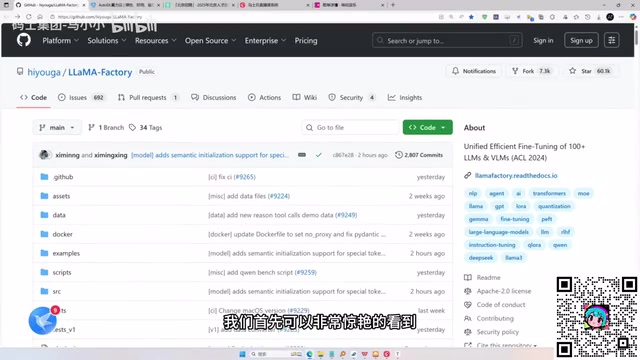
LLaMA-Factory in Practice: A Complete No-Code Guide to Fine-Tuning Large Models
An introduction to LLaMA-Factory, the open-source fine-tuning tool: its 60.1K-star background, supported models and algorithms, local vs. cloud deployment, and CUDA setup steps.

Zeng Ming's Deep Retrospective: Why OpenAI May Not Be the Ultimate Winner — and Why the Corporate System Will Disappear
Zeng Ming's deep retrospective on the AI endgame: model companies are just infrastructure, OpenAI and Anthropic won't be the final winners; the next battle is the Agent entry point standard; the corporate system will disappear as AI restructures collaboration, and only mission-driven companies can survive the cycle.

OpenHands v1.28.0: OpenCode and PI Added as Built-in Agents, API Keys Requestable In-Conversation
OpenHands ships 5 releases in 21 days: v1.27.0 adds OpenCode and PI as built-in agents, v1.28.0 enables in-chat key requests. ACP integration, credential reuse, model list changes, and upgrade advice.