AI PACs Spend Big to Influence Congressional Elections—How Effective Are They?

AI industry PACs spent millions in the 2026 midterms with mixed results and are already eyeing the next cycle.
AI industry political action committees invested millions of dollars in the 2026 U.S. midterm elections, trying to influence congressional policy by supporting AI-friendly candidates and opposing strict regulators. But results were mixed: some supported candidates won, while in other districts heavy spending failed to stop hardline regulators, showing a single industry issue can hardly dominate elections and voter attention to AI remains limited. Despite uneven results, groups are already planning the next cycle, and AI political spending is expected to keep growing, raising questions about tech giants' political influence and AI governance.
Introduction: AI Industry Political Spending Enters a New Phase
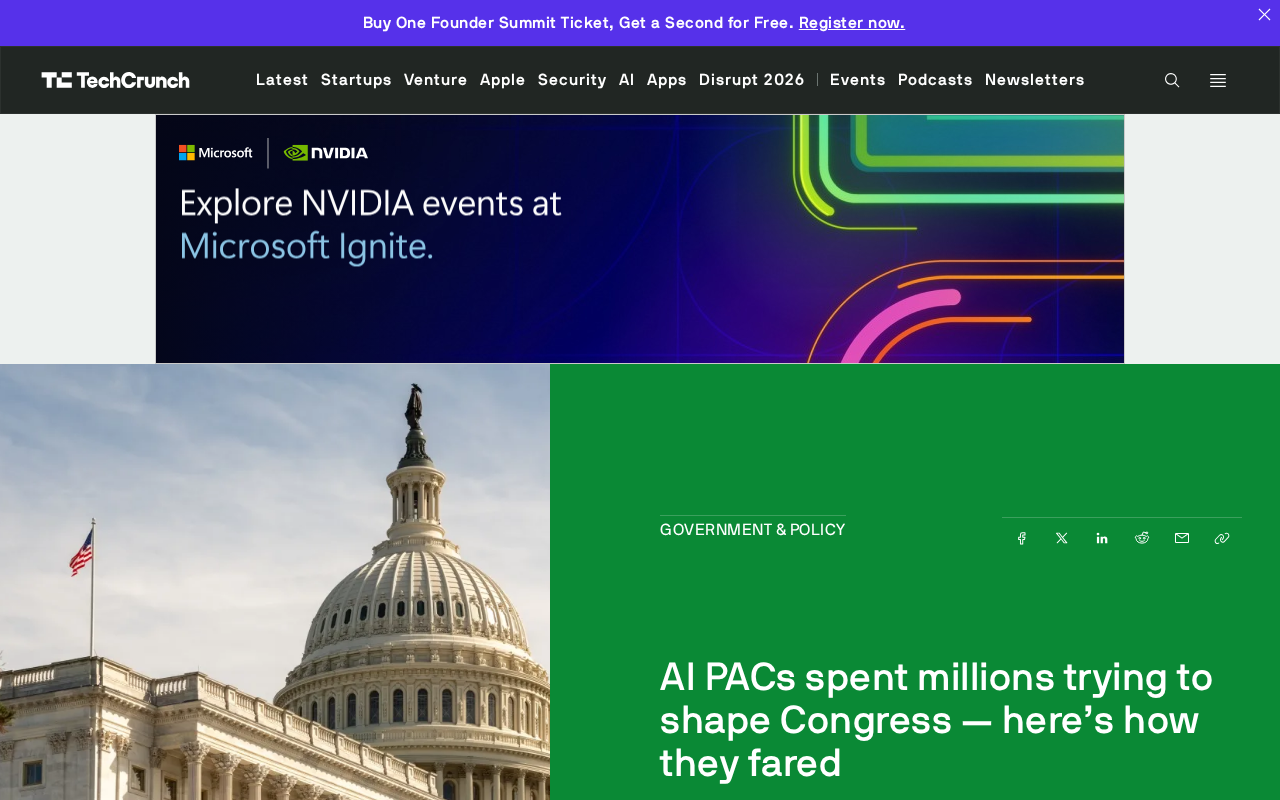
As artificial intelligence technology penetrates industries at an accelerating pace, AI-related companies and interest groups are turning their attention to the political arena, attempting to shape legislative direction through political action committees (PACs). According to an rss source, AI industry PACs invested millions of dollars in the 2026 midterm elections, aiming to shape Congress's policy agenda. However, the actual effect of this spending presents a complex picture—some goals were achieved, but overall results were mixed. Political groups have already shifted their attention to the next election cycle, signaling that interactions between technology and politics will become more frequent.
Political Action Committees (PACs) are a common type of organization in the U.S. political financing system. By law, they may donate to candidate campaigns or conduct independent campaign advocacy, but may not coordinate directly with candidates or parties. PACs are divided into traditional PACs (subject to donation limits) and Super PACs (which may accept unlimited donations but must spend independently). In recent years, technology companies and their executives have increasingly participated in elections by establishing corporate PACs or Super PACs, seeking to influence policies on tech regulation, taxation, and immigration. The rise of AI industry PACs is precisely in this context, combining lobbying strategies with electoral mobilization to respond to the growing number of AI legislative proposals.
The Scale and Goals of AI PAC Spending
The report notes that AI industry PACs spent millions of dollars in this election cycle, focusing on races for seats in both chambers of Congress. These funds were mainly used to support candidates friendly to the AI industry and to oppose politicians advocating strict regulation. Although the report did not disclose specific figures, the "millions of dollars" magnitude indicates that the tech industry is shifting from traditional lobbying strategies to more direct electoral intervention.
Fund Flows and Strategy
PAC spending strategies typically include television advertising, digital marketing, and voter mobilization. In the AI field, core issues revolve around data privacy, algorithm transparency, AI safety regulation, and R&D tax incentives. Supporters argue that a reasonable policy environment can promote innovation; critics worry that excessive deregulation may bring ethical risks.
Midterm Elections refer to congressional elections held between U.S. presidential election years (i.e., the second year after each four-year presidential election), in which all House seats and about one-third of Senate seats are up for election. Midterms are often seen as a referendum on the incumbent president, and turnout is usually lower than in presidential election years, so the mobilization and advertising spending of specific interest groups may have an amplified impact on results. The 2026 midterm elections will determine control of both chambers of Congress, which in turn will affect the direction of AI regulatory legislation—a key reason why AI industry PACs chose this time to increase investment.
Election Results: Mixed Effectiveness
According to the report, AI PAC investment did not translate into consistent victories. In some districts, supported candidates won and advanced policy discussions favorable to the industry; but in other districts, heavy spending failed to prevent candidates with hardline stances on AI regulation from winning. This divergence suggests that voters' attention to AI issues remains limited, and a single industry issue is unlikely to dominate election outcomes.
What Factors Affected the Results
Election results are influenced by multiple factors: candidates' personal charisma, local economic conditions, and national political trends can all weaken the effect of PAC spending. In addition, as a relatively emerging political issue, AI has not yet formed broad voter consensus, which also limits the influence of money.
Algorithm transparency refers to the degree to which the decision logic, data sources, and model behavior of AI systems are explainable to users, regulators, and the public. In policy debates, those supporting regulation advocate mandatory disclosure of algorithmic logic to prevent bias and discrimination, while industry worries that excessive disclosure would leak trade secrets and weaken innovation incentives. The legislative divide over algorithm transparency is precisely one of the core issues on which AI industry PACs participate in elections and seek to shape Congress's policy agenda.
Industry Outlook: Preparing for the Next Election Cycle
Despite mixed results in this midterm election, political groups have not stopped. The report mentions that relevant organizations have already begun planning strategies for the next election cycle. It is foreseeable that as AI technology's impact on society deepens, debates over its regulation will become more intense, and industry political spending may grow further.
Potential Impact on AI Governance
The activity of AI PACs has sparked discussion about the political influence of tech giants. Supporters argue that industry participation in politics is part of the democratic process; opponents warn that overly concentrated money may distort policymaking and subordinate public interest to corporate profits. In the future, how to strike a balance between incentivizing innovation and preventing risks will be an ongoing challenge for policymakers.
Conclusion
The performance of AI industry PACs in the 2026 midterm elections reveals the complexity of the intertwining of technology and politics. Millions of dollars in spending did not ensure consistent legislative outcomes, but it accumulated political participation experience for the industry. As the next election cycle approaches, the strategies and effects of AI political spending warrant continued attention.
One-line Summary
AI industry PACs spent millions in the 2026 midterms with mixed results and are already eyeing the next cycle.
Paragraph Summary
AI industry political action committees invested millions of dollars in the 2026 U.S. midterm elections, attempting to influence congressional policy by supporting AI-friendly candidates and opposing strict regulators. However, election results were divided: some supported candidates won, but in other districts heavy spending failed to stop hardline regulators from winning, showing that a single industry issue is unlikely to dominate elections and that voter attention to AI remains limited. Despite mixed results, relevant organizations have begun planning the next election cycle, and AI political spending is expected to continue growing, sparking discussion about the balance between tech giants' political influence and AI governance.
Related articles

9 AI Subscription Plans Compared: The Real Cost Per 100M Tokens Revealed
Bilibili creator tests 9 AI subscription plans from Volcano, Alibaba, Tencent, Baidu, Zhipu, Xiaomi, MiniMax and more, converting them all to real cost per 100M tokens, breaking down fixed-quota vs. three-tier coefficient billing and how caching, time-of-day discounts, and window limits affect actual quota.

Vibe Coding for Beginners: Expressing Intent Instead of Handwriting Code
What is Vibe Coding? A 137-episode Bilibili course defines it: the core is expressing intent, not writing code. This article analyzes Vibe Coding's productivity logic, target audience, and entry expectations to help beginners decide if it's worth learning.

LangChain Beginner's Guide: An Agent Development Roadmap from LangGraph to Deep Agents
Clarify the encapsulation relationship among LangChain, LangGraph, and Deep Agents, and master the learning path and selection logic for agent development frameworks—suitable for beginners in large model development.